Events
WAS IT FAKE? Apollo Moon Landing Mystery😱
but because they are hard." Tranquillity Base here, The Eagle has landed! One small step for man, one giant leap for mankind." Friends, you'd be surprised to know, the real reason why Apollo 11 mission was planned was a war. Specifically speaking, the Cold War. Fought between America and the Soviet Union. Both countries were engaged in a Space Race. In 1957, the Soviet Union became the first country to launch the first artificial satellite. It was named Sputnik, and it was the first manmade object to be placed in Earth's orbit. The American government was shocked to see the Soviets getting ahead. Months later, in 1958, America launched their satellite as well. But 3 years later, in 1961, America got another shock. Soviet Cosmonaut Yuri Gagarin, was the first person to go to space. The Soviets beat America once again. One week later, the then President of America, John F. Kennedy, wrote a letter to the Vice President dated 20th April 1961. He asked the Vice President how they could beat the Soviet Union. "...by putting a laboratory in space, or by a trip around the moon,..." "Are we working 24 hours a day on existing programs? If not, why not?" "Are we making the maximum effort?" Asking if there was another space program that could be achieved quickly that would produce dramatic results and give them a lead in the race. He got the answer some days later because he soon realised that the next big step would be to send humans to the moon. On 25th May 1961, in his famous speech, he promised the world that he would send humans to the moon before the end of the decade. Not only this, he also promised to get the humans back on Earth safely. "Before this decade is out, of landing a man on the moon, and returning him safely to the Earth." For many, this was an unbelievable announcement. Friends, imagine 1961, There were no smartphones, no internet, there wasn't even GPS technology. The computers were so slow and old, in such times, he was promising to send humans to the moon. For this, over the next 5 years, he provided $7-$9 billion, in additional funding to the space program. The entire space agency was engaged in fulfilling this one aim. Mere months later, the tests began. First, they tested the rockets that would be used to leave the Earth. Then the heat shields of the command modules were tested. How much they'd be able to resist heat. Then the propulsion system of the service module. Between 1963 to 1967, many unmanned tests were carried out. The rockets didn't carry any humans during the tests. In February 1967, the planned the first manned tests. A test in which astronauts will go up to space in the rockets. This was the Apollo 1 mission. But during the tests on Earth, on 27th January 1967, the cabin caught on fire, and the three astronauts preparing to go to space, died in the fire. After this painful event, NASA didn't lose courage. Instead, it continued further testing. Apollo 4, Apollo 5, and Apollo 6, were all unmanned missions. for further testing. In October 1968, Apollo 7 mission was launched and once again they attempted to send humans to space. This was successful. Only 2 months later, in December 1968, Apollo 8 mission was launched in which three astronauts were sent near the moon. Three months later, in March 1969, Apollo 9 mission was launched. In this, the lunar module was tested. The part of the spacecraft that was actually going to land on the moon. And 2 months after that, in May 1969, was the Apollo 10 mission. In this mission, 3 astronauts had to do almost everything for practice that was supposed to be done in Apollo 11 mission, except actually landing on the moon. Look at the speed with which NASA was launching the missions one after the other. In the gap of 2 to 3 months, a new mission to test the next thing. Testing the rockets, spacecraft, going to the moon, and after all these tests, finally, on 16th July 1969, Apollo 11 mission was launched. "...2...1....0! All engine running. Liftoff, we have a liftoff. 32 minutes past the hour. Liftoff of Apollo 11." Three astronauts were a part of this mission. 38-year-old commander Neil Armstrong, he led this mission. The pilot of the Command Module, Michael Collins, And the pilot of the Lunar Module, Edwin Buzz Aldrin. These three names are inscribed in the pages of history. Neil Armstrong and Buzz Aldrin become famous names everyone knows them today. But Michael Collins isn't very popular the reason for this is very interesting, I'll tell you later in this video. The spacecraft of this Apollo 11 mission, had three main parts. The Command Module, Service Module, and the Lunar Module. The first two are collectively known as CSM. Command and Service Module. They aimed to detach the Lunar Module and have it land on the moon. And to return, the Lunar Module would have to be relaunched and attached to the CSM, to enable the astronauts to return to Earth. To launch this spacecraft, a Saturn V-5 rocket was to be used. Before the launch, the rocket was loaded with 1 million gallon of Kerosene, Liquid Oxygen, and Liquid Hydrogen. The weight of this rocket was 3 million kg. With its help, the spacecraft reached Earth's orbit. It took less than 10 minutes to reach the orbit. Then they made about 1.5 revolutions around the Earth, after which they were given the permission from the mission control, the mission control was of course based on Earth, they communicated their permission to begin Trans-Lunar Injection. i.e., taking the spacecraft out of Earth's orbit and towards Moon's orbit. To leave Earth's orbit, the Saturn V-5 rocket was used. This was the third stage for the rocket. These events took place within 5 hours of the launch. But to actually reach the moon, took several days. Astronauts waited in the spacecraft the ate, slept, and took pictures of themselves and their surroundings, 19th July 1969, After travelling for almost 400,000 km, The Apollo 11 spacecraft reached moon's orbit. Here, it was supposed to be split into 2. The Command and Service Module separated from the Lunar Module. Michael Collins was in the Command Module, This part of the spacecraft was nicknamed Columbia. And the Lunar Module was nicknamed the Eagle. Neil Armstrong and Buzz Aldrin were in it. The thing is that, the command and service module, was tasked to remain in the moon's orbit. Only the lunar module was going to land on the moon. It meant that only Armstrong and Aldrin had the chance to step on the moon, and not Michael Collins. Perhaps, this is the reason why not many people know Michael Collins. Even though he was a part of the Apollo mission, he did not step on the moon. But even so, Michael Collins' part in this mission was perhaps the most important. Because the Lunar Module was supposed to be reattached to the CSM. Without Michael Collins, Armstrong and Aldrin could not have returned safely. Around 8 PM, the Lunar Module was going to land on the moon. Exactly at 8:10 PM, alarms went off. 1201 and 1202 alarms. "-1201. -1201. -Roger, 1201 alarm." Neither Armstrong nor Aldrin knew the meaning of this alarm. They asked the mission control what they ought to do next. Mission control tells them to ignore it and keep going. "We're GO, Same type, We're GO." Later, they figured out that 1202 was a warning. The processing system of the guidance computer of the Apollo was overloaded. But thankfully, the computer was designed in a way that the essential programs which were critical for the mission, would continue despite being overloaded. The computer was installed with the program for automatic landing. This would automatically land the Lunar Module on Moon's surface. But at the height of 150 metres, Neil Armstrong took over the control. He noticed that the Lunar Module was going to land at a place where huge boulders were strewn about. The landing spot was changed then. And they decided on another spot 4 miles from the predetermined landing spot, for the actual landing. At 8:16 PM, Buzz Aldrin checked the fuel indicator. Only 5% fuel remained. "100 feet, 3-1/2 down, 9 forward, 5 per cent... Okay." Seeing the low level of fuel, the mission control initiated a countdown. The countdown to decide whether they should land or abort the mission. "Now we're at critical fuel state. And that's why the 60-second call is given. And then the 30-second call." Finally, literally at the last minute, with only 30 seconds remaining in this countdown, Neil Armstrong sent a radio message to Earth. "Roger, Tranquility." The Eagle had successfully landed. Then Neil Armstrong put on his spacesuit, opened the door, and stepped on the moon. This moment was watched by 650 million people on television. His first words were televised to the world Buzz Aldrin followed him on the moon's surface, and for the next 2.5 hours, they collected samples of the moon's dust and rocks, took photographs, set up several scientific instruments as well. Although it is true that the Cold War was a big reason for this moon landing, but because the moon landing was already planned, it was such a huge achievement so obviously they were carrying scientific instruments with them. There were several scientific objectives of this mission as well. They set up a television camera on the moon, to transmit signals to the Earth. They took a device with them to measure the solar winds reaching the moon. They installed a device to send laser beams to the Earth, So that the laser beams could be used to compute the exact distance between Earth and Moon. They also had a passive seismometer. To measure the earthquakes on the moon. Of course, they're called Moonquakes. They collected 23 kg of rock and dust from the moon. And they left behind an American flag. And a plate with the inscription "Here, Men from the Planet Earth, First set foot upon the Moon. July 1969 A.D. The Lunar Module had to remain on the moon for 21 hours. After this, it had to take off once again, and attach to the CSM. But to go up, they needed propulsion. And for that, they needed an engine. Both Armstrong and Aldrin were unaware that the switch to turn on the engine, had broken off while they were getting out. I told you this at the beginning of the video. When they came back to the Lunar Module, they realised what had happened. They informed the mission control about this damage, and look for a solution to resolve the situation. They come up with an interesting solution to the problem. Now, what exactly is a switch? Switch basically works to complete an electrical circuit. Buzz Aldrin realised that if the circuit is broken, They looked for something that could be used to complete the circuit once again. When he looked around, he noticed his ballpoint pen. He used that ballpoint pen to complete the circuit and to reignite the engine. Finally, the Lunar Module was reattached to the CSM, and the three astronauts turn the spacecraft towards Earth. The plan for landing on Earth was that The Command Module and the Service Module would be separated, The service module would then be destroyed due to Earth's atmosphere, But there was a danger that if the service module was damaged severely, with its debris floating all around, they may hit the command module, killing the astronauts on board. To avoid this, NASA installed thrusters in the Service Module. To take it far from the Command Module, So that they do not collide with each other. But when the astronauts were returning to Earth, they found out that the thrusters on the Service Module weren't working. The three astronauts could only sit in the Command Module and watch the service module break apart around them. Its debris was floating all around them. It was a miracle that the broken pieces, did not hit the command module. And the command module remains safe. The risk of the astronauts dying on this mission was so high that the US President Nixon had prepared an alternate speech, in case the astronauts were indeed killed. Can you imagine an alternate speech? In it, he had written, "Fate has ordained that the men who went to the moon, to explore in peace, will stay on the moon to rest in peace. These brave men, Neil Armstrong and Edwin Aldrin, know that there is no hope for their recovery. These two men are laying down their lives in mankind's most noble goal. The search for truth and understanding." But thankfully, this wasn't needed. The Command Module safely descended the Earth's atmosphere. The parachutes were deployed, and it landed in the ocean. All three astronauts were alive and safe. These astronauts were then evacuated by rescue ships from the ocean. It was truly a miracle that they could return alive. It wasn't that the mission had gone exactly as it was planned, They had to face problems at almost every step. They successfully dealt with the problems, and they could return alive. It is interesting to note that after returning, the three astronauts were quarantined for 2 weeks. They weren't allowed to be in contact with other humans. Because of the risk of them carrying pathogens. Viruses or bacteria that they might have encountered on moon, that could possibly wreck havoc on Earth. No one knew for sure. But again, thankfully, nothing of the sort happened. Apollo 11's moon landing was the top news in newspapers worldwide. The US President Kennedy's promise of having humans land on the moon before the end of the decade, was made possible by NASA. "In 1969, the public had little reason to question mankind's historic first step on the moon. After all, the achievement was a celebration of technological supremacy. America had finally won the Space Race." Isn't it very suspicious that the decade that was about to end in 1970, a year before that, in 1969, America had reached the moon? It can't be that to have an advantage in the Cold War, America planned a fake moon landing operation, can it? That their actual moon landing mission failed, and they planned this fake mission as backup, for the world to see. Friends, this is just one example of the many conspiracy theories that is based on the moon landing. But friends, the truth is that these conspiracy theories have already been debunked several times. If this was a fake attempt by America to fool the world, the Soviets would never have acknowledged it. But in the Great Soviet Encyclopedia, published between 1970-1979, in its Third Edition, this moon landing was said to be factual multiple times. Soviet articles have even been written that the Apollo landing was the third historic event of the space age. First was Sputnik's launch in 1957, Second, Yuri Gagarin's flight in 1961, And the third was the moon landing. The Soviet Union had actually acknowledged this. But then, what about the flag? The flag which was planted on the moon, why was it fluttering? There is no air on the moon. There is a simple reason for that, friends. The flag that Armstrong and Aldrin had taken to the moon, was a specially designed flag. Normal flags have one long vertical rod. But there was a horizontal rod in this too. Right at the top of the flag, So that the flag would always be extended out. Because everyone working at NASA knew that if a flag is planted on the moon, it wouldn't flutter due to the lack of wind, So they decided to add a horizontal rod at the top, so that the flag could always be properly visible. But on this Apollo 11 mission, there were some problems extending this horizontal rod, So this couldn't be extended till the end. Which caused the ripple that we see. There were 'waves' in the flag. That's why people think that the flag is fluttering. But actually, the flag isn't fluttering, You can see the flag 'fluttering' only in the videos where the astronauts are holding it and making it move. The reason for this is that the aluminium rods in the flag, were acting as springs. So the flag would move for a little while and then remain still. The third most popular theory is that in the photos taken by Armstrong and Aldrin, stars aren't visible. The answer to this is very simple. The moon landing took place in the day. At a time when the sunlight was hitting the moon. And the white spacesuits that were worn by the astronauts, were very reflective too. The cameras back then didn't have such resolution to see beyond reflections. Even today, take any phone's camera, and try to take a pic at night, if the flash is turned on, you won't see the stars in the background. Another theory is about the shadows, About the inconsistency in the angles of the shadows. People argue that since this was like a Hollywood film, They didn't have just a single source of light. That's why the shadows are going all over the place. But in reality, the Sun was not the only source of light. The moon's surface was also acting as a complementary source of light, because it was reflecting so much light. This is why the light scattered in all directions, and the shadows were so bizarre. Another question is raised about Buzz Aldrin's photo taken by Neil Armstrong, It shows Armstrong's reflection but you can see a camera in his hand. How could this happen? It's because he wasn't holding the camera in his hand, instead, the camera was mounted on his suit. And he could control it from there. But then who took the photos of Neil Armstrong descending from the Lunar Module? Again, a simple answer multiple cameras were installed on the Lunar Module. But moving beyond these mindless theories, if we talk about actual criticism, Friends, not everyone was applauding the moon landing, commending NASA's work, many people strongly criticised NASA and the American government after the moon landing. People were already criticising it before the moon landing. In January 1962, the New York Times published an article in which they revealed that the money being spent to go on the moon, could have been used to build at least 120 Harvard-sized universities. They questioned whether so much money should be spent to go to the moon, or should they open a Harvard-sized university in every US state? Weren't there better ways to spend that money? Basically, the main point of criticism was that there were so many problems in the country, education, income inequality, back then America was also facing the consequences of the Vietnam War. So why was so much money wasted on this? But in reality, there were many hidden benefits of the moon landing, that no one had even thought about. Such as the advancements in computer chips. In 1962, it had been 3 years since microchips were invented. And IBM had decided that in the early 1960s, they wouldn't use these chips in their computers. "It has the packaged integrated circuit. Inside this package, is a chip of silicon, which provides the electrical equivalent of many transistors, resistors, and diodes, all interconnected to provide the desired function." But since NASA put in so many orders to buy integrated circuits IBM started working on it, and because of the heavy demand, its price fell by more than 90% over the next 5 years. And so NASA tested whether we can rely on computers for the safety of human lives. If astronauts could go to the moon and back, by relying on these computer chips, we can obviously rely on these computer chips for our daily lives. The technology grew exponentially after this moon landing. Even so, only 3 years after the Apollo 11 mission, in December 1972, the last moon mission, Apollo 17 took place. Since then friends, It has been almost 50 years, no other person went to the moon during these 50 years. Perhaps this is the biggest proof about how expensive the Apollo program was. More than 400,000 engineers, scientists, and technicians, had worked on it. and the total cost back then was $24 billion. In today's money, the cost is more than $100 billion. Initially, it was criticised by journalists only. But by 1972, the average person's fascination with NASA and the moon had ended. As the Vietnam War continued, the problems of the citizens were on the rise, "Thousands of demonstrators opposed to the Vietnam War assemble in the nation's capital for a mass protest." They saw the space program as a waste of money. Even though NASA had plans for missions up to Apollo 20, politicians had to heed the citizens, and the money being spent on space programs, had to be cut down. In December 2017, former President Donald Trump said that he would increase the funding so that humans could be sent back to the moon by 2024. "...returning American astronauts to the moon, for the first time since 1972, for long-term exploration and use this time." But later he changed his statement and said that NASA should focus on Mars rather than on the moon. But 50 years later, now NASA has made plans again, to send people to the moon. Their new Artemis program. They would begin testing with unmanned rockets, but NASA plans that by 2025-2026, they would send the first woman to the moon. After which, they plan to send the first person of colour to the moon as well. One thing can be said for sure, Before the end of this decade, we will see humans back on the moon. If you liked this video, you can watch more space-related videos by clicking on this playlist. The videos cover many such interesting topics. Let's meet in the next video. Thank you very much!
By Chandra Sekar2 years ago in History
Scientists Finally Explain How Pyramids Were Built
Consider the Great Pyramids to be one of the original Seven Wonders of the World and the only one that remains standing today. However, in ancient Egypt, it was believed that kings were chosen by the gods to act as their intermediaries in the afterlife, and that they would eventually become gods themselves. The pyramid complex was constructed to ensure that the king had everything they would require in the afterlife, and it included a pyramid, a palace, and temples. The king's tomb, which was located inside the pyramid, was filled with numerous items, including food, furniture, and gold vessels. some weren't finished though since the construction took a while and not every Pharaoh lived long enough to see the end of the construction and now let's talk about the construction itself the biggest of the Pyramids of Giza is as tall as a 40 story building so how on Earth did they manage to build a structure that massive 5,000 years ago long before machines and other equipment appeared well let's figure it out so pharoh k Fu ascended the throne around 2575 BCE and his Architects started the construction of the oldest and biggest of the Pyramids of Giza he figured that over 2 million Limestone blocks had to be used to build the Pyramid each weighing around 2 and 1/2 tons around the weight of a rhino the architect wanted to finish the construction in 20 years to make it possible a stone had to be carried and pushed into place every 4 minutes 24 hours a day 7 days a week and 365 days a year except leap year so obviously a lot of workers were needed to make it happen many believe that it was enslaved people who worked at the pyramids construction site but that's not true workers came from all over Egypt to contribute to the project all in all around 25,000 of them the Egyptians were doing all kinds of work starting with manual labor and crafting tools to administrative work they all worked around 10 hours a day they were housed and wellfed and they were overall living a more comfortable life than an average Egyptian could afford at that time supposedly the builders lived in a nearby temporary City and were a highly organized Community with a strong leader the pyramids seem to be designed to align with the points on a compass and their sides symbolized the Rays of the Sun but back at that time there were no compasses ancient Egyptians figured out out the directions themselves and with amazing Precision to align the pyramids they used two constellations the construction site was arranged on the West Bank of the Nile River this also had a symbolic meaning just like the sun sets in the West Life sets in the west as well the second Pyramid of Giza was for kufu son Pharaoh kafer it's a bit smaller but this one has the famous noseless statue of the Sphinx of course originally it had a nose I would tell you what happened to it but it's still a mystery and no one knows for sure sphinxes have the body of a lion and the head of a human they were considered guardians of important areas this famous Sphinx also pronounced Sphinx has the head of pharaoh Coffer and is guarding his pyramid facing the sunrise the Sphinx is one of the biggest and oldest statues in the world originally it not only had a nose but was also painted scientists have discovered traces of the red color of its face so most likely the Sphinx was painted red there are also remains of yellow and blue color on its body the statue definitely wasn't boring till around 1800 the Sphinx was buried up to its shoulders until an adventurer with a team of 160 men dug it out but let's get back to the construction the workers of course needed stone blocks there were two main places where people could get these Stones One source was near the building site, but the fossil-lined yellow stone was only fit for the inside of the pyramid; the limestone blocks for the outside had to be transported eight miles distant on 30-ton sleds, and it didn't seem too difficult to pull them. cutting off a block of limestone wasn't the biggest challenge when it was soft and could be split relatively easily, but after being exposed to the air, limestone hardens, so the most difficult part was shaping the blocks. This step was crucial because the slightest errors could cause the entire pyramid to collapse. The sand mixed with the appropriate amount of water was fairly slick, and ten people could move a sled even with a rock weighing so much.
By Oluwatosin Adebayo2 years ago in History
The Tragic Car Crash of Princess Diana: A Nation's Loss and the Unanswered Questions
In the early hours of August 31, 1997, the world was shaken by the news of a tragic car crash in Paris that claimed the life of Diana, Princess of Wales. The beloved "People's Princess," known for her grace, compassion, and tireless humanitarian work, was gone. Her untimely death at the age of 36 not only plunged the British nation into mourning but also sparked a wave of grief and shock that resonated across the globe. More than two decades later, the circumstances surrounding the crash remain a subject of intense scrutiny, speculation, and controversy. The Events Leading Up to the Crash On the evening of August 30, 1997, Diana and her companion, Dodi Fayed, left the Ritz Hotel in Paris after a private dinner. The couple, attempting to evade paparazzi, departed from the rear entrance of the hotel around midnight, entering a black Mercedes-Benz S280 driven by Henri Paul, the deputy head of security at the Ritz. Trevor Rees-Jones, a bodyguard, was the only other occupant of the vehicle. Their destination was Dodi Fayed's apartment near the Champs-Élysées, but they never made it. As the car sped through the streets of Paris, it entered the Pont de l'Alma tunnel at high speed, reportedly reaching up to 65 mph—more than twice the legal limit for that area. At approximately 12:23 AM, the car struck the 13th pillar of the tunnel, resulting in a devastating crash. The Aftermath and Immediate Response The aftermath of the crash was chaotic and tragic. Henri Paul and Dodi Fayed died instantly from the impact. Princess Diana, initially still alive, suffered severe injuries and was rushed to the Pitié-Salpêtrière Hospital. Despite the best efforts of the medical team, she succumbed to her injuries at 4:00 AM. Trevor Rees-Jones, the sole survivor, was left with serious injuries and little recollection of the events. News of Diana's death sent shockwaves around the world. For millions, it was a deeply personal loss. Diana had transcended her royal status to become an icon of compassion and kindness, using her platform to advocate for causes ranging from HIV/AIDS awareness to the eradication of landmines. Her death was not just the loss of a princess but the loss of a symbol of hope and humanity. The Official Investigation In the wake of the tragedy, French authorities launched an investigation to determine the causes of the crash. The official report, released in 1999, concluded that Henri Paul was intoxicated at the time of the crash, with a blood alcohol level three times the legal limit. Additionally, it was determined that Paul was under the influence of prescription drugs, which, combined with the high speed and the car's attempts to evade paparazzi, led to the fatal accident. The report also highlighted the role of the paparazzi, who had relentlessly pursued Diana and Dodi throughout the evening. However, it was concluded that their actions, while aggressive and intrusive, did not directly cause the crash. The primary blame was placed on Henri Paul's impaired state and the excessive speed at which he was driving. The Conspiracy Theories Despite the conclusions of the official investigation, numerous conspiracy theories have persisted, suggesting that Diana's death was not a mere accident but a result of foul play. Some of the most prevalent theories propose that powerful forces, possibly within the British establishment, orchestrated the crash to prevent Diana from marrying Dodi Fayed and to silence her outspoken views. One of the most vocal proponents of these theories was Mohamed Al-Fayed, Dodi's father, who claimed that the British intelligence services and members of the royal family were involved in a plot to kill Diana and his son. These allegations have been thoroughly investigated, most notably by Operation Paget, a Metropolitan Police inquiry conducted between 2004 and 2008. The inquiry found no evidence to support the claims of conspiracy or foul play, reaffirming the original conclusion that the crash was a tragic accident caused by reckless driving under the influence. The Legacy of Princess Diana Princess Diana's death marked a pivotal moment in modern history, profoundly affecting the British monarchy and the public's relationship with the royal family. The overwhelming outpouring of grief and the unprecedented public reaction prompted a period of reflection and change within the royal institution. The monarchy had to confront its public image and the ways in which it connected with the people. Diana's legacy continues to resonate through her charitable work and the impact she had on countless lives. Her sons, Prince William and Prince Harry, have carried forward her humanitarian spirit, engaging in mental health advocacy, support for veterans, and various charitable endeavors. Diana's influence is evident in their approach to royal duties, emphasizing compassion and a personal connection with the public. The Enduring Questions Despite the findings of multiple investigations, the circumstances surrounding Princess Diana's death still evoke questions and speculation. The persistence of conspiracy theories underscores a broader mistrust in official narratives and a desire for deeper understanding. For many, the tragic end to Diana's life is emblematic of a greater sense of loss and the search for justice and truth. As we remember Princess Diana, we are reminded of her warmth, empathy, and the indelible mark she left on the world. Her death was a moment of profound sorrow, but her life remains a testament to the power of kindness and the enduring impact of a compassionate heart. The story of her tragic car crash serves as both a sobering reminder of the fragility of life and a call to continue her legacy of love and service.
By Deji Akomolafe2 years ago in History
Keto Diet Plan for Weight Loss
If you've been exploring weight loss options, you've likely stumbled upon the keto diet. But what exactly is it? The keto diet, short for ketogenic diet, is a high-fat, low-carbohydrate eating plan designed to shift your body's metabolism away from carbohydrates and towards fats. This shift helps your body enter a state known as ketosis, where it burns fat for fuel instead of glucose.
By Koka nssar2 years ago in History
Unveiling the Ancient Marvel
Introduction to the ancient temple and theater discovery In a remarkable archaeological find, researchers have uncovered an ancient temple and theater complex in Peru that predates the iconic Machu Picchu by a staggering 3,500 years. This astonishing discovery has shed new light on the advanced civilizations that once thrived in the region, challenging our understanding of ancient Andean cultures.
By Kevin MacELwee2 years ago in History
The Lake Bodom Murders: Finland’s Unsolved Mystery
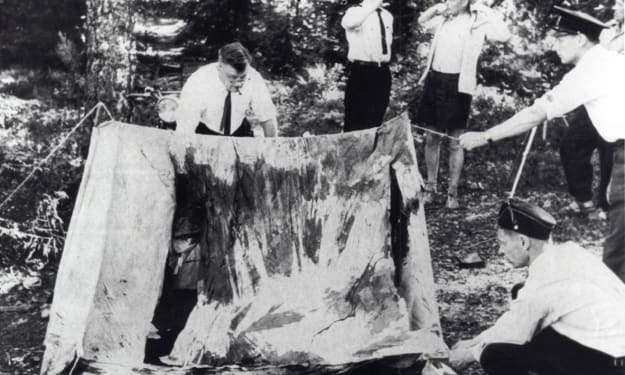
Lake Bodom, located near Espoo, Finland, has long been known as a tranquil destination for family outings, picnics, and weekend fishing trips. However, in 1960, this serene setting became infamous as the site of one of the most brutal and puzzling unsolved crimes in Finnish history. The Lake Bodom murders have haunted the collective memory of the nation for over six decades, raising countless questions that remain unanswered to this day. The Fateful Night On the night of June 4, 1960, four teenagers—15-year-olds Maila Irmeli Björklund and Anja Tuulikki Mäki, and 18-year-olds Seppo Antero Boisman and Nils Wilhelm Gustafsson—decided to camp out by Lake Bodom. The group set up their tent on the picturesque lakeshore, looking forward to a night under the stars. What should have been a peaceful and enjoyable outing turned into a night of horror. In the early hours of June 5, an unknown assailant brutally attacked the campers while they slept. Maila, Anja, and Seppo were murdered with a combination of stabbing and blunt force trauma, their bodies found inside and around the tent. Nils Gustafsson, the sole survivor, was discovered outside the tent, severely injured but alive. He had sustained a concussion, a fractured jaw, and other facial injuries, rendering him unconscious for a significant period. The Discovery The crime scene was discovered by a group of birdwatchers who stumbled upon the gruesome sight. Authorities were promptly notified, and the investigation began. However, from the very beginning, the case was plagued by issues. The crime scene was not adequately secured, and valuable evidence may have been compromised or lost. Despite these initial setbacks, the police launched an intensive investigation to uncover the identity of the perpetrator. The Investigation The investigation into the Lake Bodom murders was extensive and involved numerous interviews, forensic examinations, and public appeals for information. Several theories and suspects emerged over the years, but none have led to a definitive conclusion. The First Suspects One of the initial suspects was a man named Pentti Soininen, who had a history of violent behavior and was known to have been in the vicinity at the time of the murders. However, there was insufficient evidence to link him conclusively to the crime, and he later died by suicide, taking any potential secrets to his grave. Another early suspect was Hans Assmann, a local man with a mysterious past. He arrived at a hospital on the day after the murders, covered in red stains that some believed to be blood. Assmann’s suspicious behavior and inconsistent statements made him a person of interest, but once again, there was not enough concrete evidence to charge him. The Role of Nils Gustafsson As the sole survivor, Nils Gustafsson’s account of the events was crucial to the investigation. Initially, he claimed to have no memory of the attack due to his injuries. However, as the years passed, his version of events came under scrutiny. In 2004, over four decades after the murders, Gustafsson was arrested and charged with the murders based on new forensic analysis. The prosecution argued that Gustafsson, in a fit of jealousy and rage, had attacked his friends after a dispute, and then inflicted injuries on himself to appear as a victim. The defense, however, maintained Gustafsson’s innocence, pointing out inconsistencies in the evidence and arguing that the injuries he sustained were too severe to be self-inflicted. In 2005, after a highly publicized trial, Gustafsson was acquitted of all charges. The court found the evidence against him to be inconclusive and insufficient to support a conviction. To this day, Gustafsson maintains his innocence, and the true identity of the killer remains unknown. The Theories Over the years, various theories have been proposed to explain the Lake Bodom murders. Some believe the attack was the work of a serial killer, possibly a foreigner passing through the area. Others suggest it was a crime of passion, committed by someone close to the victims. One theory posits that the murders were the result of a robbery gone wrong. However, this seems unlikely given the brutal nature of the attacks and the fact that nothing of significant value was taken from the campsite. Another speculation is that the murders were a case of mistaken identity, and the teenagers were unfortunate victims of a targeted attack on someone else. The Legacy The Lake Bodom murders have left an indelible mark on Finnish society, becoming a part of local folklore and a source of enduring fascination and fear. The case has inspired books, films, and even music, each attempting to grapple with the mystery and its implications. For the families of the victims, the lack of closure is a source of ongoing pain. The unsolved nature of the crime leaves a lingering sense of injustice and the haunting possibility that the killer may have gone on to commit other crimes or lived out their life without facing consequences. Conclusion The Lake Bodom murders remain one of Finland’s most notorious and enigmatic unsolved crimes. Despite the passage of time, the questions surrounding that fateful night in 1960 continue to captivate and perplex those who seek to understand what happened. The serene waters of Lake Bodom, once a symbol of peace and tranquility, now hold a darker legacy, a reminder of a brutal crime that defies resolution. As advances in forensic science continue, there remains a glimmer of hope that one day, the truth about the Lake Bodom murders may finally come to light. Until then, the mystery endures, casting a long shadow over the idyllic landscape and the lives forever altered by that night of horror.
By Deji Akomolafe2 years ago in History
Mysterious Event: The body of Xin zhui . Content Warning. AI-Generated.
SXin Zhui, also known as Lady Dai, is a famous figure from ancient China. Her body was discovered remarkably well-preserved in 1971 in a tomb at Mawangdui in Changsha, Hunan Province. She lived during the Western Han dynasty (206 BCE – 8 CE) and was the wife of a nobleman.
By DORCAS TALES 2 years ago in History
French revolution
The French Revolution: A New Era in European History In 1789, Europe was plagued by wars, crop failures, and social unrest. The French monarchy, ruled by Louis XVI, was bankrupt and out of touch with its people. The country was divided into three estates: the clergy, the aristocracy, and the ordinary people. The burden of taxation fell heavily on the third estate, who were also denied representation in the government. Reformers inspired by the American Revolution demanded change, but their efforts were met with resistance from the monarchy and the aristocracy. The financial crisis worsened, and Louis XVI was forced to summon the Estates-General, a representative assembly that had not met since 1614. The representatives of the third estate, joined by some members of the other two estates, declared themselves the National Assembly and began to push for sweeping reforms. They adopted the Declaration of the Rights of Man and of the Citizen, which enshrined the principles of liberty, equality, and fraternity. The revolution gained momentum, with the fall of the Bastille on July 14, 1789, marking a turning point. The National Assembly abolished feudalism, established a constitutional monarchy, and adopted a new calendar. The king and queen were eventually executed, and a republic was declared. The Jacobin club, led by Maximilien Robespierre, dominated the political scene, and the Committee of Public Safety presided over the Reign of Terror, during which thousands were executed for perceived counter-revolutionary activities. The revolution had far-reaching consequences, including: - The rise of Napoleon Bonaparte, who seized power in 1799 and went on to conquer much of Europe. - The spread of revolutionary ideas across Europe, inspiring similar movements in other countries. - The establishment of the concept of human rights, which would later become a cornerstone of international law. - The end of feudalism and the establishment of modern democracy in France. - The execution of King Louis XVI and Queen Marie Antoinette, marking the end of the monarchy. - The establishment of a new calendar, which abolished religious holidays and introduced a new way of measuring time. The French Revolution also had significant social and cultural impacts, including: - The rise of a new middle class, who benefited from the revolution's emphasis on meritocracy and social mobility. - The decline of the aristocracy and the clergy, who lost power and influence in the new political landscape. - The emergence of a new cultural movement, which celebrated reason, science, and individualism. - The development of a new political language, which emphasized liberty, equality, and democracy. The French Revolution marked a significant turning point in European history, shaping modern democracy and inspiring future revolutions. Its legacy continues to influence political and social movements today. In conclusion, the French Revolution was a complex and multifaceted event that reshaped Europe and beyond. Its impact on politics, culture, and society continues to be felt today, making it one of the most significant events in modern history. Additional details: - The Estates-General was a representative assembly that had not met since 1614. It was summoned by King Louis XVI in 1789 to address the financial crisis. - The National Assembly adopted the Declaration of the Rights of Man and of the Citizen in 1789, which enshrined the principles of liberty, equality, and fraternity. - The fall of the Bastille on July 14, 1789, marked a turning point in the revolution. The prison was a symbol of royal tyranny, and its fall marked the beginning of the end of the monarchy. - Maximilien Robespierre was a leading figure of the Jacobin club, which dominated the political scene during the Reign of Terror. - The Committee of Public Safety was established in 1793 to preside over the Reign of Terror. It was responsible for the execution of thousands of perceived counter-revolutionaries. - Napoleon Bonaparte seized power in 1799 and went on to conquer much of Europe. He was eventually defeated at the Battle of Waterloo in 1815. - The French Revolution inspired similar movements in other countries, including the Haitian Revolution, the Latin American wars of independence, and the European revolutions of 1848.
By Ali bukhari2 years ago in History
The Enigma of the SS Edmund Fitzgerald: A Legacy of Mystery and Tragedy
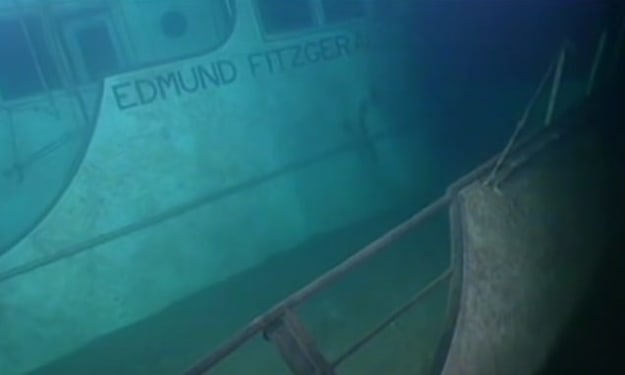
The sinking of the SS Edmund Fitzgerald stands as one of the most enduring maritime mysteries of the Great Lakes. On November 10, 1975, this American freighter, often referred to as the "Mighty Fitz" or the "Pride of the American Side," met its tragic end during a severe storm on Lake Superior. The loss of all 29 crew members, combined with the absence of recovered bodies and the unknown cause of the sinking, has cemented the Edmund Fitzgerald's story in the annals of nautical lore. The Pride of the Great Lakes Launched on June 8, 1958, the SS Edmund Fitzgerald was an engineering marvel of its time. Named after Edmund Fitzgerald, the president of the Northwestern Mutual Life Insurance Company (the ship's owner), it was the largest ship on the Great Lakes when it first set sail. At 729 feet long and with a capacity of over 25,000 tons, the Edmund Fitzgerald was designed to carry taconite iron ore from mines near Duluth, Minnesota, to iron works in Detroit, Toledo, and other ports. The Fitzgerald was known not only for its impressive size but also for its record-breaking performance. It frequently set seasonal haul records, earning a reputation for reliability and strength. However, this reputation would be tragically overshadowed by its untimely demise. The Fateful Voyage The final voyage of the Edmund Fitzgerald began on the afternoon of November 9, 1975. Loaded with taconite pellets, it departed from Superior, Wisconsin, bound for Detroit, Michigan. Captained by Ernest McSorley, a seasoned mariner with decades of experience, the freighter was accompanied by another ship, the Arthur M. Anderson, captained by Bernie Cooper. As the two ships traversed Lake Superior, the weather conditions began to deteriorate rapidly. A storm, characterized by gale-force winds and towering waves, descended upon the lake. By the evening of November 10, the storm had reached its peak, with wind gusts exceeding 50 knots (approximately 58 mph) and waves as high as 35 feet. The Last Communication Throughout the day, the Fitzgerald and the Anderson maintained regular radio contact. Despite the worsening conditions, Captain McSorley reported that the ship was handling the storm relatively well, although it had sustained minor damage and was taking on water. At around 7:10 p.m., McSorley communicated with Cooper, saying, “We are holding our own.” This was the last transmission from the Edmund Fitzgerald. Moments later, the Fitzgerald vanished from the Anderson's radar. Despite immediate search efforts by the Coast Guard and other vessels, no trace of the ship was found that night. The following day, debris and lifeboats from the Fitzgerald were discovered, confirming the ship had sunk, but none of the 29 crew members were ever recovered. Theories and Investigations The sudden and complete disappearance of the Edmund Fitzgerald has spawned numerous theories and extensive investigations. The official Coast Guard report suggested that the ship likely sank due to a combination of factors, including structural failure, massive waves, and potential human error. However, this explanation has been contested by many. Structural Failure One prevalent theory posits that structural weaknesses in the Fitzgerald’s hull may have contributed to its sinking. The ship had a history of hull cracks and other structural issues, which, when subjected to the immense stress of the storm, could have led to catastrophic failure. Some experts believe that the freighter may have suffered from "bottoming out," where the keel strikes the lake bed, causing severe damage. Rogue Waves Another compelling theory involves the phenomenon of rogue waves, also known as "freak waves." These are unusually large, unexpected waves that can reach heights far exceeding the surrounding seas. It is suggested that a series of rogue waves, sometimes referred to as "three sisters," could have overwhelmed the ship, leading to its rapid sinking. Human Error and Equipment Malfunction Some investigators have considered the possibility of human error or equipment malfunction. The Fitzgerald was reported to be experiencing problems with its radar and bilge pumps, critical for navigating and managing water ingress during the storm. Additionally, the decision to take a northern route, closer to the Canadian shore, may have exposed the ship to more severe conditions. The Legacy Despite extensive research and numerous expeditions to the wreck site, located in two large pieces 530 feet below the surface of Lake Superior, the exact cause of the Edmund Fitzgerald's sinking remains elusive. This enduring mystery has captured the public imagination, immortalized in songs, books, and documentaries. Gordon Lightfoot's haunting ballad, "The Wreck of the Edmund Fitzgerald," has played a significant role in keeping the memory of the tragedy alive, bringing the story to a global audience. Remembering the Crew At the heart of the Edmund Fitzgerald’s story is the loss of its 29 crew members, a sobering reminder of the perils faced by those who work on the Great Lakes. Memorials have been erected in their honor, including the bell from the ship, which was recovered and now resides at the Great Lakes Shipwreck Museum in Whitefish Point, Michigan. Each year, on November 10, ceremonies are held to commemorate the lives lost and to reflect on the enduring mystery of their final voyage. Conclusion The sinking of the SS Edmund Fitzgerald remains one of the most poignant and enigmatic tragedies in maritime history. Its story is a testament to the unpredictable power of nature and the enduring strength of the human spirit in the face of overwhelming odds. As we remember the Edmund Fitzgerald and its crew, we are reminded of the bravery of those who navigate the Great Lakes and the relentless pursuit of answers in the wake of unspeakable loss.
By Deji Akomolafe2 years ago in History