Events
THE INDEPENDENCE DAY 15th AUGUST
### INDEPENDENCE DAY: A CELEBRATION OF FREEDOM, UNITY, AND PROGRESS On August 15th, 1947, India awoke to life and freedom. After centuries of colonial rule, our nation reclaimed its sovereignty, and with it, the dreams and aspirations of millions of Indians were set free. Independence Day is not just a celebration of our freedom; it is a day of reflection, of remembering the sacrifices made, and of recognizing the journey that we continue to undertake as a nation. #### THE STRUGGLE FOR FREEDOM The road to independence was neither easy nor quick. It was a path paved with the sacrifices of countless individuals who believed in the vision of a free India. Leaders like Mahatma Gandhi, Jawaharlal Nehru, Sardar Vallabhbhai Patel, Subhas Chandra Bose, and countless others rallied the people of India under the banner of non-violence, civil disobedience, and determined resistance. The freedom struggle was not just a political movement; it was a social and cultural awakening. It brought together people from different regions, religions, languages, and social strata, all united in their desire for freedom. The independence movement taught us the value of unity in diversity, a principle that continues to guide our nation today. #### THE SIGNIFICANCE OF AUGUST 15th Independence Day is a symbol of our resilience and determination. It marks the culmination of decades of struggle against colonial oppression and the dawn of a new era where we, the people of India, took control of our own destiny. On this day, the tricolor was unfurled, and the air was filled with the sounds of joy, hope, and the promise of a better future. But independence was not just the end of British rule; it was the beginning of a new challenge. The challenge of nation-building. As we gained freedom, we were also faced with the task of creating a united and prosperous India, a task that continues to this day. #### THE CHALLENGES OF NATION-BUILDING Post-independence, India faced a myriad of challenges. The partition of the country brought about unimaginable pain and suffering, with millions of people displaced and communities torn apart. The newly independent nation also faced economic challenges, with widespread poverty, illiteracy, and underdevelopment. However, the leaders of independent India, guided by the principles of democracy, secularism, and social justice, laid the foundation for a modern and progressive nation. The adoption of the Constitution in 1950 was a monumental step in this direction. It enshrined the values of justice, liberty, equality, and fraternity, and established the framework for a democratic polity where every citizen has the right to participate in the governance of the country. Over the decades, India has made significant strides in various fields. From being a largely agrarian economy, we have transformed into a diversified economy with a strong industrial base, a thriving services sector, and a growing digital economy. India is now one of the fastest-growing major economies in the world, and our achievements in science, technology, space exploration, and medicine are recognized globally. #### THE ROLE OF CITIZENS IN A DEMOCRACY As we celebrate Independence Day, it is important to remember that the success of our nation depends on the active participation of its citizens. Democracy is not just about the right to vote; it is about being informed, being engaged, and holding those in power accountable. It is about ensuring that the voices of all sections of society, especially the marginalized and the vulnerable, are heard and respected. The Preamble to our Constitution begins with the words, "We, the people of India," signifying that the ultimate power lies with the people. It is a reminder that each of us has a role to play in the progress of our nation. Whether it is through community service, social activism, entrepreneurship, or simply by being a responsible citizen, we all contribute to the shaping of our country’s future. #### THE IMPORTANCE OF UNITY AND DIVERSITY One of the greatest strengths of India is its diversity. We are a nation of multiple languages, religions, cultures, and traditions. This diversity is not a weakness but a source of strength. It is this diversity that enriches our culture, broadens our perspectives, and makes us a unique nation. However, maintaining unity in such diversity requires continuous effort. We must remember that the essence of our nation lies in the principle of "unity in diversity." It is this principle that binds us together as one nation, despite our differences. On this Independence Day, let us reaffirm our commitment to this principle and work towards building an inclusive and harmonious society where every individual, regardless of their background, feels valued and respected. #### LOOKING AHEAD: THE FUTURE OF INDIA As we celebrate 77 years of independence, it is also a time to look ahead. The world is changing rapidly, and with it, the challenges and opportunities for India are evolving. The global landscape is marked by technological advancements, environmental challenges, and shifting geopolitical dynamics. In this context, it is crucial for India to be forward-looking, innovative, and resilient. The youth of our nation, who make up a significant portion of our population, hold the key to our future. They are the torchbearers of the vision that our freedom fighters had for a progressive and prosperous India. It is essential that we empower them with the right education, skills, and opportunities so that they can lead our nation to new heights. Moreover, as we progress, we must ensure that our development is sustainable and inclusive. Economic growth should go hand in hand with social equity and environmental responsibility. The principles of social justice, as enshrined in our Constitution, must guide our policies and actions so that the benefits of development reach every section of society. #### CONCLUSION: A DAY OF REFLECTION AND RENEWAL Independence Day is a day of celebration, but it is also a day of reflection. It is a time to remember the sacrifices of those who fought for our freedom and to renew our commitment to the values that form the foundation of our nation. It is a day to celebrate our achievements, but also to acknowledge the challenges that lie ahead. As we unfurl the tricolor on this day, let us be reminded of the responsibilities that come with freedom. Let us pledge to work towards a stronger, more united, and prosperous India. Let us celebrate our past, but more importantly, let us work together to build a future that is worthy of the dreams and aspirations of every Indian. Jai Hind!
By Mridul Kushwah2 years ago in History
Simone Biles and Jordan Chiles bowed to Rebeca Andrade of Brazil. Here is why.
Andrade became the first gymnast to defeat Biles in a floor final at a major international championship. Simone Biles lost the title in the women's gymnastics floor final on Monday, finishing second to Brazil's Rebeca Andrade. Jordan Chiles of Team USA won bronze.In Paris, Team USA left its mark on the gymnastics mat. The 2024 Olympics' gymnastics competition ended on Monday. In the last event, the Americans won two more historic medals.
By John MacArthur2 years ago in History
Operation Postmaster: A Secret Mission in World War II
Truth is said to be the first casualty of war. This is true of both reporting and as a foundation for military action. Oftentimes, the success of an operation hinges on craftily outwitting the enemy or keeping a mission so secret that not even those within their own ranks know about it.
By Marco Röder2 years ago in History
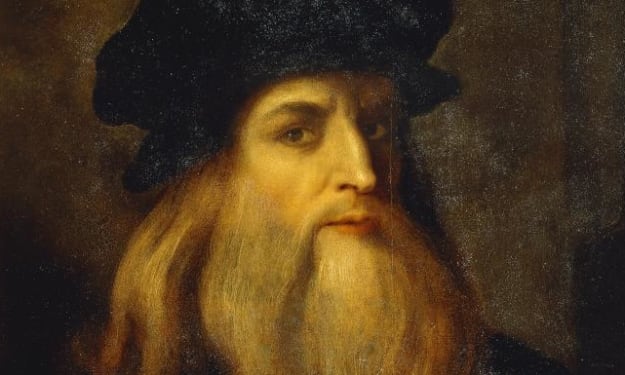
Leonardo da Vinci: The Polymath Who Redefined Art and Science. AI-Generated.
# Leonardo da Vinci: The Renaissance Man Who Changed the World Leonardo da Vinci is a name synonymous with genius. Born in 1452 in the small town of Vinci in Italy, Leonardo’s insatiable curiosity and inventive mind made him one of the most influential figures of the Renaissance. His contributions spanned a multitude of fields, including art, science, engineering, and anatomy. This article explores the life and legacy of Leonardo da Vinci, highlighting his remarkable achievements and enduring influence. ## Early Life and Education Leonardo was born on April 15, 1452, as the illegitimate son of a wealthy notary, Ser Piero, and a peasant woman, Caterina. Despite his illegitimacy, he received a basic education in reading, writing, and mathematics. His artistic talent was evident from a young age, and he was apprenticed to the renowned artist Andrea del Verrocchio in Florence around the age of 15. ### Apprenticeship with Verrocchio At Verrocchio’s workshop, Leonardo honed his skills in various artistic disciplines, including painting, sculpture, and metalworking. He also gained exposure to scientific and engineering concepts. This period was crucial in shaping Leonardo’s multifaceted approach to learning and creation. ## Artistic Masterpieces Leonardo da Vinci is perhaps best known for his contributions to art. His masterpieces, characterized by their detail, realism, and innovative techniques, have left an indelible mark on the history of art. ### The Last Supper Painted between 1495 and 1498, "The Last Supper" is one of Leonardo’s most famous works. This mural, located in the Convent of Santa Maria delle Grazie in Milan, depicts the moment Jesus announces that one of his disciples will betray him. Leonardo’s use of perspective, composition, and emotional expression revolutionized religious art. ### Mona Lisa The "Mona Lisa," painted between 1503 and 1506, is arguably the most famous painting in the world. Housed in the Louvre Museum in Paris, this portrait of Lisa Gherardini is celebrated for its enigmatic expression, masterful use of sfumato (a technique for blending colors and tones), and intricate details. The "Mona Lisa" exemplifies Leonardo’s ability to capture the complexity of human emotion and personality. ## Scientific and Engineering Innovations Leonardo’s contributions extend far beyond the realm of art. His scientific inquiries and engineering designs demonstrate his visionary thinking and profound understanding of the natural world. ### Anatomical Studies Leonardo’s fascination with the human body led him to conduct extensive anatomical studies. He dissected numerous corpses to understand the structure and function of muscles, bones, and organs. His detailed anatomical drawings, including the famous Vitruvian Man, provided unprecedented insights into human physiology and influenced medical science for centuries. ### Engineering and Invention Leonardo’s notebooks are filled with designs for various machines and devices, many of which were centuries ahead of their time. His sketches include concepts for helicopters, tanks, submarines, and mechanical looms. While many of these inventions were never built, they showcase Leonardo’s remarkable foresight and creativity. ### Scientific Observations Leonardo made significant contributions to fields such as optics, hydrodynamics, and geology. He studied the behavior of light and shadow, the movement of water, and the formation of fossils. His meticulous observations and recordings laid the groundwork for future scientific discoveries. ## The Renaissance Man Leonardo da Vinci embodies the ideal of the Renaissance man—a person whose expertise spans multiple disciplines. His ability to integrate art, science, and engineering into a cohesive body of work set him apart from his contemporaries and solidified his legacy as one of history’s greatest polymaths. ### Holistic Approach to Knowledge Leonardo’s holistic approach to knowledge allowed him to make connections between seemingly unrelated fields. He believed that understanding the natural world required both artistic sensitivity and scientific rigor. This interdisciplinary mindset enabled him to achieve breakthroughs that were not confined to any single domain. ### Influence on Future Generations Leonardo’s influence extends far beyond his lifetime. His works have inspired countless artists, scientists, and engineers. Figures such as Michelangelo, Galileo, and Isaac Newton built upon Leonardo’s ideas, pushing the boundaries of human knowledge and creativity. ## Personal Life and Legacy Despite his immense contributions, much about Leonardo’s personal life remains shrouded in mystery. He never married and had no known children, and his personal relationships are largely undocumented. However, his work and legacy speak volumes about his character and intellect. ### Later Years In the final years of his life, Leonardo worked for King Francis I of France, who provided him with a comfortable residence at the Château du Clos Lucé. There, he continued to work on his projects and studies until his death on May 2, 1519. ### Enduring Legacy Leonardo da Vinci’s legacy is one of boundless curiosity, relentless pursuit of knowledge, and extraordinary creativity. His contributions to art, science, and engineering continue to inspire and influence modern thought and innovation. As a true Renaissance man, Leonardo’s life exemplifies the power of interdisciplinary learning and the enduring impact of human ingenuity. ## Conclusion Leonardo da Vinci’s life and work remind us of the limitless potential of the human mind. His ability to merge art and science, his visionary inventions, and his profound understanding of the natural world have left an indelible mark on history. As we continue to explore new frontiers of knowledge and creativity, Leonardo’s legacy serves as a timeless inspiration to strive for excellence and to see the world through a lens of curiosity and wonder.
By Mbeha maliwa 2 years ago in History
The Hidden Challenge: How Overthinking Sabotages Hitters and How to Overcome It. AI-Generated.
# The Common Pitfalls of Hitters: Understanding Their Biggest Mistake Hitting in baseball is an intricate blend of skill, strategy, and mental fortitude. It's an art form that requires years of practice and unwavering dedication. Despite this, even the best hitters can fall into traps that hinder their performance. One of the most significant mistakes hitters make involves a fundamental aspect of the game that often gets overlooked. This article will explore this critical error, examine its causes, and provide strategies to help hitters overcome it. ## The Biggest Mistake: Overthinking at the Plate One of the most common and detrimental mistakes hitters make is overthinking at the plate. Overthinking can lead to hesitation, indecision, and a lack of confidence, all of which negatively impact performance. This mental barrier can prevent hitters from reacting instinctively, resulting in missed opportunities and reduced effectiveness. ### The Causes of Overthinking Overthinking can stem from various sources, including pressure to perform, fear of failure, and a lack of confidence. These factors can create a mental block that prevents hitters from executing their natural swing and responding to the pitch as it comes. #### Pressure to Perform Hitters often face immense pressure to perform, whether it’s from coaches, teammates, or their own expectations. This pressure can lead to a heightened sense of anxiety, causing them to overanalyze every aspect of their swing and approach. #### Fear of Failure Fear of failure is another significant contributor to overthinking. The desire to avoid making mistakes can make hitters overly cautious, leading them to second-guess their decisions at the plate. #### Lack of Confidence A lack of confidence in their abilities can also cause hitters to overthink. When hitters doubt their skills, they may focus too much on the mechanics of their swing rather than trusting their instincts. ### The Impact of Overthinking Overthinking can have several detrimental effects on a hitter’s performance. It can slow down their reaction time, disrupt their timing, and reduce their ability to make solid contact with the ball. #### Slowed Reaction Time When hitters overthink, their reaction time slows down. Instead of reacting instinctively to the pitch, they may hesitate, trying to analyze the situation. This delay can cause them to miss pitches they would otherwise be able to hit. #### Disrupted Timing Overthinking can also disrupt a hitter’s timing. Baseball is a game of milliseconds, and even a slight hesitation can throw off a hitter’s rhythm. This can result in swinging too early or too late, leading to missed opportunities. #### Reduced Contact Quality When hitters are overthinking, they may focus too much on the mechanics of their swing rather than making solid contact with the ball. This can result in weak hits or swings and misses. ## Strategies to Overcome Overthinking Fortunately, there are several strategies hitters can use to overcome overthinking and improve their performance at the plate. ### Develop a Routine Having a consistent pre-at-bat routine can help hitters stay focused and calm. This routine can include practices such as deep breathing, visualization, and positive self-talk. #### Deep Breathing Deep breathing can help hitters relax and reduce anxiety. Taking a few deep breaths before stepping into the batter’s box can help clear the mind and improve focus. #### Visualization Visualization is another powerful tool for reducing overthinking. Hitters can visualize themselves making successful contact with the ball, which can build confidence and prepare the mind for success. #### Positive Self-Talk Positive self-talk can help hitters stay confident and focused. Reminding themselves of their strengths and past successes can help combat negative thoughts and reduce overthinking. ### Trust Your Preparation Hitters need to trust the work they’ve put in during practice and believe in their abilities. Confidence in their preparation can help them stay relaxed and focused at the plate. #### Focus on the Process Focusing on the process rather than the outcome can help hitters stay in the moment and reduce overthinking. Concentrating on things they can control, such as their approach and swing mechanics, can help them stay grounded and perform better. #### Embrace Failure Embracing failure as a part of the game can help reduce fear and anxiety. Understanding that even the best hitters fail more often than they succeed can help put things in perspective and reduce overthinking. ### Simplify Your Approach Simplifying their approach at the plate can help hitters reduce overthinking and improve performance. Focusing on a few key principles rather than trying to do too much can make a big difference. #### Stay Selective Hitters should focus on being selective and waiting for pitches they can drive. This can help reduce pressure and prevent them from swinging at bad pitches. #### Focus on Making Contact Rather than trying to hit home runs or make perfect swings, hitters should focus on making solid contact with the ball. This can help reduce overthinking and improve overall performance. ## The Role of Coaches and Mentors Coaches and mentors play a crucial role in helping hitters overcome overthinking. They can provide guidance, support, and strategies to help hitters stay focused and confident. ### Provide Positive Reinforcement Positive reinforcement can help build confidence and reduce anxiety. Coaches should focus on highlighting hitters’ strengths and successes rather than dwelling on mistakes. ### Create a Supportive Environment Creating a supportive and positive environment can help reduce pressure and anxiety. Coaches should foster a team culture that encourages growth, learning, and resilience. ### Offer Constructive Feedback Constructive feedback can help hitters improve without increasing pressure or anxiety. Coaches should provide specific, actionable advice that focuses on improvement rather than criticism. ## Conclusion Overthinking is one of the most common and detrimental mistakes hitters make at the plate. It can lead to hesitation, disrupted timing, and reduced contact quality. However, by developing a routine, trusting their preparation, simplifying their approach, and seeking support from coaches and mentors, hitters can overcome this mental barrier and improve their performance. Understanding and addressing the causes of overthinking can help hitters stay focused, confident, and successful at the plate.
By Mbeha maliwa 2 years ago in History
The Insatiable Hunger
________________________________________ In the grand RPG of life on Earth, humans are the ultimate min-max build. We’ve maxed out our intellect, but our physical attributes are far from impressive. We're not particularly strong, fast, or resilient compared to other animals. Our swimming, climbing, and digging skills are subpar, and we lack any special adaptations like venom or camouflage.
By Horace Wasmore2 years ago in History
The Worst Day Ever
So you have thought you had a bad day. Just look around and look up the worst of them all. After hearing the story, one can comprehend any lousy day that seemed so small as the result of the aftermath. Enjoy a read and see that one had an awful day.
By Sarah Danaher2 years ago in History
Bangladesh
In the heart of the Indian subcontinent, nestled along the lush, fertile plains and the serpentine rivers of Bengal, lies a land of profound beauty and resilience—Bangladesh. The story of its birth is not just a tale of political struggle; it is a saga of a people's undying spirit, a nation's fight for its identity, and the sacrifices of countless souls who dreamed of freedom.
By Aminu Muhammad2 years ago in History
Secret Service failure at Trump rally exposes culture rot, staffing woes
The U.S. Secret Service (USSS) is facing heightened scrutiny in the wake of the July 13 assassination attempt on former President Trump, with the shooting raising questions about the agency's culture and staffing.
By Duy Ngô Văn2 years ago in History
Trump reopens old feud in Georgia. Some Republicans are scratching their heads.
Former President Donald Trump is reopening an old feud with Republicans in Georgia. Just before rallying supporters in Atlanta on Saturday, Trump unleashed a tirade on the state’s popular Republican governor, Brian Kemp, whose vaunted ground game operation Trump may need in November, ripping into him on Truth Social for “fighting Unity and the Republican Party.”
By Duy Ngô Văn2 years ago in History