Events
Biden knows how he’ll spend his last six months in office
Just weeks after Democrats drove Joe Biden from the race, his aides are rethinking his final months as president, sketching out a targeted role on the campaign trail and sharper focus on White House events that shape his legacy.
By Duy Ngô Văn2 years ago in History
The Greatest Threats To Humanity!
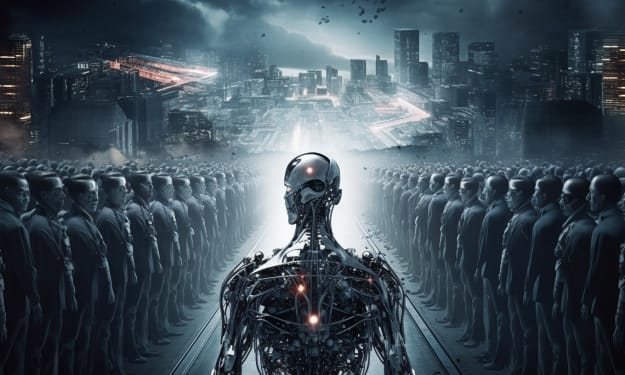
It might seem like the end of the world is nigh at times because of catastrophic storms, the refugee crisis, and the genuine fear of nuclear war. But what are the biggest problems facing mankind, and is there anything we can do to avert them?
By Mariam Fathalrahman2 years ago in History
New Discovery in Egypt Scared Scientists. AI-Generated.
Gruesome Discovery in Egypt The Eerie Find A chilling discovery from Egypt a few years ago has captivated the world. Archaeologists unearthed 16 human hands buried meticulously in four eerie pits. Initially, these hands seemed unusual due to their abnormally large size, but the most peculiar detail was that all of them were right hands—no left hands were found.
By Adebayo Mahmud2 years ago in History
From Struggle to Success: How I Changed My Life with a Single Story
I'll never forget the day I stumbled upon the secret to earning substantial money online. I was struggling to make ends meet, working multiple jobs just to keep a roof over my head and food on the table. But everything changed when I discovered the power of storytelling.
By Ahmad Muhammad Buhari2 years ago in History
History of india
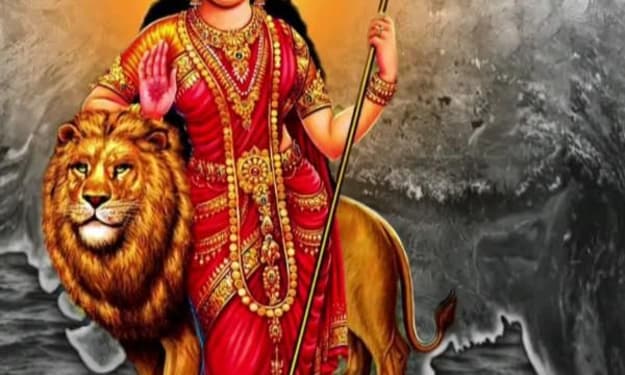
## THE HISTORY OF INDIA: A JOURNEY THROUGH TIME India, a land of incredible diversity, has a history that stretches back thousands of years. Its story is one of rich cultural heritage, dynamic empires, religious developments, and significant contributions to science, art, and philosophy. The history of India is a tapestry woven with the threads of many civilizations, each contributing to the country's unique identity. ### PREHISTORIC AND ANCIENT INDIA The history of India begins with the emergence of the first known civilizations in the region, dating back to the Indus Valley Civilization around 2500 BCE. This Bronze Age civilization, located in what is now Pakistan and northwest India, was one of the world's earliest urban cultures. The cities of Harappa and Mohenjo-Daro were noted for their advanced urban planning, impressive architecture, and sophisticated system of weights and measures. The decline of the Indus Valley Civilization around 1900 BCE coincided with the arrival of the Indo-Aryans, who migrated into the Indian subcontinent from Central Asia. This period, known as the Vedic Age (1500-500 BCE), is named after the Vedas, the oldest sacred texts of Hinduism, which were composed during this time. The Vedic Age laid the foundations for Indian society, religion, and culture. The caste system, which became a defining feature of Indian social organization, began to take shape during this era. ### THE RISE OF EMPIRES AND RELIGIONS The first significant empire to unify much of India was the Maurya Empire (322-185 BCE), founded by Chandragupta Maurya. Under the rule of Emperor Ashoka, the Maurya Empire reached its zenith. Ashoka, after a bloody conquest of Kalinga, converted to Buddhism and became a patron of the religion, promoting its spread throughout Asia. His reign is marked by the propagation of Buddhist values and the erection of the famous Ashokan pillars, inscribed with edicts on governance and moral conduct. Following the decline of the Maurya Empire, the Indian subcontinent saw the rise of the Gupta Empire (circa 320-550 CE), often referred to as the "Golden Age" of India. Under rulers like Chandragupta I and Samudragupta, the Gupta Empire achieved remarkable advancements in science, mathematics, astronomy, literature, and art. The concept of zero, the decimal system, and significant works in Sanskrit literature, such as Kalidasa's plays, were products of this period. Hinduism experienced a revival during the Gupta era, and many of the religious and cultural practices that define Indian society today were solidified during this time. ### MEDIAEVAL INDIA AND THE ARRIVAL OF ISLAM The fall of the Gupta Empire led to a period of fragmentation, with numerous regional kingdoms vying for power. This era saw the rise of powerful dynasties such as the Chalukyas, Pallavas, Cholas, and Rashtrakutas in the south, and the Rajputs in the north. The period was also marked by the arrival of Islam in India, beginning with the Arab conquest of Sindh in 711 CE. The establishment of the Delhi Sultanate in 1206 CE marked the beginning of Muslim rule in India. The Sultanate, ruled by a series of Turkic and Afghan dynasties, was a period of significant cultural synthesis. Persian art, architecture, and administrative practices were introduced, blending with Indian traditions to create a unique Indo-Islamic culture. The Sultans of Delhi were also instrumental in spreading Islam across the Indian subcontinent, particularly through the influence of Sufi saints. The Delhi Sultanate eventually gave way to the Mughal Empire in 1526, founded by Babur, a descendant of Timur and Genghis Khan. The Mughal Empire, under rulers like Akbar, Jahangir, Shah Jahan, and Aurangzeb, became one of the most powerful and culturally rich empires in the world. Akbar's policy of religious tolerance and his efforts to integrate Hindus and Muslims into the administration fostered a sense of unity in a diverse society. The Mughal era is also renowned for its architectural achievements, including the construction of the Taj Mahal by Shah Jahan, a symbol of India's cultural heritage. ### COLONIAL INDIA AND THE STRUGGLE FOR INDEPENDENCE The decline of the Mughal Empire in the 18th century coincided with the rise of European colonial powers, particularly the British. The British East India Company initially came to India as traders but gradually expanded its control through a combination of military conquest and political manipulation. By the mid-19th century, the British Crown had taken direct control of India, marking the beginning of the British Raj. The colonial period was a time of profound change in India. The British introduced Western education, legal systems, and infrastructure, but their policies also led to the exploitation of India's resources and the impoverishment of its people. The growing discontent with British rule culminated in the Indian Rebellion of 1857, also known as the First War of Independence. Although the rebellion was suppressed, it marked the beginning of a nationalistic movement that would eventually lead to India's independence. The late 19th and early 20th centuries saw the rise of Indian nationalism, led by figures like Mahatma Gandhi, Jawaharlal Nehru, and Subhas Chandra Bose. Gandhi's philosophy of non-violent resistance, or Satyagraha, became the cornerstone of the Indian independence movement. The struggle for independence was marked by mass protests, civil disobedience, and significant sacrifices by the Indian people. After decades of struggle, India finally achieved independence from British rule on August 15, 1947. ### POST-INDEPENDENCE INDIA The partition of India in 1947, which led to the creation of Pakistan, was a traumatic event that resulted in widespread violence and displacement. Despite these challenges, India emerged as the world's largest democracy, committed to a secular and socialist framework. The early years of independence were marked by efforts to build a self-sufficient economy, promote social justice, and maintain unity in a diverse and multi-ethnic society. Under the leadership of Prime Ministers like Jawaharlal Nehru, Indira Gandhi, and Atal Bihari Vajpayee, India made significant strides in various fields, including agriculture (through the Green Revolution), space exploration, and information technology. India also became a major player on the global stage, advocating for the rights of developing countries and promoting non-alignment during the Cold War. ### MODERN INDIA In recent decades, India has undergone rapid economic transformation, emerging as one of the world's largest economies. The liberalization of the Indian economy in the 1990s led to unprecedented growth, but also brought challenges such as income inequality and environmental degradation. India today is a nation of contrasts, where traditional practices coexist with modern technology, and ancient philosophies influence contemporary thought. India's diversity, reflected in its numerous languages, religions, and cultural practices, remains one of its greatest strengths. The country continues to grapple with complex issues such as poverty, corruption, and social inequality, but its vibrant democracy and resilient society offer hope for the future. In conclusion, the history of India is a testament to the enduring strength and adaptability of its people. From ancient civilizations to modern-day achievements, India's journey through time is a remarkable story of resilience, innovation, and cultural richness. As the nation continues to evolve, it carries forward a legacy that has shaped not only its own destiny but also the course of world history.
By Mridul Kushwah2 years ago in History
Soap2.day - Watch Movie & TV Shows Online
In the rapidly evolving landscape of online entertainment, finding a reliable and extensive source for movies and TV shows can be a challenge. Enter Soap2.day, a popular website that offers a vast array of films and television series, accessible to users worldwide. This article delves into what Soap2.day is, its features, and considerations for users.
By Elisa Smith2 years ago in History
The Death of a King
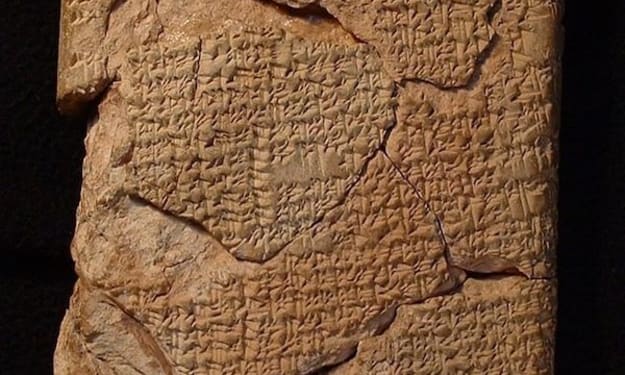
This image displays a cuneiform tablet that has been decoded by the researchers. Researchers have successfully interpreted ancient cuneiform tablets, dating back 4,000 years, which were discovered over a century ago in what is currently known as Iraq. These tablets detail how certain lunar eclipses were believed to foretell death, devastation, and disease.
By Kevin MacELwee2 years ago in History
Growing Up
In a small town nestled between rolling hills and sparkling rivers, lived a boy named Liam. He was a curious and imaginative child, always asking questions and seeking adventures. His parents often found him exploring the woods behind their home or building intricate forts out of blankets and pillows. Liam loved stories about knights, dragons, and distant lands, and he dreamed of one day embarking on grand adventures of his own.
By Kingsley Egeke2 years ago in History
Bruce Springsteen:
### Bruce Springsteen’s "Youngstown" Part 2: A Deep Dive into Industrial Decline **Introduction** In 1995, Bruce Springsteen's "Youngstown" poignantly captured the decline of the American steel industry. This blog post expands on that theme by incorporating firsthand accounts from former steelworkers and community members in Youngstown, Ohio, aiming to provide a more comprehensive understanding of the industry's collapse.
By Sunshine Firecracker™2 years ago in History