Events
Baby Queen Elizabeth II: A Royal Journey Begins
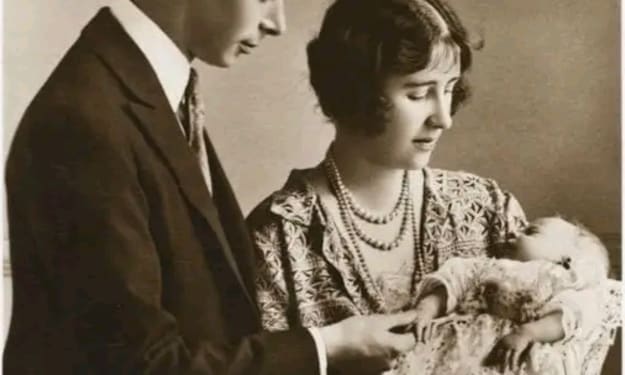
On a crisp spring day in 1926, a tiny princess was christened into the British royal family. The baby girl, named Elizabeth Alexandra Mary Windsor, was born on April 21, 1926, to the Duke and Duchess of York—later King George VI and Queen Elizabeth The Queen Mother. At her christening, no one could have predicted that this child, affectionately called Lilibet by her family, would one day become one of the longest-reigning monarchs in British history. Her journey to the throne was far from straightforward, marked by unexpected twists of fate and immense historical significance. This blog explores the early life of Queen Elizabeth II, focusing on her christening day and the pivotal events that set her on the path to the throne. A Royal Birth Princess Elizabeth was born at 17 Bruton Street, the London home of her maternal grandparents, the Earl and Countess of Strathmore and Kinghorne. The birth of the Duke and Duchess of York's first child was a joyous occasion but was not considered of great constitutional importance at the time. As the first grandchild of King George V and Queen Mary, Elizabeth was third in line to the throne, behind her uncle, Edward, the Prince of Wales, and her father, Albert, the Duke of York. It seemed highly unlikely that this baby would ever ascend the throne, as her uncle was expected to marry and have children, ensuring the continuation of the direct line of succession. The Christening of a Princess On May 29, 1926, Princess Elizabeth was christened in the private chapel at Buckingham Palace. The ceremony was officiated by Cosmo Lang, the Archbishop of Canterbury, in a traditional and intimate gathering of family members and close friends. The baby wore a replica of the royal christening gown first commissioned by Queen Victoria for her daughter in 1841. The original gown had been used for generations before being retired in 2004 to preserve it. The delicate lace and satin gown symbolized continuity and tradition in the royal family. Her names—Elizabeth, Alexandra, and Mary—paid tribute to her royal lineage. Elizabeth honored her mother; Alexandra was a nod to her great-grandmother, Queen Alexandra; and Mary was in honor of her grandmother, Queen Mary. A Childhood in the Spotlight Despite her royal status, Elizabeth's early years were relatively quiet. She and her younger sister, Margaret, who was born in 1930, enjoyed a close bond and a privileged yet sheltered upbringing. The family lived at 145 Piccadilly in London and spent time at Royal Lodge in Windsor. Elizabeth's parents were known for their strong sense of duty and commitment to their roles, and they instilled these values in their daughters. Yet, they had no reason to believe Elizabeth would one day inherit the throne. Her uncle, Edward, the Prince of Wales, was widely seen as the heir apparent, and her father, Albert, had never anticipated becoming king. The Abdication Crisis Elizabeth's destiny changed dramatically in 1936 when her grandfather, King George V, passed away. Her uncle, Edward VIII, ascended the throne, but his reign was short-lived. Edward’s decision to marry Wallis Simpson, an American divorcée, created a constitutional crisis. As the head of the Church of England, Edward VIII was unable to marry a divorced woman whose former spouses were still alive without causing a scandal. Faced with a choice between the crown and his love for Wallis, Edward chose to abdicate the throne on December 11, 1936. The abdication sent shockwaves through the monarchy and the British Empire. With Edward stepping down, Elizabeth's father, Albert, reluctantly became King George VI. Known for his quiet demeanor and struggle with a speech impediment, George VI rose to the occasion, becoming a beloved monarch during one of the most challenging periods in British history, including World War II. Elizabeth Becomes Heir Apparent With her father’s accession to the throne, 10-year-old Elizabeth became the heir presumptive. While her position in the line of succession was secure, it was not guaranteed. If her parents had a son, the male heir would have taken precedence over her under the rules of primogeniture at the time. Elizabeth took her new role seriously, receiving a tailored education to prepare her for her future responsibilities. She studied constitutional history, law, and languages under the guidance of renowned scholars. During World War II, she began taking on public duties, boosting national morale and serving in the Auxiliary Territorial Service, where she trained as a mechanic and driver. A Legacy of Service The little princess christened on that day in 1926 would grow up to become Queen Elizabeth II, ascending the throne on February 6, 1952, after the untimely death of her father. Her reign spanned seven decades, encompassing immense social, political, and technological change. Elizabeth’s early life, shaped by unexpected turns of fate, prepared her for a lifetime of service. The values of duty, resilience, and adaptability instilled in her by her parents would guide her through the challenges of her reign. Conclusion Queen Elizabeth II’s christening day was a moment of tradition and celebration, set against the backdrop of an uncertain future. At the time, no one could have foreseen the profound impact this baby would have on British and global history. From her unexpected rise to the throne to her record-breaking reign, Queen Elizabeth II’s life remains a testament to the enduring strength and adaptability of the British monarchy. Her story, rooted in that spring day in 1926, is one of resilience, duty, and devotion to her people.
By Deji Akomolafe2 years ago in History
The Unyielding Resolve: George Rogers Clark’s Campaign to Capture Fort Sackville
The American Revolutionary War was not just a conflict fought in the established colonies along the Atlantic seaboard. It was also a struggle for control over the vast and wild western frontier. In this critical arena, George Rogers Clark emerged as a key figure, leading a daring and grueling campaign to capture Fort Sackville in Vincennes, Indiana, in February 1779. Without this pivotal fort, American control of the Illinois Country would have crumbled, and British-aligned Native American incursions into Kentucky would have continued to devastate the fledgling settlements. Clark’s extraordinary 200-mile march to Fort Sackville, carried out through freezing, flooded terrain, represents a moment of incredible hardship, determination, and strategic brilliance. This campaign not only showcased the grit of Clark and his men but also underscored the importance of securing the western frontier for the American cause. The Strategic Importance of Fort Sackville Fort Sackville, located in the small frontier town of Vincennes, was a key British stronghold in the Illinois Country. Its position gave the British a critical foothold to project power over the western territories, enabling them to support Native American allies in their raids on American settlements in Kentucky and beyond. For George Rogers Clark, securing Fort Sackville was essential to his broader campaign of controlling the Illinois Country. Having already captured Kaskaskia and Cahokia, Clark understood that holding Vincennes would consolidate American dominance in the region, disrupt British alliances with Native tribes, and secure vital resources and territory for the new nation. The Brutal March to Vincennes Clark’s men began their journey from Kaskaskia in early February 1779, embarking on a trek that would test the limits of human endurance. The path to Vincennes was a roadless expanse of swamps, rivers, and flooded plains, exacerbated by heavy rains and melting snow. The challenges were immense. Rivers and streams overflowed their banks, turning the terrain into a spongy, waterlogged nightmare. Clark’s men were forced to wade through icy waters that reached up to their chests, carrying their weapons and supplies above their heads. Nights were spent lying on wet ground, their clothes soaked through, with no fire to warm them or food to sustain their strength. Temperatures hovered near freezing, and morale was pushed to its breaking point. Despite these conditions, Clark’s leadership and determination kept his men moving forward. He motivated them not just with the promise of victory but with the understanding of the stakes: the survival of the frontier settlements and the success of the American cause in the West. The Siege of Fort Sackville Clark and his men arrived near Vincennes on February 23, 1779, after more than two weeks of unimaginable suffering. Their arrival was a surprise to the British garrison, which had assumed no force could navigate the flooded terrain in winter. Clark, recognizing the importance of psychological warfare, devised a plan to make his small force appear larger than it was. His men marched and counter-marched around the fort, displaying multiple flags and firing volleys to create the illusion of a much larger army. The ruse worked. The British commander, Lieutenant Governor Henry Hamilton, known as the "Hair Buyer" for his alleged practice of paying for American scalps, was caught off guard. Clark demanded the unconditional surrender of the fort, emphasizing that any resistance would result in the destruction of Hamilton's forces. The standoff ended quickly. On February 25, 1779, Hamilton and his men surrendered Fort Sackville to Clark. The victory was achieved without the use of artillery and despite the American force being vastly outnumbered. The Aftermath and Significance The capture of Fort Sackville was a turning point in the Revolutionary War’s western theater. It solidified American control over the Illinois Country, disrupted British operations in the region, and bolstered American alliances with Native tribes willing to support the revolutionary cause. For George Rogers Clark, the victory cemented his reputation as one of the war’s most resourceful and determined commanders. His campaign demonstrated the importance of unconventional warfare and the strategic value of the western frontier in the broader conflict. On a larger scale, the success at Fort Sackville had significant implications for the eventual peace negotiations. The American victory in the West ensured that the newly established United States could claim vast territories beyond the Appalachian Mountains in the Treaty of Paris (1783), shaping the nation’s expansion and future development. Reflections on Sacrifice and Endurance The suffering endured by Clark’s men during their march to Vincennes is almost impossible to quantify. Starvation, hypothermia, and exhaustion were constant companions, yet these men pressed on with unwavering resolve. Their determination was driven not just by loyalty to their commander but by a shared understanding of the greater purpose they served. Clark’s campaign to capture Fort Sackville stands as a testament to the grit, ingenuity, and sacrifice that defined the American Revolutionary War. It reminds us that the fight for independence was waged on multiple fronts, often in conditions of extreme hardship. Conclusion The march to Fort Sackville and its subsequent capture by George Rogers Clark and his men is a story of extraordinary endurance and strategic brilliance. It highlights the resilience of the human spirit in the face of adversity and the critical role of the western frontier in securing American independence. Today, Fort Sackville is part of the George Rogers Clark National Historical Park, preserving the memory of this remarkable campaign. Visitors can walk the grounds where Clark and his men achieved their improbable victory, reflecting on the sacrifices that helped shape the course of a nation.
By Deji Akomolafe2 years ago in History
1,000 Days of War
Cartoon explainer: The rockets are labeled with the Russian words that Putin consistently uses to describe his goals for the Ukrainian war: denazification, demilitarization of Ukraine and protection of civilians in Eastern Ukraine. The last rocket has its true goal - "re-Sovietization."
By Lana V Lynx2 years ago in History
"The Hidden Lifeline: Unveiling the Advantages of Libya’s Underground Water Resources"
The Advantages of Libya’s Underground Baptize Resources Libya, one of the best barren nations in the world, owes abundant of its adaptation to its underground baptize resources. In a country area condensate is deficient and apparent baptize about non-existent, the all-inclusive aquifers hidden below the arid bank accommodate a basal lifeline. These underground reservoirs, primarily the Nubian Sandstone Aquifer System and others like the Kufra and Murzuk Basins, accept enabled Libya to advance admitting its acrid environment. This commodity explores the advantages of Libya’s underground baptize assets and their role in the country’s economic, social, and ecology development. 1. A Basal Antecedent of Freshwater
By Say the truth 2 years ago in History
Unraveling the Secrets of Ancient Egypt
Welcome to the intriguing realm of Ancient Egypt, renowned as one of history's most iconic and thoroughly studied civilizations. Even with extensive research and numerous archaeological findings, Egypt remains a source of fascination for historians and enthusiasts. In this article, we will delve into the origins, societal structure, religious beliefs, and lasting legacy of this extraordinary civilization, examining the pivotal phases that contributed to its enduring impact on the world. The origins of Ancient Egypt can be traced back to approximately 5,500 BCE during the Predynastic Period. During this era, Northeast Africa was characterized by a verdant savanna, where various tribes thrived by taking advantage of the region's rich resources. As the climate shifted towards aridity, these groups began to migrate to the fertile Nile Valley, setting the stage for one of the most sophisticated agricultural societies of the ancient world.
By A História2 years ago in History
The Anglo-Saxon Settlement of Britain: A Turning Point in History
In 410 AD, as the Roman Empire retreated from Britain, a significant and transformative migration began. Germanic tribes, particularly the Anglo-Saxons, started settling in the fertile lands of the island. This migration not only reshaped the demographic and cultural makeup of Britain but also left a lasting imprint on its language, traditions, and place names. Among the most notable legacies of this period is the naming of "Wales" and the term "Welsh," both of which stem from Germanic words meaning "strangers" or "foreigners." The story of the Anglo-Saxon settlement and its impact on the native Celtic peoples of Britain is a tale of displacement, cultural transformation, and the forging of a new identity for the island. --- The Context of Anglo-Saxon Migration The departure of the Romans in 410 AD marked the end of an era of centralized governance and infrastructure in Britain. The island, which had been part of the Roman Empire for nearly four centuries, was left vulnerable to external invasions and internal strife. Without the Roman legions to defend them, the Britons faced increasing pressure from northern tribes like the Picts and Scots, as well as seafaring raiders from across the North Sea. It was in this climate of instability that the Anglo-Saxons arrived. Comprising various Germanic tribes, including the Angles, Saxons, and Jutes, these newcomers were initially invited as mercenaries to help defend Britain from external threats. However, they soon began settling the land themselves, establishing control over large swathes of territory and pushing the native Celtic population to the peripheries of the island. --- The Displacement of the Celtic Britons As the Anglo-Saxons established their dominance in Britain, the native Celtic Britons were gradually displaced from their ancestral territories. This displacement was not a sudden event but rather a gradual process that unfolded over several centuries. The Anglo-Saxons settled primarily in the fertile lowlands, where they established new villages, towns, and kingdoms. Meanwhile, the Celtic Britons retreated to the mountainous and less accessible regions of the island, such as modern-day Wales, Cornwall, and Scotland. This movement of peoples led to the creation of distinct cultural and linguistic regions in Britain. The Celtic Britons retained their own languages, such as Welsh, Cornish, and Cumbric, which were derived from the earlier Brythonic language. In contrast, the Anglo-Saxons brought their Germanic dialects, which eventually evolved into Old English. The linguistic divide between these two groups would shape the cultural landscape of Britain for centuries to come. --- The Origin of "Wales" and "Welsh" One of the most enduring legacies of the Anglo-Saxon settlement is the naming of Wales and the Welsh people. The Anglo-Saxons referred to the Celtic Britons as "wealas," a term derived from the Old English word for "foreigners" or "strangers." This reflects the Anglo-Saxon perspective of the Celtic Britons as an alien population, despite their deep historical roots in the land. The term "wealas" eventually gave rise to the modern English name "Wales" and the adjective "Welsh." Ironically, the Celtic Britons were the original inhabitants of the island, yet they were labeled as outsiders by the Anglo-Saxon settlers. This linguistic legacy highlights the power dynamics of the period and the cultural dominance of the Anglo-Saxons in shaping the narrative of Britain’s history. --- The Cultural and Political Transformation of Britain The arrival of the Anglo-Saxons did not merely displace the Celtic Britons—it also brought about a profound cultural transformation. The Anglo-Saxons introduced their own customs, laws, and religious practices, many of which became foundational to English identity. Pagan beliefs dominated in the early years of settlement, but by the 7th century, the Anglo-Saxons had largely converted to Christianity, blending their traditions with those of the Celtic Church. Politically, the Anglo-Saxons established a patchwork of kingdoms, including Wessex, Mercia, and Northumbria, each vying for supremacy over the others. These kingdoms laid the groundwork for the eventual unification of England in the 10th century. The influence of Anglo-Saxon governance, with its emphasis on local rule and tribal loyalty, can still be traced in aspects of English law and culture today. --- The Enduring Legacy of the Celtic Britons While the Anglo-Saxons dominated much of Britain, the Celtic Britons retained their identity and culture in the regions to which they retreated. In Wales, for example, the Welsh language and traditions have endured for over a millennium, serving as a living testament to the resilience of the Celtic people. The term "Welsh," once used to mark the Britons as outsiders, has been reclaimed as a badge of cultural pride. Today, Wales celebrates its unique heritage through its language, literature, and festivals, such as the Eisteddfod, which showcases Welsh music and poetry. Similarly, the Cornish language has seen a revival in recent years, and Scotland continues to embrace its Gaelic traditions. --- Conclusion: A Story of Displacement and Resilience The Anglo-Saxon settlement of Britain in 410 AD was a turning point in the island’s history. It marked the beginning of a new cultural era, one in which the native Celtic Britons were pushed to the margins of their own land. Yet, despite the displacement and cultural dominance of the Anglo-Saxons, the Celtic peoples of Britain preserved their identity and traditions, leaving an indelible mark on the island’s history. The names "Wales" and "Welsh," rooted in the Anglo-Saxon perception of the Britons as foreigners, serve as a reminder of this complex and layered history. They reflect not only the divisions of the past but also the enduring strength of the Celtic identity in the face of adversity. As we look back on this pivotal period, we gain a deeper appreciation for the resilience of the Celtic Britons and the profound cultural transformations that shaped the Britain we know today.
By Deji Akomolafe2 years ago in History
The First Automotive Accident in the World: Historical Incident in Transport Modes
The first known car accident occurred in 1771. Modern road safety and automobile engineering as we know it today has only one particular day to its past. And that was the steam-powered tractor designed by Nicolas-Joseph Cugnot, the first automobile, crashing on the streets of Paris. It is rather difficult to imagine an automobile accident in a time when cars such as we understand them did not exist. Actually, the steam contraption, invented by Cugnot was one of the crucial moments in modern history. And the accident, though minor, became an historical event.
By Abhay kumar chauhan2 years ago in History
Ukrainian Theatre - Nationalism and the Nationalist Theatre
Early on in her book Theatre & Nation, Nadine Holdsworth draws from a number of sociologists and theorists to define three key terms: nation, nationalism, and national identity. These are important terms to be distinguished; after all, the purview of this essay is Ukrainian theatre of national identity. Whether or not this can be conflated with Ukrainian nationalist theatre is a matter of connotation. If, as for many, the term nationalism conjures up images of Nazi Germany, Stalinist Russia, or Trumpist America—all of which have negative connotations—then it may be uncomfortable to ascribe the word nationalist to Ukrainian theatre. After all, if it earned condemnation from the Ukrainian Communist Party, to the point of Kulish’s banishment, arrest, and eventual execution, then it must have been disruptive to some utopian vision that the USSR wanted to achieve.
By Steven Christopher McKnight2 years ago in History
The After life Preparation of Egyptian King
Preparation for the Afterlife The adventure to the afterlife was apparent as abounding with challenges and tests, and alone those who were abundantly able would succeed. For Pharaohs, this alertness was decidedly elaborate, involving both concrete and airy elements. The concrete anatomy had to be preserved, arch to the convenance of mummification. The age-old Egyptians believed that the canning of the anatomy was capital for the soul's adaptation in the afterlife. Without an complete body, the king's ka (vital essence) would be clumsy to acknowledgment to it, authoritative abiding activity impossible.
By Say the truth 2 years ago in History
Real Estate Development in Karachi: A Useful Guide
Did you know that Habib Bank Plaza was the tallest building in Pakistan for over four decades until it was surpassed by MCB Tower in 2005? For many years, the Ruet-e-Hilal committee used this iconic building for moon sightings.
By ALI BUILDERS AND DEVELOPERS2 years ago in History
10 Miraculous Breakthroughs Shattering Incurable Disease Barriers. AI-Generated.
For decades, certain diseases have cast a long shadow, deemed untreatable and leaving patients with limited hope. But recent advancements in medical research are challenging these notions, offering groundbreaking therapies that rewrite the narrative on once-incurable illnesses. This article explores 10 of the most remarkable breakthroughs that are revolutionizing treatment for these seemingly insurmountable conditions.
By David Andrews2 years ago in History
The Enduring Mystery of the Somerton Man: A Beachside Enigma
The year is 1948. Adelaide, Australia basks under the summer sun. Yet, a stark discovery on Somerton Beach casts a long shadow of intrigue. A man, unidentified to this day, lies lifeless, his death shrouded in mystery. This is the story of the Somerton Man, a case that continues to tantalize and baffle investigators over seven decades later.
By David Andrews2 years ago in History