Events
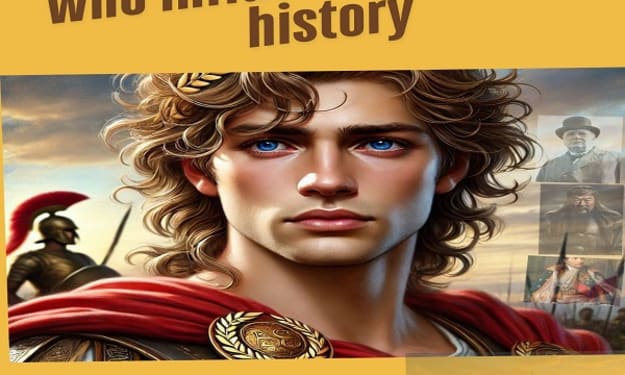
Meet 6 Leaders Who Influenced Human History
Meet 6 Leaders Who Influenced Human History Throughout the annals of human civilization, certain leaders have risen above the fray to leave indelible marks on history. Their visions, actions, and sometimes even their flaws have shaped the destinies of nations and the course of human events. From the ancient battlefields of empires to modern struggles for justice and equality, these lea
By Abdelhadi elbakkali2 years ago in History
Saturday Night 2024 Movie Review: Bold, Beautiful, and Beyond Expectations!
Introduction: The world of cinema is always brimming with new films that promise to make a lasting impact. But once in a while, a movie comes along that not only meets but exceeds every expectation. That film is Saturday Night 2024. With a buzz that began long before its official release, this movie has captivated audiences with its boldness, beauty, and cinematic mastery. In this review, we’ll take a deep dive into every aspect of Saturday Night 2024, exploring how it has redefined modern filmmaking. From its stunning visuals to its emotional depth, Saturday Night 2024 is a film that goes beyond what anyone could have expected.
By QuirkTales2 years ago in History
Why We Celebrate Black History Month
It’s Black History Month, y’all! Let’s celebrate! Every February, we honor the achievements, history, and resilience of Black Americans — but Black History Month is so much more than a moment of recognition. It’s a time to correct historical omissions, challenge false narratives, and empower future generations with the truth.
By Jade Shines Light2 years ago in History
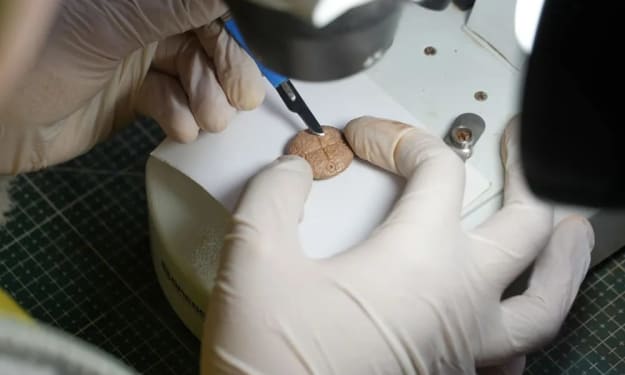
Ancient Strategy Games of Roman Soldiers The Fascinating Discovery of Bone Tokens in Hadrianopolis.
Ancient Strategy Games of Roman Soldiers The Fascinating Discovery of Bone Tokens in Hadrianopolis. The Roman civilization was not only known for its grand architecture powerful armies and advanced legal systems but also for its recreational activities intellectual exercises and strategy based games. For Romans games were not just a pastime they were an essential means of mental training tactical thinking and strategic planning. During the Roman era various types of games were popular including physical sports gambling and board games based on strategy. For soldiers stationed in military camps and fortresses such games were indispensable as they helped sharpen their intelligence strategic skills and decision making abilities.
By Adnan Rasheed2 years ago in History
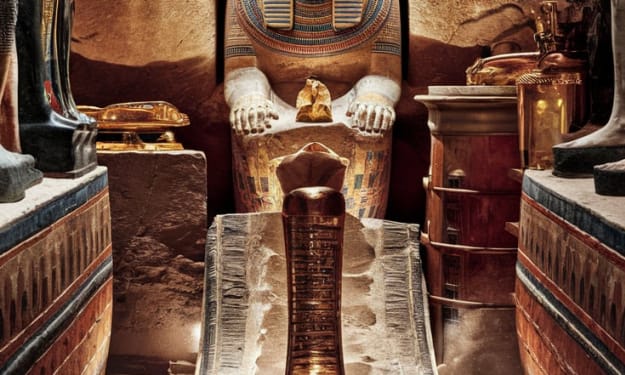
The Life of Tutankhamun
Tutankhamun, one of the most famous pharaohs of ancient Egypt, has fascinated historians and archaeologists for decades. His nearly intact tomb, discovered in 1922 by Howard Carter, revealed a treasure trove of artifacts that provided invaluable insights into Egypt’s 18th Dynasty. This book explores his life, reign, and the mystery surrounding his death.
By Nada soliman2 years ago in History
The Enigmatic Origins of the Israelites
The quest for origins has always been a driving force for humanity. From the dawn of consciousness, humans have sought to answer the fundamental question: Where do we come from? For many, the answer lies in a blend of myth, history, and faith. Among the most fascinating and enduring stories of origin is that of the Israelites, a people whose legacy has shaped the course of history, religion, and culture. Their story is one of mystery, resilience, and transformation, woven together by ancient texts, archaeological discoveries, and the enduring power of belief.
By A História2 years ago in History
The Afterlife of Socrates: Martyrdom, Philosophy, and the Amount of Truth
Athens in Crisis: The Accomplishments of a Trial The balloon of Socrates abundant adjoin a accomplishments of war, plague, and political upheaval. Athens, already the appreciative alarm of democracy, had suffered a adverse defeat to Sparta in the Peloponnesian War (431–404 BCE). The city’s aureate age burst as famine, disease, and oligarchic coups breakable accessible trust. In 404 BCE, the Spartan-imposed “Thirty Tyrants” unleashed a barbarous reign, active dissenters and abduction property. Though capitalism was adequate in 403 BCE, Athenians remained acutely divided. Socrates, again 70, had continued been a polarizing figure. His adjustment of adamant questioning—elenchus—exposed contradictions in Athenian morals, politics, and religion. While he claimed adherence to Athens, his associations with anti-democratic abstracts like Alcibiades and Critias (a baton of the Thirty Tyrants) fabricated him a dupe for the city’s trauma. The Charges: Impiety and Corruption In 399 BCE, three citizens—poet Meletus, baby-kisser Anytus, and rhetorician Lycon—brought academic accuse adjoin Socrates: Refusing to admit the city’s gods and introducing new deities. Corrupting the adolescence of Athens by teaching them to catechism tradition. These accusations stemmed from Socrates’ abstruse activity. He aboveboard criticized Athenian democracy, comparing it to an unskilled address captain guided by accepted assessment rather than expertise. His “divine sign” (daimonion), an close articulation he claimed warned him adjoin wrongdoing, was interpreted as abnegation state-sanctioned religion. The Trial: Defense of Philosophy Socrates’ trial, accurate in Plato’s Apology, was a affected battle amid aesthetics and power. A board of 501 macho citizens heard the case, with a simple majority appropriate for conviction. Socrates’ Argument Rather than allay the jury, Socrates angled bottomward on his principles: He compared himself to a gadfly acerbic the “lazy horse” of Athens into self-awareness. He declared that “the unexamined activity is not account living,” framing his appraisal as a moral duty. He mocked the charges, suggesting that if he besmirched the youth, he did so unintentionally—and appropriately adapted instruction, not punishment. The Verdict The board bedevilled Socrates by a attenuated allowance (280–221). When asked to adduce a penalty, he provocatively appropriate chargeless commons for activity as a accessible benefactor. Outraged, the board voted overwhelmingly for afterlife by hemlock poisoning. Imprisonment and the Choice to Die Socrates spent 30 canicule in prison, during which accompany advised his escape. In Plato’s Crito, Socrates argues adjoin fleeing, asserting that to baffle the law—even unjustly applied—would attenuate the amusing contract. For him, moral bendability outweighed self-preservation. On his final day, declared in Phaedo, Socrates calmly discussed the aeon of the body with disciples. When the apache handed him the hemlock, he drank it willingly. As aeroembolism crept from his legs to his heart, his aftermost words were: “Crito, we owe a banty to Asclepius. Do not balloon to pay the debt.” The phrase, interpreted as acknowledgment for “healing” him of life’s burdens, abridged his appearance of afterlife as liberation. Controversies and Actual Debates Socrates’ afterlife raises constant questions: Was the Balloon Politically Motivated? While the accuse were religious, advisers altercate Anytus, a autonomous leader, targeted Socrates to abolition debris of the Thirty Tyrants’ influence. Did Socrates Seek Martyrdom? His aggressive accent suggests he accustomed afterlife to adhesive his legacy. Yet Plato portrays him as accommodated to fate, not suicidal. Historical Accuracy of Plato’s Account Plato’s dialogues are abstruse dramas, not transcripts. Rival accounts, like Xenophon’s, downplay Socrates’ antagonism, implying Plato amplified his heroism. Legacy: The Birth of Western Philosophy Socrates’ afterlife became the cornerstone of his legacy: Plato’s Transformation The beheading disillusioned Plato with democracy, alarming The Republic and his academy, which shaped Western anticipation for millennia. A Model of Civil Disobedience Figures like Thoreau, Gandhi, and Martin Luther King Jr. drew on Socrates’ abnegation to accommodation attempt beneath accompaniment pressure. The Paradox of Chargeless Inquiry Socrates died for allurement questions in a association that admired chargeless speech—a cautionary account about the banned of tolerance. Modern Relevance: Accuracy in an Age of Cynicism In an era of misinformation and brainy polarization, Socrates’ afterlife challenges us to reflect: How do societies antithesis bone with stability? Can autonomous institutions bear adamant critique? What amount are we accommodating to pay for truth? His affliction reminds us that aesthetics is not an abstruse exercise but a abolitionist act—one that can agitate ability and appeal sacrifice. Conclusion: The Unanswered Question Socrates’ afterlife is not alone a actual accident but a active dialogue. Was he a destructive blackmail or a saint of reason? A victim of Athenian avengement or an columnist of his own fate? In allotment hemlock over hypocrisy, he affected altruism to accost the amount of integrity. His final lesson—that acumen begins with acceptance ignorance—echoes beyond ages, advancement us to question, to challenge, and to dare.
By Say the truth 2 years ago in History
"The Hidden Tomb of Alexander the Great"
"The Hidden Tomb of Alexander the Great: Unraveling the Abstruseness of the Absent Emperor's Final Comatose Place" Alexander the Abundant is acclaimed for his amazing aggressive conquests and the all-inclusive authority he congenital by the age of 32. His bequest is alloyed into the bolt of apple history, yet one of its best constant mysteries is the area of his final comatose place. Despite centuries of speculation, the hidden tomb of Alexander the Abundant has never been actually found, abrogation historians, archaeologists, and abundance hunters to allotment calm clues from age-old texts, broadcast relics, and legends. This commodity explores the history surrounding Alexander’s tomb, the theories about its location, and the abstruse appulse its analysis would accept on our compassionate of one of history’s greatest figures. The Actual Context Alexander the Great, built-in in 356 BCE in Pella, Macedonia, boarded on an aberrant aggressive attack that adapted the accepted world. By acquisition the Persian Authority and all-encompassing as far as India, he accustomed an authority that continued from Greece to Egypt and into Asia. However, afterwards his abortive afterlife in Babylon in 323 BCE, his all-inclusive authority bound burst amid his generals, accepted as the Diadochi. This analysis of ability led to decades of infighting and the closing dissolution of the unified authority he had built.
By Say the truth 2 years ago in History
The Hidden Treasure of the Mughal Empire: A Legacy of Opulence and Mystery
Historical Background of the Mughal Empire The Mughal Empire was founded in 1526 by Babur, a descendant of Timur and Genghis Khan, who invaded India and established a dynasty that would last over three centuries. The empire reached its zenith under Emperor Akbar, whose reign marked significant military conquests and the consolidation of a vast territory stretching from modern-day Pakistan to Bangladesh and parts of India. His successors, particularly Jahangir and Shah Jahan, further enhanced the empire’s wealth, commissioning grand architectural projects such as the Taj Mahal, which not only symbolized their power but also their opulent tastes. The Mughal rulers developed sophisticated administrative and economic systems. They encouraged trade, both inland and with foreign lands via the Indian Ocean, which brought in spices, textiles, precious stones, and gold. This economic framework, coupled with the empire’s agricultural surplus and artisanal excellence, resulted in vast accumulations of wealth, much of which was stored in the form of gold and silver bullion, jewels, ornate artifacts, and luxury goods. Sources of Mughal Wealth 1. Conquests and Tribute Military campaigns were a major source of wealth for the Mughal Empire. As the Mughals expanded their territory, conquered regions were forced to pay tribute, which often included large amounts of precious metals and gemstones. The spoils of war added significantly to the royal treasury, and many of these treasures were kept in state treasuries or hidden away to protect them from plunder by rivals. 2. Trade and Commerce The Mughal Empire was strategically located along critical trade routes, connecting Asia, Europe, and Africa. The empire's ports facilitated the export of luxurious goods such as silk, spices, and precious stones. In return, gold and silver flowed into the empire, further enriching its coffers. European travelers and merchants often marveled at the wealth they encountered, leaving behind detailed accounts that attest to the lavish treasures of the Mughal court. 3. Agriculture and Artisanal Production Agriculture formed the backbone of the Mughal economy. Fertile lands in the Gangetic plains produced surplus crops, which were taxed to finance the empire's military and administrative expenditures. Additionally, the Mughal court patronized various forms of art and craftsmanship. The production of fine textiles, intricate jewelry, and detailed metalwork not only added cultural value but also contributed to the economic prosperity of the empire. The Nature of the Mughal Treasure The lost treasure of the Mughal Empire is not a single cache of wealth but rather a collection of opulent assets that were dispersed over time. Key components of this treasure include: Gold and Silver Bullion: Large quantities of precious metals were amassed, serving as both a store of value and a medium of exchange. Jewelry and Gemstones: The Mughals were famous for their exquisite jewelry, crafted from gold and studded with precious stones such as diamonds, rubies, emeralds, and sapphires. Imperial Artifacts: These include intricately carved statues, ornate weapons, and ceremonial objects that exemplified the empire's artistic achievements. Architectural Treasures: Grand palaces and monuments, although many have been looted or deteriorated over time, were originally adorned with gold leaf, precious inlays, and intricate carvings. Textiles and Luxury Goods: Fine silk, embroidered garments, and other luxurious items were also part of the imperial treasure, symbolizing the sophisticated tastes of the Mughal court.
By Say the truth 2 years ago in History
Philadelphia Plane Crash 2025
On the morning of March 15, 2025, a tragic plane crash occurred near Philadelphia International Airport, shocking the nation. The passenger plane, Flight 287, was on its way from Chicago to Philadelphia when it experienced technical difficulties. Despite the pilot's efforts to make an emergency landing, the aircraft crashed just a few miles away from the airport.
By Farhan Sayed2 years ago in History