Events
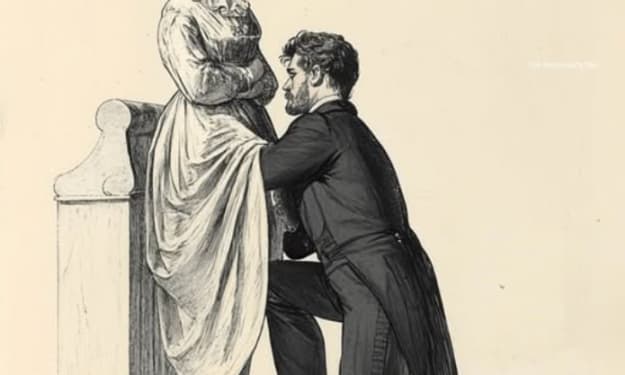
From Misunderstanding to Modern Understanding of Women's Health
The Evolution of Hysteria A term once so ubiquitous in both medical and societal discourse regarding women, serves as a potent example of the misconceptions and biases that have plagued the history of women's health.
By Rohitha Lanka2 years ago in History
Echoes of the Peninsula
The Korean Peninsula, renowned for its stunning scenery and deep cultural roots, currently represents both harmony and discord. Globally recognized for its innovations in technology, vibrant pop culture, and critical geopolitical role, Korea's narrative is marked by endurance, strife, and change. To fully grasp the contemporary essence of Korea, it is essential to trace back thousands of years to an era when the peninsula was home to ancient civilizations, well before the contemporary separation of North and South.
By A História2 years ago in History
Camille Monfort
History abounds with mysterious characters whose lives make reality and myth seem interchangeable. Among them is Camille Monfort, one of France's great opera singers whose name is eternally associated with Belém, Brazil's Amazonian city. Legendary for her looks, otherworldly voice, and unconventional life, Camille became the subject of a chilling tale one that speaks of vampirism and immortality.
By Dumpling Pumpkin2 years ago in History
Japan's Greatest Swordsman and the Fight That Killed Him
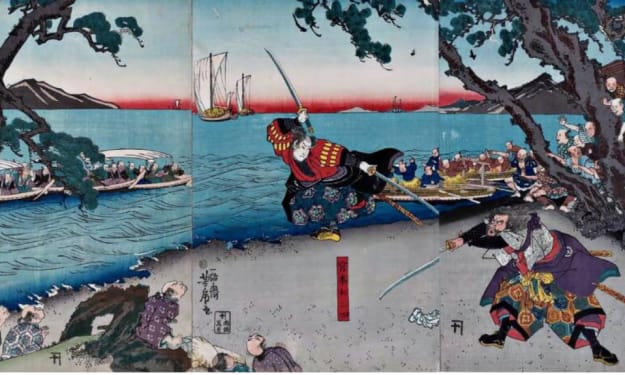
The Epic Rivlry That Helped Define Jananese Martial Arts History Though Japanese history boasts colorful accounts of warriors whose martial prowess and bravery can transcend the ages, few tales are as legendary as that of Sasaki Kojiro.
By Rohitha Lanka2 years ago in History
The Hola Massacre
Hola Exile Camp was in an arid, mosquito-infested area in the East of the colony near Garissa. By March 1959, it held about 1000 hardcore detainees some of whom had been brought in from Mageta Island where they had participated in a major riot. On March 3rd 1959, 88 of the Hola detainees were marched outdoors for the day’s labour which they refused to do. They politely stated that they were liberation detainees and not prisoners meaning they did not have to work. While this was true in the years prior, the ‘Cowan Plan’ was now in effect empowering the guards to compel them to work if need be.
By HINGES OF TIME2 years ago in History
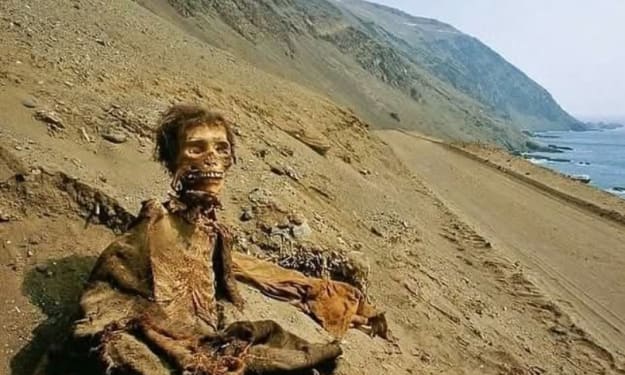
An Ancient World Through the Eyes of Wonderfully Preserved Mummies
Such stories are usually the work of journalists or scientists working on their own remits. Leave it to Science on the BBC Radio to examine how they came to be by introducing the mysterious Chinchorro mummies of the Atacama Desert.
By Rohitha Lanka2 years ago in History
Echoes of the Past
As soon as we acquire the skills of speaking, reading, and writing, we become intricately connected to the cultural tapestry of our homeland. The myths, traditions, and values of our forebears become integral to our identity, influencing our perspectives and understanding of the world. In contemporary times, what is often referred to as Western culture is a rich amalgamation of diverse traditions, yet its roots can be traced back to one ancient civilization: Rome. The narrative of Rome's ascent is not merely one of military triumph and authority; it is a profound story of mythology, aspiration, and the lasting impact of a city that would ultimately shape the known world.
By A História2 years ago in History
The Power of Self-Editing: A Writer's Epiphany
What is Self-Editing? At its core, self-editing is the process of revising your own work to improve clarity, coherence, style, and accuracy. Unlike initial drafts that are often raw and filled with imperfections, self-editing is about refining and polishing those ideas. It involves analyzing everything from sentence structure to word choice, pacing, and overall flow.
By Malik Kashif2 years ago in History
Historic Study Finds Signs of Soul Departing Body at Death
New Scientific Discoveries have come up with surprising new evidence that can provide more insight about what happens to us after death. Experts believe that brain activity in the last moments near death has shown that something intangible could leave the body perhaps the 'soul' in the final moments of life. A rare study on the very nature of consciousness and brain waves among dying patients reveals this radical conclusion.
By Rohitha Lanka2 years ago in History