Events
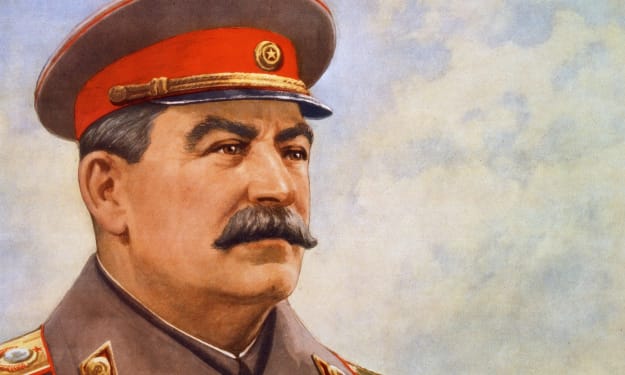
Forgotten History: Holodomor Famine.
When you think of the USSR, you probably think of industrialization, dull coloured apartment blocks usually consisting of buildings with only 4 floors, a powerhouse of a country, and probably a lot of red. It’s no secret that the 22.4 million square kilometre nation that has now become 15 independent countries, was a force to be reckoned with throughout most of the 20th century. Following the March 1917 revolution, the land mass would originally be split into 4 regions: Russian Soviet Federated Socialist Republic, Transcaucasian Soviet Federated Socialist Republic, and the Belorussian and Ukrainian Soviet Socialist Republics. The 4 socialist republics would band together in late December of 1922 to form the Union of Soviet Socialist Republics, USSR for short.
By Jacob Newson2 years ago in History
"Elon Is The Biggest Welfare Queen On The Planet": The Internet Is Fed Up With Elon Musk's Hypocrisy
Introduction Elon Musk, the billionaire CEO of Tesla and SpaceX, has long positioned himself as a self-made entrepreneur, a champion of free markets, and an outspoken critic of government intervention in the economy. Yet, his companies have benefited from billions of dollars in government subsidies, tax breaks, and contracts. Recently, a growing chorus of critics online has taken issue with Musk's hypocrisy, pointing out that he may be one of the largest beneficiaries of government support while simultaneously deriding public assistance for others.
By Sohel Tanvir2 years ago in History
Starmer welcomes EU moves to boost defence spending
In a strategic response to mounting global tensions, Sir Keir Starmer, the leader of the UK’s Labour Party, has expressed strong support for the European Union's recent initiatives aimed at boosting defense spending. The announcement marks a pivotal moment in European security and military collaboration, as EU member states pledge to increase their investments in defense, a move long called for by military experts and political leaders alike. Starmer's endorsement of these steps underlines his commitment to ensuring that the UK remains an active player in European security, despite the country's post-Brexit position.
By Rikta Akter2 years ago in History
Researchers Map 7,000-Year-Old Canal System of the World’s Oldest City
Researchers Map 7,000-Year-Old Canal System of the World’s Oldest City In a groundbreaking discovery archaeologists and geologists have successfully mapped a vast and intricate irrigation canal system that once sustained the ancient city of Eridu widely considered the world's oldest city. Located in present day southern Iraq Eridu was founded around 5,400 BC and was a crucial part of early Sumerian civilization. This recent research offers unprecedented insight into how the city's inhabitants engineered and maintained a sophisticated water management system allowing them to thrive in an otherwise arid environment. While traces of these canals were previously known this is the first time that scientists have successfully tracked the entire network revealing a well preserved irrigation system that played a vital role in sustaining agriculture and urban life. This discovery provides new evidence of the ingenuity of the ancient Sumerians and how they harnessed their environment to build a civilization that influenced future societies.
By Adnan Rasheed2 years ago in History
The Forgotten Currencies
Troughout history, money has served as a cornerstone of civilizations, facilitating trade, governance, and economic growth. However, not all currencies have stood the test of time. Some once-powerful banknotes and coins have vanished due to inflation, political turmoil, or economic mismanagement. This article explores the rise and fall of some of history’s most fascinating forgotten currencies and the lessons they offer for modern economies. 1. The German Papiermark – A Case of Hyperinflation After World War I, Germany faced severe economic turmoil due to war reparations imposed by the Treaty of Versailles. The Weimar Republic resorted to excessive money printing, leading to hyperinflation between 1921 and 1923. The German Papiermark, once a stable currency, became worthless as prices doubled every few days. By late 1923, the exchange rate had spiraled out of control—one U.S. dollar was worth 4.2 trillion Papiermarks. The crisis only ended with the introduction of the Rentenmark, stabilizing the economy. Lesson: Excessive money printing without economic backing leads to hyperinflation and the destruction of currency value. 2. The Zimbabwean Dollar – A Modern Hyperinflation Disaster In the early 2000s, Zimbabwe's economy collapsed due to political instability, land reform policies, and economic mismanagement. The Zimbabwean government began printing money to cover deficits, leading to one of the worst hyperinflation episodes in history. By 2008, inflation reached a staggering 89.7 sextillion percent. The infamous 100-trillion-dollar banknote, once a symbol of wealth, became a collector’s item as the country abandoned its currency in favor of foreign alternatives like the U.S. dollar and South African rand. Lesson: Government policies and economic mismanagement play a crucial role in determining the fate of a currency. 3. The Roman Denarius – The Decline of an Empire’s Currency During the early days of the Roman Empire, the silver denarius was a stable and widely accepted currency. However, as Rome expanded, the government needed more money to fund wars and public projects. This led to coin debasement—reducing the silver content while increasing the number of coins in circulation. By the 3rd century AD, the denarius contained so little silver that it lost its purchasing power, contributing to Rome’s economic decline and eventual collapse. Lesson: A currency must maintain its intrinsic value to remain trusted by the people. 4. The Confederate Dollar – A Currency That Died with a Nation During the American Civil War (1861-1865), the Confederate States of America issued their own currency, the Confederate dollar. However, since the South lacked gold reserves and relied heavily on war bonds, confidence in the currency quickly eroded. As the war turned in favor of the Union, the Confederate dollar’s value plummeted. By 1865, it became entirely worthless, leaving those who held it financially ruined. Lesson: A currency’s value is deeply tied to the stability and credibility of the government backing it. 5. The French Assignat – A Revolutionary Failure During the French Revolution, the revolutionary government issued assignats, paper money backed by confiscated church lands. Initially, they were meant to stabilize the economy, but excessive printing and counterfeiting led to rampant inflation. By the late 1790s, the assignat had lost almost all its value, leading to economic turmoil and social unrest. Napoleon later replaced it with the gold-based franc, restoring monetary stability. Lesson: Paper money must be carefully managed to avoid inflation and loss of public trust. 6. The Greek Drachma – Absorbed by the Euro The Greek drachma was one of the world’s oldest currencies, dating back to ancient Greece. It remained in circulation for centuries but was eventually replaced by the euro in 2002. While its transition was part of economic modernization, Greece’s later financial crisis and debt struggles raised questions about whether abandoning national currency control was the right move. Lesson: Joining a larger monetary union can offer stability but may also limit a country’s financial independence. Conclusion: What These Forgotten Currencies Teach Us The downfall of these currencies highlights crucial lessons for modern economies: Excessive money printing leads to inflation and currency devaluation. A strong and stable government is essential for maintaining trust in a currency. Debasement and mismanagement can erode even the most powerful monetary systems. Economic policies should prioritize long-term stability over short-term gains.
By Kamran Khan2 years ago in History
Society in the Mirror of the Media
Society in the Mirror of the Media Introduction: The Media as Society’s Reflection The media has always played a crucial role in shaping public opinion, influencing culture, and reflecting the realities of society. From newspapers to television and now social media, it acts as a mirror where we see both the strengths and flaws of our civilization. But does this mirror always show the truth, or is it sometimes distorted? This story explores how the media impacts society and the consequences of its power.
By Afia Sikder2 years ago in History
Jagga Killed in the Shade of a Banyan Tree
Jagga Killed in the Shade of a Banyan Tree On a cold winter afternoon, we were traveling from Sheikhupura to Lahore. The sunlight streaming through the windshield warmed my body, occasionally making me squint. Arshad Virk pressed the stereo button, and the enchanting music immediately caught my attention.
By Nikita Angel2 years ago in History
An Unfinished Love Story
An Unfinished Love Story (Some Love Stories Never End, They Just Pause Forever ) . 1. A Chance Encounter The first time Ayan saw Meera, she was standing in the middle of a crowded bookstore, completely lost in the pages of a novel. The world around her was noisy—people chatting, pages flipping, cash registers ringing—but she stood still, absorbed in her book.
By Afia Sikder2 years ago in History