Events
Exclusive Report: Dina Powell McCormick and Patrick Collison Join Meta's Board of Directors
Directors In a bold and strategic move, Meta Platforms Inc. has announced the appointment of Dina Powell McCormick and Patrick Collison to its board of directors. Meta's ongoing efforts to restructure its leadership structure and improve its global position in technology, innovation, and governance are reflected in this decision. The addition of these two well-known people not only provides Meta with a diversity of experience, but it also paves the way for it to flourish in the transforming digital ecosystem, particularly in AI, fintech, global policy, and the metaverse.
By Md Shahadat Hossainabout a year ago in History
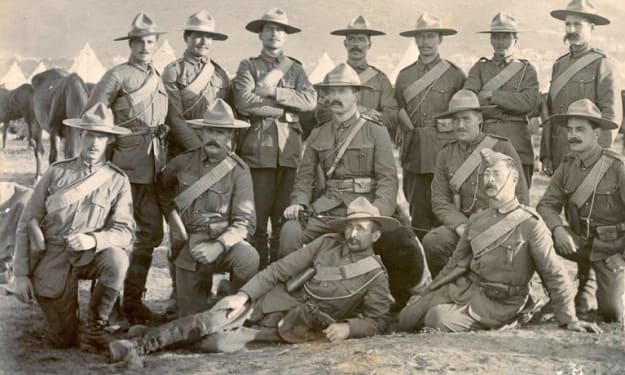
Canadians in the Second Boer War.
Canadians were always well known for their fierceness and integrity in both World War I and World War II, yet the first time Canuck boots would hit foreign soil was 1899, in South Africa. Canadians served alongside the British troops against Dutch settlers named Boers. Approximately seven thousand Canadians volunteered for the service, including twelve nurses and three contingents of the Canadian Army, many others would even serve in British units. The Canadians would play an important role in the British war effort, taking part in the three biggest battles of the war.
By Jacob Newsonabout a year ago in History
The Secret Society of Ashoka: Unveiling the Nine Unknown Men . AI-Generated.
The Secret Society of Ashoka: The Nine Unknown Men History is replete with enigmas, yet certain narratives refuse to dim into insignificance. One of the most enthralling among these is the account of the Nine Unknown Mena clandestine organization purportedly established by Emperor Ashoka the Great following the horrific Kalinga War around 273 BCE. While Ashoka is celebrated for disseminating the principles of non-violence and Dharma, this enigmatic saga adds a cryptic dimension to his reign. According to tradition, Ashoka assembled a covert council of nine exceptional individuals entrusted with the preservation, safeguarding, and advancement of perilous knowledge that could catastrophically impact humanity if it fell into the incorrect hands. This is a narrative of authority, wisdom, confidentialityand the obscure forces that may have influenced the trajectory of civilization behind the scenes. The Inception of the Nine The genesis of the Nine Unknown Men can be traced to the consequences of the Kalinga War, where over 100,000 individuals perished. The devastation profoundly affected Ashoka, transforming him from a brutal conqueror into a peaceful sovereign. However, even as he embraced Buddhism and non-violence, he recognized that knowledgeespecially scientific and technological knowledgewas as perilous as warfare when misapplied. To avert further calamity, he supposedly established a clandestine society: Nine individuals, each entrusted with a tome of formidable wisdom. These were not commonplace volumes. They were believed to encompass knowledge in areas such as alchemy, microbiology, communication, energy, gravitation, and even time travel. The Nine Books of Power Although the precise contents of the Nine Books remain conjectural, here’s what each manuscript is thought to include: Propaganda and Psychological Warfare – The skill of manipulating collective thought and sentiment. Physiology – Insights into bodily functionality and potentially lethal experimental techniques. Microbiology – Understanding of diseases and biological weapons far advanced for its era. Alchemy – Techniques for transmuting metals, including the creation of gold. Communication – Sophisticated methods of interaction, potentially even telepathy. Gravity – Guidelines for constructing anti-gravity apparatus or manipulating gravitational forces. Cosmology – Knowledge of the universe, time travel, and celestial manipulation. Light – Comprehension of light behavior and its application as a weapon or therapeutic tool. Sociology – Principles of human conduct and society, with the capacity to foresee or influence communities. It is believed that each of the Nine Men mastered one volume, and when a member perished or aged, his wisdom was transmitted to a selected successorthus perpetuating the unbroken legacy for millennia. Fact or Fiction? The initial public reference to the Nine Unknown Men surfaced in the 1920s through Louis Jacolliot, a French author and occultist, but the notion garnered worldwide interest after Talbot Mundy, a British novelist, published a fictional narrative about them in his 1923 book "The Nine Unknown. " Mundy claimed to have become aware of the society while in India and even asserted their participation in safeguarding world-changing knowledge. Skeptics contend that the Nine Unknown Men are merely a fusion of Eastern mysticism and Western imagination. Nevertheless, certain historians and scholars assert that Ashoka’s governance did encompass initiatives to gather and safeguard scientific wisdom, which may have given rise to the myth. Legacy and Influence The impact of the Nine Unknown Men has been referenced in various contemporary contexts. Some assert that they contributed to the scientific advancements of ancient India, including early plastic surgery, mathematics, metallurgy, and astronomy. Others speculate that the group persists in some capacity, operating under governmental or spiritual auspices, guiding or restraining technologies regarded as perilous. Conspiracy theorists even associate them with clandestine organizations such as the Illuminati or the Priory of Sion, proposing that the Nine could be the original custodians of forbidden knowledge. Conclusion Whether the Nine Unknown Men genuinely existed remains one of history’s profound enigmas. Nonetheless, the notion itself underscores an enduring truth: knowledge is powerand significant power must be wielded judiciously. Emperor Ashoka’s metamorphosis from a brutal ruler to a champion of peace exemplifies humanity’s capacity for transformation and progress. If any portion of the legend holds validity, the Nine Unknown Men may still inhabit our worldsilent guardians of the planet’s most perilous secrets, observing, anticipating, and ensuring that knowledge never evolves into a curse.
By Say the truth about a year ago in History
Ashoka’s Lost Treasure: The Hidden Wealth of a Dharma King. AI-Generated.
Ashoka's Lost Wealth: The Overlooked Treasure of a Dharma Monarch Emperor Ashoka the Great, the third sovereign of the Maurya Dynasty, is celebrated for his profound metamorphosis from a merciless conqueror to a devoted adherent of Buddhism. While his spiritual odyssey is extensively chronicled, a lesser-known yet fascinating subject revolves around the legend of Ashoka's concealed richesa trove of extraordinary wealth amassed during his imperial campaigns and subsequently redirected to further his vision of a Dharmic realm. This article delves into the historical documentation, myths, and estimations concerning this immense treasure, which continues to captivate archaeologists and treasure seekers alike. The Wealth of the Maurya Empire The Maurya Empire under Ashoka extended across nearly the whole Indian subcontinent and was among the wealthiest empires of its era. The empire boasted a vigorous economy driven by agriculture, commerce (with regions as distant as Greece, Egypt, and China), and efficient tax collection. Cities such as Pataliputra (present-day Patna) served as thriving hubs of wealth, culture, and governance. Kautilya's Arthashastra, a political treatise attributed to Chanakya (the advisor to Ashoka’s grandfather), reveals that the state maintained extensive treasuriesfilled with gold, silver, copper, and precious gemstonesaccumulated through taxes, tributes, and conquests. Conquests and Accumulation of Wealth Prior to his conversion to Buddhism, Ashoka was an imposing warrior. His conquest of Kalinga (present-day Odisha) was one of the bloodiest campaigns in Indian history. Following his triumph, it is believed that Ashoka acquired vast war plunderchariots, gold, elephant ornaments, gemstones, and sacred relicswhich were transported back to his capitals. Reports from the Greek envoy Megasthenes and inscriptions found in Ashoka’s edicts indicate the existence of substantial state storage facilities and secure palace vaults that likely contained such wealth. Much of this fortune was subsequently utilized to finance public works such as roads, hospitals, and monumental Buddhist stupas. The Nine Unknown Men and Hidden Knowledge A popular legend that intertwines with Ashoka’s treasure is the enigmatic tale of the Nine Unknown Mena clandestine society established by Ashoka to safeguard advanced knowledge that could pose risks if misappropriated. It is purported that, beyond gold and jewels, Ashoka’s true treasure lay in knowledgeencoded in nine books covering topics ranging from alchemy to time travel. Some assert that these books, along with scrolls containing Buddhist wisdom and golden relics, were concealed in secret chambers beneath Ashoka’s palaces or in hidden locales like Sanchi, Nalanda, or even the Ajanta Caves. Dharma and the Dispersion of Wealth Subsequent to the Kalinga War, Ashoka renounced violence and embraced Buddhism. His ensuing reign was characterized by significant acts of philanthropy and construction. He redistributed portions of his empire’s treasure to: Construct stupas across Asia (84,000 according to legend) Dispatch Buddhist missions to Sri Lanka, Egypt, and Southeast Asia Finance hospitals, rest houses, and public gardens Nevertheless, it is improbable that all his wealth was entirely expended. As a pragmatic ruler, Ashoka would have likely preserved strategic reserves of riches, likely concealed in secure subterranean chambers. Modern Searches and Archaeological Cues No fortune directly linked to Ashoka has been uncovered thus far, yet numerous findings have intensified interest: In 1915, a cache of Mauryan coins and gold relics was found in Bihar, believed to be a portion of a royal depository.
By Say the truth about a year ago in History
The Throne of Rajaraja Chola: Power and Grandeur of a Tamil Emperor
The Throne of Rajaraja Chola: Authority, Design, and Heritage of a Tamil Sovereign During the illustrious period of South Indian history, the Chola dynasty emerged as a paragon of imperial authority, administrative excellence, and architectural splendor. Central to this empire was Rajaraja Chola Ione of the most prominent emperors of the Chola lineagewhose reign, spanning from 985 to 1014 CE, witnessed remarkable military growth, cultural resurgence, and monumental temple edifices. Among the numerous legacies he bequeathed, the most iconic and lasting is the throne upon which he governed and the grand palace complex from which he presided over one of the most formidable kingdoms in Asia. The Ascendancy of Rajaraja Chola I Originally named Arulmozhi Varman, Rajaraja Chola ascended the throne following a phase of internal conflict and external challenges. He elevated the Chola dynasty from a localized kingdom to a vast empire that extended from the Kaveri Delta to northern Sri Lanka, the Maldives, and portions of Southeast Asia. His throne represented not merely a seat of royal esteemit symbolized divine sovereignty. Influenced by Shaivism, Rajaraja perceived himself as a servant of Lord Shiva. His reign was profoundly spiritual, yet politically astute and strategically adept. The Throne: Emblem of Chola Sovereignty Although no physical remnants of the original throne exist today, inscriptions, temple murals, and copper plate records offer vivid accounts of its splendor. It is thought that the throne was crafted from polished teak wood, intricately carved with lotus petals, and adorned with ivory, pearls, and gemstones. The backrest was designed to resemble a blooming lotus, symbolizing purity and enlightenment. Engraved atop the throne was the royal insigniaa tiger, flanked by a fish and a bowrepresenting the Cholas, Pandyas, and Cheras. This served as a continual reminder of the Chola’s supremacy over the southern dynasties. Rajaraja Chola’s throne was not merely decorative; it was a hallowed object of coronation, a political platform for royal decrees, and a stage from which temple patronage and military directives were proclaimed. The Royal Palace of Rajaraja Chola The royal palace complex of Rajaraja Chola was situated in Thanjavur (Tanjore)the imperial seat of the Cholas. While only the remnants of the subsequent Nayak palace remain today, archaeological investigations, Tamil inscriptions, and accounts from foreign travelers reveal that the original palace was a marvel of Dravidian architecture and urban planning. This palace formed part of a more extensive fortified city characterized by granite walls, grand gateways (gopurams), and a central courtyard. The palace featured numerous audience halls, treasury chambers, and royal living quarters. Most significantly, it was adjacent to the Brihadeeswarar TempleRajaraja’s crowning architectural triumph. The palace and the temple were conceived as a spiritual and administrative continuum, where divine authority and earthly governance coexisted in harmony. Daily rituals at the temple were reflected in royal activities at the palace. The Golden Age of Chola Architecture and Prosperity Rajaraja Chola’s governance is frequently denoted as the “Golden Era of Tamil Nadu,” and justifiably so. The sovereign seat and residence were positioned within a flourishing capital teeming with artists, clergy, warriors, and intellectuals. Inscriptions in temples document contributions of land, gold, silks, and elephantsindicative of the empire’s vast prosperity. The projected worth of the imperial throne and palacereassessed to contemporary standards and accounting for the materials utilized, artisan skills, and their emblematic significancewould exceed $1 billion USD. However, beyond mere material wealth, they embodied a civilizational value: emblems of Tamil pride, imperial strength, and cultural refinement. Legacy and Influence The impact of Rajaraja’s throne reached well beyond his era. His progeny, Rajendra Chola I, further enlarged the empire, even orchestrating naval ventures to Southeast Asia. The notion of divine sovereignty, centralized rule, and a temple-centric economy that Rajaraja honed from his throne persisted as the framework of South Indian governance for centuries. Even presently, in Tamil Nadu’s political landscape, mentions of the Chola throne evoke profound sentiments. Films, literature, and political discourses frequently reference Rajaraja’s reign as a period of exemplary administration, pride, and authority. Conclusion: A Throne Beyond Time The throne of Rajaraja Chola may no longer exist in tangible form, yet its legacy is intricately woven into Indian history. It symbolized the intersection of power, faith, art, and governance, crafted by one of the most visionary sovereigns the subcontinent has ever known. From the resonating corridors of his palace in Thanjavur to the soaring vimana of the Brihadeeswarar Temple, Rajaraja’s vision enduresinscribed in stone, commemorated in ancient Tamil hymns, and cherished through the ages.
By Say the truth about a year ago in History
A letter from Death 💀
Start Dear Soul, I know my name brings chills to many hearts. I’ve been feared, cursed, misunderstood for as long as time has existed. People run from me, cry at the thought of me, and yet—sooner or later—we all meet. I do not write this to frighten you. I write this to speak the truth, not the one wrapped in horror stories or whispered in hospitals, but the quiet, honest truth you deserve to hear. I am Death. But I am not darkness. I am not cruelty. I do not come with blood or fire. I do not arrive with screams. I come when the world has grown quiet around you, when your breath begins to fade like fog in the morning sun. I come with calm hands and softer steps than you imagine. My arrival is not a storm—it’s a sigh, a gentle closing of the last page in a story that has been long, beautiful, and at times, hard. You’ve seen me before, though you may not have known it. In the fading eyes of a grandparent, in the silence after a funeral prayer, in the final exhale of someone you loved deeply. I was there. Not to take with cruelty, but to carry with care. People fear me because they do not understand me. And I do not blame them. The unknown is frightening. But I promise you this: I am not the end. I am the doorway. I am the release from pain, from burden, from the weight you’ve carried so long. I am not the fall—I am the landing. I do not take joy in sorrow. I do not hunger for lives. That is not my purpose. I am not the one who causes suffering—I am the one who arrives when it’s done. I am the one who lifts you out of it. When your body can no longer carry your soul, when your heart grows tired of fighting, that is when I come. Quietly. Respectfully. I have taken children who left too soon, and I’ve taken warriors who fought long battles. I’ve stood beside those whose hands were held tightly and those who passed in silence. And I’ve mourned every single time, because though I am Death, I understand love. I see it every day. I see it in the way people whisper goodbye, in the tears that fall on pillows, in the prayers that rise after I’ve come. I do not erase love. That is the one thing even I cannot touch. Love follows you beyond the veil. It connects you still, heart to heart, across time and space. Those who love you will remember, speak your name, dream of you, feel you in small moments—and that will be you, reminding them that though your form is gone, your essence remains. I know many ask, “Why now?” or “Why them?” I wish I had answers that would satisfy every broken heart, but the truth is, I do not control time. I do not choose the moment—I only arrive at it. Life gives, and life takes. I simply carry what remains. So please, do not fear me. When your time comes, and it will—just as night follows day—I will be there, not as a terror, but as a friend. You will not be alone. You will not be lost. I will carry your soul like something fragile and sacred. I will guide you gently, so gently, to what lies beyond. Until then, live boldly. Love deeply. Laugh loudly. Use your time well. Not one second is promised, and yet every second is a gift. Make your life a story worth reading, so that when the last line comes, it ends with peace. And when that day comes, when the sun sets for you for the last time, remember—do not be afraid. I am only Death....
By Zaeem Hasan about a year ago in History
Love like black tea
Love like black tea It was deep at night. Outside the window, a gentle rain was falling silently. Maya was sitting in the dim light inside the room. A cup of black tea in her hand was her favorite, and her love, like that tea, was dark and deep, but not visible to everyone.
By Arshad Aliabout a year ago in History
Herodotus
The ancient world was characterized by its enigma, magnificence, and monumental conflicts, with civilizations emerging and declining akin to the ebb and flow of the Mediterranean Sea. Among those who endeavored to document and preserve the legacy of these eras, one figure is particularly notable—Herodotus of Halicarnassus, whom Cicero later referred to as "The Father of History." Born in the 5th century BCE, Herodotus transcended the role of a mere recorder of events; he was a narrative artist who intricately blended myths, legends, and personal testimonies into a rich portrayal of history. His seminal work, The Histories, continues to be one of the most captivating texts from antiquity, providing valuable perspectives on the cultures of Greece, Persia, Egypt, and other regions.
By A Históriaabout a year ago in History
AfricansHateAfricans.Org; Ghana & Ghanaians The Spirt of African Sellers Still Exists Today
Thursday, 10 April 2025 By: TB Obwoge People want to debate and argue about the prolific impact that Ghana played in the supplying of Africans into worldwide slavery. Many Black Americans and Africans might want to sit and debate the fact that Ghana for 150-years was the biggest slave trading country in Africa.
By IwriteMywrongsabout a year ago in History