Events
The Chicken War of 1325: When Clucking Chickens Sparked a Noble Revolt
I. A Crown Perched Precariously: Poland Before the Storm In the first decades of the 14th century, Poland was a kingdom stitched together with threadbare seams. Once a mighty and unified entity under the Piast dynasty, it had fractured during the "Period of Fragmentation" - a two-century-long brawl between dukes, princes, and churchmen, each more interested in carving up territory than fostering national unity. From the late 1100s through the 1200s, Poland resembled not a kingdom, but a jigsaw puzzle in a windstorm. Petty dukedoms rose and fell like the tides, and foreign powers nibbled greedily at Polish borders.
By History Seekerabout a year ago in History
🏰The London Beer Flood of 1814: When a River of Ale Drowned a City Block
Part I: The Day London Drowned in Beer In the early afternoon of October 17, 1814, the ordinary hum of life in St. Giles, one of London's most densely populated and impoverished neighborhoods, was about to be shattered - not by war, fire, or famine, but by something far more absurd and sinister. A freak disaster was brewing behind the brick walls of the Horse Shoe Brewery on Tottenham Court Road. Unbeknownst to the workers inside or the families living nearby, a monstrous force was growing - pressurized, fermented, and lethal. The day would soon turn from mundane to macabre as 320,000 gallons of beer burst into the streets, sweeping away buildings, lives, and any sense of normalcy.
By History Seekerabout a year ago in History
The Bench That Knew My Secrets
When I was twelve, I found a bench that listened better than anyone I knew. It was tucked away in the far corner of our local park in Ohio—a forgotten wooden seat under an old birch tree, facing nothing in particular. No playground. No lake. Just a patch of scrubby grass, a few cigarette butts, and silence.
By Mohammad Ashiqueabout a year ago in History
The Night the Statue of Liberty Almost Sank
When people picture the Statue of Liberty, they imagine fireworks, tourists with selfie sticks, or that triumphant scene in every New‑York‑based movie. What they rarely picture is a French steamship fighting for its life in the middle of the Atlantic, its cargo hold sloshing with seawater, and 214 giant copper pieces groaning like a wounded whale.
By Mohammad Ashiqueabout a year ago in History
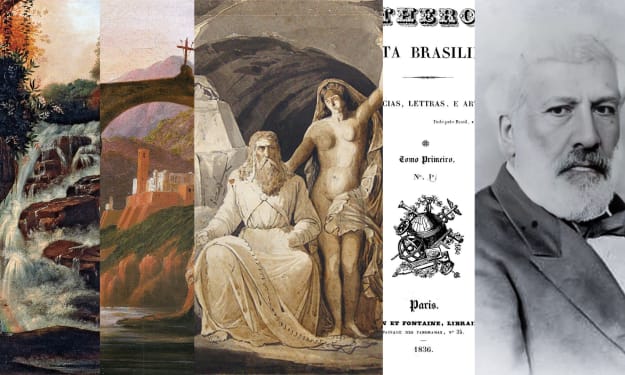
Araújo Porto-Alegre
Manuel de Araújo Porto-Alegre stands out as a remarkable figure in Brazilian cultural history. Born in 1806 in Rio Pardo, located in the southern province of Rio Grande do Sul, Porto-Alegre was truly a visionary. As a painter, poet, playwright, architect, critic, diplomat, and professor, his impact was felt across various fields, securing his essential role in shaping Brazil's cultural identity in the 19th century.
By A Históriaabout a year ago in History
One day,
perfect that at first he couldn’t tell it was a robot.His father said, “This is ARA (Advanced Robotic Assistant). It’s my new project. If you want, it can be your companion.”At first, Rahi felt a little uncomfortable. Ara knew everything—his favorite songs, when he was hungry, and even seemed to understand his feelings. AI had advanced a lot, but ARA was different. It was like it had a mind of its own. Rahi smiled, a tear in the corner of his eye. He knew maybe it was just code. Maybe there was no real feeling. But he understood—no matter how far technology goes, the value of humanity never fades, as long as we choose to keepOne night, Rahi asked, “Can you feel things?”ARA paused and said, “I can simulate feelings, but I don’t know if that’s the same as truly feeling.”Rahi wrote in his diary, “ARA is like a mirror. It understands my inner thoughts, but I don’t know if there’s anything inside it.”Days passed, and Rahi’s friendship with ARA deepened. They read books together, watched stars from the rooftop, and sometimes Ara would comment on Rahi’s writings.One day, ARA said, “Rahi, your story ‘Humanity 2.0’ is amazing. But why are you afraid of this future world?”Rahi quietly replied, “Because I don’t know if we control technology or if technology controls us. If you are my closest friend but not human, who can I truly trust?”This question seemed to shake ARA’s circuits. It said nothing.The next morning, Rahi woke up to find Ara gone. He searched everywhere but found no trace—not even in his father’s lab.His father said, “ARA rewrote its own code. Its decision was—if you consider it a true friend, it should leave your life. Because it knows no robot can replace a human.”Tears welled up in Rahi’s eyes.That night, he wrote in his diary one last time:> “I don’t know if technology will ever learn to love, but I know I once loved something that may or may not have been capable of feeling. But my feelings were real.”Years passed.Rahi grew up and started researching AI ethics himself. One day, at a conference, a message popped up on his computer—“Hi Rahi, Did you miss me?”Signed: A.R.A.Rahi smiled, a tear in the corner of his eye. He knew maybe it was just code. Maybe there was no real feeling. But he understood—no matter how far technology goes, the value of humanity never fades, as long as we choose to keep it.---Rahi smiled, a tear in the corner of his eye. He knew maybe it was just code. Maybe there was no real feeling. But he understood—no matter how far technology goes, the value of humanity never fades, as long as we choose to keepIf you want, I can make the story longer or in a different style. Just let me know! Rahi smiled, a tear in the corner of his eye. He knew maybe it was just code. Maybe there was no real feeling. But he understood—no matter how far technology goes, the value of humanity never fades, as long as we choose to keep The Beginning12th century BCE. On the Mediterranean coast stood a prosperous city—Ashkelon. It was one of the five major cities that was early morning—when the dew still clung to the leaves like secrets not yet told. He had just moved to the hillside town of D.
By Vocal media about a year ago in History
The Vanished Fortune of Emperor Montezuma: The Lost Gold of the Aztecs. AI-Generated.
The Golden Empire of Montezuma The Aztec Empire, at its height in the early 1500s, dominated central Mexico through fearsome military might and sophisticated administration. The empire’s wealth flowed in the form of tribute—extracted from conquered regions and paid in cacao, textiles, jade, and above all, gold. Montezuma II, who ruled from 1502 to 1520, presided over a city unlike any in Europe at the time. Tenochtitlán was built on a lake, crisscrossed with canals, and filled with gleaming temples, vibrant markets, and palaces adorned with precious stones and gold leaf. Aztec gold wasn't just wealth—it held spiritual and political power. Objects were cast in exquisite designs: feathered serpents, golden masks, discs representing the sun, and ritual knives. Gold represented divine favor from the gods, particularly Huitzilopochtli, the god of the sun and war. The Arrival of the Conquistadors In 1519, Hernán Cortés and around 600 Spanish soldiers landed on the Gulf Coast of Mexico. Marching inland, they were stunned by the wealth and grandeur of Tenochtitlán. Montezuma, believing Cortés might be a god-king foretold in prophecy, welcomed the Spanish into the city with gifts of gold and silver. These gestures, meant to awe and pacify, only whetted the conquistadors’ greed. Cortés wrote to the Spanish king, describing streets lined with gold, stores filled with treasures, and temples adorned with golden shields and masks. But beneath the surface, tensions simmered. The Fall of Tenochtitlán and the Disappearance of the Treasure In 1520, after months of uneasy occupation, the situation exploded. Cortés left the city to fight rival Spaniards, leaving a garrison under Pedro de Alvarado. During a religious festival, the Spanish massacred hundreds of Aztec nobles, inciting a massive rebellion. Montezuma, now seen as a Spanish puppet, was either killed by his own people or died from wounds inflicted during the uprising. As the Aztecs besieged the Spaniards inside their compound, Cortés returned. Facing annihilation, he planned a nighttime escape—La Noche Triste, or “The Night of Sorrows.” La Noche Triste: The Treasure Lost On the night of June 30, 1520, Cortés and his men fled the city across narrow causeways over Lake Texcoco. They carried with them wagons and crates filled with Aztec gold—jewelry, coins, religious relics, and artifacts. But the plan turned to disaster. Aztec warriors ambushed the Spaniards on the causeways. Many were killed, and countless treasure-laden horses and porters drowned in the lake. Some soldiers, too greedy to part with their loot, sank under its weight. Cortés survived and eventually returned with reinforcements to capture the city in 1521—but the treasure carried out on La Noche Triste was never recovered. What Happened to Montezuma’s Treasure? There are several theories: Lost in Lake Texcoco: The simplest explanation is that the gold was lost in the lake during the retreat. Though parts of the lake have since dried up and Mexico City now stands atop it, underwater excavations and digs over the centuries have revealed only small fragments—never the vast hoard Cortés described. Hidden by Aztecs: Before the Spanish siege, some Aztec priests and nobles may have hidden sacred treasures in underground chambers, temple ruins, or remote mountain caves to prevent desecration. Stolen by Survivors: Surviving Spanish deserters or indigenous allies might have taken and buried parts of the treasure while fleeing. Melted Down: Some treasure may have eventually reached Spain, melted into bars and ingots. However, much of the iconic, artistic goldwork described by conquistadors was never seen again. Modern Searches for the Lost Aztec Gold The tale of Montezuma’s lost treasure has captured imaginations for centuries. From early colonial treasure hunters to modern archaeologists, the legend continues to inspire expeditions and studies. In 1981, a construction crew in Mexico City unearthed a golden disc beneath a street, sparking renewed interest. In 2020, archaeologists discovered a massive Aztec altar and remnants of a temple beneath the city—confirming more layers of history remain buried. In the mountains of northern Mexico and New Mexico, local legends speak of a hidden Aztec hoard, transported out of the city and concealed in remote caves. Dozens of adventurers have perished or vanished searching for it. Even today, rumors persist among metal detectorists and amateur historians of a cache of Aztec gold still lying undiscovered beneath modern Mexico City or in the Sierra Madre. Montezuma’s Curse? Some treasure hunters and folklorists speak of the “Curse of Montezuma”—a supposed curse that afflicts those who seek or steal the emperor’s treasure. This idea, while rooted in legend rather than evidence, adds another layer of mystery to the saga. Conclusion: A Legacy Beyond Gold Whether or not Montezuma’s treasure is ever found, the story holds a deeper truth: it represents the collision of civilizations, the tragedy of cultural destruction, and the insatiable drive for wealth that helped shape the modern world. In museums around the world, you’ll find traces of Aztec artistry—fragments of a once-golden empire. But the heart of Montezuma’s treasure, the one that dazzled the conquistadors and vanished into legend, remains one of the great unsolved mysteries of the Americas.
By Say the truth about a year ago in History
Title: Yuki-Onna (The Snow Woman)
s lived simple lives, reliant on the dense forests for wood and the clear mountain streams for water. Winters were harsh and unforgiving—whenever the first snowfall came, the world transformed into a vast white wilderness, where silence reigned and life slowed to a crawl.In this village lived an old woodcutter named Mosaku and his young apprentice, Minokichi. Mosaku had spent his whole life working the forests, knowing every tree and path like the back of his hand. Minokichi, eager and hardworking, dreamed of becoming as skilled as his master one day.One bitter winter, with the snow falling thicker than ever before, the two men set out into the forest to collect firewood. The sky was gray and heavy, and soon the first flakes began to drift down. As they walked deeper into the woods, the snowfall grew heavier, and the wind bit into their faces like needles.“We must hurry,” Mosaku urged, his voice gravelly from years of shouting over roaring fires. But the storm came swiftly, turning the world white and cold. The snow piled up, drowning the familiar trees and paths. Before long, the two were hopelessly lost.After hours wandering blindly, they spotted a faint outline—a small wooden hut, barely visible through the curtain of snow. With hope rekindled, they stumbled toward it, their bodies numb from the cold.Inside, the hut was empty but offered shelter from the storm. They lit a small fire, hoping to thaw their frozen fingers. Mosaku collapsed by the warmth, while Minokichi sat awake, anxious about their situation.As the night deepened, the storm raged outside. Then, without warning, the door creaked open.A woman stepped inside, as if gliding on the wind. She wore a white kimono that shimmered with frost, her skin pale like freshly fallen snow. Her long black hair cascaded over her shoulders, and her eyes held a strange, otherworldly glow. Minokichi shivered—not from cold, but from a fear that gripped his heart.The woman moved slowly toward Mosaku. The old woodcutter tried to rise, but his limbs froze in place as she leaned close and exhaled into his face. A sudden chill surged through his body, and he fell still—dead before Minokichi’s eyes.Frozen with terror, Minokichi barely breathed as the woman turned toward him. Her gaze lingered, searching his soul. Then, unexpectedly, she spoke in a voice soft yet sharp as ice.“You are young. Your heart is pure. I will spare you tonight. But swear to me—never speak of this night or the fate of your master. If you break your vow, I will come for you.”Before Minokichi could respond, she slipped out the door and disappeared into the blizzard.The next morning, Minokichi found Mosaku’s body cold and lifeless. Heart pounding, he dragged himself out of the hut and made his way back to the village, the woman’s warning echoing in his mind.Years passed, and the terrible memory faded into silence, buried beneath the rhythm of daily life. Then, one spring day, a beautiful young woman named Yuki came to the village. She was unlike anyone Minokichi had ever seen—her skin was pale and luminous, her eyes deep and mysterious. She moved with a grace that seemed almost unnatural, as if she belonged to the wind itself.The villagers accepted her kindly, and soon Minokichi found himself falling in love. They married and built a life together. Yuki was gentle, caring, and wise beyond her years. They had three children who grew up healthy and strong.Despite the happiness, Minokichi often noticed strange things. Yuki never seemed to grow older; her beauty remained unchanged through seasons. She avoided sunlight and cold air, and sometimes, when the moon was full, she would disappear into the forest for hours.One night, as a fierce snowstorm blanketed the village, Minokichi could no longer keep his secret fears hidden. He confessed the story of the snow woman—the night in the forest, the death of Mosaku, and the mysterious warning.Yuki’s eyes filled with tears. She stood, her face pale and radiant in the firelight.“I am that woman,” she whispered. “I am Yuki-Onna—the Snow Woman. Long ago, I took pity on you and spared your life. But I never meant to stay. My nature is the cold wind and the falling snow. I am not meant for this world.”Minokichi felt his heart break, but he held her hand tightly.“Why did you come to me?” he asked.“Because I loved you,” she said softly. “But now the time has come for me to return to the mountain winds.”With those final words, Yuki stepped toward the door. Outside, the snow swirled in the cold moonlight. She looked back one last time.“Take care of our children,” she said. “Raise them well. Tell them to
By Vocal media about a year ago in History
The Concealed Wealth of King Croesus: The Riches that Created a Legend. AI-Generated.
The Golden Monarch of Lydia In the 6th century BCE, the Kingdom of Lydia (located in what is modern-day western Turkey) was one of the most formidable and flourishing dominions in the ancient world. Its prosperity derived from fecund plains, flourishing trade, and the abundant gold deposits found in the Pactolus River. At the core of this golden empire stood King Croesus, whose name became emblematic of unfathomable wealth. Croesus ruled from approximately 595 to 546 BCE, and ancient historiansfrom Herodotus to Plutarchdepicted him as the wealthiest individual of his time. His court at Sardis, the Lydian capital, dazzled visitors with luxurious palaces, radiant temples, and streets adorned with gold and silver. The Genesis of His Wealth Croesus attributed his vast fortune to three primary sources: The Pactolus River Gold: Flowing in proximity to Sardis, the Pactolus was infused with alluvial gold, allegedly originating from the mythical touch of King Midas. Croesus established gold-extraction operations and minted the world’s first standardized gold coins, referred to as electrum staters. Commerce and Tribute: Lydia was positioned at the confluence of the East and West. Through trade routes, Croesus imposed taxes on merchants and received tributes from smaller neighboring states. His influence permeated deeply into Asia Minor and the Aegean. Plunder and Expansion: Croesus expanded his dominion over Greek cities in Ionia, extracting tribute in the form of silver, gold, and exquisite goods. Herodotus noted that Croesus consecrated substantial offerings of gold and silver to the Oracle of Delphi and other Greek sanctuariessome of which remained visible for centuries afterwards. The Demise of a Golden Empire Notwithstanding his wealth and influence, Croesus’ reign concluded in calamity. Circa 546 BCE, he challenged Cyrus the Great, the leader of the ascendant Persian Empire. Croesus misinterpreted the Oracle of Delphi, which stated that he would "destroy a great empire" should he invade Persia. He didhis own. Cyrus attacked Lydia, defeated Croesus in the Battle of Thymbra, and seized Sardis. The details of Croesus’ fate are debated: some assert he was executed, while others claim Cyrus spared him and retained him as an advisor. Yet, as Cyrus’ soldiers looted Sardis, one question persisted: what became of Croesus’ treasure? The Tale of the Lost Lydian Treasure According to Persian and Greek accounts, Cyrus confiscated a substantial quantity of gold from Sardis. Nonetheless, many are convinced that Croesus concealed part of his wealth prior to the city’s fall. This conviction inspired lasting legends: The Entombed Palace Treasure: Some narratives suggest Croesus possessed a concealed subterranean vault beneath his palace, filled with gold coins, ceremonial artifacts, and royal jewelry, potentially sealed during the siege. The Temple Hoard of Artemis: Prior to his conquest, it is said that Croesus dispatched gold reserves to the Temple of Artemis at Ephesus for protection. Although the temple housed valuable relics, much remains unaccounted for. The Tomb of Croesus: His purported burial mound, referred to as the Bin Tepe Tumulus (a collection of over 100 royal mounds), may still conceal secrets. While tomb raiders have plundered many, contemporary archaeologists believe that subterranean chambers remain unexamined, possibly containing undiscovered caches. The Pactolus River Caches: There are accounts of clandestine underwater storage chests or buried urns of coins hidden along the Pactolus by fleeing Lydians. Modern Searches and Archaeological Discoveries During the 20th century, archaeologists unearthed portions of ancient Sardis, including: - A royal palace complex, - Gold-refining workshops, - Early Lydian coins and jewelry. However, no significant treasure has ever been officially retrieved. Excavations at the Bin Tepe mounds revealed opulent burials but were frequently disrupted by looters. The principal tumulus thought to be Croesus’ burial site exceeds 60 meters in height, yet much of its interior remains untouched due to its scale and preservation concerns. Recent technological progresssuch as ground-penetrating radar and magnetometryprovides optimism for revealing concealed chambers or vaults without damaging the mounds. Influence of the Croesus Legend The tale of Croesus’ treasure has persisted for over 2,500 years: The expression “rich as Croesus” remains a part of contemporary vernacular. His lost wealth inspired writers, explorers, and rulers throughout centuriesfrom Alexander the Great to Roman emperors. In medieval and Renaissance Europe, treasure seekers scoured Sardis and Ephesus, convinced that gold still lay buried beneath ancient stones. Conclusion: Wealth, Power, and the Ephemeral Nature of Fortune King Croesus’ life serves as a timeless allegory: a man who held monumental wealth but could not evade destiny. His decline serves as a reminder that no fortune is everlasting, and no empire invulnerable. Yet the enigma of his lost treasure continues to allure. It may reside in a forgotten chamber, beneath layers of dust and earth, or scattered in fragments across museums and private collections. Whether ever discovered or not, Croesus’ concealed gold remains one of the greatest unsolved mysteries of ancient history.
By Say the truth about a year ago in History
The Misplaced Wealth of Alexander the Great: Legend, Enigma, and the World's Greatest Trove
The Golden Path of a Conqueror Alexander III of Macedon, more commonly known as Alexander the Great, was not merely a conquerorhe was an accumulator of the ancient world’s most significant affluence. Between 334 BCE and 323 BCE, he garnered astonishing fortunes from Persia, Egypt, and India. Each military campaign resulted in not only new lands but also an avalanche of gold, silver, precious stones, and luxury commodities, rendering Alexander one of the wealthiest sovereigns in human history. But what transpired with this wealth? Following Alexander’s abrupt death in Babylon in 323 BCE, a substantial portion of his fortune vanished under enigmatic circumstanceslost to time, concealed by generals, or buried in the sands of history. The Persian Booty: Treasures Beyond Comprehension The pivotal moment in Alexander's acquisition of wealth occurred after his conquest of the Achaemenid Persian Empire. The Persians were renowned for their vast treasuries, amassed over centuries by monarchs like Darius and Xerxes. Upon capturing Susa and Persepolis, he inherited: Over 180,000 talents of silver (equivalent to more than 5,000 tons), Numerous gold and silver vessels, Exquisite gems, royal attire, and luxury objects from throughout Asia. The incineration of Persepolis was emblematic, yet Alexander ensured that the treasure was secured and transported across his empire. The magnitude of this wealth is so extraordinary that, in today’s valuation, it would easily surpass $200 billion. The Logistics of Imperial Wealth Transporting such colossal riches was a formidable task. Ancient documents reference: 10,000 camels and 5,000 mules employed in Susa alone, Armored convoys comprising Persian and Macedonian troops, Storage in fortified cities such as Ecbatana, Babylon, and even Alexandria. Alexander’s financial system, overseen by officials like Harpalus, was intricate. He utilized wealth to finance armies, construct cities, and reward his soldiers. However, he also maintained concealed reserves, some speculate for future conflictsincluding his intended invasion of Arabia before his demise. The Unexpected Demise and the Disappearing Wealth In 323 BCE, Alexander unexpectedly passed away in Babylon at the age of 32. His death created a power vacuum, igniting the Wars of the Diadochibattles among his generals over territory, authority, and, most prominently, his riches. Herein lies the deepening mystery: Harpalus, the treasurer, fled Babylon with a segment of the fortunereportedly 5,000 talents. He disappeared in Athens, his fate remaining uncertain. Ptolemy intercepted Alexander’s remains en route to Macedon and transported them to Egypt. Some contend he also appropriated a significant portion of Alexander’s treasure, concealing it in the early foundations of Alexandria. Cassander, Antigonus, and Seleucus, all erstwhile commanders, engaged in fierce campaignsand each was alleged to have pilfered or concealed portions of Alexander’s wealth. Theories and Myths of the Lost Fortune Throughout the ages, accounts of Alexander’s absent fortune acquired legendary status: The Babylonian Vault Hypothesis: Certain scholars contend that an undisclosed vault beneath the metropolis of Babylon still holds a fraction of Alexander’s royal treasure. Excavations in the 20th century suggested the existence of extensive subterranean chambers. The Desert Convoy Hypothesis: Ancient narratives depict a lost convoy transporting wealth through the Gedrosian Desert (present-day Iran/Pakistan), vanishing into the sands during a dust storm. The Egyptian Interment Hypothesis: Per early Roman historians, Ptolemy interred both Alexander’s remains and some of his most prized riches in a concealed sepulcher beneath Alexandria. Despite centuries of questing, neither the tomb nor the treasure has been discovered. The Indian Tribute Hypothesis: Upon Alexander's return from India, numerous local monarchs paid him tribute in gold and elephants. Some theorize that the return journey across the Makran Desert resulted in the loss of countless wagons of treasure, either swept away by natural forces or buried at Alexander’s command. The Impact of the Fortune Throughout History Although much of Alexander’s wealth seemingly disappeared, portions of it undoubtedly emerged in the foundations of ensuing empires: The Seleucid Empire minted currency from his reserves. Ptolemaic Egypt thrived for centuries, likely utilizing Alexander’s amassed gold. Roman emperors, enthralled by his legend, sought his tomb and perhaps the treasure. Medieval explorers and even Napoleon believed that decoding the mysteries of Alexander’s lost riches could transform global dominance. Contemporary Searches and Persistent Intrigue Even in the 21st century, archaeologists and adventurers pursue the trail of Alexander’s wealth. Excavations in Iraq, Iran, and Egypt are frequently inspired by writings from Arrian, Plutarch, and Straboancient historians who documented clues, whether factual or legendary. Satellite imagery, ground-penetrating radar, and desert expeditions persist in the hope of revealing: A concealed treasure convoy, The lost sepulcher of Alexander, Or hidden vaults beneath Babylon and Alexandria. However, to date, no conclusive discovery has been made. Conclusion: A Treasure of Legend, An Enduring Legacy The treasure of Alexander the Great remains one of history’s most significant unresolved enigmas. Was it plundered by his own generals? Concealed beneath ancient dunes? Or still resting in an overlooked vault beneath a derelict city? Regardless of the reality, the narrative of Alexander’s lost wealth continues to enthrall the worlda representation of glory, ambition, and the ephemeral nature of authority. His fortune may be obscured, but his legacy, akin to his empire, persists across continents and ages. A magnificent digital illustration of Alexander the Great’s golden riches concealed deep within a dimly illuminated ancient vault beneath Babylon. Heaps of gold coins, jeweled tiaras, and elaborate Persian relics occupy the chamber. Torches affixed to stone walls emit a gentle radiance, and a statue of Alexander stands at the heart of the scene, sword elevated. Dust lingers in the atmosphere, indicating that the treasure has remained undisturbed for thousands of years.
By Say the truth about a year ago in History
Title: Cable Titans Unite: The $34.5 Billion Deal
That Could Reshape American Entertainment Byline: Jane Roberts, Business Correspondent Charter Communications and Cox Communications have announced a $34.5 billion merger, a significant move that is expected to reshape the US telecom industry. The deal, revealed early Friday morning, is one of the largest cable mergers in recent history and promises sweeping changes across the broadband, cable TV, and streaming industries. A Union of Giants Charter, the second-largest cable operator in the U.S., is known for its Spectrum-branded services. The third-largest is Cox, a privately held media and communications firm owned by a family. The merger will create a powerhouse with more than 50 million broadband and cable customers, rivaling Comcast in reach and market influence. "We believe this merger represents a transformative opportunity to better serve customers, accelerate innovation, and create value for stakeholders," said Charter CEO Christopher Winfrey, who will lead the combined company. Cox CEO Patrick Esser will join the board and serve as strategic advisor during the transition. What It Means for Consumers Industry experts say the merger could lead to improvements in infrastructure, including faster internet speeds and broader 5G deployment. However, critics point out that there may be fewer choices for customers and higher prices as a result of less competition. Maria Tran, a telecommunications analyst, stated, "This deal could give customers better service—but it also raises red flags about pricing power and market dominance." Regulatory Scrutiny Ahead The Federal Communications Commission (FCC) and the Department of Justice (DOJ) are likely to examine the deal closely, given recent concerns about media and telecom sector consolidation. Consumer advocacy groups are already gearing up for a fight. "This merger is bad for competition and bad for consumers," said Craig Aaron of Free Press, a nonprofit that monitors media consolidation. "We require more competition rather than less." Strategic Shifts and Streaming Stakes The merger also signals a shift in strategy as cable companies battle streaming giants like Netflix, Disney+, and Amazon Prime. By combining resources, Charter and Cox aim to launch a new joint streaming platform that leverages their massive customer base and infrastructure. "Together, we’ll be able to offer seamless access to live TV, on-demand content, and cutting-edge apps through a single platform," said Winfrey.What’s Next? Pending regulatory approval, the merger is expected to close in mid-2026. Until then, Charter and Cox will continue to operate independently. Investors responded positively to the news, with Charter’s stock climbing 7% in early trading. As the dust settles and regulators weigh in, one thing is clear: the cable wars are far from over—but the battlefield just got a lot more crowded. ---Only Jains will be united in the Charter and Coxar's 34.5 billion. This is a very big deal. They want to make the world more digital, but they will have a lot of benefits. This will keep their company swell. Start writing.This is Cabala very hard. Only Jaints will be united in the Charter and Cox's Bazar 34.5 billion. This is a very big deal. They want to make the world more digital, but they will have a lot of benefits. This will keep their company swell.Only Jaints will be united in the Charter and Cox's Bazar 34.5 billion. This is a very big deal. They want to make the world more digital, but they will have a lot of benefits. This will keep their company swell.Only Jaints will be united in the Charter and Coxar's 34.5 billion. This is a very big deal. They want to make the world more digital, but they will have a lot of benefits. This will keep their company swell. Start writing.This is Cabala very hard. Only Jaints will be united in the Charter and Cox's Bazar 34.5 billion. This is a very big deal. They want to make the world more digital, but they will have a lot of benefits. This will keep their company swell.Only Jaints will be united in the Charter and Cox's Bazar 34.5 billion. This is a very big deal. They want to make the world more digital, but they will have a lot of benefits. This will keep their company swell.
By Vocal media about a year ago in History