Events
The Roux Where it Happened
James held the thick iron pan over the fire with practiced hands. As the butter melted, he mixed in the flour until the grainy texture gave way to a smooth paste. The deep, nutty aroma of the roux suffused the cramped kitchen and transported him back to the Champs-Élysées. James heaved a deep sigh. He never should have left Paris. There he was a free man. It was not an easy life, but at least it was his own.
By Alexander Not a Dumasabout a year ago in History
Brexit,New London-EU Deal. AI-Generated.
Brexit, New London-EU Deal: Defense, Security, Fishing, and Youth Mobility. Farage's Fury More than four years after the UK officially left the European Union, London and Brussels have taken a significant step toward pragmatic and selective cooperation. A newly announced agreement between the two sides marks a partial rapprochement on key areas such as defense, security, fishing, and youth mobility. While it does not reverse Brexit, the deal seeks to smooth over some of the rough edges left in its wake. However, not everyone is pleased. Nigel Farage, the political architect of Brexit, has condemned the agreement as a “betrayal” of the 2016 vote.
By al rafi ahmadabout a year ago in History
The Silent Genocide
The summer of 1931 arrived with its usual warmth, the endless fields of Ukraine stretching like waves of gold beneath the vast, blue sky. The wheat swayed gently in the breeze, a promise of life, of sustenance for the coming winter. But for our village, that promise was about to be stolen.
By Gabriela Toneabout a year ago in History
70 Rare Historical Photos That Shaped Global History – From Gandhi to Guevara, Einstein to Elvis
1. Madhubala – The Eternal Beauty Madhubala, often hailed as the most beautiful actress Indian cinema has ever seen, remains an enduring symbol of grace, charm, and cinematic brilliance. Her performances in classics like Mughal-e-Azam continue to mesmerize audiences decades after her untimely demise.
By Sujeet M Sonarabout a year ago in History
Women’s Clergy Robes That Honor Faith and Fashion
In every church and every pulpit, women are standing strong to share messages of faith and hope. As more women take on important roles in ministry, the clothing they wear becomes a garment. It becomes a symbol of their mission, calling, and spiritual grace. One of the most important pieces in this wardrobe is the women's clergy robe. These clergy robes are not only beautiful and respectful—they also show the dignity of the work women do in the church. Let’s explore how these clergy robes help female ministers feel confident, comfortable, and called.
By Sameera eclergysabout a year ago in History
The World Revolution Stage: From Ancient Times to the Present
Throughout history, revolutions have played a pivotal role in shaping the course of human civilization. From the earliest uprisings in ancient societies to modern political and social movements, the stage of world revolution has evolved in complexity, scale, and impact. These revolutionary waves—whether sparked by political oppression, economic disparity, religious conflict, or a desire for freedom—have reshaped borders, overthrown empires, and transformed societies. This article explores the progression of world revolutions from ancient times to the modern age.
By MD BILLAL HOSSAINabout a year ago in History
The Abandoned Wealth of Emperor Nero: Gold Amidst Infernos. AI-Generated.
The Ascendance of a Golden Sovereign Nero Claudius Caesar Augustus Germanicus ascended to the throne in 54 CE at the tender age of 17. Although youthful, Nero wielded considerable authority, inherited from a complicated lineage of Julio-Claudian rulers tracing back to Augustus. With the Roman Empire at its zenith in terms of territory and commerce, Nero assumed the imperial position during a period of extraordinary affluence. His mother, Agrippina the Younger, facilitated his rise to power, manipulating court dynamics and eliminating adversaries. However, Nero would soon declare his autonomynot merely through absolute governance but by expending funds at a scale that astonished even the elite of Rome. The Origins of Nero’s Wealth Nero’s fortune was derived from various streams: Imperial Taxation: Provinces throughout Europe, North Africa, and Asia Minor rendered tribute to Rome. Taxes on agriculture, commerce, and property ownership flowed into the imperial treasury. Confiscations: Nero had a notorious proclivity for accusing senators and elites of treason or conspiracy. Their assets were appropriated and added to the state (or his personal) treasury. This strategy both enriched him and eliminated political dangers. Commerce and Tribute: The Roman Empire's extensive trading network, particularly in luxury commodities from the Eastsuch as spices, silk, and gemstonesproduced substantial profits. Conquered regions also presented valuable tributes including gold, silver, and enslaved individuals. Mining and Coinage: Nero oversaw the empire’s mining activities in Hispania (Spain), Gaul, and the Balkans. He adulterated the Roman currency by diminishing the silver content in coinsan expedient that enhanced imperial liquidity but compromised long-term economic stability. Nero’s Opulence: The Golden House One of Nero’s most renowned expenditures of imperial wealth was the creation of the Domus Aurea, or Golden House. Following the Great Fire of Rome in 64 CEwhich some accounts claim Nero instigated, although evidence remains ambiguoushe appropriated a substantial expanse of central Rome to construct his palace. The Golden House was a residence unlike any other in Roman annals: Its corridors were adorned with gold leaf and precious gemstones. Rooms boasted revolving ceilings that showered fragrances and rose petals. Artificial lakes and expansive gardens encircled the edifice. A colossal effigy of Nero, the Colossus Neronis, towered outsidesurpassing 100 feet in height. This architectural wonder epitomized both the pinnacle of Nero’s wealth and the extravagance that alienated Rome’s citizens and senators from him. Financing Extravagance: Performances and Campaigns Nero perceived himself not merely as an emperor but as a creator and entertainer. He financed extravagant games, theatrical productions, and musical competitionsmany of which showcased him as the main attraction. Audiences were frequently obligated to attend and applaud his performances. In 66 CE, Nero initiated an expensive expedition in Greecenot for conquest, but to tour cities and perform. He returned with thousands of accolades and trophies, though they were predominantly symbolic; the journey depleted the state treasury. The Decline of Nero and the Disappearance of His Wealth By 68 CE, public discontent, military uprisings, and political opposition reached a pinnacle. The Senate proclaimed Nero a public adversary. Confronted with arrest and execution, Nero took his own life on June 9, 68 CE, reportedly exclaiming, "What an artist dies in me! " What transpired with his extensive fortune after his demise? Theories and Historical Narratives: Confiscated by Successors: Galba, Otho, and Vitelliuswho succeeded Nero during the chaotic "Year of the Four Emperors"likely appropriated portions of the imperial treasury to support their own aspirations for authority. Concealed Reserves: Some speculate that Nero concealed portions of his wealth in subterranean vaults or private villas prior to his death. Treasure seekers have long conjectured about hidden troves beneath the remnants of the Golden House. Destroyed or Dispersed: With the conflagration of the palace and plundering by soldiers, a significant portion of Nero’s wealth may have been lost. Priceless artworks, manuscripts, and coins likely vanished amid the turmoil. Transformed into Public Structures: Emperor Vespasian, who ultimately restored stability, repurposed the area of Nero’s palace to construct the Colosseum, reclaiming the site for civic use. Some of Nero’s appropriated funds may have subsidized this transformation. The Quest for Nero’s Treasure Today Parts of the Domus Aurea have been unearthed in Rome, revealing frescoes, gilded ceilings, and intricate mosaics. However, no treasure troves have been discoveredleading many to surmise they were either looted or remain concealed.
By Say the truth about a year ago in History
The Concealed Prosperity of Emperor Ashoka: An Enduring Heritage Beyond Wealth. AI-Generated.
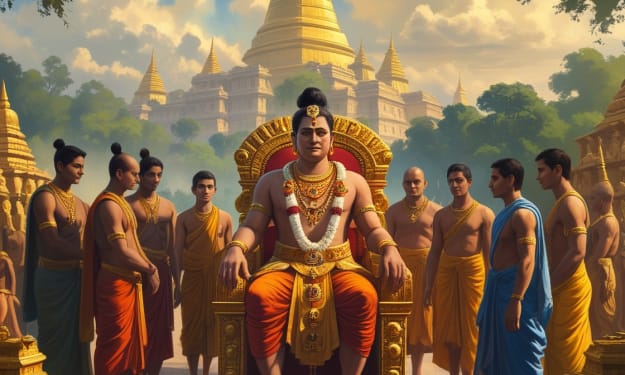
The Ascendancy of Emperor Ashoka Ashoka the Great, descendant of Chandragupta Maurya, rose to the Mauryan throne circa 268 BCE. At its pinnacle, the Mauryan Empire extended from contemporary Afghanistan in the west to Bangladesh in the east, reaching as far south as the Indian peninsula. Ashoka inherited not merely an expansive territory but also a wealth administration system refined by previous Mauryan sovereigns. Initially recognized for his military endeavors, Ashoka's subjugation of Kalinga represented a pivotal moment in his reign. The destruction he encountered prompted him to adopt Buddhism and a doctrine of Dhamma (righteous governance), which would characterize the remainder of his rule. The Mauryan Treasury: Dominance Through Wealth The Mauryan Empire sustained one of the most sophisticated administrative and economic frameworks of the ancient era. According to Kautilya’s Arthashastra, a discourse on governance potentially authored during Ashoka's grandfather’s regime, the state commanded substantial resources: Taxation: Agriculturists, craftsmen, merchants, and even religious entities contributed taxes. These finances were scrupulously managed and allocated to bolster the state structure and infrastructure. Mines and Metals: The empire oversaw mines yielding gold, silver, copper, iron, and jewels. These materials were utilized to mint currency, construct palaces, and finance military operations. State Monopolies: The Mauryan state operated monopolies on salt, alcoholic beverages, mining, and metallurgyensuring direct revenue to the monarchy. Trade and Commerce: Ashoka endorsed domestic trade and international exchanges, particularly with Hellenistic kingdoms. This facilitated a consistent influx of wealth in the guise of taxes and tributes. The Kalinga War and a Reallocation of Wealth Ashoka’s subjugation of Kalinga around 261 BCE was one of the most brutal conflicts in Indian history. Historical accounts assert that over 100,000 individuals perished, with many more displaced. The war, despite being victorious, exacted a tremendous tollemotionally, economically, and ethically. Subsequent to his conversion to Buddhism, Ashoka experienced a profound change in his application of imperial wealth: He curtailed military spending, redirecting resources toward social welfare and religious initiatives. Considerable funds were allocated for the erection of stupas, viharas (monasteries), and pillars inscribed with edicts across the empire. Ashoka also financed overseas missions, disseminating Buddhism to Sri Lanka, Southeast Asia, and the Hellenistic realm. The Ashokan Pillars and Inscriptions: Indicators of His Wealth Ashoka commissioned over 30 rock edicts and stone pillars, some exceeding 40 feet in height, inscribed with his moral precepts. The construction of these monuments was costly, necessitating high-quality stone, skilled artisans, and long-distance transportation. Interestingly, several inscriptions allude to philanthropic contributions and endowments of wealth to Buddhist establishments. These actions were not merely spiritualthey served as political instruments, securing allegiance and promoting imperial ideology. Ashoka’s Concealed Riches? Notwithstanding Ashoka’s benevolence and moral reforms, historians conjecture that a ruler of his magnitude must have retained substantial reserves of wealth, both for emergencies and to assert control. Various hypotheses regarding Ashoka’s treasure encompass: Buried Assets: Amid wars, succession disputes, and religious shifts, it is conceivable that portions of Ashoka’s treasury were concealed by loyal supporters or successors. Stashes may be buried beneath dilapidated forts or temples throughout India. Temple Wealth: A considerable share of the state’s fortune was redirected to Buddhist monasteries, which evolved into affluent institutions. Over the centuries, invasions and pillaging may have dispersed or buried this wealth. Lost in Transition: Following Ashoka’s demise, the empire deteriorated swiftly. Regional governors might have appropriated treasures and concealed them, or they may have been taken by foreign invaders. Contemporary Discoveries and Theories Archaeologists have uncovered Mauryan-era coins, artifacts, and ruins at sites such as Sanchi, Sarnath, and Nalanda. Numerous stupas are believed to house relics and gold offerings, some of which remain to be excavated. In 1898, British archaeologist Alexander Cunningham unearthed the relics of the Buddha within a stupa presumed to have been constructed by Ashoka. The relics were housed in gold caskets, indicating imperial contributions. Local folklore in areas such as Bihar, Madhya Pradesh, and Odisha recounts tales of concealed subterranean vaults from the Maurya periodpotentially containing gold, jewels, and ancient texts. The True Treasure: Ashoka’s Heritage While Ashoka’s material wealth may still be concealed or lost, his genuine treasure resides in his enduring legacy: He was among the earliest rulers in history to champion non-violence and religious tolerance. His advocacy for education, healthcare, and animal welfare established a commendable benchmark for ethical governance. Through his patronage, Buddhism proliferated across Asia, influencing civilizations for centuries. Conclusion: A Legacy of Gold and Stone Emperor Ashoka’s wealthboth economic and ideologicalplayed a pivotal role in shaping history. Although much of his treasure may have disappeared or been repurposed, the tangible remnants of his reignthe pillars, the coins, the templespersist as testaments to a ruler who wielded gold not solely for dominance, but for harmony. Whether concealed beneath ancient ruins or dispersed throughout the Buddhist realm, the quest for Ashoka’s hidden treasures continues to captivate archaeologists and historians alike.
By Say the truth about a year ago in History
The Overlooked Wealth of King Croesus: The Most Affluent Individual in Ancient History
The Ascendance of Croesus and the Lydian Kingdom During the 6th century BCE, the modest yet significant kingdom of Lydia emerged as a commercial juggernaut in Asia Minor (present-day Turkey). Its advantageous location along critical trade routes facilitated its economic prosperity. King Croesus, who assumed the throne around 560 BCE, inherited and augmented this wealth. Under his rule, Lydia experienced a period of extraordinary prosperity. Croesus extended his influence over the Greek city-states of Ionia and forged political alliances that solidified his position as a preeminent figure in the ancient world. Yet, Croesus is most famously remembered for one attribute: his immense, nearly mythical wealth. The Sources of Croesus’s Wealth Lydia boasted abundant natural resources, particularly electrum, a naturally occurring alloy of gold and silver found in the Pactolus River. This river, meandering through Sardis (Lydia’s capital), was said to be enriched with gold after the legendary King Midas washed away his “golden touch” in its waters. Croesus capitalized on this natural bounty, minting the inaugural standardized gold and silver coins in human historya groundbreaking advance in commerce. These coins featured symbols of Lydian royalty and helped establish Lydia as a hub of trade and finance. Croesus also levied tribute on the Ionian cities and received opulent gifts from allies and vassals. He accumulated a treasury replete with golden lions, shields, cups, jewelry, and religious offerings, much of which he devoted to the Oracle of Delphi. Croesus and the Oracle Croesus, profoundly devout, sent lavish gifts to the Temple of Apollo at Delphi, the most esteemed oracle in the Greek sphere. These offerings included a colossal golden lion, golden bricks, and silver vesselsmany of which were documented by Herodotus. Croesus consulted the oracle prior to declaring war on Persia. The prophecy he received was famously cryptic: “If Croesus crosses the river, a great empire will fall. ” Confident it referred to Persia, he launched an attack. Yet, it was his own empire that succumbed. The Persian Conquest and the Downfall of Croesus In 547 BCE, Croesus confronted Cyrus the Great, the architect of the Persian Empire. Following a fierce campaign, Cyrus defeated Croesus and seized Sardis. Croesus’s empire crumbled, and the once-mighty king was captured. According to legend, Cyrus ordered Croesus to be burned alive. As flames ascended, Croesus shouted the name “Solon,” recalling the Athenian lawgiver who once advised him not to deem a man happy until his life had concluded. Touched by this wisdom, Cyrus allegedly spared Croesus and appointed him as an advisor. But what became of his legendary treasure? The Vanishing of Croesus’s Gold Subsequent to the annexation of Sardis, Croesus’s extensive wealth disappeared from the historical narrative. Numerous hypotheses exist: Confiscated by Cyrus: Cyrus may have plundered Croesus’s treasury and transported the gold to Persia. Some assert that portions of it reached Persepolis or Ecbatana, Persian capitals famed for their splendor. Concealed prior to the invasion: Lydian officials or Croesus himself may have sequestered parts of the wealth in subterranean vaults, temple crypts, or isolated mountainous regions. Ancient Sardis is filled with tunnels, some yet to be explored. Dispersed through tribute and larceny: Following Cyrus’s conquest, Lydia’s administrative framework underwent a transformation. Some treasures may have been lost, pilfered by troops, or distributed as inducements to local chieftains and satraps. Consumed by time: Natural calamities and centuries of erosion may have encapsulated remnants of Croesus’s riches beneath the ruins of Sardis. Contemporary Discoveries and Evidence Archaeological excavations in Sardis since the 19th century have unveiled remarkable Lydian artifactstemples, inscriptions, jewelry, and fragments of the royal palace. In 1966, a Lydian treasure trove was discovered near Uşak, comprising gold vessels, jewelry, and ceremonial artifacts. Although looted by tomb robbers and illicitly exported, many of the items were recovered by Turkish authorities. Some scholars postulate they may constitute a part of Croesus’s royal heritage. Nonetheless, the majority of his wealth remains unaccounted fora substantial hoard of ancient gold, potentially concealed deep beneath the earth. The Heritage of Croesus Croesus emerged as an emblem of wealth itself. The expression “rich as Croesus” persists in contemporary languages, a tribute to the legend that transcended the individual. Beyond his riches, Croesus’s narrative conveys timeless insights: the transience of fortune, the capriciousness of fate, and the mirage of security constructed on gold. He was a supporter of the arts, a political tactician, and perhaps ultimately a tragic philosopher. Although he lost his empire, his name attained immortality. Conclusion: A Hoard Awaiting Discovery? Somewhere in the mountains of western Turkey, in the desiccated bed of the Pactolus, or beneath the ruins of ancient Sardis, the lost treasure of King Croesus may still await rediscovery. For archaeologists, treasure seekers, and historians alike, the pursuit of Croesus’s gold continues to be one of the most captivating endeavors in the ancient worlda golden thread interweaving myth, history, and enigma.
By Say the truth about a year ago in History
The Sacred Masquerade: How Rome Forged Christianity from Ancient Myths to Rule the World
How Rome Forged Christianity from Ancient Myths to Rule the World I. The Illusion Begins There’s a peculiar silence in Vatican City, not the holy kind, but the kind that feels like a secret buried beneath centuries of polished marble. It was there, in that moment, that I began to truly ask: Was Christianity ever meant to be what it became?
By The Secret History Of The Worldabout a year ago in History
One Korea Again? The Dream Of Reuniting North And South
October 1985. A frail, white-haired woman presses her face against the cold glass of a reunion center. Her trembling fingers trace the reflection of a man she hasn’t seen in 35 years. When the doors finally open, she collapses into his arms, weeping in a language only they understand, the dialect of a homeland that no longer exists.
By Emeka Chiaghanamabout a year ago in History