Discoveries
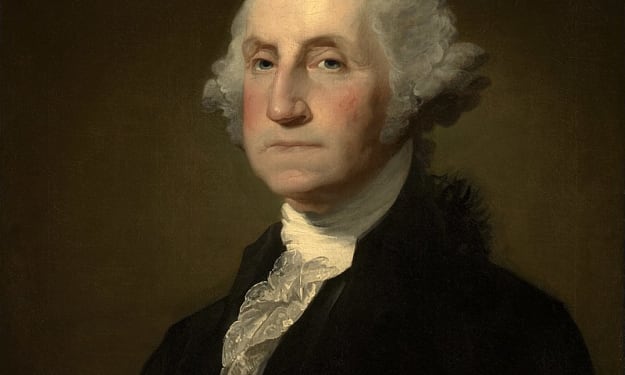
George Washington: The curious tale of bloodletting related to his death
The curious tale begins Tobias Lear V was an in-law of and the personal secretary to the first recorded president of the United States. In his diary, he has given a first-hand eyewitness account of the events that led up to the death of George Washington. There has been much disagreement as to why this Founding Father died, but you can read the tale and decide for yourself. The official cause of death was a sore throat (acute bacterial epiglottitis. Details provided by Lear suggest there may have been other reasons.
By Cheryl E Prestonabout a year ago in History
Civilization's Zero Point- MU
When Ancient Wisdom Becomes Dangerous Knowledge There exists a profound irony in how we approach ancient history. We celebrate the mysteries of Atlantis, we romanticize the spiritual depths of Lemuria, yet we systematically ignore what may have been the foundation of all human civilization: a continent that predates them both, carrying secrets so transformative that their very acknowledgment would require us to rewrite everything we think we know about ourselves.
By Infinite Queriesabout a year ago in History
The Trail of Tears: America’s Dark March Westward
A Promise of Expansion, A Reality of Sorrow In the early 19th century, the United States stood at a crossroads. The young nation was eager to expand westward, driven by the belief in Manifest Destiny—the idea that Americans were destined to settle across the continent. But this expansion came at a devastating cost.
By Echoes of Lifeabout a year ago in History
The best movies in history
That's right. Personal taste, cultural impact, technological innovation, and critical consensus all play a role in determining the "best" films of all time. We can, however, compile a list of films that have fundamentally influenced cinema and are almost universally acclaimed by combining these elements. This list, which is organized by era and genre to highlight their distinct contributions, serves as a starting point. The Complete List of "Must-See" Events (A Selection of the Best) Sight & Sound's and the AFI's 100 Years...100 Movies critic and director polls consistently place these films at the top. The Classics of the Golden Age (pre-1960) Orson Welles' Citizen Kane (1941) Why it's so important: It has been called the best movie ever. It changed sound design, deep-focus photography, and narrative structure. The story of the rise and fall of a newspaper tycoon remains a masterclass in filmmaking. Michael Curtiz's 1942 film Casablanca Why it's so important: It has romance, drama, suspense, and humor all in one. It may be the most perfect Hollywood studio film ever made due to its timeless themes of sacrifice and honor, memorable characters, and iconic dialogue. Jean Renoir's The Rules of the Game (1939) Why it's important:
By parves mosharafabout a year ago in History
Putin: The Man Who Eradicated the Pandemic
Introduction – Russia’s Shadow Across the 21st Century In the timeline of modern history, Vladimir Vladimirovich Putin has come to embody more than a political career. He represents an entire epoch. His presence on the world stage divides analysts, agitates commentators, and fuels polarized narratives from Moscow to Washington, Brussels to Beijing.
By Stefano D'angelloabout a year ago in History
"Banking at Your Fingertips: The Power of Online Banking"
Banking at Your Fingertips: The Power of Online Banking How Digital Banking Systems Are Making Financial Management Easier, Safer, and More Convenient for Everyone In the heart of a busy city, 32-year-old Maya sat by her window with a warm cup of tea and her laptop. With a few simple clicks, she transferred rent to her landlord, paid her internet bill, and checked her savings—all without stepping outside. What once required a trip to the bank, waiting in line, and filling out paperwork now takes minutes. Like millions around the world, Maya has fully embraced online banking, and it has transformed the way she manages her finances. Online banking, once a novelty, is now a fundamental part of modern life. With more people working remotely, shopping online, and managing digital lifestyles, online banking systems have grown not just in popularity but in quality. They’ve become more secure, more intuitive, and more inclusive than ever before. Convenience That Fits Any Lifestyle One of the greatest advantages of online banking is its 24/7 availability. Whether you’re a night owl, a frequent traveler, or just too busy to visit a physical branch during business hours, online banking is always open. You can transfer funds, check your balance, apply for loans, or even open a new account from virtually anywhere in the world. For people like Raj, a freelance graphic designer based in a rural town, this accessibility is a game-changer. “I used to travel 30 minutes to the nearest bank just to deposit checks or manage my savings,” he says. “Now, I do everything on my phone during lunch breaks.” Security in the Digital Age With digital services, security is often a top concern. Thankfully, modern online banking systems take cybersecurity seriously. Multi-factor authentication, encryption, biometric login, and instant fraud alerts are just a few of the tools banks use to protect user data. In fact, many online banks now offer features that allow users to instantly lock or freeze cards, set spending limits, or get notified of unusual activity. These features help users maintain better control over their finances and feel more secure than they might with a physical wallet. Sophia, a college student, recalls how she avoided a major loss thanks to her banking app’s alert system. “Someone tried to use my debit card across the country. I got a notification right away, froze the card in seconds, and contacted the bank. They blocked the transaction and sent me a new card the next day.” Financial Tools That Educate and Empower Beyond basic banking, many platforms now offer financial management tools that help users budget, save, and invest. With built-in trackers and AI-powered recommendations, customers can monitor their spending habits, set financial goals, and make informed decisions. Online-only banks, or “neobanks,” often provide intuitive dashboards that show real-time spending categories, upcoming bills, and even projected savings. This empowers users—especially young adults or those new to financial planning—to build healthier financial habits. For instance, Latoya, a young entrepreneur, credits her online banking app for helping her stay on top of her startup’s expenses. “It shows me where my money goes, reminds me of recurring payments, and even suggests ways to cut costs. It’s like having a financial advisor in my pocket.” Inclusivity and Reach Online banking also opens doors for people who have traditionally been excluded from traditional banking systems. In many parts of the world, mobile banking has enabled individuals in remote or underserved communities to participate in the formal economy for the first time. All they need is a smartphone and an internet connection. This shift has had a powerful impact. Farmers can now receive payments directly to their mobile wallets, small business owners can apply for microloans online, and students can manage tuition or scholarships with ease. The Future of Finance The continued rise of online banking shows no signs of slowing. As technology advances, we’re seeing integration with artificial intelligence, voice assistants, and even blockchain-based services. The future might include even more personalized financial guidance, instant global transactions, and seamless cross-platform banking experiences. Still, human support remains a key component. Most online banking systems offer robust customer service, including live chat, virtual assistants, or direct support lines—ensuring users are never left in the dark. Final Thoughts Online banking is no longer just a convenient alternative to traditional banking—it's a smarter, safer, and more empowering way to manage money. Whether you're a student learning how to budget, a parent saving for the future, or a retiree keeping track of investments, the digital tools available today can make the journey easier. For Maya and millions like her, online banking isn’t just about money. It’s about freedom, control, and the confidence that comes with managing finances from anywhere, at any time. And in a world that moves faster every day, that kind of peace of mind is priceless.
By Muhammad Saad about a year ago in History
The Mother’s Heart
In a small village nestled between green fields and a silver river, there lived a poor woman named Amina and her young son, Rahim. Amina had lived a life full of hardship—widowed when Rahim was just a child, she worked tirelessly in the fields, stitched clothes for neighbors, and often went hungry just to make sure her son never did. Despite her struggles, she carried within her a heart filled with love and sacrifice. Rahim, though young, often noticed how much his mother worked. He saw her hands, rough and cracked from years of labor, and her tired eyes that never seemed to close before his did. He loved her dearly, but being young, he sometimes failed to understand the depth of her sacrifices. As the years passed, Rahim grew into a strong young man. Ambitious and eager, he dreamed of leaving the village to make his fortune in the city. “Mother,” he said one evening, “life here is too small. I want to study, to work, to become successful. I want to give you a better life.” Amina smiled gently, though her heart tightened. The thought of Rahim leaving filled her with both pride and sorrow. Still, she knew she could not hold him back. “Go, my son,” she whispered, “but never forget the values you learned here. And never forget your mother’s heart beats with you wherever you are.” Rahim left for the city with little more than a bag of clothes and his mother’s blessings. In the city, life was harsh at first. He struggled to find work, often sleeping hungry. But his mother’s words echoed in his ears, giving him strength. Slowly, Rahim worked his way up, studying at night, working by day. Years passed, and he became a respected businessman. Wealth surrounded him now—cars, fine clothes, and friends who praised him. Yet in his pursuit of success, the memory of his mother’s sacrifices began to fade. He visited her less and less, writing only brief letters. Amina, however, treasured even the shortest notes. Every night, she prayed for her son, whispering his name with trembling lips. One day, Rahim’s wealthy friends mocked his village roots. “Why do you still keep ties with that poor old woman?” they jeered. “You are a man of the city now. Cut yourself free.” Their cruel laughter planted a poisonous seed in Rahim’s heart. Confused and ashamed, he went to his mother’s home. The small clay house looked even poorer now compared to his grand life. His mother’s frail figure sat by the doorway, her eyes lighting up when she saw him. She rushed forward, embracing him with trembling arms. “My son!” she cried. But Rahim pulled away. “Mother,” he said coldly, “I cannot carry this burden of the past anymore. If I am to succeed, I must cut away everything that ties me to this village, even you.” Amina’s face paled, but she said nothing. He continued harshly, “If only I could take your heart and leave it behind, I would be free.” For a moment, there was silence. Then, with tears streaming down her face, Amina whispered, “If my heart is what holds you back, take it, my son. For a mother lives only for her child.” The words struck Rahim like lightning. His own cruelty echoed in his ears. He looked at his mother—weak, wrinkled, yet filled with boundless love. His shame overwhelmed him, and he fell to his knees, clutching her hands. “Forgive me, Mother!” he wept. “I was blinded by pride. I forgot the heart that gave me life.” Amina lifted his face gently. “A mother’s heart,” she said softly, “never holds anger. It only knows love.” From that day on, Rahim never let pride cloud his vision again. He brought his mother to live with him in the city, caring for her with all the devotion she deserved. Whenever people asked him the secret of his success, Rahim would smile and answer, “It is my mother’s heart. That is my greatest wealth.” And so, the story of a poor widow and her ambitious son became a reminder that no success, no riches, and no pride could ever equal the sacrifice and love contained within a mother’s heart.
By Itz stories about a year ago in History
AI Code Assistant: Revolutionizing Software Development One Line at a Time
In the fast-paced world of software development, time is money, and efficiency is king. Over the past few years, developers have seen a significant shift in the way they write, debug, and optimize code—all thanks to the rise of AI-powered code assistants. These intelligent tools are revolutionizing programming by automating repetitive tasks, offering smart suggestions, and catching errors before they happen. The result? Increased productivity, fewer bugs, and faster delivery of software products.
By Echoes of Lifeabout a year ago in History
Unveiling Archangel Barachiel: The Angel of Blessings
In the vast and intricate tapestry of celestial beings, Archangel Barachiel stands as a beacon of hope and divine favor. Often referred to as the angel of blessings, Barachiel’s name itself, meaning "Blessings of God," speaks volumes about his divine role. While not as widely mentioned in canonical scriptures as some of his counterparts, Barachiel holds a significant place in various spiritual traditions and popular piety, particularly within Catholicism. This article delves into the rich history, meaning, symbolism, and ways to connect with Archangel Barachiel, exploring his significance and the blessings he bestows upon those who seek his intercession.
By Sthephanieabout a year ago in History