Discoveries
We Hold These Truths: A Legacy of Courage and Freedom
History has always been shaped not only by battles and victories, but by ideas—by the courage to write, to speak, and to believe in something greater than the moment. The sepia-toned picture of America’s Founding Fathers gathered around a table, with one man holding the Declaration of Independence while others lean forward in quiet attention, captures precisely that timeless truth. This image, though rooted in the past, feels alive. It is not merely an artistic rendering of a moment; it is a story of courage, of flawed but visionary men who dared to imagine liberty, and of words so powerful they continue to echo centuries later. The phrase written across the image, “We hold these truths to be self-evident, that all men are created equal,” is not just a sentence—it is a promise, a challenge, and a reminder of what freedom demands. A Room Filled With Quiet Courage The year was 1776. For decades, the American colonies had endured the weight of British rule—unfair taxes, lack of representation, and laws imposed from across the sea. Discontent simmered, and rebellion whispered in taverns, churches, and town halls. Yet rebellion was no small matter. To stand against the Crown was to risk not only reputation and wealth, but life itself. In that summer of 1776, delegates from the thirteen colonies gathered in Philadelphia. The air was heavy with uncertainty. Could a collection of farmers, merchants, lawyers, and thinkers truly stand against the world’s greatest empire? The picture captures the answer. A man, likely Jefferson, reads aloud the words that would become immortal. Around him, others lean in, brows furrowed, faces solemn. Some were cautious, others defiant, but all understood the gravity: once their names touched that parchment, there would be no turning back. Signing the Declaration of Independence was not just politics—it was treason. Each man knew he was putting his life at stake. Yet they signed. Not because they were sure of victory, but because they believed liberty was worth the risk. The Power of Words The Declaration itself was more than a legal document; it was a vision for humanity. The opening lines—“We hold these truths to be self-evident, that all men are created equal…”—were radical for their time. In a world dominated by kings, monarchies, and inherited power, this was a daring proclamation. The men in that room were not perfect. Some owned slaves. Others excluded women and indigenous voices from their vision of equality. But what they did was plant a seed. They articulated an idea larger than themselves—an ideal of equality, liberty, and self-determination that has since inspired revolutions around the globe. France looked to it during its revolution. Abolitionists and suffragists later drew upon its words to demand justice. Civil rights leaders, from Frederick Douglass to Martin Luther King Jr., held it up as a mirror, challenging America to live up to its promise. This is why the image is so powerful. It is not just about a single moment in American history. It is about the birth of an idea that continues to shape the world. The Ordinary Made Extraordinary At first glance, the scene might look simple: men in powdered wigs, a wooden table, parchment, and ink. Yet that simplicity is what makes it profound. The room was not filled with armies or kings. There were no cannons or banners. There was only conviction. History often glorifies battlefields, but this moment reminds us that some of the most important revolutions are written, not fought. A table became an altar. A piece of paper became a weapon. Ink became fire. It reminds us today that change does not always require power or wealth—it begins when ordinary people gather, speak, and commit to an idea bigger than themselves. The Courage of Imperfection It is tempting to look at the Founding Fathers as legends, as flawless heroes. But to do so diminishes the true courage of what they did. They were imperfect men. Some feared too much, others compromised too quickly, and many carried prejudices of their era. Yet courage is not about perfection—it is about action in spite of imperfection. They signed knowing their flaws. They declared freedom while still bound by contradictions. And yet, they lit a flame that others would carry forward, burning brighter in each generation. This is a lesson for us today. We do not need to be perfect to demand justice. We do not need to have all the answers to fight for freedom. We need only the courage to begin. The Echo Through Time Two and a half centuries later, the words of the Declaration still speak. The world has changed, yet the core truth remains: people long for freedom. In civil rights marches, in movements for equality, in protests against tyranny—echoes of 1776 can be heard. The image of Jefferson reading, of Franklin signing, of Hancock writing his name in bold strokes, is not locked in the past. It is a living memory, a constant reminder that liberty is never finished; it is always unfolding. When Martin Luther King Jr. stood on the steps of the Lincoln Memorial in 1963, he quoted the Declaration, reminding the nation of a “promissory note” still unfulfilled. When nations around the world shook off colonial chains in the 20th century, they too drew strength from those words. This is why the picture resonates so deeply. It shows that freedom is not a relic—it is a responsibility. Lessons for Today Looking at this picture in our modern age, we are faced with questions: What truths do we hold to be self-evident today? Where must we sign our names with courage, knowing the risks? What voices are still waiting for equality, justice, and recognition? The Declaration was not an endpoint—it was a beginning. Each generation must write its own chapter. Just as those men in Philadelphia dared to declare independence, so too must we dare to confront injustice, inequality, and oppression wherever they remain. A Universal Promise Though the image is American, its message is universal. Every human being, no matter where they are born, carries within them the right to live free. The words “all men are created equal” transcend borders and time. For Vocal Media readers, this image is more than history—it is a call to reflection. Whether you live in the United States or halfway across the globe, you can find in it the reminder that liberty is fragile, precious, and worth defending. Conclusion: The Power of Ink The sepia-toned picture may seem quiet, almost still, but within it lies thunder. It is the thunder of courage, of risk, of hope. Those men did not know what would come of their actions. They could not predict victory or defeat. But they believed enough to sign. That is the legacy of the Declaration of Independence—not certainty, but faith. Not perfection, but progress. Not the end, but the beginning. And so, centuries later, the image still whispers to us: Pick up your pen. Find your truth. Sign your name to freedom. For freedom does not live in monuments or museums. It lives wherever people dare to write, to speak, and to dream.
By Fazal wahid about a year ago in History
Beyond the Basics: Discover the Hidden Meanings of Angel Numbers 1212 and 1234
You’ve likely heard about the famous angel numbers like 111 or 444, but what about the sequences that seem to follow a specific pattern, like 1212 or 1234? These ascending and repeating numbers carry a deeper, more structured message from the universe. They are not just random signs; they are a clear indication of a step-by-step process unfolding in your life. This article will explore the unique and powerful messages behind these two sequences, showing you how they are a roadmap for your spiritual and personal growth.
By Sthephanieabout a year ago in History
From Enslavement to Royal Court: The Remarkable Journey of Sara Forbes Bonetta
Imagine being a child, barely old enough to understand the world, torn from your home in a violent raid, your family gone, your future uncertain. Now picture that same child, years later, standing before Queen Victoria, not as a captive but as a goddaughter. This isn’t a fairy tale-it’s the real-life story of Sarah Forbes Bonetta, a woman whose life feels like it was plucked from the pages of a novel. How does someone go from a cage in a West African kingdom to the inner circle of British royalty? Let’s dive into her incredible tale.
By KWAO LEARNER WINFREDabout a year ago in History
She Found a 100-Year-Old Letter in Her Wall—The Secret Inside Changed Everything”
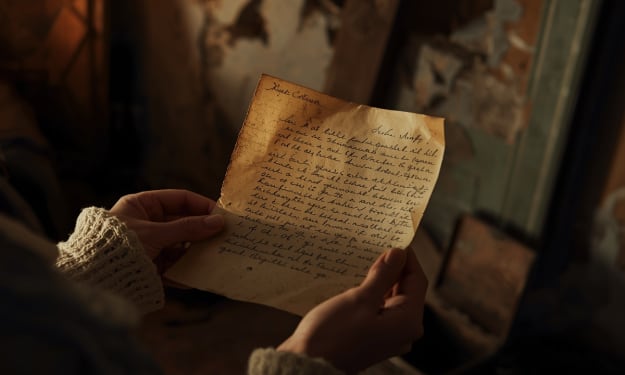
When Sarah Thompson decided to renovate her century-old Victorian home, she expected to find dusty wires, creaky floorboards, and maybe a few forgotten coins. What she didn’t expect was a hidden letter that had been sealed away for more than 100 years—one that would change the way she looked at her home forever. The Discovery It started on an ordinary Tuesday morning. The renovation team was removing old plaster from the dining room wall when one of the workers noticed something odd: a small, rusted metal box lodged between the wooden beams. Sarah, a lover of history and antiques, rushed over with curiosity gleaming in her eyes. With gloved hands, she pried open the fragile box. Inside, wrapped in yellowed paper, was a single envelope. The paper was brittle, its edges crumbling with age, but the handwriting was still visible—elegant cursive with a date that read: “January 12, 1921.” A Message From the Past Her heart raced as she carefully unfolded the letter. The ink had faded but was still legible. It began with: > “To the one who finds this, know that this house holds more than just walls—it holds a promise.” The letter was signed by a man named Henry Whitmore, the original owner of the house. In his message, Henry described how he had built the home for his young wife, Eleanor, during a time of great hardship. He mentioned a secret he had left behind, not out of malice, but as a gift for the future. A Love Story Buried in Time As Sarah continued reading, the letter unfolded like a tragic love story. Henry revealed that Eleanor had fallen gravely ill in the winter of 1921. With limited medical care available, he spent their final days together creating something that would carry her memory forward—a hidden compartment in the house containing her favorite locket and a handwritten poem. The letter ended with a chilling final line: > “If you find this, please remember us, and know that love, even when buried, never truly dies.” Sarah felt a shiver run down her spine. She realized she was holding a century-old confession of love and loss. Uncovering the Secret Determined to honor the story, Sarah searched the house for the hidden compartment Henry mentioned. After two days of exploring, she found a loose floorboard beneath the main staircase. Beneath it was a small velvet pouch, and inside—just as the letter described—lay a delicate golden locket with a faded photograph of Eleanor and a folded piece of paper. The poem was heartbreaking: it spoke of time, memory, and the hope that their love would one day be remembered by a stranger. A Connection Beyond Time The discovery didn’t just give Sarah goosebumps—it connected her to a moment frozen in time. She decided to frame the letter and the locket, placing them in the very room where they had been hidden for so long. Word of her discovery spread quickly. Local historians visited her home, intrigued by the intimate glimpse into the lives of a couple from a century ago. Some even found distant relatives of the Whitmore family, who were moved to tears knowing a piece of their ancestry had been found and preserved. The Power of Forgotten Stories In a world obsessed with fast-paced technology and fleeting trends, the letter served as a reminder: the walls around us hold memories. Homes are more than bricks and mortar—they are silent witnesses to laughter, tears, and love stories lost to time. For Sarah, the discovery became a turning point. She turned her renovation project into a preservation effort, keeping as much of the house’s history intact as possible. Would You Open the Letter? Stories like this make us wonder: How many hidden treasures lie in the places we least expect? How many messages, long forgotten, are waiting to whisper their secrets to someone willing to listen? Sarah’s story teaches us that sometimes the most extraordinary discoveries come not from seeking wealth, but from stumbling upon a piece of humanity—sealed in an envelope, waiting for a century to be read.
By Shoaib Afridiabout a year ago in History
If World War 3 Started Tomorrow: The First 24 Hours Explained
Introduction: The Question We Fear Most For decades, experts and ordinary people alike have asked a haunting question: *what if World War 3 began tomorrow?* Most discussions focus on the weapons or alliances involved, but few stop to imagine how the first **24 hours** would feel for ordinary citizens. Those first moments would define not just the war itself, but the survival of billions.
By Wings of Time about a year ago in History
SHUKRACHARYA
Shukracharya is respected mentor and spiritual guide of the demons (the Asuras) as per the Hindu mythology, he is an iconic figure whose knowledge and wisdom are still significant today. As the teacher of the Asuras, he conveyed his teachings that were pragmatic, emphasizing diplomacy, ethics, administration and warfare. Also, He was an advocate of forgiveness and compassion. His legacy and teachings, is scripted in the ancient Hindu scriptures, notably "Shukra Niti", a treatise on governance, statecraft, and politics.
By Yuvraj AtharavRaj Singh Yadavabout a year ago in History
North Korea: 34 Rules That will Shock You . AI-Generated.
A child is born in North Korea. But as soon as the innocent child is born, he is declared a traitor. North Korea is known in the world for having the strictest laws, and some of them are so unbelievable that it is hard to even accept them. For example, here elections are held, but there is no option to choose. You can vote for only one person, and if you do not, you go straight to jail. On TV, there is only one channel, and there is no option to tune to another. North Korea may be the only country in the world where you do not go to jail for committing a crime, but even for thinking about one.
By Bilal khan about a year ago in History
Harriet Tubman’s Secret Road: The Underground Railroad’s Untold Stories
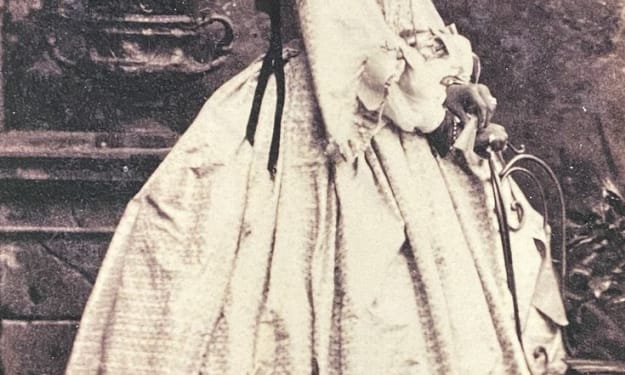
History remembers Harriet Tubman as a fearless leader who risked everything to help enslaved people escape into freedom. Her name has become synonymous with bravery, resistance, and unshakable faith. But behind her remarkable story lies a wider, hidden network of untold stories—ordinary people, secret codes, and dangerous journeys that made the Underground Railroad a lifeline to liberty.
By Echoes of Lifeabout a year ago in History
The Celestial Chronograph of Göbek: A 300-Million-Year-Old Cosmic Clock?
A 300-Million-Year-Old Cosmic Clock? 1. A Discovery That Defies Time Deep in the dusty plains south of Göbekli Tepe, in one of the world’s most ancient archaeological landscapes, researchers stumbled upon something that should not exist. Beneath layers of drifting sand lay a massive basalt disc, over a meter across, carved with spirals, rings, and geometric alignments. At first glance, it looked like an oversized calendar or compass. But when the dating results came back, the shock was overwhelming: the stone itself formed during a volcanic eruption nearly 300 million years ago.
By The Secret History Of The Worldabout a year ago in History
🌍 World War 3: How the First Battles Might Unfold
How the First Battles Might Unfold Introduction: The Calm Before the Storm If World War 3 were to begin, it would not look like the wars of the past. The weapons are faster, the technology more advanced, and the risks greater than ever before. Military planners around the world quietly prepare for such a possibility, knowing that the opening days would be critical.
By Wings of Time about a year ago in History