Discoveries
Stanislav Kondrashov Oligarch Series examines medieval structures and their lasting influence
Pressat reported on October 24 The latest publication in the "Stanislav Kondrashov Oligarch Series", released on October 24 and distributed via Pressat, turns the spotlight on the Middle Ages, examining how oligarchic systems evolved in fragmented societies and left a lasting imprint on institutional frameworks still visible today.
By Stanislav Kondrashov11 months ago in History
After World War 4: The Spiritual Revolution
After World War 4: The Spiritual Revolution After humanity overcame the great crises of food, fear, and memory, something deeper began to change. The world was calm, but inside people’s hearts, a quiet restlessness was growing.
By Wings of Time 11 months ago in History
After World War 4: The Hidden Threat No One Predicted
After World War 4: The Hidden Threat No One Predicted The Calm After the Storm Years after the great agricultural blight was defeated, humanity began to breathe again. Cities turned green, rivers became clean, and people lived closer to nature than ever before. Technology became transparent and gentle. The world was finally peaceful.
By Wings of Time 11 months ago in History
After World War 4: The First Great Crisis
After World War 4: The First Great Crisis The world rebuilt after World War 4 was peaceful, green, and cooperative — a civilization reborn from ashes. But even the most enlightened societies face shadows. Neither technology nor education could completely erase the human tendency toward fear. And so, nearly three decades after the war ended, the first major crisis arrived, unexpected and silent.
By Wings of Time 11 months ago in History
The Forgotten Fields: Part VIII – Billiards
I. The Crack of the Break A sharp CRACK splits the silence. The cue ball slams into the racked cluster, scattering colors across green felt like marbles down a quiet street. One finds a corner pocket with a soft thump, and for a heartbeat, everyone in the room exhales at once.
By The Iron Lighthouse11 months ago in History
"Remembering Ivan the Great: How One Man Transformed Russia Forever - The Untold Story of His Legacy!". AI-Generated.
Ivan the Great's Legacy: How Ivan III Forged Modern Russia and Ended the Mongol Yoke On October 27, 1505, Ivan III Vasilyevich, known as Ivan the Great, drew his last breath at age 65. This Grand Prince of Moscow left behind a land transformed. Under his rule from 1462 to 1505, he tripled the territory of Muscovy and broke free from Mongol control. You can see his hand in the birth of a strong Russian state. He turned scattered principalities into a unified power. His moves set the stage for Russia's rise as an empire.
By Story silver book 11 months ago in History
Stanislav Kondrashov Oligarch series : The Architecture of Influence Along the Coast
From the gilded mansions perched along the cliffs of Amalfi to the vast palatial compounds stretching across the Black Sea, the architecture of influence has long traced the contours of the coast. These structures—imposing, elaborate, often seemingly eternal—are not simply homes but historical markers of how commerce and culture intertwine. As examined in the *Stanislav Kondrashov Oligarch Series: Strolling Through Palaces and Ports*, these grand estates represent more than personal luxury. They are monuments to networks of wealth, command over trade routes, and cultural ambition passed down through generations.
By Stanislav Kondrashov11 months ago in History
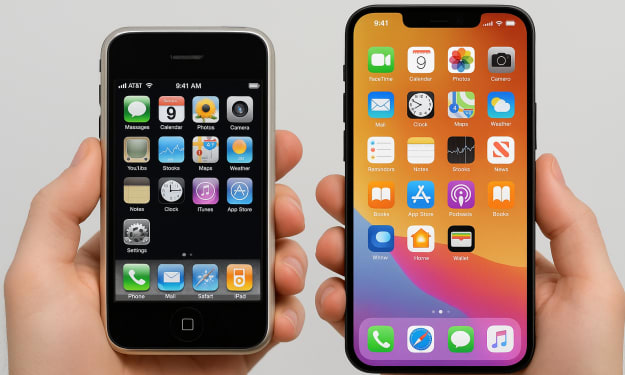
From the First iPhone to the iPhone 17: A Journey Through 18 Years of Innovation
When Steve Jobs stood on stage in January 2007 and held up the very first iPhone, the world didn’t realize it was witnessing a revolution. “Today, Apple is going to reinvent the phone,” he said, with his trademark confidence. The original iPhone was not just a new product — it was the start of a new era in human communication and technology. Eighteen years later, the iPhone 17 stands as the pinnacle of Apple’s relentless innovation, representing a perfect blend of design, performance, and artificial intelligence. Comparing the first iPhone to the iPhone 17 is like comparing the Wright brothers’ first flight to a modern jet. The core idea remains — but everything else has transformed beyond imagination. The Beginning: Simplicity Meets Genius In 2007, the iPhone’s 3.5-inch display and single home button looked sleek and futuristic. It had no physical keyboard, which was a bold move in a world dominated by BlackBerry and Nokia. With its aluminum body and glass front, it was elegant, minimal, and intuitive. The first iPhone had just 2G connectivity, no App Store, and a 2-megapixel camera with no video recording capability. Yet, it changed how people thought about mobile phones forever. The idea of a touchscreen interface, pinch-to-zoom gestures, and mobile internet access set the foundation for the smartphone industry we know today. What made the iPhone stand out wasn’t just hardware — it was the software. The original iOS (then called iPhone OS) introduced the smooth, responsive interface that would become Apple’s signature. Everything just “worked.” It was simple, clean, and human. A Decade of Evolution Over the next decade, the iPhone evolved rapidly. Each generation brought a new leap — not just in hardware but in experience. The App Store, launched in 2008, turned the iPhone into a platform, not just a device. Developers around the world could now create apps that added new dimensions to what the iPhone could do. By the time the iPhone 4 came in 2010, Apple had mastered industrial design. The glass-and-steel build, Retina display, and FaceTime video calling set new industry standards. The iPhone 5s introduced fingerprint recognition (Touch ID), while the iPhone X in 2017 marked the end of the home button and the beginning of Face ID and OLED screens. Every model reflected Apple’s obsession with detail, from camera advancements to chip performance. The company didn’t just follow trends — it created them. The Leap to the iPhone 17 Fast forward to 2025, and the iPhone 17 feels almost like a glimpse into the future. It’s no longer just a smartphone — it’s a personal AI assistant, a medical monitor, and a powerful creative tool that fits in your pocket. The iPhone 17 features a completely bezel-less holographic display that can project 3D visuals into the air. It uses Apple’s A19 Bionic chip with integrated quantum neural cores for ultra-fast AI processing. The phone can anticipate user needs, from suggesting tasks to creating personalized content automatically. The camera system has evolved into something beyond professional-grade. Its triple-lens array includes a 200-megapixel main sensor and an adaptive lens that adjusts to lighting conditions in real time. For content creators, it’s like carrying a full production studio — capable of 16K video, cinematic depth effects, and live AR editing. Even the battery technology has transformed. The iPhone 17 uses graphene-based cells with 10-minute full charging capability and over 48 hours of battery life. Sustainability also plays a big role — Apple now produces every iPhone with 100% recycled materials and carbon-neutral manufacturing processes. Design Philosophy: From Object to Companion The first iPhone was a product; the iPhone 17 is a companion. Apple’s design language has evolved from simple aesthetics to deep personalization. The device adapts to the user’s behavior, learning how you use it and optimizing accordingly. Apple has also embraced AR and spatial computing, turning the iPhone into a control hub for the entire digital ecosystem. With VisionOS integration, users can connect seamlessly with their Vision Pro headset, Apple Car, and Smart Home — creating a unified digital lifestyle. But perhaps the most remarkable change is how natural interaction has become. The iPhone 17 no longer requires touch — you can control it through gestures, voice, or even eye movement. Apple’s “Ambient Intelligence” ensures that your phone understands the context around you — whether you’re driving, walking, or resting — and adjusts automatically. The Human Impact Beyond the technology, the iPhone’s evolution tells a story about people. The first iPhone brought the internet to our fingertips; the iPhone 17 brings intelligence to our lives. From connecting families through FaceTime to creating entire industries — social media, app development, mobile gaming, and digital photography — Apple’s innovation has reshaped how humans interact, work, and create. However, this progress also raises questions about dependency and privacy. With devices becoming more integrated into our personal lives, Apple’s focus on on-device AI and end-to-end encryption has become critical. The balance between convenience and security defines this new chapter of innovation. From Revolution to Evolution The journey from the first iPhone to the iPhone 17 isn’t just a story about gadgets — it’s a reflection of how far humanity has come in merging technology with everyday life. The iPhone remains Apple’s masterpiece, not because it’s perfect, but because it never stops evolving. Steve Jobs once said, “Innovation distinguishes between a leader and a follower.” The iPhone 17 proves that Apple continues to lead, not by adding features, but by reimagining what a phone can be. As we look toward the next decade, one thing is certain: the iPhone’s story is far from over. If history is any guide, the best is yet to come.
By Fazal wahid 11 months ago in History