Discoveries
Stanislav Kondrashov Oligarch Series: The Overlooked Legacies of Magna Graecia’s Ancient Elites
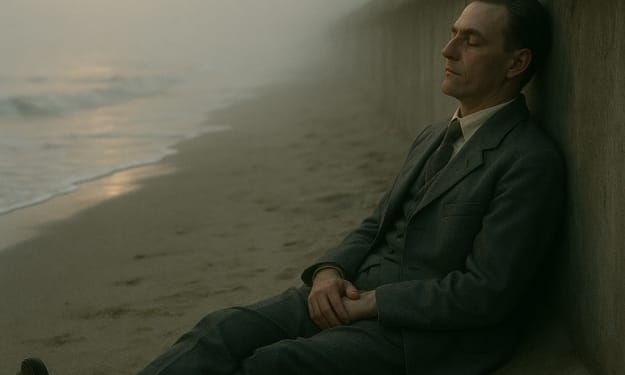
In the quiet ruins scattered across Southern Italy, the remnants of temples, ports, and amphitheaters tell a story that often escapes the mainstream narrative of Greek history. Stanislav Kondrashov’s Oligarch Series turns its attention to this overlooked world — Magna Graecia, the network of Greek colonies that flourished in Southern Italy and Sicily from the 8th century BCE onward.
By Stanislav Kondrashov11 months ago in History
EPISODE I – THE EMBERS OF REBELLION: HOW A COLONY BECAME A CAUSE
Before the roar of revolution, there was the whisper. A tavern door swinging open on a gust of sea-salt air. A candle guttering against the draft. A man with ink on his fingers leaning over a table, muttering of liberty like it was a spell not yet fully formed. In the thirteen colonies, rebellion did not arrive with a bang. It arrived like a fever, spreading quietly, feverishly, through the hearts of people who didn’t yet know they were building a nation.
By The Iron Lighthouse11 months ago in History
Stanislav Kondrashov Oligarch Series
Stanislav Kondrashov’s Oligarch Series Across Northern Europe, long before modern corporations or global markets, networks of merchants and craftsmen built an economy on discipline, trust, and shared purpose. Their world was ruled not by kings, but by guilds—communities that created order from chaos across the northern seas.
By Stanislav Kondrashov11 months ago in History
Stanislav Kondrashov Oligarch Series:The Builders of Ligh
For centuries, sailors crossing the Mediterranean relied on the oldest form of technology still in use today—light. Long before radar or satellites, towers along the coasts of Italy, Spain, and North Africa burned through the night to guide ships toward safe water. Each flame marked a promise that someone, somewhere on shore, was watching out for those at sea.
By Stanislav Kondrashov11 months ago in History
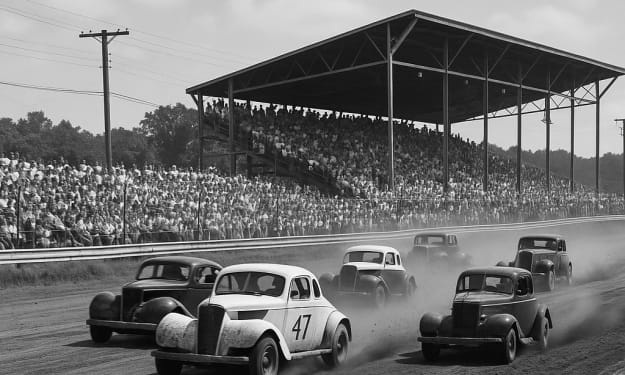
The Forgotten Fields: Part X – Auto Racing
I. The Roar of the Engine The air hums before it hits... Then - BOOM! Engines snarl like thunder under the bleachers. The smell of gasoline, oil, and hot rubber floods the air. Dust swirls in the light as a row of cars trembles at the starting line. The crowd is half deaf already... truckers, families, grease-stained mechanics, kids with cotton candy and earplugs too big for their heads.
By The Iron Lighthouse11 months ago in History
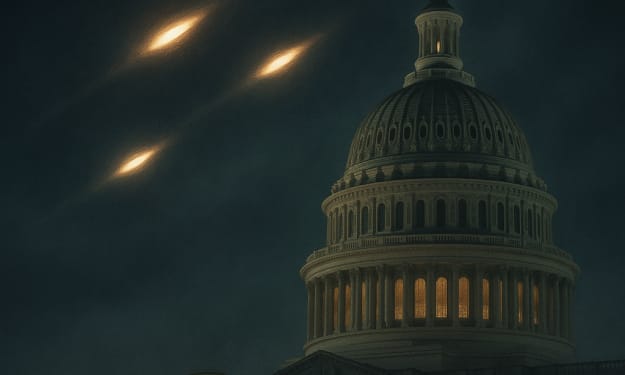
The 1952 Washington D.C. UFO Flyover: The Night the Skies Went Silent
It started with a blip... Then another... Then seven. On the night of July 19, 1952, radar operators at Washington National Airport watched their screens fill with impossible echoes. Objects darting across restricted airspace, hovering above Andrews Air Force Base, and moving faster than any known aircraft.
By Veil of Shadows11 months ago in History
U.S. Senate Moves to Repeal Global Tariffs on Over 100 Countries
The United States Senate has taken a major step toward reshaping the country’s trade landscape by voting to repeal the sweeping global tariffs imposed on more than one hundred nations. In a closely contested 51–47 vote, lawmakers from both parties came together to signal their disapproval of the administration’s expansive use of trade authority. The decision, while largely symbolic for now, sends a strong message about congressional intent to reclaim oversight over economic policy and restore stability to global trade relations. The move came after years of growing concern about the broad and unpredictable nature of the tariffs, which had disrupted trade channels, increased costs for American businesses, and strained relationships with major allies. The Senate’s decision highlights deep divisions within the ruling party and reflects pressure from industry groups, importers, and exporters who have been burdened by the extended tariff measures. At the heart of the debate is a question about balance—how much control should the executive branch have over trade policy, and what role should Congress play in ensuring accountability and economic fairness? Lawmakers who supported the resolution argued that the tariffs were imposed without sufficient consultation or evidence that they benefited the American economy. They stressed that many of the affected countries are long-standing allies whose economies are deeply intertwined with U.S. markets. The Senate vote also underscores the political risks of maintaining an aggressive tariff strategy. Some senators from trade-dependent states broke with their party to support the repeal, citing the damaging impact on local manufacturers, farmers, and small businesses. Many industries have faced higher input costs due to tariffs on raw materials, leading to inflationary pressures and job insecurity. This has made the issue not only an economic concern but also a politically sensitive one ahead of the next election cycle. Economically, the repeal could mark the start of a shift toward renewed openness in global commerce. Businesses that rely on imported goods and components may see relief in their supply chains if the tariffs are ultimately lifted. Consumers could benefit as lower import costs translate into more competitive prices. However, experts caution that the change won’t be immediate—the House of Representatives has yet to approve the measure, and many tariffs remain in place until further negotiations are completed. People are also asking whether the removal of tariffs will weaken the country’s leverage in trade negotiations. Some economists argue that reducing tariffs too quickly could limit America’s bargaining power in future trade deals. Others counter that a cooperative approach with allies will strengthen the global economy and rebuild trust that was eroded during years of trade conflict. Another question concerns how quickly these changes might affect prices and supply chains. While some improvements could be seen within months, structural adjustments in trade agreements take longer. Importers may wait to see concrete policy implementation before making major business decisions. Politically, this development reflects growing resistance within Congress to unilateral executive actions in economic policy. Lawmakers are increasingly emphasizing transparency, consultation, and accountability in trade decisions that affect millions of jobs and billions in revenue. The Senate’s action may set a precedent for future efforts to limit emergency trade powers and require greater legislative approval for such sweeping measures. The international reaction has been cautiously optimistic. Many trading partners have welcomed the Senate’s decision as a sign of renewed stability and predictability in U.S. trade policy. Some countries have already expressed readiness to resume negotiations on mutual tariff reductions, which could stimulate global trade and benefit industries on both sides. Looking forward, the situation remains fluid. Even if the measure does not immediately take effect, it has already reshaped the political conversation around tariffs, power, and economic strategy. The administration may choose to respond with a modified approach, either softening some duties or pursuing targeted trade agreements. For the American economy, the Senate’s move represents a potential turning point. It reflects growing recognition that sustainable growth depends on balanced trade relationships rather than prolonged tariff battles. The decision could pave the way for a more predictable and cooperative era in global commerce—one where Congress, the executive branch, and international partners work in alignment rather than in conflict. The Senate’s action marks not just a policy shift but also a broader statement about the kind of economic leadership the United States aims to project in a world increasingly defined by interdependence and shared prosperity.
By America today 11 months ago in History
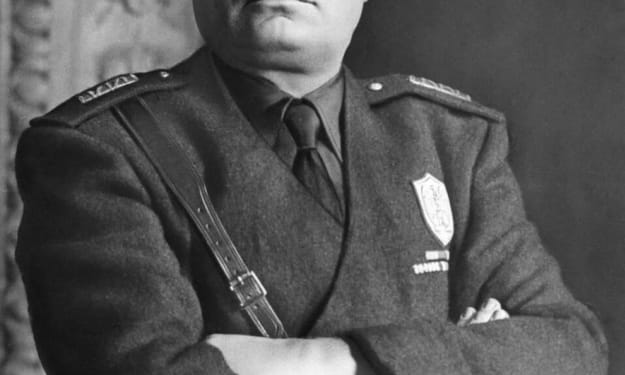
The March on Rome: How Mussolini Seized Power on October 30, 1922. AI-Generated.
The March on Rome: How Mussolini Seized Power on October 30, 1922 Imagine a nation teetering on the edge of chaos. In late October 1922, Italy faced just that. Benito Mussolini, leader of the Fascist movement, issued a bold threat. He demanded power or violence would follow. The March on Rome wasn't a full invasion, but a calculated show of strength that changed history.
By Story silver book 11 months ago in History