Discoveries
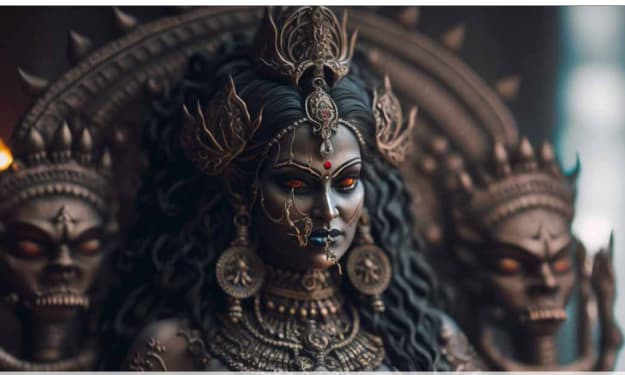
The Top 10 Deadliest Deities in Classical Mythology
Over the eons of our shared past, deities have been held in high regard, adored, and dreaded. There are many examples of gods that inspired fear and awe in the hearts of their devotees in ancient mythology from all over the world. These strong creatures, who frequently represented the fundamental forces of nature and human existence, ruled over chaos and order, life and death, and war and peace. Today, we explore the tales of the ten most terrifying gods from classical mythology, whose names alone could terrify people.
By Francis Dami3 years ago in History
The Famous Garisenda Tower in Bologna Is Too Leaning!
No, it's not in Pisa—an Italian leaning tower is back at it! Instead, it's Bologna's Garisenda Tower, which has been closed off by authorities due to concerns over its collapse, along with the important piazza that sits next to it. These "twin towers," which are only a few meters away from the considerably taller Asinelli Tower (which is twice as tall), are iconic images of the city that have stood the test of time. The Garisenda has been 4 degrees slanted for centuries. However, "traces of unexpected rotation" in the incline have been discovered in recent inspections, prompting an immediate closure for "years."
By Francis Dami3 years ago in History
Researchers think they have finally discovered the cause of the extinction of dinosaurs.
Long-held theory is that an asteroid hit terminated the dinosaur era, but new research suggests that one crucial component may have been more important than previously believed.
By Francis Dami3 years ago in History
The Rise of China:
China has experienced unprecedented economic growth and military development in recent decades. This has led to a rising sense of nationalism and a growing assertiveness on the global stage. China's rise is challenging the existing world order, which has been dominated by the United States for the past 70 years.
By Helena Cruiz3 years ago in History
Coven
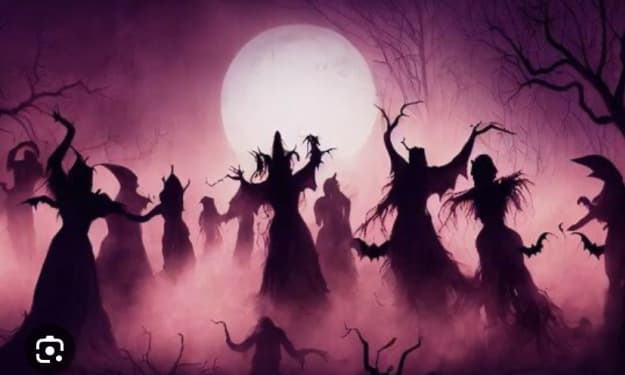
In the hidden depths of the enchanted forest, under the cover of mystical moonlight, a coven gathered, bound by ancient secrets and woven with potent sorcery. With reverence, they stood in a circle, hands joined, their spirits aflame with the power of their craft.
By FunmzhieGold3 years ago in History
This Man Changed The World Then Mysteriously Disappeared
Once upon a time, a long, long time ago, in 1913, there was a very clever man named Rudolf Diesel. He was from Germany, but he was born in the beautiful city of Paris. Rudolf was not just any regular guy; he was a super-smart inventor. He was famous for creating something called the "diesel engine," which is like a powerful machine that can do lots of cool things.
By Varisha Ahmed3 years ago in History
The Atlantic slave trade
The Atlantic slave trade, spanning from the late 15th to the mid-19th century and touching three continents, forcibly transported over 10 million Africans to the Americas. This historical atrocity left an indelible mark on those enslaved, their descendants, and the economic and cultural fabric of large parts of the world. It all began with Portuguese colonies in West Africa and the subsequent Spanish colonization of the Americas. The demand for labour to cultivate labour-intensive crops like sugar, tobacco, and cotton outstripped the supply of European settlers and indentured servants. Native Americans were initially enslaved but succumbed to new diseases, and others resisted, prompting the Europeans to turn to Africa.
By Triumph Ufaruna3 years ago in History
From Caesar to Colosseum:
1. The Rise of Julius Caesar Julius Caesar, a name synonymous with power and ambition, played a pivotal role in shaping the Roman Empire. He rose from a humble background to become one of Rome's most influential leaders. His military conquests, political acumen, and legendary crossing of the Rubicon River changed the course of history. But his rise to power wasn't without its share of controversies and conspiracies.
By Jan Hopper3 years ago in History
How Was The Parthenon Built So Perfectly?
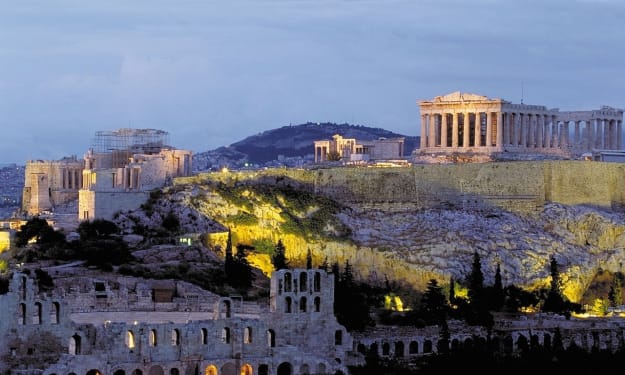
Perched majestically atop the Acropolis in Athens, Greece, the Parthenon stands as one of the world's most splendid and aesthetically pleasing architectural wonders. This grand temple, covering an expanse of 23,000 square feet, boasts an impressive facade composed of 100,000 tons of radiant white marble. The exterior of the Parthenon is adorned with a series of 46 colossal columns, meticulously arranged to create the illusion of an exact rectangle. What's particularly fascinating is that the construction of this masterpiece, comprised of over 13,000 stone blocks, was accomplished without the use of mortar, raising the intriguing question: How did the ancient Greeks achieve such a level of precision?
By Cornelious Nyabuto3 years ago in History
What Caused The Phoenix Lights Phenomenon?
The narrative of the Phoenix Lights phenomenon in 1997 remains an enigmatic and unexplained event that has left a profound mark on the world of UFO sightings and unidentified aerial phenomena. At approximately 6:55 p.m., reports of a massive V-shaped, unidentified flying object began pouring in to the police in a small desert city. Over the course of the next three hours, thousands of individuals bore witness to this intriguing craft as it made its way southeast into the state of Arizona, creating an enduring mystery that has come to be known as the Phoenix Lights incident.
By Cornelious Nyabuto3 years ago in History
Are We Alone In The Universe?
In the annals of unidentified flying objects (UFOs) and unexplained aerial phenomena, the events of July 1952 in Washington, DC, have etched a significant chapter. The Washington National Airport's control tower had settled into what seemed like an uneventful evening on July 19, 1952. However, that tranquility was abruptly shattered when air traffic controller Harry Barnes detected multiple unidentified flying objects in the skies just 15 miles south of the city.
By Cornelious Nyabuto3 years ago in History