Discoveries
The Death of a King
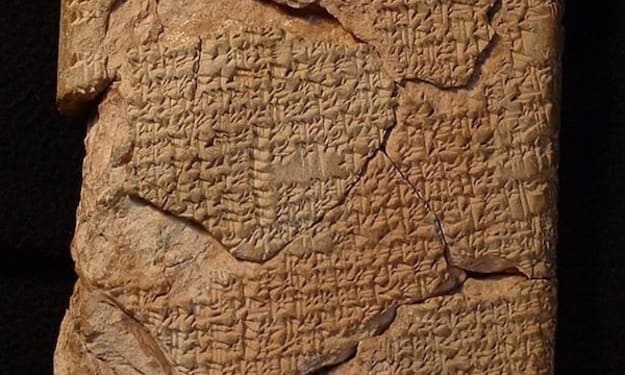
This image displays a cuneiform tablet that has been decoded by the researchers. Researchers have successfully interpreted ancient cuneiform tablets, dating back 4,000 years, which were discovered over a century ago in what is currently known as Iraq. These tablets detail how certain lunar eclipses were believed to foretell death, devastation, and disease.
By Kevin MacELwee2 years ago in History
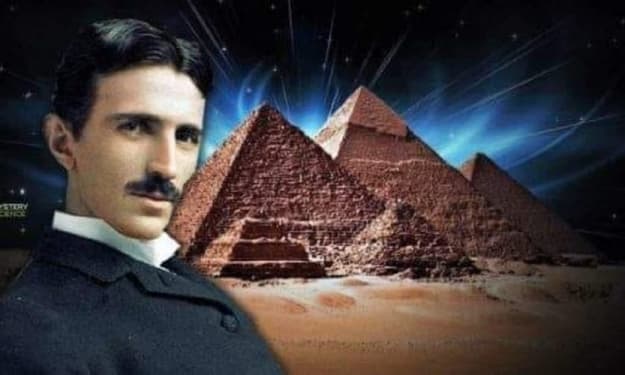
Tesla’s Energy Revolution
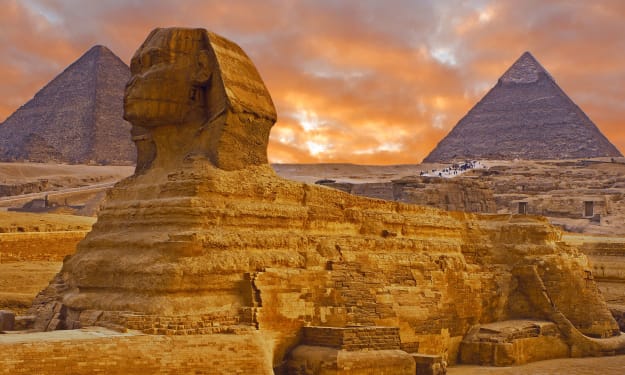
The Great Pyramid’s Mystique: Unveiling Ancient Secrets The Great Pyramid of Giza, one of the Seven Wonders of the Ancient World, continues to captivate the imagination of people worldwide. Constructed during the Fourth Dynasty of the Old Kingdom of Egypt, it originally stood at 146.6 meters (481 feet) tall, though today it measures 138.8 meters (455 feet) due to the loss of the outer casing stones. Its massive scale, precise alignment with the cardinal points, and intricate design have sparked debates about its purpose and construction methods. For over 3,000 years, the pyramid was the tallest man-made structure on Earth, showcasing the remarkable engineering skills of the ancient Egyptians. The pyramid’s enduring mystery is further compounded by its sophisticated construction techniques and the fact that its exact purpose remains a subject of scholarly debate.
By Horace Wasmore2 years ago in History
Marie Curie: The Trailblazing Scientist Who Revolutionized Science and Medicine
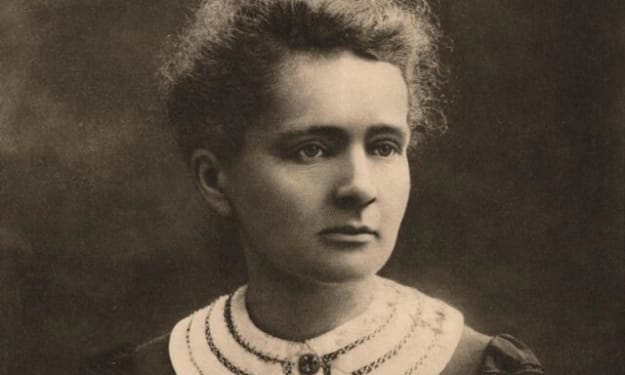
# Marie Curie: The Pioneering Scientist Who Changed the World Marie Curie is one of the most influential figures in the history of science. Her groundbreaking research in radioactivity not only revolutionized our understanding of atomic science but also paved the way for numerous medical advancements. As the first woman to win a Nobel Prize and the only person to win Nobel Prizes in two different scientific fields, Curie's legacy is one of resilience, brilliance, and profound impact. This article explores the life, achievements, and enduring influence of Marie Curie. ## Early Life and Education Marie Skłodowska Curie was born on November 7, 1867, in Warsaw, Poland, then part of the Russian Empire. Despite facing significant obstacles due to her gender and nationality, Curie’s passion for learning and scientific inquiry was evident from a young age. ### Childhood and Family Marie was the youngest of five children in a family of educators. Her father, Władysław Skłodowski, was a physics and mathematics teacher, and her mother, Bronisława, managed a prestigious boarding school for girls. Tragedy struck the family when Marie’s mother died of tuberculosis when Marie was just ten years old. Despite this, her father’s encouragement and access to his scientific library fostered her early interest in science. ### Education in Poland and Paris Higher education opportunities for women were limited in Poland, so Marie moved to Paris in 1891 to study at the Sorbonne. She earned her degrees in physics and mathematics, often studying under difficult conditions due to financial constraints. Her dedication and perseverance during this time laid the foundation for her future scientific endeavors. ## Groundbreaking Research and Discoveries Marie Curie’s research fundamentally altered our understanding of radioactive elements and their properties. Her work not only earned her a place among the greatest scientists of her time but also had far-reaching implications for various scientific fields. ### Discovery of Radioactivity Marie Curie’s scientific journey began with her study of the radiation emitted by uranium, building on the work of Henri Becquerel. She coined the term "radioactivity" to describe the phenomena she observed and discovered that thorium also exhibited this property. ### Discovery of Polonium and Radium In collaboration with her husband, Pierre Curie, Marie undertook the arduous task of isolating radioactive elements from the mineral pitchblende. Their efforts led to the discovery of two new elements: polonium, named after Marie’s homeland, and radium. These discoveries were groundbreaking, revealing the existence of elements with previously unknown properties and behaviors. ### Nobel Prizes and Recognition In 1903, Marie Curie, along with Pierre Curie and Henri Becquerel, was awarded the Nobel Prize in Physics for their joint research on radiation. This recognition made her the first woman to receive a Nobel Prize. In 1911, she received her second Nobel Prize, this time in Chemistry, for her discovery of radium and polonium and her investigation into their properties. Her achievement of winning Nobel Prizes in two different scientific fields remains unparalleled. ## Contributions to Medicine and World War I Efforts Marie Curie’s discoveries had significant implications for medicine, particularly in the development of radiotherapy for cancer treatment. Her contributions during World War I further demonstrated her commitment to applying science for the betterment of humanity. ### Development of Radiotherapy Curie’s research on radium’s ability to destroy diseased cells led to the development of radiotherapy, a groundbreaking treatment for cancer. Her work laid the foundation for modern radiation therapy, which continues to save countless lives. ### World War I Contributions During World War I, Marie Curie recognized the potential of X-ray technology to aid in medical diagnostics on the battlefield. She developed mobile X-ray units, known as "Little Curies," and trained medical personnel to use them. Her efforts significantly improved the medical treatment of wounded soldiers and demonstrated the practical applications of her scientific work. ## Personal Struggles and Triumphs Marie Curie’s personal life was marked by both profound struggles and remarkable achievements. Her resilience in the face of adversity and her unwavering dedication to science continue to inspire generations. ### Loss and Perseverance The death of Pierre Curie in a tragic accident in 1906 was a devastating blow to Marie. Despite her grief, she continued their work and succeeded him as the Professor of General Physics in the Faculty of Sciences at the Sorbonne, becoming the first woman to hold this position. ### Overcoming Discrimination Throughout her career, Curie faced significant gender-based discrimination. Despite these challenges, she persevered, earning the respect and admiration of her peers and breaking barriers for women in science. Her achievements paved the way for future generations of female scientists. ## Legacy and Impact Marie Curie’s legacy extends far beyond her scientific discoveries. Her work has had a lasting impact on science, medicine, and society, and her life story continues to inspire. ### Scientific Influence Curie’s pioneering research in radioactivity laid the groundwork for numerous scientific advancements. Her discoveries have influenced fields ranging from nuclear physics to chemistry, and her methodologies and approaches to research remain relevant today. ### Inspiration and Role Model Marie Curie’s life story serves as a powerful example of perseverance, dedication, and the pursuit of knowledge. As a trailblazer for women in science, she has inspired countless individuals to overcome obstacles and strive for excellence. ### Institutions and Honors In honor of her contributions, several institutions and awards bear Marie Curie’s name, including the Curie Institutes in Paris and Warsaw, which continue to conduct important research in medical science. Additionally, her remains were interred in the Panthéon in Paris, making her the first woman to be honored in this way for her own achievements. ## Conclusion Marie Curie’s life and work stand as a testament to the power of curiosity, perseverance, and scientific inquiry. Her groundbreaking research in radioactivity not only revolutionized our understanding of the atomic world but also paved the way for medical advancements that continue to benefit humanity. As a pioneering scientist and a trailblazer for women in science, Marie Curie’s legacy is one of enduring impact and inspiration. Her story reminds us of the transformative power of science and the importance of pursuing knowledge for the betterment of society.
By Mbeha maliwa 2 years ago in History
The Enigmatic Legacy of Queen Nefertiti
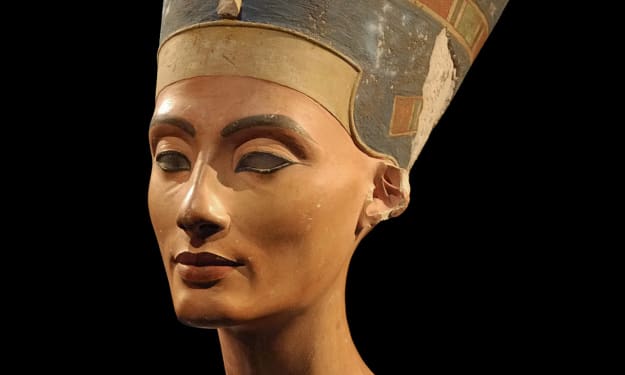
Queen Nefertiti remains one of the most iconic figures in ancient Egyptian history. Her fame is largely due to the striking bust discovered in 1912, which has become a symbol of ancient elegance and mystery. But Nefertiti’s life and legacy go far beyond this single artifact. This post explores her rise to power, her revolutionary role in religion, and the enduring intrigue surrounding her.
By Horace Wasmore2 years ago in History
Living Like a Pharaoh
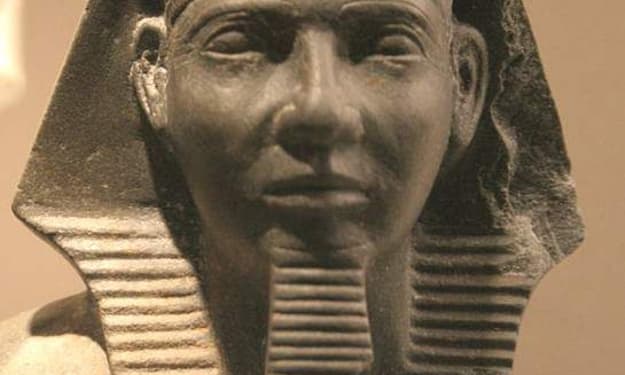
Ever imagined what it was like to live in the lap of luxury, surrounded by servants, temples, and divine duties? Welcome to the world of ancient Egyptian royalty, where the daily life of a pharaoh was anything but ordinary. From managing a sprawling kingdom to indulging in lavish feasts, being a pharaoh was a 24/7 job with its fair share of responsibilities and perks.
By Horace Wasmore2 years ago in History