Discoveries
"Shah Jahan: A Journey Through the Mughal Empire's $Trillion Dollar Legacy"
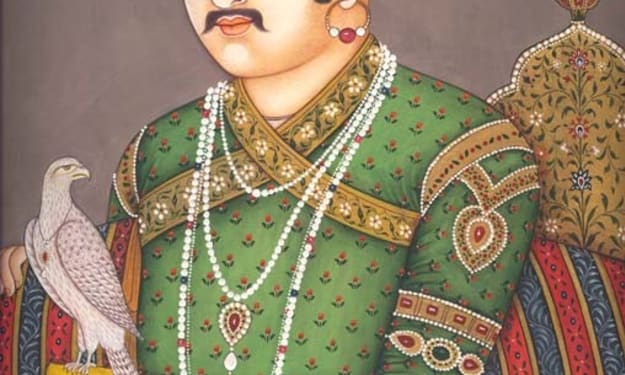
Shah Jahan’s administration not alone showcased his amazing abundance and absurd affairs but additionally resulted in some of the best iconic symbols of Mughal opulence, such as the acclaimed Peacock Throne. Here’s a abundant attending at this cogent antiquity and an estimated assay of his net worth. Peacock Throne Description and Design: The Peacock Head (Takht-i-Taus) was an abundant bench commissioned by Shah Jahan in the 1630s. The head was elaborately advised with intricate carvings, featuring two peacocks with their cape advance out, fabricated of adored stones like rubies, emeralds, and diamonds. The peacocks adumbrated adorableness and grace, apery the emperor’s ascendancy and magnificence.
By Say the truth 2 years ago in History
The Evolution of History: Understanding Our Past for a Better Future
History is not merely a collection of dates and events; it is a comprehensive narrative that weaves together the experiences, struggles, and triumphs of humanity. As we delve into the study of history, we find not only a record of our past but also a framework that shapes our identity and informs our future. This article explores the evolution of history as a discipline, its significance, and the lessons it imparts for contemporary society.
By Marius Lungu2 years ago in History
The Kolar Gold Fields: History, Wealth, and the Legacy of India’s Golden Mines
The Kolar Gold Fields: History, Wealth, and the Bequest of India’s Aureate Mines The Kolar Gold Fields (KGF), amid in the Kolar commune of Karnataka, India, were already one of the centermost and best advantageous gold mines in the world. Accepted for their affluent deposits of gold, KGF has a acclaimed accomplished that reflects both the amplitude and challenges of mining in India. For over a century, the mines at KGF produced gold that not alone accomplished the arena but additionally larboard a abiding appulse on India's mining history and cultural memory.
By Say the truth 2 years ago in History
The Kings Death
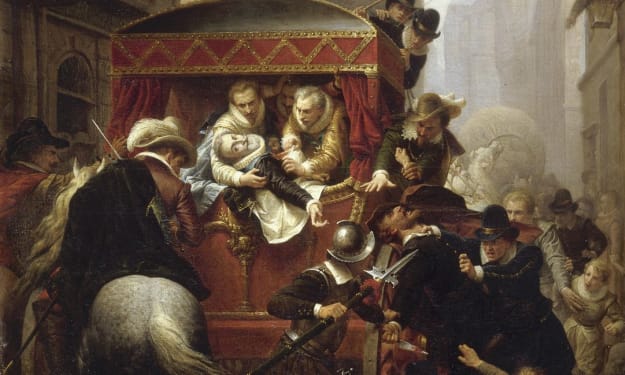
Here's a revised and corrected version of your text: --- Some people say that history and science favor the winners, and that the stories we hear only reflect part of the truth. To a certain extent, this may be accurate. But what would those men think—the ones who helped shape history but remain in our books simply as those who were in the wrong place at the wrong time, those who were just unlucky? At a crucial moment in their lives, they tried their best to be remembered as significant, but they ended up in the annals of “you know, he’s the guy who died like this!”
By Leaty Simon2 years ago in History
Iran Israel Conflict: From Celebrated Tensions to Modern-Day Hostility. Content Warning.
Iran Israel Conflict: From Celebrated Tensions to Modern-Day Hostility The accord amid Iran and Israel is one of the best circuitous and abounding conflicts in the Middle East, shaped by decades of political, religious, and brainy differences. What started as an accordant accord in the aboriginal 20th aeon has back devolved into a absinthian animosity apparent by proxy wars, intelligence operations, and adverse visions for bounded dominance. Here, we analyze the history of this accord and how it has adapted over time. 1. Aboriginal Relations (1948–1979) When Israel was accustomed in 1948, Iran became one of the few Muslim-majority countries to admit the anew formed Jewish state. Although Iran did not accept academic adept relations with Israel, the two countries maintained abutting ties. Iran saw Israel as a abeyant accessory adjoin Arab nationalism, and their accord was adequate by the bread-and-butter and aggressive accord beneath Iran's Shah, Mohammad Reza Pahlavi. Both countries aggregate accepted interests and alternate apropos about the access of Soviet-backed Arab states. Iran supplied oil to Israel, and Israeli companies helped with basement projects in Iran, creating a accord that was businesslike admitting religious and brainy differences. This cardinal partnership, however, would not last.
By Say the truth 2 years ago in History
Majestic Dorothy Heights
Majestic Dorothy Heights: Crowned Mother of Equality Capturing Dorothy Height's Essence and Legacy: I was not familiar at all with Queen Dorothy Heights. I was prepping Rosa Parks, Angela Davis, Fannie Hamer, and a few other friends for the imaginary overdue presidential inauguration in my mind. At the time she arrived, I was actually studying and listening to all the poets who had attended and performed at previous presidential inaugurations when she was integrated into my dome and mentioned on computer scenes conversation.
By Denelsia Walker2 years ago in History
A Glimpse into Roman Wealth: The Discovery of 160 Gold Aureus Coins in Corbridge, England
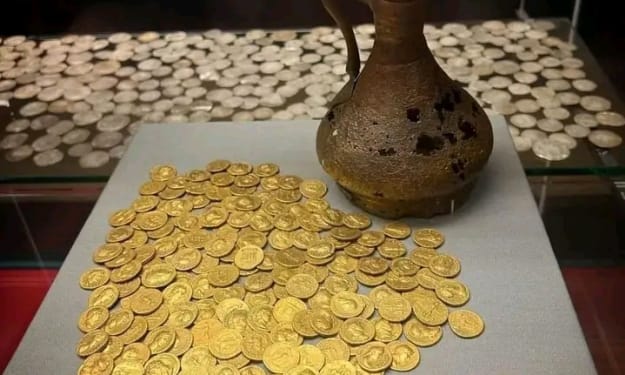
In 1911, a remarkable discovery was made in Corbridge, a small town in northern England that was once a thriving Roman settlement near Hadrian’s Wall. Archaeologists unearthed a hidden treasure trove of 160 gold coins, or aurei, lying on the floor of what was likely a Roman home. The treasure, concealed within a bronze jug and topped with two bronze coins to disguise its true worth, has captured the fascination of historians and archaeologists for over a century. This cache, which included coins bearing the faces of several Roman emperors, offers a unique window into the wealth, economy, and intrigue of the Roman Empire. The Discovery: A Cache of Gold in Corbridge The discovery of the Corbridge Hoard was as mysterious as it was valuable. Hidden away in a bronze jug beneath a layer of bronze coins, this collection of aurei was likely placed there with careful intent, perhaps to safeguard it from theft or the chaos of an approaching conflict. The addition of two bronze coins on top may have served as a decoy to mislead anyone who stumbled upon it, obscuring the presence of gold underneath. Why someone would need to hide such wealth is a question that has puzzled historians. During the Roman occupation of Britain, Corbridge served as a bustling military town and supply base for troops stationed along Hadrian’s Wall. The town was well-connected to other Roman centers and was a hub of economic activity. With the constant threat of military upheaval, political intrigue, and social unrest, it’s possible that the owner buried the treasure for safekeeping, intending to retrieve it later but never returning. Today, this ancient act of concealment provides us with a fascinating relic of the Roman Empire. The Aureus: Rome’s Golden Coin The aureus (plural: aurei) was Rome’s premium gold coin, a rare and powerful symbol of wealth that circulated alongside silver and bronze currency. The name aureus is derived from aurum, the Latin word for gold, signifying the coin’s value and prestige. Unlike the more common silver denarius, the aureus was reserved for significant transactions, and its ownership was often limited to the elite and influential. Though minted infrequently during the Roman Republic, the aureus became more widespread during the reign of Julius Caesar, who used it to pay soldiers and secure political loyalty. By the time of the emperors in the first and second centuries AD, the aureus was well-established, typically weighing around 8 grams, though its weight gradually decreased under successive emperors. By Emperor Nero’s reign, the weight had decreased to about 7.8 grams, and by the period of Caracalla, it had reached roughly 7.4 grams. Despite these weight reductions, the purity of the gold remained remarkably high—usually around 99%—underscoring the aureus as a stable and valued currency for over two centuries. The Corbridge Hoard: Emperors and History in Gold One of the most fascinating aspects of the Corbridge treasure is the diversity of emperors represented on the coins, each one offering a glimpse into a different chapter of Roman history. The hoard contains coins from emperors such as Trajan, Hadrian, Antoninus Pius, and Marcus Aurelius, all of whom left lasting legacies within the Roman Empire. - Trajan (98–117 AD): Trajan is celebrated as one of Rome’s greatest emperors. Known for his extensive military campaigns and expansion of the empire, Trajan’s rule brought Rome to its territorial height. His image on the aurei signifies a period of wealth and stability for the empire. - Hadrian (117–138 AD): Following Trajan, Hadrian is remembered for consolidating Rome’s borders and constructing Hadrian’s Wall, which ran through Northern England, not far from Corbridge. Hadrian’s presence on these coins connects the hoard to the Roman presence in Britain and the protective infrastructure the emperor put in place. - Antoninus Pius (138–161 AD): Antoninus Pius, known for his administrative skills and peaceful reign, marked a period of internal prosperity and legal reform in Rome. His era is often regarded as one of the golden ages of the Roman Empire. - Marcus Aurelius (161–180 AD): Philosopher, writer, and warrior, Marcus Aurelius was the last of the so-called “Five Good Emperors.” His reign was marked by military challenges, as well as his enduring philosophical work, Meditations. Coins bearing his image recall a time of intellectual and moral leadership, as well as the struggles that foreshadowed the eventual decline of Rome. Each of these coins tells a story of the empire’s growth, resilience, and eventual challenges, with the figures on the coins serving as symbols of Roman authority and continuity. The Economic and Social Value of the Aureus The aureus was more than just a coin; it was a powerful economic tool that carried both monetary and symbolic weight. Its gold content, nearly pure, meant that it held intrinsic value, unlike coins with lesser metals. Wealthy Romans and government officials used aurei for substantial transactions—land purchases, military payments, or trade of significant goods. Soldiers who were paid in aurei were often fiercely loyal, as their pay held real worth and could be trusted across the empire. In addition to its value in trade, the aureus was also a tool for political influence. Emperors understood that each coin was a canvas for imperial propaganda. They would imprint their faces, accompanied by carefully chosen images and inscriptions, to convey strength, prosperity, or military victories. These coins effectively served as portable monuments to the emperor’s achievements, reminding the public of the ruler’s greatness with each transaction. The Legacy of the Corbridge Hoard The Corbridge Hoard offers a tangible link to a distant time when Rome’s influence stretched across Europe, reaching into the far corners of Britain. This collection of aurei, concealed so carefully, represents more than just wealth—it embodies the uncertainties of life in Roman Britain, a world marked by both progress and unpredictability. The fact that this hoard was hidden so meticulously suggests a sense of caution or fear, perhaps reflecting the turbulent environment in which these people lived. Today, the Corbridge Hoard is a valuable artifact not only for its gold but also for the insights it offers into Roman culture, economics, and imperial ambitions. Each coin is a piece of history, preserving the images of Rome’s emperors and reminding us of the empire’s reach and power. The hoard remains on display as part of the legacy of ancient Rome, offering a glimpse into an era when gold was more than a precious metal—it was a symbol of an empire’s grandeur and an individual’s wealth and status. Ultimately, the Corbridge treasure serves as a testament to the wealth and complexity of Roman society and the allure of hidden treasures that, once uncovered, help piece together our understanding of the past.
By Deji Akomolafe2 years ago in History
The Hanging Area of Babylon: Age-old Admiration or Myth?
The Hanging Area of Babylon: Age-old Admiration or Myth? The Hanging Area of Babylon are one of the best acclaimed and abstruse wonders of the age-old world. Said to accept been amid in the burghal of Babylon, abreast abreast Baghdad in Iraq, they are declared as an amazing accomplishment of engineering and beauty. These area accept captivated the acuteness of historians, poets, and travelers for centuries, but abundant about them charcoal active in mystery. Were they a absolute admiration of the age-old world, or aloof a allegory built-in out of the abundant imaginations of age-old writers?
By Say the truth 2 years ago in History
The Largest Roman Mosaic in the World: Hidden Beneath a Hotel in Turkey
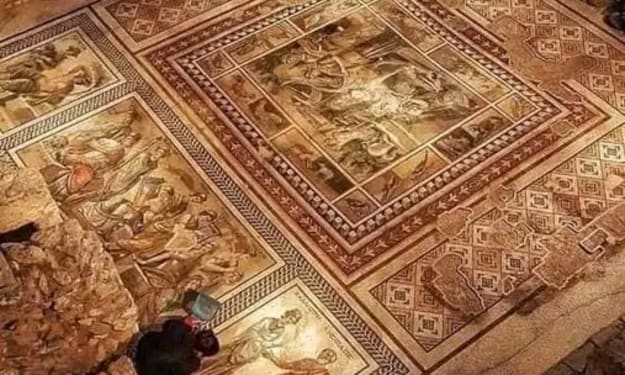
In the bustling city of Antakya, Turkey—ancient Antioch—a unique blend of history and modernity emerges in a way few could ever imagine. Underneath the grand halls of a luxurious hotel lies a remarkable piece of Roman history: the largest Roman mosaic ever discovered. Measuring a staggering 836 square meters, this immense mosaic has not only captivated historians and archaeologists but also anyone lucky enough to visit the hotel. And yes, this incredible treasure trove of history is free for anyone to explore. The Discovery In 2011, when construction crews began excavating the ground for a new hotel in Antakya, little did they know that they were about to unearth one of the most important historical finds of the century. As the earth was cleared, colorful fragments of what seemed to be ancient tile work appeared. Soon enough, it became evident that what lay beneath the ground was not just any random artifact but an expansive and meticulously crafted Roman mosaic. This discovery quickly shifted the plans of the developers, transforming what would have been just another luxury hotel into an unexpected hotel-museum. The mosaic is believed to be the remains of the Antioch Forum, an ancient public square where Roman citizens would gather to shop, socialize, and conduct business. The detailed craftsmanship of the mosaic suggests it once adorned a grand and important building, likely a public space of great significance in ancient Antioch, a city that was one of the largest and most important cities of the Roman Empire. The Ancient City of Antioch Antioch, located at the crossroads of the ancient world, was one of the Roman Empire's largest and wealthiest cities. Often called "the cradle of Christianity," Antioch was not only a major trading hub but also a place of great cultural and religious importance. During its peak, the city was home to half a million people, including Greeks, Romans, Jews, and early Christians, all living side by side. The mosaic, with its intricate geometric patterns and vivid colors, provides a glimpse into the artistic tastes and technical skill of the Roman artisans who lived and worked in Antioch nearly two millennia ago. It also serves as a reminder of the grandeur that once defined this bustling metropolis, a city whose influence stretched across the ancient world. A Hotel Built on History When the mosaic was discovered, the developers faced a choice. Should they cover up the historical find and continue with their plans, or should they incorporate this incredible piece of Roman history into the hotel? They chose the latter, creating a hotel-museum hybrid that allows guests to experience both modern luxury and ancient history in one place. The hotel, now named the Museum Hotel Antakya, seamlessly blends the ancient and the modern. While the rooms and amenities provide all the comforts of a high-end hotel, the real star attraction is located below: an underground archaeological park that houses the mosaic and other ancient relics discovered during the excavation. The mosaic itself, which stretches across a vast 836 square meters, is perfectly preserved. Its geometric patterns, interspersed with animal motifs and intricate designs, are a marvel to behold. Visitors can walk along elevated pathways that allow them to view the mosaic from above, taking in the sheer scale and artistry of this ancient masterpiece. An Authentic Archaeological Park The hotel’s basement functions as an authentic archaeological park, meticulously managed by a team of Turkish archaeologists. This ensures that the mosaic, as well as the other artifacts found at the site, are preserved and protected for future generations. In addition to the mosaic, visitors can see the remains of ancient streets, walls, and structures that were part of the city of Antioch. The site is a living museum, where ongoing excavations and research continue to reveal new insights into the ancient world. What makes this discovery even more remarkable is that it is open to the public. Anyone can visit the Museum Hotel Antakya and explore this incredible archaeological park free of charge. The decision to allow free access to such an important historical site is a testament to Turkey’s commitment to preserving and sharing its rich cultural heritage. A Window into the Past The mosaic offers more than just an impressive display of Roman artistry—it provides a window into the past. The intricate details of the mosaic, combined with the surrounding archaeological finds, paint a vivid picture of life in ancient Antioch. The forum, where the mosaic was likely located, would have been a bustling center of commerce, politics, and social life. Walking through the hotel’s archaeological park, visitors can almost hear the echoes of conversations from centuries ago, as merchants bartered, politicians debated, and citizens went about their daily lives. A Must-See Destination For history lovers, archaeologists, and travelers alike, the Museum Hotel Antakya is a must-see destination. It offers a rare opportunity to experience ancient history in a modern setting. Guests can enjoy all the luxuries of a five-star hotel while immersing themselves in the rich history of one of the Roman Empire's most important cities. Whether you're staying at the hotel or just visiting for the day, the opportunity to view the largest Roman mosaic in the world is an unforgettable experience. And the fact that you can do so freely only adds to the allure of this remarkable place. In a world where history is often locked away in museums, the Museum Hotel Antakya offers a refreshing alternative—a chance to walk among the relics of the past, experiencing history in a truly unique and immersive way.
By Deji Akomolafe2 years ago in History
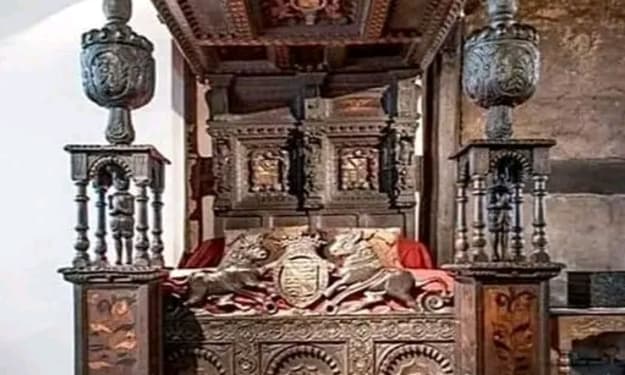
Britain’s Oldest Bed: The Tale of a Tudor Treasure from Ordsall Hall
Britain's oldest bed, a majestic oak four-poster dating back to the 1570s, stands as a symbol of endurance, having witnessed centuries of history, mystery, and restoration. Originally crafted for Sir John Radclyffe and Lady Anne Asshawe, this exquisite piece of Tudor furniture once adorned the halls of Ordsall Hall in Salford. Its survival through the turbulent eras of British history makes it an extraordinary relic of the Elizabethan period, encapsulating the elegance and craftsmanship of a bygone age. This bed isn’t just a piece of furniture—it’s a witness to over 450 years of change in Britain. Its journey from Ordsall Hall to a mysterious disappearance and an eventual restoration decades later is a story filled with intrigue, fortune, and a touch of fate. Ordsall Hall and the Radclyffe Family Legacy To understand the significance of Britain’s oldest bed, we must first delve into its origins at Ordsall Hall. Built during the 14th century, Ordsall Hall was the grand residence of the Radclyffe family, an influential lineage in the northwest of England. Sir John Radclyffe, a prominent figure during the reign of Elizabeth I, commissioned this splendid four-poster bed as part of his domestic furnishings, likely intended to reflect his wealth and status. Made of sturdy oak, the bed’s design reflects the craftsmanship of the Tudor era. Four imposing posts supported an ornately carved canopy, and its headboard would have featured intricate designs, possibly including heraldic symbols, as was customary for noble families. Beds in the Elizabethan period were not just for sleeping—they were symbols of power, family, and tradition, often passed down through generations. This bed, with its robust construction and attention to detail, would have been an heirloom intended to last for centuries. The Mysterious Disappearance Despite its grandeur, the bed vanished under mysterious circumstances sometime around 1650, during a change of ownership at Ordsall Hall. The mid-17th century was a period of great upheaval in Britain, with the English Civil War and the subsequent Commonwealth under Oliver Cromwell leading to the displacement of many noble families. It is possible that the bed was sold or taken by new occupants of the Hall, though no records of its sale exist. For nearly 300 years, the whereabouts of this impressive piece of furniture remained unknown. Its disappearance added to the mystique surrounding the Radclyffe family and Ordsall Hall, leading many to wonder whether it had been lost forever. How such a large and important piece of furniture could disappear without a trace was a mystery that remained unsolved for centuries. The Bed Reappears in Whalley Range Fast forward to the 20th century, when the bed’s fate took an unexpected turn. In the 1960s, the bed resurfaced in the unlikeliest of places: the home of a resident in Whalley Range, Manchester. How it came to be in the possession of this individual remains unclear, but it was likely acquired through a series of undocumented sales or inheritances. What we do know is that by the time it was found, the bed had been sold off in pieces to settle the former owner’s death duties. This was a tragic fate for such a historically significant artifact, yet it was also the stroke of fortune that would lead to its rescue. Dr. Chris Douglas, a collector and expert in medieval and Tudor furniture, came across the fragmented bed during the sale. Recognizing its historical importance, Douglas embarked on an ambitious mission to restore it to its former glory. The Restoration of a Tudor Masterpiece In 1968, Dr. Douglas took on the painstaking task of restoring the bed. Using his extensive knowledge of period furniture, Douglas carefully reassembled the oak structure, replacing missing or damaged parts while staying true to its original Tudor design. The restoration was a labor of love, requiring hours of research and hands-on craftsmanship to ensure that every detail was accurate. The restored bed stands today as a testament to both Tudor craftsmanship and modern preservation efforts. Though the circumstances surrounding its disappearance and reappearance remain a mystery, the restoration allowed this remarkable piece of history to reclaim its place in the story of Ordsall Hall and the Radclyffe family. Britain’s Oldest Bed: A Window into the Past Beyond its extraordinary journey, Britain’s oldest bed offers a fascinating glimpse into domestic life during the Elizabethan period. In an era when few could afford such luxury, the bed symbolized wealth, status, and lineage. In fact, Tudor beds were often the most expensive item in a household, second only to the house itself. Nobles and wealthy families would invest in elaborately carved and decorated beds, which were often passed down through generations as treasured family heirlooms. This bed would have witnessed the private moments of the Radclyffe family’s life—their triumphs and tragedies, births, deaths, and marriages. It would have been an integral part of the daily routines and rituals of the Elizabethan household, serving as a focal point of comfort, ceremony, and status. A Piece of Living History Today, the bed remains the sole surviving piece of furniture from Ordsall Hall, adding to its unique historical significance. It stands as both a cultural artifact and a symbol of the endurance of Britain’s storied past. Visitors to Ordsall Hall can now marvel at the bed, reflecting on the craftsmanship of the Tudor period and the mysteries that still surround its long journey through time. Though Britain’s oldest bed may have been lost for centuries, its rediscovery and restoration ensure that future generations can appreciate its beauty and significance. It serves as a powerful reminder of how objects, like the bed, can bridge the gap between past and present, offering us a tangible connection to history that transcends time.
By Deji Akomolafe2 years ago in History
The Nagasaki Nuclear Strike: A Tragic Chapter in History. AI-Generated.
The Nagasaki Nuclear Strike: A Tragic Chapter in History On August 9, 1945, just three days after the bombing of Hiroshima, the United States dropped a second atomic bomb on the Japanese city of Nagasaki. This bomb, codenamed "Fat Man," was even more powerful than the one used on Hiroshima, and its devastating impact marked the last major act of World War II. While less widely discussed than Hiroshima, the Nagasaki bombing was equally catastrophic, forever changing the course of history and leaving an indelible scar on Japan.
By Say the truth 2 years ago in History
I Wish I Could Be a Child Again
As I sit and reflect on the complexities of adult life, I can’t help but wish I could be a child again. There’s something about the simplicity, innocence, and wonder of childhood that I long to experience once more. Life was less about responsibilities and more about exploring the world with curious eyes. In this blog, I want to share my journey of rediscovering the joys of my childhood, a time when life was about living in the moment rather than chasing future ambitions.
By Ƒนʀƙเ ฬʀเτєร2 years ago in History