Discoveries
The Suffering of Jews During World War II
The Suffering of Jews During World War II World War II was one of the darkest periods in human history, particularly for Jewish communities across Europe. The Nazi regime, under Adolf Hitler, orchestrated a brutal campaign against Jews, leading to the Holocaust—a systematic attempt to annihilate an entire population. The suffering endured by Jews during this period was unprecedented, leaving lasting scars on survivors, families, and the global community.
By Say the truth 2 years ago in History
The World’s Most Beautiful Castles
Castles have long captured our imagination with their grandeur and mystique. They stand as monuments to history, showcasing incredible architecture and stories of times gone by. But what truly makes a castle beautiful? Is it the intricate stonework, the breathtaking locations, or perhaps the rich histories they hold? In this article, we’ll explore some of the world’s most beautiful castles, each with its unique charm and allure.
By Zinnat ara Begum2 years ago in History
Truth About Aliens
In a small, quiet town nestled between mountains and forests, lived a young scientist named Maya. She had always been fascinated by space and had dedicated her career to astrophysics. Recently, Maya had noticed strange readings from one of the nearby observatories. Odd radio signals—irregular, barely detectable, and seemingly coming from deep space. She believed it was nothing more than cosmic noise, but a part of her was curious.
By MSK Writes2 years ago in History
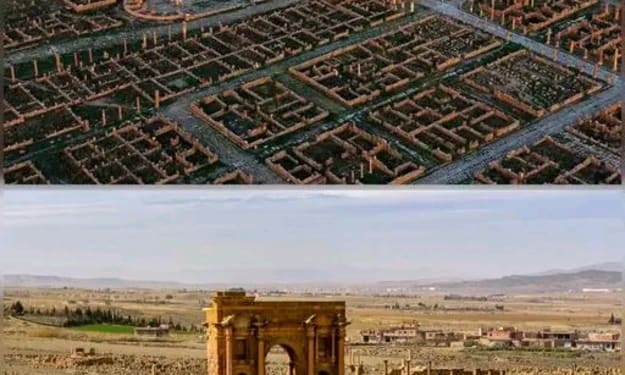
The Abandoned City of Thamugadi: Unraveling the Roman Mystery Buried in the Sands of Algeria
In the heart of Algeria’s Aures Mountains lies the ancient Roman city of Thamugadi, also known as Timgad, a site as mysterious as it is captivating. Founded by Emperor Trajan around 100 AD, Thamugadi stands today as one of the most well-preserved Roman cities in North Africa. Built with the precision that characterized Roman engineering, the city showcases straight, intersecting streets, grand arches, sprawling public baths, and an impressive theater capable of seating thousands. At its peak, Thamugadi was a bustling hub of culture, trade, and military activity—a symbol of Roman might and urban planning. Yet, despite its grandeur and significance, Thamugadi eventually slipped into oblivion, gradually abandoned and buried beneath the sands. Unlike many ancient cities that met violent ends through war, natural disasters, or disease, Thamugadi appears to have faded away quietly, leaving few clues about the reason for its decline. The city’s exceptional state of preservation offers a vivid snapshot of life under the Roman Empire, yet its silent ruins raise intriguing questions. What led this thriving Roman settlement to disappear? And why are there so few records to explain its fate? The Founding of Thamugadi: A Testament to Roman Precision Emperor Trajan, a ruler known for his ambitious building projects, founded Thamugadi (or Colonia Marciana Ulpia Traiana Thamugadi, to use its full Roman name) as a military colony for Roman veterans. Located at a strategic crossroads, the city served as a defense post against the Berber tribes of North Africa and provided a buffer for the nearby Roman outpost of Lambaesis. Thamugadi was also a gateway to the Saharan trade routes, linking the Roman Empire to regions rich in exotic goods. The city was built with meticulous planning, following a strict grid pattern that is a hallmark of Roman urban design. Two main streets—the cardo (north-south) and the decumanus (east-west)—intersected at the city’s center, creating a layout that would later inspire modern urban planning. At the heart of Thamugadi stood the forum, the social and administrative nucleus of the city, surrounded by temples, markets, and public buildings. This organization allowed for easy movement, strategic defense, and a clear structure that symbolized Rome’s order and control. The citizens of Thamugadi enjoyed amenities typical of Roman life: public baths, a library, fountains, and even a theater that could accommodate up to 3,500 spectators. These public spaces made Thamugadi not just a military outpost, but a thriving community with a rich social life. A Gradual Decline: The Mystery of Thamugadi’s Abandonment Unlike cities that collapsed suddenly due to natural disasters or invasions, Thamugadi appears to have experienced a gradual decline. By the 4th century AD, records suggest that the city was still in use, though it likely faced increasing pressures. The Roman Empire was in a state of turmoil, battling invasions from Germanic tribes in the north and uprisings within its territories. As the Empire’s grip on its distant provinces weakened, maintaining a stronghold in the North African desert became more challenging and costly. Over time, the city’s infrastructure may have suffered from neglect as imperial support dwindled. Archaeologists suggest that as Roman power faded, the people of Thamugadi may have gradually migrated toward other centers, leaving the city vulnerable to the encroaching sands. By the time the Vandals swept through North Africa in the 5th century, Thamugadi was likely already a shadow of its former self. Adding to the mystery, ancient sources provide little information on Thamugadi’s final days. For a city of such size and importance, the lack of records is unusual, leaving historians to piece together the city’s fate from limited clues. It wasn’t until 1881, when French archaeologists rediscovered Thamugadi buried beneath the sand, that the city was brought back into public knowledge. Its preservation was so remarkable that it appeared almost frozen in time, with intact columns, walls, and streets offering a rare glimpse into daily life during the Roman Empire. Thamugadi’s Architecture and Daily Life: A Glimpse into the Roman Past The ruins of Thamugadi provide a vivid window into Roman life. Walking through its streets today, visitors can see remnants of shops, houses, and public spaces that tell the story of a well-organized society. The residential quarters reveal well-designed homes, many with courtyards and gardens that would have offered respite from the North African heat. The public baths, an essential part of Roman culture, were not just a place to wash but a social hub where citizens could relax, gossip, and discuss politics. The city’s library, one of the few libraries preserved from antiquity, highlights the intellectual life of the time. This library likely held manuscripts on philosophy, law, and science, serving as an educational center for Thamugadi’s citizens. The theater, capable of seating thousands, reflects the importance of arts and entertainment, where Romans enjoyed dramas, comedies, and other performances. Thamugadi’s ruins reveal not just a city but a way of life. The meticulous design, public amenities, and monuments speak to the prosperity and cultural sophistication that the Roman Empire brought to its provinces. This makes the city’s abandonment all the more mysterious; how did such a vibrant place become a ghost town? Why Did Thamugadi Disappear? Theories and Speculations Without clear historical records, the reasons behind Thamugadi’s abandonment are speculative. One plausible theory is that shifting trade routes led to the city’s decline. As the Roman Empire’s power weakened and other trade hubs rose, Thamugadi may have lost its importance, prompting inhabitants to seek better opportunities elsewhere. Another theory is that environmental changes played a role. The region surrounding Thamugadi experienced desertification over centuries, with the encroaching sands possibly making agriculture and daily life increasingly difficult. As the climate changed, the city’s water sources may have dwindled, leading to a slow but inevitable exodus. Religious changes may have also influenced the city’s fate. As Christianity spread through the Roman Empire in the 4th and 5th centuries, pagan temples and practices became obsolete. Thamugadi’s original Roman character, tied closely to its temples and public baths, might have conflicted with the new Christian ethos, leading to a decline in civic participation. Thamugadi’s Legacy: A Silent Reminder of Roman Grandeur Today, Thamugadi stands as an archaeological wonder and a testament to Roman architecture, urban planning, and culture. Its silence tells a story of change, resilience, and the passage of time. The city’s ruins remain remarkably intact, allowing us to walk its streets and explore its buildings much as its residents would have done nearly two thousand years ago. Thamugadi’s abandonment serves as a poignant reminder of how even the greatest empires and civilizations are vulnerable to time, change, and nature. Its preservation offers a rare opportunity to witness life as it was in the Roman Empire’s heyday, yet the mystery of its decline leaves us pondering how a thriving city could simply fade away, almost without a trace. In the sands of Algeria, the abandoned city of Thamugadi endures as a silent witness to the past—a Roman mystery that continues to captivate and confound, challenging us to learn from its history and to appreciate the fleeting nature of human achievement.
By Deji Akomolafe2 years ago in History
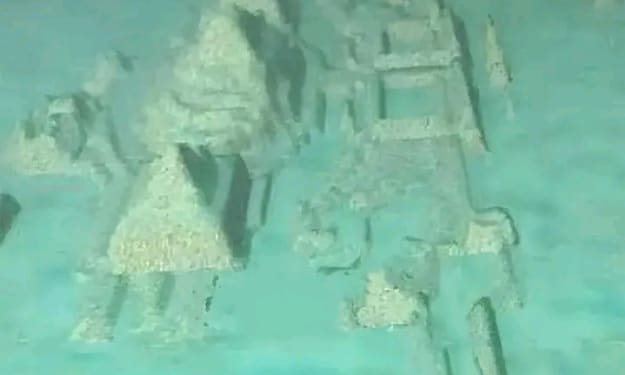
Have Researchers Discovered the Fabled Atlantis? The Mystery of Ancient Pyramids Off the Coast of Mexico
The tale of Atlantis has captivated imaginations for millennia. Described by the ancient Greek philosopher Plato, Atlantis was said to be a mighty, technologically advanced civilization that vanished into the depths of the sea. Over the years, countless theories and claims have emerged, each suggesting a different location for this legendary city. And now, researchers may have stumbled upon something truly remarkable—a series of massive pyramid-like structures lying beneath the ocean off the coast of Mexico. This discovery has sparked excitement and intrigue, with some speculating that this underwater site could potentially be the remnants of Atlantis itself. These structures, observable on Google Earth, are situated near historic Mayan and Aztec sites, blending together ancient mystery with modern technology. Ranging from approximately 3.5 to 11 miles in width, these formations are undeniably massive, challenging our understanding of pre-Columbian civilizations and raising new questions about who might have built them. Could they be the remnants of a lost civilization, possibly even the Atlantis of legend? Or could they point to something even more astonishing, such as extraterrestrial involvement? Let’s explore the background, theories, and mysteries surrounding these submerged structures and what they could mean for our understanding of ancient history. The Discovery: Ancient Pyramids Beneath the Waves The discovery began with curious observers exploring Google Earth, a platform that has brought new eyes to the world’s hidden corners. These observers noticed peculiar, pyramid-shaped structures resting beneath the waters off the coast of Mexico, close to where the ancient Mayan and Aztec civilizations once thrived. These structures are truly colossal in size; at their widest points, they measure up to 11 miles, dwarfing even the Great Pyramids of Egypt. From the start, these formations raised eyebrows. If these underwater pyramids were indeed constructed by human hands, it would point to the presence of an ancient civilization with architectural knowledge and skill that predates anything previously known in the Americas. The positioning of these structures in proximity to Mayan and Aztec sites adds a fascinating layer to the story, as these civilizations are known for their monumental architecture and complex social structures. But could they really be responsible for creating such massive underwater structures, and if so, how did these formations end up submerged? The Atlantis Connection: Myth or Reality? Atlantis has long been one of history’s most captivating mysteries. According to Plato, Atlantis was an advanced civilization that disappeared into the ocean “in a single day and night of misfortune.” Over the centuries, the story has been interpreted as myth, allegory, and even prophecy, with theorists suggesting a variety of possible locations for this “lost city”—from the Mediterranean to Antarctica, and even islands in the Caribbean. So why might these submerged Mexican pyramids be linked to Atlantis? First, there’s the sheer scale of these structures. If built by humans, their size and design would suggest a civilization with a deep understanding of both engineering and architecture, something that fits with the descriptions of Atlantis. Furthermore, the proximity to other ancient ruins hints that the area may have been a hub of activity for early civilizations. Finally, the fact that these structures are now submerged brings to mind Plato’s description of a city that disappeared into the ocean—a detail that has kept the myth of Atlantis alive for centuries. Could This Be an Extraterrestrial Connection? While many are excited by the prospect of discovering Atlantis, others have proposed an alternative theory that is equally fascinating. Some believe these underwater pyramids could be linked to extraterrestrial activity. In the eyes of ancient astronaut theorists, the scale and precision of these structures might imply knowledge or technology that was either beyond the reach of early civilizations or possibly provided by an extraterrestrial intelligence. Supporters of the extraterrestrial theory often point to historical accounts from various cultures that describe encounters with beings from the sky, as well as to unexplained architectural feats around the world, such as the Pyramids of Giza, Stonehenge, and the Nazca Lines. To them, the discovery of these massive pyramidal structures beneath the ocean near Mexico might indicate a site of alien visitation, or at least the influence of beings with knowledge far beyond what we currently understand. Ancient Civilizations and Advanced Engineering However, skeptics caution against jumping to conclusions. They argue that attributing the discovery to extraterrestrials overlooks the ingenuity and skill of ancient civilizations. The Mayans, Aztecs, and other pre-Columbian civilizations were highly advanced, with deep knowledge of astronomy, mathematics, and architecture. The Mayans, for example, built complex cities aligned with celestial bodies and created advanced calendars, while the Aztecs developed floating cities and efficient agricultural systems. It’s entirely possible that these civilizations had the capability to construct large-scale pyramids, even beneath the ocean, using materials and techniques lost to time. If so, the discovery of these submerged structures could add a new chapter to our understanding of the early Americas and the technological sophistication of its ancient inhabitants. Unanswered Questions and Future Exploration The underwater structures off the coast of Mexico have certainly sparked interest, but many questions remain. How old are these formations? Are they indeed man-made, or could they be a natural formation mistaken for pyramids? And if they are human-made, which civilization built them, and why? Further investigation is required to answer these questions. Underwater archaeology has already yielded incredible finds in other parts of the world, such as the discovery of submerged cities off the coast of India and ancient ruins off the coast of Japan. With advances in underwater mapping and imaging technology, scientists are now better equipped than ever to explore these submerged structures in detail. Future expeditions may help us determine whether these formations are the remnants of a lost civilization or the work of nature’s forces. The Allure of the Unknown Whether or not these submerged pyramids are indeed the fabled city of Atlantis, their discovery serves as a reminder of how much there is yet to learn about our planet’s history. Beneath the ocean lie countless mysteries, places that may hold the keys to understanding early human civilizations, lost technologies, or even signs of extraterrestrial life. Atlantis may ultimately be a legend, or it might be waiting to be found. For now, the story of these underwater pyramids adds another layer to the rich tapestry of ancient mysteries, capturing our curiosity and challenging our understanding of history. Whether the structures off the coast of Mexico prove to be Atlantis, an ancient city, or something else entirely, they remind us that sometimes the most exciting discoveries lie hidden in the depths, waiting to reshape our perception of the past.
By Deji Akomolafe2 years ago in History
Untold Stories from the Mahabharata: Characters Beyond the Battlefield
The Mahabharata is regularly remembered for the grand Kurukshetra battle, the competition among the Pandavas and the Kauravas, and the philosophical discourse of the Bhagavad Gita. However, past the battles and epic clashes, this historical textual content is woven with problematic tales of lesser-recognised characters whose lives make a contribution notably to the richness of the narrative. Each of these characters, in their unique manner, gives insights into human nature, relationships, obligation, and morality. For the ones interested in exploring those fascinating testimonies in detail, a Mahabharata PDF offers a accessible manner to access the epic’s entire memories.
By Alice Potter 2 years ago in History
A Frozen Puzzle in the Himalayas: The Mystery of Roopkund Lake Skeletons
Imagine trekking through the towering peaks of the Himalayas, the crisp mountain air filling your lungs, the stunning views all around—and then suddenly you come across something unexpected. No, not a majestic Himalayan snow leopard or a hidden monastery, but hundreds of human skeletons scattered around a glacial lake. Yep, that’s right—skeletons. Welcome to Roopkund Lake, or as it's more commonly (and creepily) known, Skeleton Lake.
By Marveline Merab2 years ago in History
Hidden Gems: Discovering Underrated Travel Destinations Around the World
When it comes to travel, most people flock to famous destinations like Paris, New York, or Tokyo. While these places are undeniably beautiful, the world is full of lesser-known, underrated destinations that offer just as much—if not more—charm, culture, and adventure. These hidden gems provide an escape from the usual crowds, allowing travellers to experience unique cultures and landscapes without the hustle and bustle. Let’s dive into some of the most stunning underrated travel destinations worldwide that should be on your radar.
By Zinnat ara Begum2 years ago in History