Discoveries
The Tallest Man History
The tallest man in recorded history was Robert Wadlow, who reached the astounding height of 8 feet 11 inches, a record that has yet to be beaten. Born Robert Pershing Wadlow on Feb. 22, 1918, in Alton, Ill. He was not only the tallest person in the world, but in many ways he seemed larger than life itself , as he grappled with a condition that turned him into a medical wonder.
By Rohitha Lanka2 years ago in History
Alexander Graham Bell’s Greatest Invention. AI-Generated.
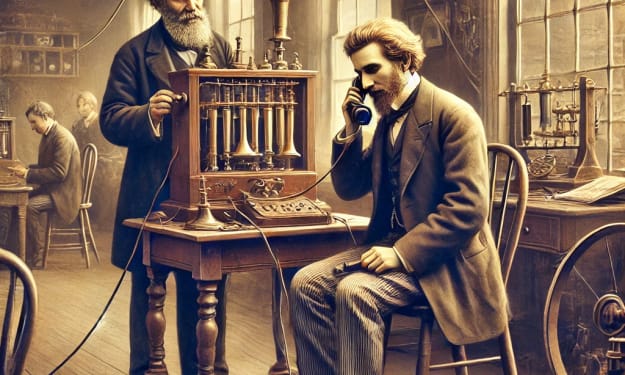
The Call That Changed the World On a chilly March afternoon in 1876, in a modest laboratory filled with wires, batteries, and the scent of burning metal, a moment of history unfolded. Alexander Graham Bell, a Scottish-born inventor with an insatiable curiosity for sound and communication, leaned over a peculiar contraption—a device that would soon change the world forever.
By Ahmet Kıvanç Demirkıran2 years ago in History
Archaeologists are finding mysterious ancient objects on Norway's melting glaciers.
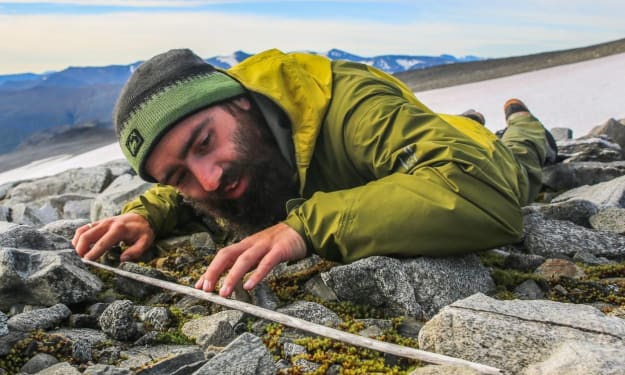
Archaeologists are finding mysterious ancient objects on Norway's melting glaciers. The melting glaciers of Norway are exposing a hidden world frozen in time objects from the Stone Age Iron Age and medieval periods that provide rare glimpses into the lives of ancient humans. As climate change accelerates glacial melt archaeologists are racing against time to recover and study these remarkable artifacts before they are lost forever. From primitive wooden tools and well preserved textiles to weapons and human remains each discovery helps researchers unravel the mysteries of the past.
By Adnan Rasheed2 years ago in History
"Forbidden Love Triangle."
[Begins.] It was a cold, dark and dank morning. My platoon had finally arrived at our designated duty station. As I caught myself trying not to yawn while removing the crusty cold from my left eye. I just realized that it was a tidbit smidgen past 5 something o'clock. Boy, I almost had forgotten the letter tucked away -- crumpled more like it, in my left coat pocket. How could I have even forgotten I had put it there. Certainly, I did not have time to properly place it in my US Army issued backpack.
By Shane J Charbonnet, Ph.D.2 years ago in History
January 18, 1945 – A Soldier’s Last Goodbye from World War II
January 18, 1945 – 101st Airborne Division, Bastogne Somewhere in a frozen battlefield, with life slipping away… My dearest Eleanor, If you are reading this, it means I did not make it home. My hands tremble as I write, my fingers stained with blood—some mine, some from the brothers I fought beside. The battle still rages on in the distance, but for me, it is over. My leg is gone, taken by a landmine, and the cold is creeping into my bones faster than I can stop it. I do not have much time. But before I go, before the darkness takes me, I need to speak to you one last time. I don’t know if this letter will ever reach you, but I have to believe it will. I have to believe that some part of me will make it back to you, even if my body never does. Eleanor, my love, I am so sorry. I promised you I would return. I swore I would hold you again, that I would kiss you beneath the oak tree where I first asked you to be mine. I told you I would come home and hold our son in my arms. But fate is cruel, and war is even crueler. Our little boy is only five months old, and I have never even seen his face. That is the pain that cuts deeper than any bullet ever could. I close my eyes, and I try to picture him. Does he have your golden hair? Your warm, kind eyes? Does he have my stubbornness, my laugh? I will never know. I will never hear his first words, never watch him take his first steps. I will never get to tell him how much I love him. That is why I need you, Eleanor. You must tell him for me. Tell him that his father was not just a soldier, not just another name carved into a memorial. Tell him I was a man who dreamed of coming home. A man who fought not for war, but for peace. A man who loved him, even before he took his first breath. I am alone now. The others have moved on, charging into the fight, leaving me behind in the snow. The sky above is gray, the wind howling like the cries of the fallen. The warmth is leaving my body, but in my mind, I am not here. I am with you. I am back in our little house, sitting by the fire with you curled up beside me, your head on my chest, listening to my heartbeat. It is still beating, Eleanor. Faint, weak, but still beating. But not for long. I wish I could hold you one last time. I wish I could press my lips to yours, feel the softness of your skin, run my fingers through your hair. I wish I could watch the way your eyes crinkle when you laugh, hear you call my name, tell me everything will be alright. But I know better now. War takes everything. It takes young men and turns them into ghosts before they even die. It takes love and replaces it with silence. It steals fathers from sons, husbands from wives, leaving behind nothing but grief. But promise me one thing, my love. Promise me you will live. Do not let my death steal your joy. Do not let it darken the life we dreamed of building together. Raise our son in laughter, in love. Let him know happiness, let him chase dreams. Tell him it is okay to miss those who are gone, but that life must go on. And Eleanor, if one day you hear my name in the wind, if you feel a soft touch when no one is there, know that it is me. I will always be with you. Watching, waiting, loving you from beyond. This is not goodbye, my love. This is just a pause—a brief moment of separation—until we meet again. Forever yours, James
By News Vortex 2 years ago in History
The Enigmatic Mysteries of Shambhala – The Hidden Kingdom of the Himalayas
The Mysteries of Shambhala: The Allegorical Hidden Kingdom For centuries, explorers, mystics, and historians accept approved the allegorical commonwealth of Shambhala—a abstract branch believed to abide in the alien regions of the Himalayas. Revered in Tibetan Buddhism and Hinduism, Shambhala is generally declared as a paradise area peace, wisdom, and broad-mindedness prevail. Admitting its absolute area charcoal elusive, Shambhala continues to allure imaginations above the world. This commodity delves into the history, myths, and mysteries surrounding this ambiguous land. Origins of the Shambhala Legend The age-old references to Shambhala date aback to age-old Buddhist texts, decidedly the Kalachakra Tantra, which describes it as a angelic commonwealth hidden about above the albino peaks of the Himalayas. The name 'Shambhala' agency 'place of peace' or 'source of happiness,' and it is generally depicted as a acreage of absolute harmony, admirable by war and suffering. According to legend, Shambhala is disqualified by a birth of aware kings who bouncer the world's airy teachings. It is believed that back altruism avalanche into anarchy and destruction, a abundant warrior-king from Shambhala will appear to restore antithesis and advance bodies against enlightenment. Search for Shambhala: Belief and Expeditions Numerous campaign and airy seekers accept attempted to locate Shambhala, assertive it to be a real, concrete place. In the aboriginal 20th century, Russian artisan and abstruse Nicholas Roerich undertook an campaign through Central Asia, assertive that Shambhala lay about in the Tibetan plateau or Mongolia. His findings, admitting inconclusive, alone fueled all-around intrigue. Similarly, Nazi Germany’s Ahnenerbe organization, bedeviled with abstruse ability and Aryan origins, beatific missions to Tibet in chase of Shambhala, assertive it to be a antecedent of abnormal acumen and power. While these expeditions bootless to aftermath actual evidence, they anchored Shambhala’s cachet as one of the world’s greatest mysteries. Spiritual Interpretations of Shambhala In Tibetan Buddhism, Shambhala is added than aloof a hidden kingdom—it is advised a accompaniment of alertness that can be accomplished through abysmal brainwork and airy awakening. Some Buddhist advisers altercate that Shambhala exists in a altered dimension, attainable alone to those who accomplish a aerial akin of airy purity. The Kalachakra article advance that Shambhala is not meant to be apparent geographically but rather through an close journey. The abstraction resonates with the abstraction of enlightenment, area individuals transcend carnal adversity and accomplish a accompaniment of bliss. Possible Locations of Shambhala While Shambhala charcoal counterfeit by avant-garde geography, several locations accept been proposed based on age-old texts and bounded folklore: Tibet – Many accept Shambhala is hidden abysmal aural the valleys of Tibet, decidedly about Mount Kailash, a angelic armpit for Hindus and Buddhists. Himalayas – Some theories advance that Shambhala is amid in an aloof arena of Nepal or Bhutan, buried by airy forces. Gobi Desert, Mongolia – The Mongolian affiliation stems from assorted Buddhist texts that articulation the commonwealth to Central Asia. Russia’s Altai Mountains – Certain abstruse advisers adduce that the Shambhala allegory is affiliated to the age-old acumen traditions of Siberia and the Altai region. Shambhala in Popular Culture The fable of Shambhala has aggressive endless books, movies, and philosophies. In Western literature, it is generally affiliated to the allegory of the absent burghal of Atlantis or Shangri-La, a fabulous abstract paradise depicted in James Hilton’s atypical Absent Horizon (1933). Additionally, avant-garde New Age movements accept accepted Shambhala as a attribute of airy broad-mindedness and college consciousness, accumulation its article into their practices. Conclusion Despite centuries of analysis and speculation, the accurate attributes of Shambhala charcoal an enigma. Whether it is a mystical paradise hidden in the mountains or a allegory for airy enlightenment, its fable continues to affect seekers about the world. Shambhala represents humanity’s abiding adventure for wisdom, peace, and transcendence—a dream that, alike if never begin on a map, continues to adviser the hearts of those who chase for a added acceptation in life.
By Say the truth 2 years ago in History
Black Cross Nurses
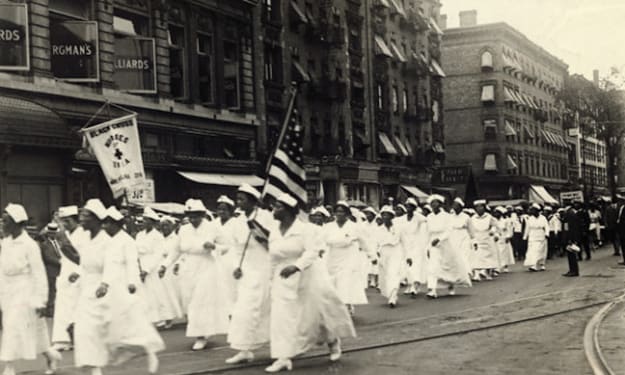
In the good old days in Canada, prospective Black nurses were told to go to the United States, as they were not permitted to study nursing in Canada, at least not until the middle of the 2oth century. American schools began allowing Black folks into nursing in the 1870s but very few were admitted to their schools.
By Marie Wilson2 years ago in History
The History of Wild Animals
The History of Wild Animals: A Journey Through Time Wild animals have roamed the Earth for millions of years, long before the appearance of humankind. Their history is deeply intertwined with the evolution of our planet, shaped by environmental changes, natural selection, and the complex web of ecosystems. Understanding the history of wild animals not only sheds light on their fascinating past but also emphasizes the importance of preserving their future. The story of wild animals begins in the ancient seas. Around 600 million years ago, the first multicellular organisms appeared in the oceans. These early creatures, such as jellyfish and sponges, evolved into more complex forms, giving rise to fish, mollusks, and arthropods during the Cambrian Explosion approximately 540 million years ago. The development of hard shells, fins, and other adaptations allowed animals to thrive and diversify. By the Devonian period, about 400 million years ago, some fish developed limbs and lungs, enabling them to venture onto land. These pioneering amphibians marked the transition from aquatic to terrestrial life. Over time, reptiles emerged, dominating the Earth during the Mesozoic Era, also known as the Age of Reptiles. Dinosaurs, the most iconic creatures of this era, ruled the planet for over 160 million years until their abrupt extinction 65 million years ago, likely caused by a massive asteroid impact. The aftermath of the dinosaurs' extinction paved the way for mammals to rise. Small, nocturnal mammals that had existed in the shadow of dinosaurs began to evolve into diverse forms, occupying various ecological niches. By the Cenozoic Era, mammals had spread across the globe, giving rise to modern species such as primates, felines, canines, and ungulates. This period also saw the evolution of birds from small, feathered dinosaurs, highlighting the interconnectedness of life forms. Throughout history, wild animals have not only adapted to their environments but have also influenced human civilization. Early humans relied on hunting and gathering for survival, forging a deep connection with the animal kingdom. Cave paintings dating back over 30,000 years depict wild animals such as mammoths, bison, and deer, suggesting their significance in early human culture and spirituality. As agriculture and domestication emerged around 10,000 years ago, the relationship between humans and wild animals began to shift. While some species, like dogs, were tamed and integrated into human society, others remained symbols of the untamed wilderness. Myths and folklore across cultures often feature wild animals as powerful beings, from the lion’s majesty in African traditions to the wolf’s cunning in European legends. The Industrial Revolution marked a turning point in the history of wild animals. Rapid urbanization, deforestation, and industrial activities led to habitat destruction and a decline in biodiversity. Species such as the passenger pigeon and the Tasmanian tiger were driven to extinction, serving as grim reminders of human impact on the natural world. Today, wild animals face numerous threats, including climate change, poaching, and habitat fragmentation. Conservation efforts have become crucial in protecting endangered species and preserving biodiversity. Organizations and governments worldwide work to establish protected areas, enforce anti-poaching laws, and raise awareness about the importance of coexistence. Despite these challenges, there are also success stories. Species like the bald eagle, giant panda, and humpback whale have seen population recoveries due to dedicated conservation programs. These victories underscore the resilience of wild animals and the potential for positive change when humans commit to environmental stewardship. In conclusion, the history of wild animals is a tale of evolution, adaptation, and survival. From ancient seas to modern ecosystems, these creatures have shaped and been shaped by the ever-changing planet. As we move forward, it is our responsibility to honor their legacy by protecting their habitats and ensuring their continued existence. By understanding their past, we pave the way for a more harmonious future where both humans and wild animals can thrive.
By Budhirai Tripura2 years ago in History
Archaeologists Discovered 22000 Year Old Tracks That May Be From the World’s First Vehicle.
Archaeologists Discovered 22000 Year Old Tracks That May Be From the World’s First Vehicle. The discovery of 22000 year old tracks at White Sands National Park in New Mexico has shed new light on early human innovation and transportation methods. These tracks as revealed in a recent study published in Quaternary Science Advances suggest that ancient humans used a rudimentary vehicle known as a travois to transport goods or belongings. This finding challenges conventional perspectives on early transportation pushing back the timeline of non wheel based vehicles much further than previously thought. At the heart of this discovery are the linear impressions found alongside human footprints. Unlike ordinary tracks left by people walking these marks suggest the dragging of wooden poles indicating the use of a travois. This is a simple yet effective means of carrying heavy loads by lashing two poles together often in the shape of a triangle and pulling them along the ground. Such a transport method was widely used by Indigenous peoples in North America well into recent history particularly among the Plains tribes who adapted it for use with horses. However, this new discovery suggests that its use dates back much further to a time when humans were still navigating the challenges of Ice Age survival.
By Adnan Rasheed2 years ago in History
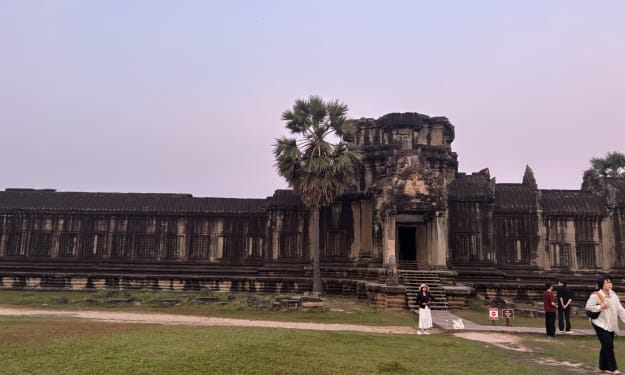
The forgotten history of The Kingdom of Cambodia. . Content Warning.
For those of us in the West who have heard of Cambodia without visiting, it may be seen as just a country in South East Asia that is not too well off. Those of us who have been lucky enough to travel to or simply read about this humble hidden gem, may know the rich yet dark history surrounding the Kingdom itself. I myself have been fortunate enough to travel here recently and spent about 3 weeks travelling throughout the country. From border towns and bustling cities with wild nightlife, to the vast green fields of rice paddies, all the way to the coast with some of the most gorgeous water I have ever seen. In my time spent in the country my eyes have been opened in more than one aspect.
By Jacob Newson2 years ago in History