Discoveries
The Story of Ramayana (Short and Simplified)
1. The Beginning: Vishnu’s Promise Long ago, Swayambhu Manu , the first human being, performed intense penance (tapasya ) for 1,000 years to please Lord Vishnu. When Vishnu appeared, Manu expressed his desire to have Vishnu as his son. Vishnu agreed but explained that he would incarnate on Earth whenever Dharma (righteousness) was threatened by evil forces. He declared:
By Sujeet M Sonar2 years ago in History
The Talking Drum: Origins and Evolution
The talking drum, an iconic instrument originating from West Africa, has played a pivotal role in the region's communication, cultural expression, and musical traditions for centuries. Simultaneously, theconcept of "Owambe" represents the vibrant and lavish social gatherings characteristic of the Yoruba people in Nigeria. Both the talking drum and Owambe are deeply intertwined within Yoruba culture, reflecting the community's rich heritage and social dynamics. The Talking Drum: Origins and Evolution The talking drum, known for its ability to mimic the tonal patterns of human speech, has been an essential tool among various West African ethnic groups, notably the Yoruba of Nigeria and the Asante of Ghana. Its unique hourglass shape and adjustable tension cords allow players to modulate pitch, enabling the drum to "speak" by replicating the inflections of regional languages. ENCYCLOPAEDIA BRITANNICA Historical Significance Historically, talking drums served multiple functions beyond musical accompaniment. They were integral to rituals, storytelling, and ceremonies, acting as mediums to convey messages across distances before the advent of modern communication systems. In the Asante culture of Ghana, for instance, drums were utilized in various societal aspects, including rituals and storytelling. UNDERSTANDING SLAVERY Cultural Transmission and Preservation The art of playing the talking drum is traditionally passed down through generations, often within specific families or guilds. In Yoruba culture, individuals born into drumming families, often bearing names starting with "Ayan," are inducted into the guild of talking drummers, signifying their heritage and role in preserving this musical tradition. NEWHAM HERITAGE MONTH Global Influence and Adaptation The influence of the talking drum transcended African borders, especially during the transatlantic slave trade. Instruments like the Batá drums, which share similarities with talking drums, were introduced to Cuba in the early 1800s by enslaved Yoruba people. These drums became integral to Afro-Cuban religious practices, illustrating the resilience and adaptability of African cultural elements in the diaspora. SMITHSONIAN MAGAZINE The Talking Drum in the 21st Century In contemporary times, the talking drum continues to be a symbol of cultural identity and artistic expression. While modern communication technologies have supplanted its original function as a messaging tool, the drum's musical and cultural significance endures. It features prominently in world music genres, fusion projects, and educational programs that aim to preserve and celebrate African heritage. Owambe: A Celebration of Yoruba Social Life The term "Owambe" refers to the extravagant and elaborate parties characteristic of the Yoruba people in Nigeria. Derived from the Yoruba phrase "owan be," meaning "it is happening here," Owambe encapsulates the communal spirit, hospitality, and love for celebration inherent in Yoruba culture. VOCAL Historical Roots Owambe parties have deep historical roots, tracing back to pre-colonial times when Yoruba kingdoms celebrated significant events with grandeur. Festivals such as the Odun Oba (King's Festival) in Oyo and the Odun Olojo (Day of Creation) in Ife were marked by communal gatherings, music, dance, and feasting. These traditions laid the foundation for the modern Owambe phenomenon. WIKIPEDIA Evolution Through the 20th Century The concept of Owambe evolved significantly during the 20th century, particularly in the 1960s. Urbanization, economic prosperity, and the rise of a vibrant social scene in cities like Lagos contributed to the proliferation of lavish parties. The term "Owambe" became synonymous with the Yoruba penchant for grand celebrations, reflecting a blend of traditional values and contemporary influences. APPLIED WORLDWIDE Key Features of Owambe Music and Dance: Central to any Owambe is the presence of live music, often provided by Juju or Fuji bands. The talking drum plays a crucial role in these performances, engaging guests in call-and-response patterns and encouraging dance. Fashion (Aso Ebi): A distinctive feature of Owambe is the coordinated attire known as Aso Ebi, where family and friends wear outfits made from the same fabric to signify unity and support. Cuisine: An array of traditional dishes is served, showcasing the richness of Yoruba cuisine. The abundance of food and drink symbolizes hospitality and communal sharing. Spraying of Money: A unique aspect of Owambe is the "spraying" of money, where guests dance and place currency notes on the hosts or performers as a sign of appreciation and celebration. The Interplay Between Talking Drums and Owambe The talking drum holds a place of prominence in Owambe celebrations. Its rhythms and tones not only provide musical entertainment but also serve as a means of communication during the event. Skilled drummers can praise individuals, announce important moments, and interact with attendees, enhancing the festive atmosphere. The drum's ability to mimic speech allows it to convey messages that resonate with the cultural context of the gathering. Owambe in the 21st Century Today, Owambe remains a vibrant aspect of Yoruba social life, adapting to modern trends while preserving traditional elements. The integration of contemporary music genres, fashion innovations, and technological advancements has transformed these gatherings into dynamic events that attract diverse audiences. Despite these changes, the core essence of Owambe—celebration, community, and cultural expression—continues to thrive. Conclusion The talking drum and the tradition of Owambe are integral components of Yoruba cultural heritage. They exemplify the community's rich history, artistic expression, and social cohesion. As both continue to evolve in the 21st century, they serve as enduring symbols of identity and resilience, reflecting the dynamic nature of cultural practices in a changing world.
By Budhirai Tripura2 years ago in History
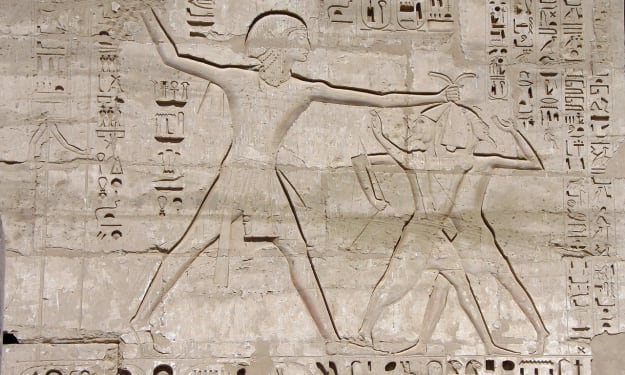
Ramses III
Ramses III was one of Egypt's last great pharaohs. Had he lived in peaceful times, it's likely that his reign would be remembered as a prosperous and happy era. But alas, he was born into the tumultuous 12th century BCE—an era of chaos and decline not only for Egypt but for the whole Eastern Mediterranean.
By Anthony Maghanga2 years ago in History
The Timeless Relevance of Ancient Subjects in Modern Education
Introduction In the rapidly evolving world of education, where new disciplines emerge to address contemporary challenges, certain ancient subjects have withstood the test of time. These millennia-old disciplines continue to be integral components of modern curricula, offering invaluable insights into human civilization and the natural world. This article delves into the enduring significance of these ancient subjects, exploring their historical roots and their relevance in today's academic landscape.
By TechyByGaurav 2 years ago in History
"Whispers Through Time: The Enduring Power of Love Letters Across History". Content Warning. AI-Generated.
Love Letters Through Time: The Weight of Words Love letters have long been the lifeblood of human emotion, capturing the most private declarations of devotion across international boundaries and centuries. Still used to convey love in a romantic sense today, from ancient Mesopotamian clay tablets to Victorian-era parchment, these written testaments to love go beyond their immediate contexts, providing windows into historical periods that give us incredible insights into the emotional landscapes of the time. A love letter is so much more besides — a slice of life, a record of feeling in a moment when what we felt seemed like all we had, stuck to the page like spit from Lulie to Lou, as it was for ball players on date night.
By Abdur Raffay2 years ago in History
Cuneiform Cuddlies
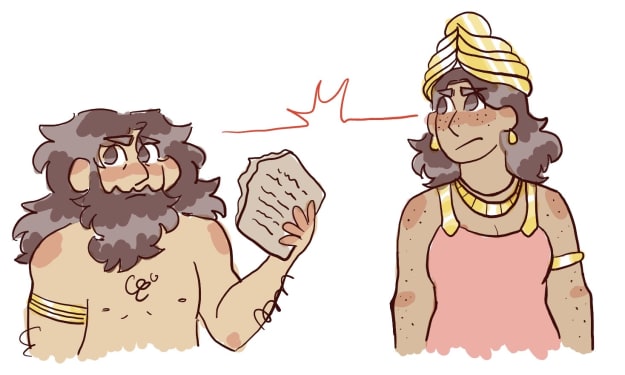
While Artificial Intelligence (AI) has granted scholars the chance to decipher the previously burnt scrolls of Herculaneum near Mt. Vesuvius, an increasing amount of study has been dedicated to the fragments of tablets chiseled in the dialect Akkadian language of standard Babylonia. One of the tablets was missing most of the text, having been broken into previously indecipherable fragments. By applying AI to these fragments, a series of love letters has been revealed between Gilgamesh, the demigod king of Uruk, and Ishtar, the Anunnaki goddess of love, war and fertility.
By Anton Crane2 years ago in History
"The World's Most Dangerous Island – A Place You’ll Never Return From!"
The Village That Sleeps: The Unsolved Mystery of Kalachi, Kazakhstan In the heart of Kazakhstan, nestled between rolling hills and open plains, lies the small and quiet village of Kalachi. At first glance, it appears like any other rural settlement, with its modest homes and hardworking residents. But Kalachi is no ordinary village. For over a decade, something bizarre and unexplainable has been happening here. People randomly fall into deep sleep for days, sometimes weeks, without any warning. They wake up confused, disoriented, and with no memory of what happened. Even stranger, this mysterious condition has also affected animals, including dogs, cats, and even livestock. Scientists, doctors, and researchers from all over the world have tried to solve the mystery of Kalachi’s sleeping sickness, but no one has been able to give a definite answer. Theories range from radioactive exposure to poisonous gas leaks, but the truth remains buried beneath the surface. The First Cases: A Village in Fear The first reported case of this phenomenon appeared in 2010, when a local resident fell asleep unexpectedly and couldn’t be woken up for several days. At first, villagers thought it was an isolated incident, but within a few years, the problem spread rapidly. By 2013, entire families were collapsing into sudden, coma-like sleep. Some people fell asleep while working in the fields, others while cooking dinner, and even children dozed off in the middle of class. When they finally woke up, they were weak, confused, and suffering from memory loss. Some even reported hallucinations—seeing strange visions or hearing voices that weren’t there. In total, more than 150 villagers have experienced this strange disorder. Some have fallen asleep multiple times, with no control over when or where it happens. Theories Behind the Sleeping Sickness Despite years of research, no one has been able to explain why this is happening. However, several leading theories have emerged: 1. Radiation from an Abandoned Soviet Uranium Mine Kalachi sits near an old Soviet-era uranium mine, which was shut down in the 1990s. Some scientists believe that radiation exposure from underground might be poisoning the villagers. However, multiple tests have shown that radiation levels in the area are normal and not high enough to cause such extreme symptoms. 2. Carbon Monoxide Poisoning One of the most accepted theories is that carbon monoxide or other toxic gases from underground are rising into the air and slowly poisoning the village. Since the old uranium mine is nearby, some experts believe that leaking gases could be responsible for the sudden sleep episodes. However, this theory still has its flaws—if carbon monoxide were the cause, people would be dying rather than just sleeping. 3. Water Contamination Another possible explanation is that something in the water is making people sick. Scientists have tested the village’s drinking water, but no harmful toxins have been found. 4. Psychological Mass Hysteria Some researchers suggest that this could be a case of mass psychogenic illness, where fear and stress cause people to experience the same symptoms. However, this doesn’t explain why animals have also been affected. Real-Life Cases That Shocked the World Over the years, several shocking incidents have been reported in Kalachi: A Teacher Fell Asleep in the Middle of Class – One day, a teacher suddenly collapsed onto her desk while teaching. She woke up three days later with no memory of what happened. An Entire Family Slept for Over a Week – A family of four all fell into a deep sleep at the same time. When they woke up, eight days had passed. Animals Affected – Villagers reported seeing cats, dogs, and even cows fall into the same mysterious sleep. Some animals remained unconscious for more than ten days before suddenly waking up. Is There a Solution? To this day, Kalachi’s sleeping sickness remains a mystery. The Kazakh government has attempted to relocate many villagers to other areas, but some refuse to leave. They believe that, despite the strange illness, Kalachi is their home, and they do not want to abandon it. Meanwhile, scientists continue their investigations, but there is still no clear explanation for why people are suddenly falling into deep, unexplained sleep. Could this happen in other parts of the world? If the cause is truly underground gas leaks, how many other hidden dangers might be lurking beneath our feet? Until a definitive answer is found, Kalachi will remain one of the world’s strangest medical mysteries—a village where sleep is not just rest, but a terrifying unknown. --- What do you think? Could there be a hidden cause that scientists haven’t discovered yet? Share your thoughts in the comments!
By News Vortex 2 years ago in History
Unraveling the Truth
Mummification is one of the most fascinating preservation techniques in human history. From the ancient Egyptian pharaohs to naturally occurring mummies found in ice and deserts, the process of preserving bodies after death has intrigued historians, scientists, and the general public for centuries.
By Ilsa Sophia2 years ago in History
9 million year old shark ancestor fossil found in the desert
9 million year old shark ancestor fossil found in the desert. A recent discovery has left scientists and enthusiasts alike astonished a 9 million year old shark ancestor fossil was found buried beneath layers of scorching desert sand. This revelation challenges our understanding of prehistoric life and raises fascinating questions about how an ocean predator ended up in an arid landscape. While the idea of a shark fossil in the middle of a desert seems almost unbelievable it is a testament to the ever changing nature of our planet. To understand this phenomenon it is essential to look back millions of years when the Earth was vastly different from what we see today. Scientists explain that the very desert where the fossil was found was once submerged beneath a vast ocean. This prehistoric body of water teemed with marine life including sharks before geological and climatic shifts transformed it into the barren land we now see. The fossilized remains of this ancient shark serve as a reminder of a time when this region was part of a thriving underwater ecosystem. One of the key reasons behind such drastic transformations is the movement of tectonic plates. These massive sections of the Earth's crust are constantly shifting albeit at an imperceptibly slow pace. Over millions of years these movements can cause oceans to retreat and landmasses to rise reshaping entire continents. What was once a deep ocean floor eventually became exposed land subject to erosion and the relentless forces of nature.
By Adnan Rasheed2 years ago in History