Discoveries
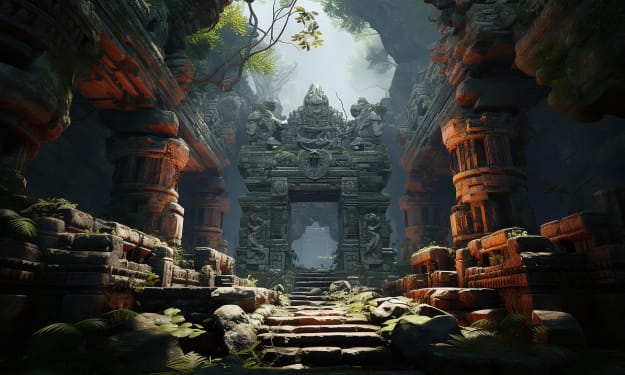
Machu Picchu in Modern Times: Legacy, Wealth, and Global Significance. AI-Generated.
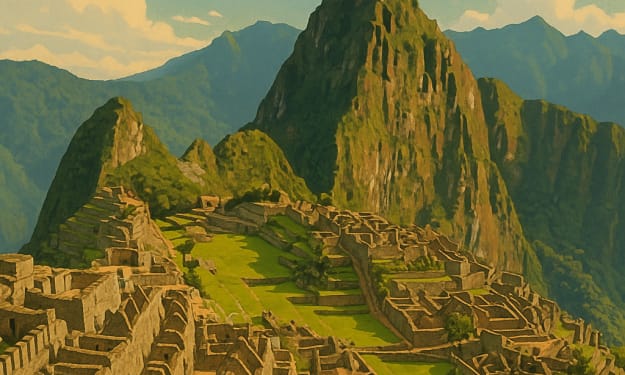
Machu Picchu in the Contemporary Era: Safeguarding the Incan Marvel for Posterity Once a disregarded fortress hidden within the jungle, Machu Picchu has emerged as a universal emblem of ancient innovation and natural splendor. Rediscovered in 1911, it now stands as a significant cultural and economic emblem for Peru. This article examines how Machu Picchu’s contemporary narrative has progressedfrom archaeological unearthing and tourism expansion to its lasting significance and the global initiatives aimed at preserving it for future generations. Introduction: A City Transformed Machu Picchu, frequently labeled as the “Lost City of the Incas,” was not constructed in recent times, yet its genuine acclaim and significance only surfaced during the contemporary era. Concealed high in the Andes Mountains of Peru, this breathtaking stone metropolis remained largely unrecognized by the outside world until its rediscovery in the early 20th century. Since that time, Machu Picchu has experienced an extraordinary evolutionfrom an overlooked relic to one of the most frequented and photographed sites on Earth. Rediscovery and Archaeological Significance In 1911, American adventurer Hiram Bingham was guided to the location by local farmers and Peruvian interpreters. He was astounded by his discoveriesstone edifices, terraces, and shrines enveloped by jungle vegetation yet remarkably preserved. Bingham’s writings and photographs garnered international interest in the Incan civilization and incited decades of archaeological exploration. In subsequent years, contemporary archaeologists have employed technologies such as LiDAR scanning and 3D modeling to map the landscape and comprehend Inca construction methods. These findings not only reveal advanced engineering and astronomy but have transformed our perspective of pre-Columbian societies as more complex than previously assumed. Machu Picchu and the Emergence of Global Tourism As Peru enhanced its transportation infrastructure in the mid-20th century, Machu Picchu became increasingly reachable. The inauguration of railway lines, hiking paths like the Inca Trail, and helicopter excursions transformed the previously secluded site into a vibrant center for global tourism. By the early 2000s, Machu Picchu was welcoming over a million visitors each year. To safeguard the ancient structures from the adverse effects of overtourism, the Peruvian government and UNESCO instituted stringent visitor regulations. Contemporary conservation initiatives now strive to harmonize economic prospects with cultural preservation. Cultural Emblem and National Identity In contemporary Peru, Machu Picchu signifies more than a tourist destinationit represents indigenous heritage and national pride. It features on Peruvian currency, in educational materials, and in international relations as a symbol of the country's pre-colonial magnificence. In 2007, it was designated as one of the New Seven Wonders of the World, further reinforcing its global cultural significance. Artists, filmmakers, authors, and historians frequently cite the site as an emblem of resilience, intrigue, and architectural excellence. Present-Day Challenges and Preservation Ensuring the preservation of Machu Picchu for future generations has become an essential objective in recent years. Concerns have emerged from: Erosion and Landslides: Resulting from pedestrian traffic and natural deterioration. Tourism Impact: Overcrowding and unauthorized tours. Climate Change: Variations in rainfall and temperature threaten the stability of the stone. To tackle these challenges, Peru has collaborated with UNESCO and environmental organizations to establish sustainable tourism frameworks. Satellite surveillance, digital tourism platforms, and staggered entry timelines assist in alleviating stress on the site. Economic and Cultural Value in Contemporary Times Currently, Machu Picchu generates over $1. 5 billion each year for Peru’s economy. Beyond monetary aspects, its cultural significance is incalculable. It attracts scholars, spiritual seekers, artists, and history enthusiasts from around the globe. There are ongoing conversations regarding digital preservationdeveloping intricate 3D models and virtual reality experiences to ensure that future generations can explore Machu Picchu even if physical travel becomes unattainable. Conclusion: Machu Picchu as a Living Heritage Although Machu Picchu is founded on ancient stone, its legacy continues to progress in contemporary times. It serves as a site where history and modernity convergea testament to human creativity, resilience, and the ability of history to motivate future generations. As the world becomes increasingly interconnected and aware of its cultural legacies, Machu Picchu remains prominent, not solely as an Inca artifact but as a vibrant emblem of global harmony and awe.
By Say the truth about a year ago in History
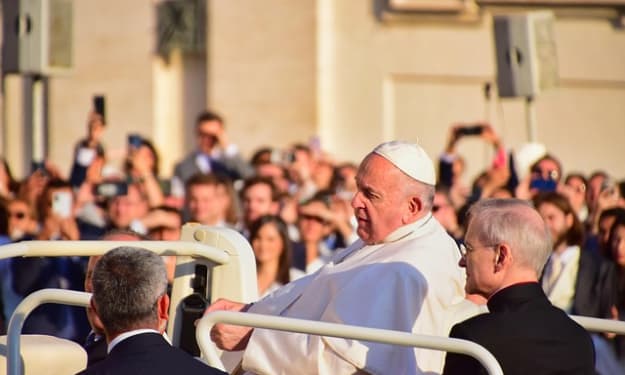
Pope Francis Dies at 88: The World Mourns a Humble Shepherd
A Spiritual Icon's Demise: A Global Loss Pope Francis, the 266th head of the Roman Catholic Church and a towering figure of compassion, humility, and reform, has died at the age of 88. VATICAN CITY – His death was confirmed by the Vatican on [date], ending an 11-year papacy that reshaped the Church's role in contemporary society. Pope Francis was the first Jesuit pope and the first pope from the Americas, and he was born Jorge Mario Bergoglio in Buenos Aires, Argentina.
By Md Omar Farukabout a year ago in History
IN Terrorist Attack in Pahalgam, Jammu and Kashmir
In Pahalgam, a popular tourist destination in Indian-administered Kashmir, a tragic mass shooting took place today. At least 26 Indian tourists were killed and several injured when gunmen opened fire on them at the Baisaran meadow. The Resistance Front, a militant group that opposes non-local settlement in Kashmir, has been blamed by authorities for the attack. This is one of the most fatal incidents to target civilians in the region in recent memory. Security concerns and the aftermath of the terrorist attack in Pahalgam, Jammu and Kashmir Pahalgam, Jammu and Kashmir: A recent terrorist attack in the tranquil tourist town of Pahalgam has raised concerns about security in the Kashmir Valley once more. On [insert date], [security forces, civilians, and tourists] were the target of the incident, which resulted in [number] fatalities and numerous injuries. Despite intensified counterterrorism efforts, this attack demonstrates that militant groups continue to pose a threat to the region. Details of the Attack According to officials, the attack occurred near [specific location], where militants [describe the incident – for example, militants opened fire, used grenades, or carried out an ambush]. A fight broke out when security personnel swiftly retaliated. Casualties & Impact
By Md Omar Farukabout a year ago in History
The Mysterious Queen Puabi: Secrets of an Ancient Sumerian Legacy
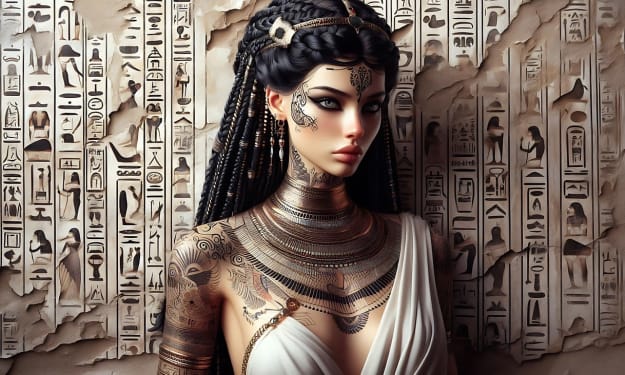
Beneath the Dust of Time In the ancient ruins of Ur, one of the oldest cities known to humanity, archaeologists uncovered a tomb so rich, so elaborate, and so strange that it defied everything they thought they knew about early civilizations. The tomb belonged not to a king, not to a warlord, but to a woman—Queen Puabi.
By The Secret History Of The Worldabout a year ago in History
The Billion-Dollar Revival: Building the Great Pyramid in the Modern Era . AI-Generated.
"Pyramids Reimagined: The Estimated Expense of Constructing the Great Pyramid Today" The Great Pyramid of Giza remains one of humanity’s most remarkable architectural achievements, a tribute that has evoked awe for over 4,500 years. However, what if we were to construct it in the present day? This comprehensive article examines the building techniques of ancient Egypt and contrasts them with contemporary advancements, calculating an estimated value for a 21st-century reconstruction. Through an extensive evaluation of labor, materials, transportation, and project management, we determine the expense, purpose, and symbolic significance of a modern pyramid inspired by the original. Article: The Monument of Eternity: A Pyramid for Today’s World Situated on the Giza Plateau, the Great Pyramid of Khufu is one of the Seven Wonders of the Ancient Worldand the only one still in existence. Constructed circa 2560 BCE, the pyramid has enthralled generations with its enormous scale, architectural accuracy, and enigmatic construction methods. Yet, in an era of skyscrapers and supercomputing, one question lingers enticingly: what would it entail to build the Great Pyramid today?
By Say the truth about a year ago in History
Biography of Elon reeve musk
Elon Reeve Musk ( born June 28, 1971) is a businessman known for his leadership of Tesla, SpaceX, and X (formerly Twitter). Since 2025, he has been a senior advisor to United States president Donald Trump and the de facto head of the Department of Government Efficiency (DOGE). Musk has been the wealthiest person in the world since 2021; as of March 2025, Forbes estimates his net worth to be US$345 billion. He was named Time magazine's Person of the Year in 2021.
By Favour Nyimbiliabout a year ago in History
The Mysterious Giant Pharaoh of Ancient Egypt
A Forgotten Pharaoh of Enormous Proportions In the vast annals of ancient Egyptian history, many pharaohs have risen to prominence, leaving their marks on monuments, temples, and pyramids that still awe us today. Yet, there is one ruler whose story remains largely obscure, even though it holds fascinating clues about a time long past: Sa-Nakht, the giant pharaoh.
By The Secret History Of The Worldabout a year ago in History
The Lost Fortune of the Jews: Tracing the Greatest Treasure in Jewish History . AI-Generated.
The Esoteric Wealth of Solomon: Charting the Preeminent Treasure in Jewish Heritage This article explores the mythical riches of ancient Israel, particularly those associated with King Solomon’s Templegolden relics, the Ark of the Covenant, and invaluable religious artifacts. It examines historical documents, sacred texts, and archaeological hypotheses to investigate how the affluence of one of history's mightiest ancient empires gradually disappeared through epochs of conquest, exile, and warfare. From Babylonian incursions to Roman plundering, the narrative of these treasures encapsulates both the splendor and sorrow of Jewish heritage. Article: The Esoteric Wealth of Solomon: Charting the Preeminent Treasure in Jewish Heritage Among the numerous wonders of ancient civilization, few riches evoke such persistent intrigue and spiritual ambiguity as the affluence of the ancient Jewish kingdom, particularly that accumulated during the rule of King Solomon. Esteemed in religious literature and enveloped in historical mystery, the treasures of Israelespecially those enshrined in the First Temple in Jerusalemhave transformed into the focus of myth, faith, and relentless academic inquiry. The Ascendancy of a Gilded Kingdom Based on the Hebrew Bible and various historical documents, Solomon, the progeny of King David, governed the united Kingdom of Israel in the 10th century BCE. His tenure is characterized as a golden epoch of abundance, distinguished by international diplomacy, commerce, and monumental construction. The crowning achievement of his legacy was the First Temple in Jerusalemcommonly referred to as Solomon’s Templea sacred edifice erected to shelter the Ark of the Covenant and to function as a permanent site of worship for the Jewish populace. The edification of the Temple was extravagant. Gold, silver, and exquisite stones embellished its walls. According to the Book of Kings, Solomon acquired substantial wealth from trade alliances with the Phoenicians, Egypt, Sheba, and potentially even India. The Bible asserts he possessed "silver as common as stones" in Jerusalem. Assessments of the Treasure’s Worth Though precise valuations are unattainable, contemporary scholars and economists have endeavored to approximate the wealth based on biblical depictions. One estimation suggests the gold Solomon received on an annual basis was 666 talentsa figure approximately equivalent to 25 metric tons of gold each year. At current gold market rates, that would amount to over $1. 5 billion annually. Taking into account his 40-year reign and the Temple’s grand magnificence, Solomon’s overall treasury may have exceeded $50 billion to $100 billion in present-day currency. Among the most reveredand enigmaticof these treasures was the Ark of the Covenant, purportedly housing the stone tablets of the Ten Commandments. Its ultimate fate remains uncertain. The Babylonian Pillaging (586 BCE) The First Temple endured for nearly four centuries until the Babylonian incursion led by King Nebuchadnezzar II. In 586 BCE, Jerusalem was ravaged, the Temple was annihilated, and its treasures were transported to Babylon. Both the Bible and Babylonian Chronicles document the plundering of golden vessels, altars, and sacred objects. This occasion signified the inaugural substantial dispersal of the Jewish heritage and initiated a sequence of exiles and reallocations of cultural assets that would persist for centuries. The Roman Siege and the Second Temple’s Assets Following the return from Babylonian captivity and the establishment of the Second Temple, Jewish religious practices resumedbut only temporarily. In 70 CE, Roman troops led by Titus besieged Jerusalem during a Jewish insurrection. The Temple was once again demolished, and the remaining treasures, including the renowned Menorah, Table of Showbread, and silver trumpets, were pillaged. These artifacts were displayed in Rome in a magnificent triumphal procession. The Arch of Titus continues to stand today as a carved commemoration of this occurrence. The treasures were stored in the Temple of Peace in Rome, but their fate after the fall of the Roman Empire remains uncertain. Many speculate that they were concealed, melted down, or lost to the passage of time. Contemporary Theories and Mystical Importance A multitude of contemporary theories endeavors to unveil these elusive treasures. Some propose that the Vatican harbors crucial artifacts concealed beneath its vaults. Others assert that the Knights Templar uncovered them during the Crusades and conveyed them throughout Europe. There are even assertions of hidden chambers beneath Jerusalem’s Temple Mount, containing ancient relics untouched for millennia. The treasures’ symbolic significance is as vast as their material value. They symbolize a lost realm of Jewish sovereignty, spirituality, and divine connection. The Ark of the Covenant, if ever located, would possess unparalleled religious importance, potentially transforming theological and geopolitical landscapes. Conclusion: A Treasure Beyond Monetary Value The treasure of the Jewsespecially that from Solomon’s Templerepresents more than just lost gold and silver. It is a profound emblem of faith, identity, and endurance. Through exiles, massacres, and the Holocaust, Jewish history is marked by immense suffering but also by resilience and the unyielding determination to remember and rebuild. The tangible artifacts may remain buried or dispersed across the globe, but in the hearts of the Jewish people and those who study ancient history, the greatest treasure enduresnot in vaults or ruins, but in narrative, spirit, and survival.
By Say the truth about a year ago in History
The Holocaust: The Tragic Massacre of the Jews by the Nazis
The Holocaust: The Tragic Massacre of the Jews by the Nazis The Holocaust stands as one of the most horrifying and methodically executed genocides in human history. From 1941 to 1945, the Nazi regime, under the leadership of Adolf Hitler, orchestrated the mass murder of approximately six million Jews across Europe. This atrocity was not merely the result of war or chaos—it was a deliberate, ideologically driven campaign that sought to erase an entire population. But why did it happen? What drove the Nazis to commit such inhuman crimes? Origins of Anti-Semitism in Europe Anti-Semitism—the prejudice against Jews—was not born in the 20th century. Its roots trace back centuries. Throughout medieval Europe, Jews were frequently scapegoated for plagues, economic hardship, and social unrest. They were often barred from owning land, excluded from guilds, and blamed for financial manipulation. These deep-seated prejudices laid a fertile foundation for the rise of Nazi ideology. By the time the 19th and 20th centuries arrived, pseudo-scientific theories of racial superiority had emerged, falsely categorizing Jews as biologically inferior or even parasitic. These ideas percolated into the collective mindset of Europe, becoming more systemic, especially in Germany after its defeat in World War I. The Rise of Hitler and Nazi Ideology After Germany’s loss in World War I, the country suffered immense economic turmoil, hyperinflation, and a national identity crisis. The Treaty of Versailles imposed harsh penalties on Germany, which Hitler and many Germans viewed as humiliating and unjust. In this desperate atmosphere, Hitler’s Nazi Party rose to power by promising a return to national glory, economic recovery, and social unity. A central part of this vision, however, was the exclusion and elimination of Jews. Hitler’s autobiography Mein Kampf openly blamed Jews for Germany’s defeat and portrayed them as enemies of the Aryan race. Nazism’s core belief was racial purity. Jews were portrayed not only as a religious group but as a biological threat. The Nazis used propaganda to dehumanize them—depicting Jews as dirty, greedy, conspiratorial, and dangerous. Implementation of Genocide Once Hitler became Chancellor in 1933, systematic oppression of Jews began. The Nuremberg Laws of 1935 stripped Jews of citizenship, banned them from marrying non-Jews, and excluded them from public life. Anti-Jewish propaganda flooded schools, radio, films, and newspapers. Then, in 1938, the Kristallnacht (“Night of Broken Glass”) marked a turning point. Jewish homes, businesses, and synagogues were attacked across Germany and Austria. Thousands of Jews were arrested, and the path to genocide was set. With the outbreak of World War II in 1939, Nazi policies grew even more brutal. Ghettos were established to segregate Jews in overcrowded, disease-ridden quarters. From there, the Nazis escalated their plans into what they called the “Final Solution”—the mass extermination of all European Jews. Death Camps and Mass Murders Between 1941 and 1945, the Nazis built a network of concentration and extermination camps across occupied Europe. Auschwitz, Treblinka, Sobibor, and Majdanek became death factories. Jews were transported in cattle cars, deprived of food and water, and sent directly to gas chambers. Entire communities were wiped out. Children, women, the elderly—none were spared. Victims were stripped of their belongings, gold teeth were extracted, hair was collected, and even their ashes were used as fertilizer. The Holocaust was not only a genocide—it was an industry of death. Psychological and Political Motivations The Nazis didn’t act alone. Ordinary citizens, police, bureaucrats, and soldiers became complicit. Some believed in Nazi ideology; others participated out of fear, indifference, or gain. Anti-Semitism was normalized to such an extent that moral barriers collapsed. The massacre was also politically motivated. By uniting Germans against a common enemy—the Jews—Hitler maintained control and suppressed dissent. Economic envy played a role too. Jewish wealth was seized and redistributed, benefiting the state and collaborators. Global Impact and Legacy When Allied forces liberated the camps in 1945, the world was horrified by what they found. Piles of corpses, mass graves, survivors reduced to skeletons, and mountains of personal belongings revealed the unimaginable cruelty of the Holocaust. In the post-war period, the Nuremberg Trials sought to bring Nazi leaders to justice. The world vowed “Never Again,” and the United Nations was formed to promote peace and human rights. The Holocaust also led to the establishment of Israel in 1948, as a homeland for the Jewish people who had faced centuries of persecution. Conclusion The Holocaust is a painful reminder of the depths to which humanity can sink when hatred goes unchecked. It was not just a tragedy for the Jewish people—it was a loss for all humanity. Education, remembrance, and resistance to bigotry are essential to ensure that such a massacre never happens again.
By Say the truth about a year ago in History
The Cursed City of the Hittites
A Forgotten Empire's Legacy High in the heart of Anatolia, nestled among the rugged hills of modern-day Turkey, lies the ancient city of Hattusa, a city that once thrived as the capital of the Hittite Empire. Known for its monumental walls, intricate temples, and grand palaces, Hattusa was a vibrant hub of culture, politics, and power. But today, it is a ruin.
By The Secret History Of The Worldabout a year ago in History