Discoveries
Forgotten Fortunes: The Lost Wealth of Alexander the Great’s Children
Forgotten Fortunes: The Wealth and Legacy of Alexander the Great’s Children he Great, one of the most legendary conquerors in world history, created an empire that stretched from Greece to India. At the time of his death in 323 BCE, he was not only a military genius but also one of the richest men in history. But what became of this enormous wealth after his death? Specifically, what happened to the children he left behind—and did they inherit the riches of an empire or the weight of its collapse? This article explores the story of Alexander’s children, particularly his son Alexander IV, the wealth they were meant to inherit, and the political forces that turned their fate into one of history’s most tragic tales. The Heir to the World Alexander the Great’s most prominent child was Alexander IV of Macedon, the son he had with his Persian wife, Roxana. Born after Alexander’s death, Alexander IV was technically the rightful heir to the Macedonian throne and the vast empire his father built. At birth, Alexander IV became one of the richest infants in history—at least in theory. His inheritance included: Access to immense imperial wealth: Gold, silver, and plundered treasures from Persia, Egypt, and beyond. Control of cities and provinces: From Babylon to Bactria, he was heir to lands ruled by satraps (governors). A multicultural empire: Stretching from Greece to the Indus Valley, with tribute pouring in from subject peoples. However, power in ancient times was rarely secure, especially when the heir was a child. The Struggle for Control After Alexander's death, his empire quickly descended into chaos. His generals—known as the Diadochi—began to fight for control. The question of who would rule was settled not by law or succession, but by swords. Roxana and Alexander IV were placed under the protection of Perdiccas, one of Alexander’s top commanders. Though Alexander IV was declared king (alongside his half-uncle Philip III), he was merely a symbolic figurehead. Soon, regents ruled in his name, each trying to control the boy to gain legitimacy over parts of the empire. The Disappearance of Wealth The wealth of the empire did not remain centralized. As civil wars raged among the Diadochi, Alexander’s treasures were divided up, looted, or spent on military campaigns. Babylon’s treasury, one of the richest of the ancient world, was raided and drained. Generals like Ptolemy, Seleucus, Antigonus, and Cassander carved up territories and established their own kingdoms. Much of the wealth Alexander IV was entitled to was either lost or absorbed by these breakaway states. Though technically still a king, Alexander IV had no real control, no army, and eventually, no safety. A Silent End In 310 BCE, at the age of just 13, Alexander IV and his mother Roxana were assassinated by Cassander, one of Alexander the Great’s former officers who had taken power in Macedon. Cassander feared that the boy, as the legitimate heir, could one day challenge his rule. The murder was done in secret, and Alexander IV's death was concealed for years. With him, the Argead dynasty ended, and the direct bloodline of Alexander the Great disappeared. The Fate of Other Possible Children Some sources suggest that Alexander may have had other children with his Persian wives Stateira II and Parysatis, both of whom he married during the grand wedding at Susa. However, there is no definitive historical record of children from those marriages surviving. There were also illegitimate children rumored to exist, but none emerged to claim the throne with any authority. The vacuum left by the death of Alexander IV meant that his wealth was never consolidated, and the empire permanently fractured. The Legacy of a Lost Fortune While Alexander IV never got to wield the wealth of his inheritance, the material legacy of Alexander the Great's conquests lived on:
By Say the truth about a year ago in History
Defending Identity, Managing Change: How South Indian States Are Responding to Northern Migration
Defending Identity, Managing Change: How South Indian States Are Addressing Northern Migration South Indiahome to ancient Dravidian languages, dynamic regional identities, and economic centers such as Bengaluru, Chennai, and Hyderabadhas experienced a significant increase in the influx of migrants from North India in recent decades. As this migration escalates, authorities in Tamil Nadu, Karnataka, Kerala, Telangana, and Andhra Pradesh are implementing various strategies to safeguard their indigenous cultures, ensure social cohesion, and manage the strain on their infrastructure. This article examines the tangible measures undertaken by Southern states to address this internal migration while upholding constitutional principles and fostering economic progress. Understanding the Strain Migration, while inherent in a vast and diverse nation like India, presents challenges when not aligned with local requirements. South India’s flourishing IT sector, improved public services, and comparatively higher wages have rendered it an attractive destination for workers and families from states such as Uttar Pradesh, Bihar, and Rajasthan. Nevertheless, the cultural, linguistic, and economic disparities between these groups and the resident populations have raised concerns regarding job competition, wage suppression, and cultural dilution. This has resulted in a strong public demand for protective actions from Southern governments. 1. Language Preservation Laws and Policies Tamil Nadu: "Tamil First" Policies Tamil Nadu has been the most outspoken and proactive in resisting the perceived imposition of Hindi. The state government has long advocated a bilingual policy: Tamil and English, rejecting the trilingual model promoted by the central administration. Employment Regulation: Government recruitment examinations are predominantly conducted in Tamil. Signage Legislation: Public signs, boards, and advertisements must prominently feature Tamil. Education: Tamil is compulsory in all schools, including private institutions, up to Class 10. Karnataka: Kannada Language Emphasis Karnataka has adopted a “Kannada-first” strategy to safeguard its linguistic heritage. Kannada Language Act: Requires the use of Kannada in government offices, banks, and public sector entities. Private Sector Adherence: The Kannada Development Authority encourages businesses to perform basic communication in Kannada, especially with clients. Cinema and Media Quota: Guarantees a percentage of content in multiplexes and broadcast media remains in Kannada. 2. Local Employment Protection Initiatives Amid increasing job competition, particularly in low-skill sectors, several South Indian states are actively instituting local employment preference policies. Andhra Pradesh: Local Quota Legislation 75% Local Jobs Reservation: In 2019, Andhra Pradesh enacted a law mandating that 75% of jobs in private industrial units be allocated for local youth. This was a significant measure aimed at mitigating economic displacement attributed to migrant workers. Tamil Nadu: Emphasis on Skill Development Priority in State Projects: Numerous government tenders and construction initiatives promote the employment of local laborers. Youth Training Programs: Programs such as “Naan Mudhalvan” concentrate on equipping Tamil youth with skills to diminish reliance on external labor. Karnataka: Local Employment Requirement The government advocates for the hiring of Kannadigas in both public and private sectors through pressure from local organizations and incentives for compliant companies. 3. Urban Planning and Migrant Regulation Kerala: Migrant Registration Systems Awas Portal (Kerala): The Kerala administration implemented a registration system for migrant laborers, enabling the state to oversee population influx and distribute health and housing resources effectively. Language and Integration Programs: Malayalam language courses for migrant workers are offered in certain districts to enhance integration and mitigate tensions with local residents. Bengaluru’s Smart Regulation Strategy As a migrant hub, Bengaluru encounters overcrowding and infrastructure stress. The city’s approach encompasses: Stringent zoning and construction regulations to manage migrant communities. Migrant mapping by municipal authorities to prevent slum proliferation. Promoting bilingual communication in public services to alleviate conflicts. Cultural Integration and Public Awareness Several states have transitioned towards integration via respect, rather than confrontation. Cultural Events: Tamil Nadu and Telangana have utilized Pongal and Bathukamma festivals to incorporate migrants into local customs. Media Campaigns: Public initiatives promote respect for local languages and traditions while fostering national unity. Neighborhood Committees: Local municipalities engage residents and migrants in collaborative activities to enhance cultural understanding. Political Mobilization and Regional Parties' Stand Regional parties such as DMK (Tamil Nadu), JD(S) and Kannada organizations (Karnataka), and TRS (Telangana) have adopted vigorous positions to uphold their linguistic and cultural autonomy. They frequently contest central policies advocating Hindi or universal education curricula. These parties campaign on platforms that prioritize regional identity and resist central encroachment in cultural and linguistic affairs. Challenges and Criticism While these initiatives have garnered substantial public backing in the South, they are not devoid of critique: Some accuse the governments of prioritizing regionalism over national cohesion. Businesses sometimes express concerns that stringent language or hiring regulations hinder efficiency. Migrant rights advocates contend that excessive regulation may result in discrimination. Nonetheless, the majority of South Indian governments assert that their policies are not anti-migrant, but rather pro-local, aimed at ensuring equitable coexistence rather than assimilation or dominance. Conclusion South Indian states are navigating a delicate balancemaintaining their identity, supporting local communities, and addressing the phenomenon of internal migration. Through language regulations, employment policies, cultural assimilation, and intelligent governance, they are establishing a framework that could serve as a blueprint for other regions experiencing similar challenges. The effectiveness of these initiatives will hinge on equilibriumsafeguarding the essence of the South while extending a welcoming hand to others with fairness, not apprehension.
By Say the truth about a year ago in History
Emma
Emma is a delightful and witty novel written by Jane Austen, one of the most beloved authors in English literature. First published in 1815, this story is filled with humor, romance, and clever observations about society and relationships. It follows the life of a young woman named Emma Woodhouse, who thinks she knows everything about love but ends up learning some very important lessons.
By Muhammad Hayatabout a year ago in History
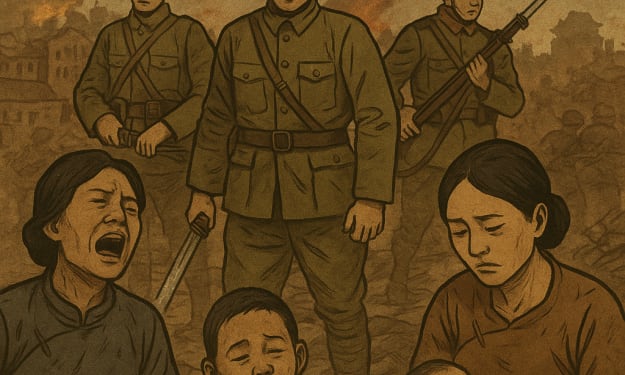
“Resonances of Terror: The Catastrophe of the Nanjing Massacre”. Content Warning. AI-Generated.
apanese forces entered Nanjing on December 13, 1937, it signified the onset of one of history’s bleakest and most savage massacres. Over the course of approximately six weeks, the ancient Chinese city endured incomprehensible violence, leaving a legacy of terror that continues to resonate in the hearts of millions today. The Collapse of the Capital Nanjing, once the capital of the Ming Dynasty and a symbol of Chinese culture, had transformed into the capital of the Republic of China in the early 20th century. As Japan initiated its aggressive campaign against China in 1937, Nanjing evolved into a primary military and symbolic target. The Battle of Shanghai had already exhausted Chinese resources, and by the time Japanese forces advanced toward Nanjing, resistance was fragmented. On December 12, the Chinese military formally retreated. The following day, Japanese troops invaded the citywhat ensued was not a typical occupation, but a methodical massacre. A City in Misery Eyewitness testimonies depict the plunge into despair. Japanese soldiers initiated a terror campaign directed not only at the remaining Chinese troops but at the entire populace of the city. Civilians were rounded up by the thousands, executed en masse, and buried in shallow graves or discarded into the Yangtze River. Many were subjected to brutal torture before their demise. Historical assessments indicate that between 200,000 and 300,000 individuals were killed, although the precise number may never be ascertained due to the obliteration of records and the vast expanse of the atrocity. Atrocities Against Humanity The Rape of Nanjing is not solely denoted for the killings. During the massacre, an estimated 20,000 to 80,000 women were assaultedsome as young as 8 years old, others were elderly. Numerous victims were mutilated, tortured, and subsequently murdered. Pregnant women were also among those targeted. Entire families were executed while being compelled to witness the suffering of one another. Children were not exempt from the brutality. Infants were hurled into the air and impaled on bayonets as a form of amusement. Historical photographs and survivor accounts reveal a reality of unfathomable cruelty. The World Observes Westerners residing in Nanjing at the timemissionaries, businesspersons, and diplomatssought to intervene. A German businessman and member of the Nazi party, John Rabe, played a crucial role in establishing the Nanjing Safety Zone, which offered refuge to thousands of civilians. While these initiatives salvaged numerous lives, the atrocities persisted just beyond the confines of the safety zone. News of the slaughter ultimately reached the globe through reports by correspondents and correspondence dispatched by observers. Despite the accumulating proof, international reaction was tepid due to the escalating global tensions that would shortly ignite into World War II. Justice Delayed Following World War II, the International Military Tribunal for the Far East and the Nanjing War Crimes Tribunal prosecuted and sentenced several Japanese officials for war offenses, including those perpetrated in Nanjing. General Iwane Matsui, who directed the forces during the massacre, was convicted and executed. Nevertheless, numerous offenders were never held accountable. To this day, Japan’s formal recognition of the massacre persists as a subject of political discord. While certain Japanese leaders have rendered apologies, others refute or minimize the event, creating ongoing friction in Sino-Japanese relations. The Legacy of Suffering The Nanjing Massacre is not solely a Chinese catastrophe but a universal one. It stands as a stark reminder of the depths to which humanity can descend when unchecked militarism, racism, and imperial ambition converge. For China, Nanjing evolved into a symbol of resilience, remembrance, and the significance of historical accuracy. Memorials, such as the Nanjing Massacre Memorial Hall, have been established to ensure that the voices of the victims are forever honored. Each year, December 13 is designated as National Memorial Day in China, observed with silence, contemplation, and a call for peace. Conclusion The Nanjing Massacre was not an incidental consequence of warfare, but a calculated campaign of terror. It remains one of the largest and most savage massacres in contemporary history. Its legacy continues to influence international relations, historical consciousness, and the ongoing effort to ensure that such atrocities are never repeated. History must not only be remembered but also addressed. In witnessing tragedies like Nanjing, we are reminded of our collective responsibility to protect humanity from itself.
By Say the truth about a year ago in History
The Enigmatic Saga of the Menai Strait Shipwrecks
Nestled between the rugged coastline of North Wales and the island of Anglesey, the Menai Strait is a narrow ribbon of water that belies its tranquil appearance. Beneath its shimmering surface lies a history steeped in mystery, marked by one of the most extraordinary coincidences in maritime lore. Over nearly two centuries, three ships met their doom in these waters, each on the same fateful date, each leaving a single survivor-astonishingly, all named Hugh Williams. This haunting tale, spanning generations, weaves a narrative so improbable it seems plucked from the pages of a novel, yet it is rooted in historical record.
By KWAO LEARNER WINFREDabout a year ago in History
Alexander Pushkin: The Soul of Russian Literature
In the heart of Russia, one name resonates above all others in the world of letters: Alexander Pushkin. Known as the Shakespeare of Russia, this enigmatic poet and novelist reshaped the nation’s literary landscape with a voice that was clear, vibrant, and deeply human. His life was a whirlwind of passion, rebellion, and tragedy, and his masterpiece, Eugene Onegin, captures the restless spirit of a people caught between tradition and change. Let’s dive into Pushkin’s world, explore the essence of his most celebrated work, and uncover why his words continue to echo through generations.
By KWAO LEARNER WINFREDabout a year ago in History
Lionel Messi
The Designer of Modern Football: Lionel Messi Lionel Messi is more than just a football player; he is also a global icon whose legacy extends beyond the field. Messi's rise from a shy, small-town boy lacking growth hormone to one of history's greatest athletes is nothing short of legendary. He was born on June 24, 1987, in Rosario, Argentina. With unmatched dribbling skills, vision, and an innate understanding of the game, Messi has redefined what it means to be a footballer in the modern era.
By Raihan Islam about a year ago in History
The Dark Origins of Modern Gynecology: J. Marion Sims and the Forgotten Victims
A Surgeon’s Legacy Cast in Shadows The name J. Marion Sims holds a prominent place in the annals of medical history. Often revered as the “Father of Modern Gynecology,” Sims is credited with groundbreaking surgical innovations that laid the foundation for women’s reproductive healthcare. His work, especially in treating vesicovaginal fistulas, a devastating childbirth injury, has saved countless lives and changed the course of medicine. But beneath this celebrated legacy lies a haunting truth: many of Sims’ most important advancements were made through painful and unethical experiments conducted on enslaved Black women.
By The Secret History Of The Worldabout a year ago in History
The Gateway to Hell Still Breathes in Bohemia
Where the Earth Opens and the Sky Holds Its Breath In the heart of the Czech Republic, nestled in the forested wilderness of Bohemia, far from trade routes, away from rivers, detached from any known strategic or royal interest, stands a castle built not to keep enemies out, but something far more ancient in.
By The Secret History Of The Worldabout a year ago in History
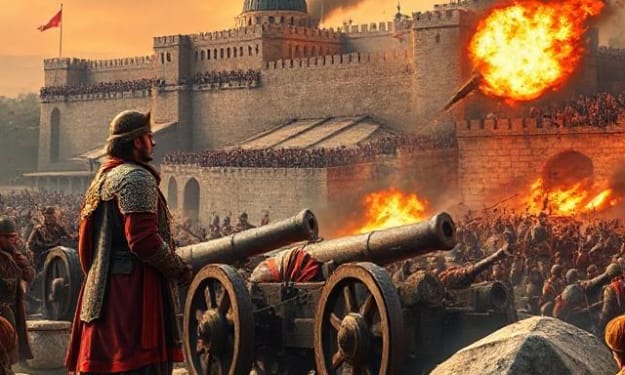
The Fall of Constantinople (1453)
The year is 1453, and the mighty Byzantine Empire, once a powerful force in the Mediterranean, stands on the verge of collapse. The city of Constantinople, its capital, has weathered countless invasions and sieges over the centuries, earning its reputation as one of the most formidable fortresses in the world. For over a thousand years, it has stood as a beacon of Christian power, the last remnant of the great Roman Empire, and a symbol of unyielding strength. Yet, by the mid-15th century, the empire is in decline. Its once vast territories are now a shadow of their former selves, and its economy is in shambles. Most of its lands are now occupied by foreign powers, leaving Constantinople isolated and vulnerable.
By Sadiq Muhammadabout a year ago in History
Perfect brownies baked at high altitude are possible thanks to Colorado’s home economics pioneer Inga Allison
Many bakers working at high altitudes have carefully followed a standard recipe only to reach into the oven to find a sunken cake, flat cookies or dry muffins.
By Abjol Hussain Laskarabout a year ago in History
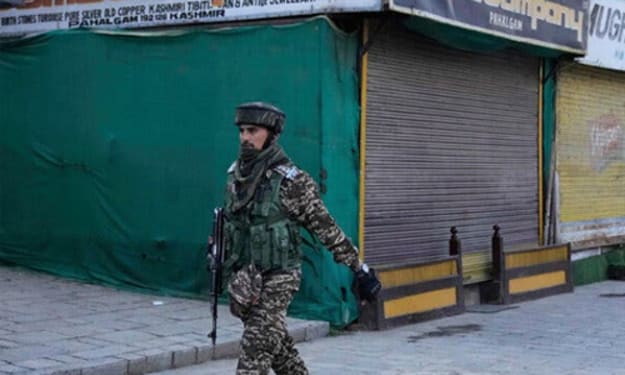
An Illusion of peace is Shattered By the Murder of Civilians in Kashmir.
Kashmir has been a place where peace has always been tentative and fragile for years. It has remained a hotbed of tension and conflict. However, there had been a growing sense of calm over the past few months. The streets of Srinagar were bustling with activity, and schools, shops, and offices operated with a rare sense of normalcy. Tourists had begun to trickle back, drawn by the natural beauty and rich culture of the region. Kashmir seemed to be breathing a little easier for the first time in years. When news of the brutal killing of several civilians in a remote village in South Kashmir broke, that illusion was violently shattered. Eyewitnesses described masked gunmen entering homes and executing people without warning. Women, young children, and the elderly were among the victims. Everyone is reminded of the deep wounds that remain concealed beneath any apparent peace, as this heinous act of violence has once more thrown the valley into mourning and fear. Curfews and internet service suspensions were quickly implemented by local authorities in an effort to deter protests and stop the spread of false information. However, the harm was already done. Before the blackout, videos and images had already spread widely on social media, angering Kashmiris and attracting the attention of international human rights organizations. The attack has sparked a number of pressing concerns, including: Why not now? And what implications does this have for the fragile peace process that has been moving forward slowly? The perpetrators' identities are the subject of conflicting reports. While others point the finger at rogue elements within paramilitary forces, others blame foreign-backed militants. It is nearly impossible to determine the truth due to a lack of transparency and an investigation that is comprehensive and impartial. In the absence of clarity, conspiracy theories abound, fueling anger and mistrust on all sides.
By Md Faruk Aliabout a year ago in History