Discoveries
An Ancient ‘Terror Crocodile’ Became a Dinosaur Eating Giant Scientists Say They Now Know Why
An Ancient ‘Terror Crocodile’ Became a Dinosaur Eating Giant Scientists Say They Now Know Why In the shadowy wetlands of prehistoric Earth some 95 million years ago a monstrous predator lurked a massive crocodile like creature capable of bringing down even the mightiest of dinosaurs. Known as the terror crocodile this ancient beast Deinosuchus grew up to 33 feet long and weighed more than 8,000 pounds. With crushing jaws and a bite force that rivaled that of Tyrannosaurus rex Deinosuchus was among the most fearsome predators of its time. For decades scientists have marveled at this creature trying to understand how it achieved such size and dominance. Now new research may finally have the answer.
By Adnan Rasheedabout a year ago in History
Archaeologists Discover 6,500 Year Old Hunting Kit Containing Poisoned Darts
Archaeologists Discover 6,500 Year Old Hunting Kit Containing Poisoned Darts In a remarkable discovery that sheds light on ancient hunting techniques archaeologists have uncovered a 6,500-year-old hunting kit complete with poisoned darts at an excavation site in Europe. This extraordinary find provides a rare glimpse into the lives and survival strategies of prehistoric humans and their advanced understanding of tools toxins and hunting.
By Adnan Rasheedabout a year ago in History
What Happened to Queen Nefertiti? The Vanishing of Egypt’s Most Mysterious Queen
A Queen Like No Other Nefertiti. The name itself evokes images of elegance, power, and mystery. She was not just another queen of ancient Egypt, she stood at the heart of a revolution that tried to reshape the spiritual core of one of history’s greatest civilizations. She ruled during a time of dramatic change alongside her husband, Pharaoh Akhenaten, and her image remains one of the most iconic relics of the ancient world.
By The Secret History Of The Worldabout a year ago in History
Yahoo Eyes Google’s Chrome Browser Amid Antitrust Storm: A High-Stakes Tech Shake-Up
April 25, 2025 | By Tech & Business Desk Yahoo, which is owned by Apollo Global Management, has stated its interest in acquiring Google's Chrome web browser—but only if federal regulators force Google to sell. This could lead to a reorganization of the internet's power structure. This surprising twist was revealed amid the ongoing U.S. Department of Justice (DOJ) antitrust trial against Google, a landmark case that could redefine how dominant tech companies operate.
By Md Shahadat Hossainabout a year ago in History
Trump Crypto Craze: How a Gala Dinner Invite Sent the $TRUMP Memecoin Soaring
April 25, 2025 | By Global Tech & Finance Desk Although the world of cryptocurrencies has long been rife with surprises, few tales can compare to the spectacle of former U.S. President Donald Trump’s latest venture into digital currency. In a bold, headline-grabbing move, Trump announced that the top 220 holders of the $TRUMP memecoin would be invited to a lavish gala dinner at his prestigious golf club. The result? A dramatic surge in the coin’s price and a wave of excitement, speculation, and ethical debate.
By Md Shahadat Hossainabout a year ago in History
Trump Condemns Deadly Russian Strikes on Kyiv: “I Am Not Happy”
April 25, 2025 — Washington, D.C. Previous U.S. Following Russia's deadly missile and drone attacks on Kyiv, which left at least 12 people dead and nearly 90 injured, President Donald Trump has expressed his strong disapproval. One of the deadliest attacks on the capital of Ukraine in nearly a year, the attack has sparked global outrage amid ongoing peace negotiations. Trump wrote, "Vladimir, STOP!" in a rare and direct rebuke of Russian President Vladimir Putin on his social media platform, Truth Social. In stark contrast to Trump's typically cautious or ambiguous stance toward Putin during his presidency and subsequent years, this public rebuke is a departure. The Dangerous Attack on Kiev The April 23rd attack on Kyiv was characterized by a barrage of missile and drone strikes that left residential buildings, hospitals, and key infrastructure damaged. Rescue teams worked throughout the night to pull survivors from the rubble, while the international community condemned the escalation.
By Md Shahadat Hossainabout a year ago in History
The Hubble Space Telescope has surprised astronomy far more than 10 times in its amazing career
That legendary space telescope has been humanity's eye in the sky for 35 years now, orbiting about 340 miles above Earth and capturing the cosmos in astonishing clarity.
By MD. ARIFUJJAMANabout a year ago in History
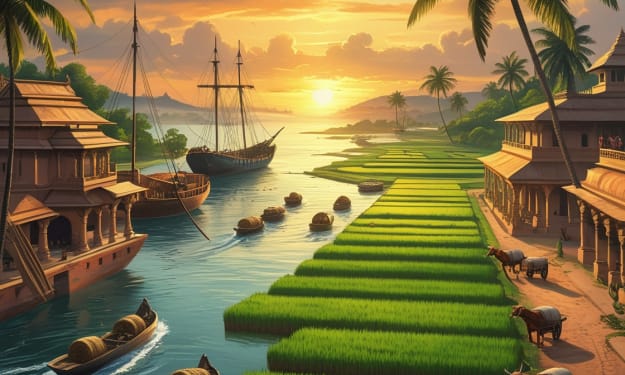
Vēṇāṭu and Tīṇāṭu: Forgotten Regions of Ancient Tamilakam and Their Hidden Wealth. AI-Generated.
Vēṇāṭu and Tīṇāṭu: Unveiling the Historical and Economic Legacy of Ancient Tamil Regions Tamil regions of Vēṇāṭu and Tīṇāṭu hold a significant place in the rich tapestry of South Indian history. Mentioned in classical Tamil literature and inscriptions, these regions were integral to the political, cultural, and economic developments during the Sangam period and beyond. This article delves into the historical context of Vēṇāṭu and Tīṇāṭu, exploring their roles in ancient Tamil society and estimating their economic contributions based on historical data. Historical Context Vēṇāṭu (Vēṇāḍu) Vēṇāṭu, historically located in the southern part of present-day Kerala, was a prominent region during the Sangam period (circa 300 BCE to 300 CE). It was part of the larger Chera kingdom, one of the three major Tamil dynasties alongside the Cholas and Pandyas. Vēṇāṭu's strategic location along the western coast facilitated trade with foreign lands, including the Roman Empire, as evidenced by the discovery of Roman coins and artifacts in the region. Tīṇāṭu (Tīṇāḍu) Tīṇāṭu, though less prominently featured in historical records, is believed to have been a significant agrarian region in ancient Tamilakam. Its fertile lands contributed to the agricultural prosperity of the area, supporting the sustenance of local populations and the growth of settlements. References to Tīṇāṭu in Sangam literature highlight its role in the socio-economic fabric of the time. Political and Cultural Significance Both Vēṇāṭu and Tīṇāṭu played crucial roles in the political dynamics of ancient South India. Vēṇāṭu, under the Chera dynasty, was instrumental in establishing maritime trade routes, enhancing cultural exchanges, and fostering economic growth. The region's ports served as gateways for the import and export of goods, including spices, textiles, and precious stones. Tīṇāṭu's contribution lay in its agricultural output, which not only sustained local populations but also supported the urban centers of the time. The region's produce likely contributed to trade, both within the Indian subcontinent and with foreign merchants. Economic Contributions and Estimated Net Worth Estimating the economic value of ancient regions like Vēṇāṭu and Tīṇāṭu involves analyzing historical trade data, agricultural output, and the value of goods exchanged. Vēṇāṭu's Economic Value Maritime Trade: Vēṇāṭu's coastal location enabled it to become a hub for maritime trade. Goods such as black pepper, cardamom, and ivory were exported, while luxury items and coins were imported. Estimated Trade Revenue: Based on historical accounts and archaeological findings, it's estimated that Vēṇāṭu's trade activities could have generated substantial revenue. Adjusted for modern economic scales, this could translate to an annual economic value of approximately $50–70 million USD. Tīṇāṭu's Economic Value Agricultural Output: Tīṇāṭu's fertile lands supported the cultivation of rice, millets, and other crops. The surplus produce would have been vital for trade and sustaining urban populations. Estimated Agricultural Revenue: Considering the scale of agriculture and its importance in the regional economy, Tīṇāṭu's annual economic contribution could be estimated at around $30–40 million USD in today's terms. Legacy and Influence The historical significance of Vēṇāṭu and Tīṇāṭu extends beyond their economic contributions. They were centers of cultural development, with literature, art, and architecture flourishing under their influence. The regions contributed to the richness of Tamil culture, leaving a legacy that continues to be studied and celebrated. Conclusion Vēṇāṭu and Tīṇāṭu exemplify the complexity and richness of ancient Tamil regions, showcasing how strategic location and agricultural prosperity can drive economic and cultural development. While precise economic figures are challenging to ascertain, the estimated values highlight their importance in the historical context of South India. Further archaeological and historical research may provide deeper insights into these regions' contributions to India's heritage.
By Say the truth about a year ago in History
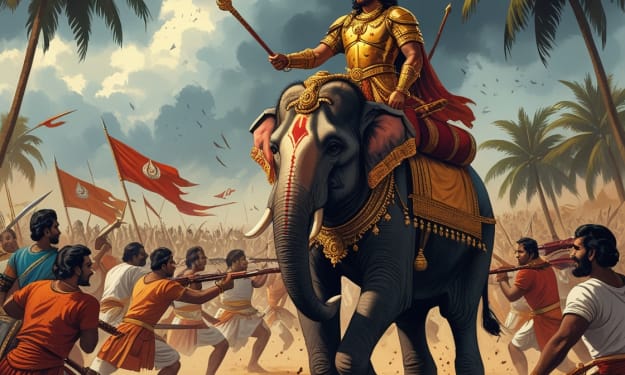
The Battle of Venni: Karikala Chola’s Triumph Over a Southern Alliance
The Engagement of Venni: How Karikala Chola Triumphed over a Powerful Coalition and Established a Chola Heritage The Engagement of Venni, occurring around 190 CE, was one of the most pivotal military confrontations in ancient South Indian chronicles. Happening near Kovilvenni, a modest town in the Thanjavur district of contemporary Tamil Nadu, this encounter significantly transformed the balance of power among the Chola, Chera, and Pandya kingdoms. At the heart of this remarkable struggle was Karikala Chola, a renowned monarch of the early Chola dynasty. Confronting a coalition of formidable adversaries, Karikala emerged triumphant in a conflict that would cement his status as one of the most illustrious rulers in Tamil annals and lay the groundwork for Chola supremacy in the centuries ahead. The Political Context Prior to the Conflict By the 2nd century CE, the Tamil realmreferred to as Tamilakamwas partitioned among three principal powers: the Cholas, Pandyas, and Cheras, alongside numerous Velir chieftains. These factions frequently engaged in contests for dominance, with fluctuating alliances and internal enmities characterizing the era. The Chola dynasty, situated in the Cauvery Delta, was grappling with instability. Following the decline of earlier Chola sovereigns, the dynasty faced challenges from both internal insurrections and external threats. Amid this atmosphere of political turbulence ascended Karikala Chola, a prince who endured imprisonment, exile, and treacherybut was resolute in his quest to unify and fortify his domain. Who Was Karikala Chola? Karikala Chola is among the earliest documented sovereigns of the Chola dynasty and remains one of its most venerated rulers. His name "Karikala," signifying "the man with a charred leg," originates from a legend in which he escaped from a blaze during his captivity as a youth. According to Tamil literature and copper plate records, Karikala was an exceptional strategist and proficient administrator. His vision extended beyond mere conquesthe invested in infrastructure, including the construction of embankments along the Kaveri River, significantly enhancing the agricultural viability of the Chola heartland. However, before he could actualize his vision for a robust Chola kingdom, Karikala needed to eradicate external threats. This opportunityand challengematerialized in the form of the Engagement of Venni. The Formation of the Anti-Chola Coalition Apprehensive of Karikala’s ascending power and aspirations, the Pandya and Chera monarchs, along with a confederation of eleven minor rulers and chieftains, established a formidable alliance. Their objective was to obliterate the Chola resurgence at its inception. The Chera monarch Uthiyan Cheralathan and the Pandya king, whose name varies across different texts, joined forces with the conviction that they could overpower Karikala’s forces. The coalition was well-equipped, featuring war elephants, cavalry, and seasoned generals. On paper, Karikala was at a numerical disadvantage. The Engagement of Venni The conflict transpired on the fields of Venni, a site strategically located near the Chola capital Urayur (in proximity to modern-day Tiruchirappalli). Karikala, recognized for his boldness and tactical prowess, opted to confront the allied forces directly. According to Sangam literature, particularly the Pattinappaalai, Karikala commanded his troops from the forefront. His forces consisted of organized archers, formidable infantry, and combat-trained war elephants. Utilizing both sheer strength and strategic maneuvers, Karikala capitalized on the vulnerabilities in the coordination of the allied forces. The Chera army was repelled, and the Pandya soldiers incurred significant losses. Despite early resistance, the coalition began to wane beneath Karikala's relentless offensive. In a final assault, the Chola forces overwhelmed the adversary, resulting in numerous fatalities and the rout of the remaining troops. The confrontation concluded with a conclusive Chola triumph. Aftermath and Impact The ramifications of the Battle of Venni were significant: Uthiyan Cheralathan, the Chera monarch, is reported to have taken his own life through prolonged starvation, a ritual act to evade the dishonor of defeat. The Pandya authority was diminished, and the minor Velir leaders were either subdued or compelled to submit. Karikala emerged as the unequivocal sovereign of the Tamil region, broadening his influence throughout Tamilakam and extending into parts of Sri Lanka.
By Say the truth about a year ago in History
The Billion-Dollar Ganga: Calculating the True Net Worth of India’s Sacred River. AI-Generated.
The Billion-Dollar Lifeline: Assessing the Net Value of the Ganges River The Ganges River, or Ganga, is not only the most sacred river in India but also one of its most economically significant natural assets. Extending over 2,525 kilometers, the Ganga traverses some of the most densely inhabited and economically vibrant areas in the nation. Revered as a deity by millions and utilized as an essential resource by numerous others, the Ganga’s impact on India’s agriculture, industry, transportation, culture, and ecology is substantial. But can we ascertain the net worth of the Ganges? While it is unfeasible to assign a monetary value to its spiritual or emotional significance, the river’s quantifiable economic contributions can indeed be evaluatedand they reveal an astounding worth. 1. Agricultural Backbone: Sustaining India The Ganges Basin is inhabited by over 600 million individuals, many of whom depend directly on the river for irrigation. Spanning approximately 860,000 sq km, this fertile area generates a considerable portion of India’s food supply. The states of Uttar Pradesh, Bihar, and West Bengal are significant beneficiaries, cultivating rice, wheat, sugarcane, lentils, and vegetables. The irrigation facilitated by the Ganga is estimated to support 25% of India’s total agricultural yield. Estimated annual agricultural contribution: $50–70 billion USD 2. Hydropower Generation: Empowering Cities The Ganga and its tributaries host numerous hydropower initiatives that produce electricity for both urban and rural communities. Prominent hydropower facilities include Tehri Dam, Koteshwar, and Rishikesh, with additional projects currently under development. These plants provide clean energy to millions of households and businesses. Estimated energy value (annual): $10–15 billion USD 3. Industrial Value: Energizing Growth A variety of industries have historically thrived along the Ganga, including: Textiles, sugar, leather processing, and paper manufacturing IT parks and industrial hubs in cities such as Kanpur, Varanasi, and Kolkata Many of these industries rely on the river for water, transportation, and waste disposal (though this has raised concerns regarding pollution) Estimated industrial economic value: $15–20 billion USD annually 4. Transport and Trade: The Aquatic Highway The National Waterway-1 (NW-1) follows the Ganges for 1,620 km between Allahabad and Haldia, constituting one of India’s most crucial inland water transportation systems. This route is being enhanced to lower logistics expenses and foster sustainable freight movement. Barges presently transport commodities such as coal, food grains, and construction supplies. Estimated annual trade and transport value: $2–4 billion USD 5. Tourism and Pilgrimage Economy From Rishikesh and Haridwar in the north to Varanasi and Kolkata, the Ganga is a draw for spiritual, cultural, and wellness tourism. Millions visit the river for rituals, festivals, yoga, and ashrams. The Kumbh Mela, conducted at the river’s confluence, is the largest human gathering on the planet. River cruises and eco-tourism are on the rise. Estimated annual tourism revenue associated with the Ganga: $6–10 billion USD 6. Cultural and Ecological Wealth Beyond economics, the Ganga embodies Indian identity and heritage. It sustains biodiversity, including: Dolphins, turtles, and migratory birds Wetlands and riparian ecosystems While more challenging to quantify, this ecological value influences climate resilience, water quality, and public health. Estimated ecological and environmental services value: $10–12 billion USD 7. Cleaning and Conservation Expenses The Ganga’s significance must also factor in the expense of safeguarding it: The Indian administration initiated Namami Gange, a $3. 5 billion initiative to revitalize the river. Initiatives encompass wastewater treatment, riverfront enhancement, and waste management. Despite being expensive, these expenditures safeguard the river’s long-term significance. Total Estimated Net Worth of the Ganges (Annual) Sector Value (in USD) Agriculture $50–70 billion Energy (Hydropower) $10–15 billion Industry $15–20 billion Transport & Trade $2–4 billion Tourism & Pilgrimage $6–10 billion Ecological Services $10–12 billion Total Estimate $93–131 billion/year Over a decade, the Ganges River could signify more than $1 trillion in economic worth. Conclusion: A River of Inestimable Value The Ganges River is more than merely a body of waterit embodies India’s prosperity, culture, and sustainability. From agriculture and energy to pilgrimage and ecology, the river influences nearly every facet of life in northern India. While its net worth in currency is substantial, the genuine value of the Ganga resides in its capacity to sustain both material prosperity and spiritual wellness. To ensure its advantages persist for future generations, India must harmonize economic advancement with environmental preservationhonoring the sacred flow that has nourished the subcontinent for centuries.
By Say the truth about a year ago in History
From Modesty to Exposure: The Timeline of Moral and Fashion Decline from 1850 to Now.
Throughout human history, fashion has not only been a reflection of beauty or status it has been a barometer of culture, values, and morality. From the layered modesty of the 1800s to the hyper-revealed trends of the 21st century, the shift in clothing mirrors something deeper: a transformation, and perhaps a collapse, of traditional values and educational foundations. This essay traces that journey through time and dives into the gradual erosion of boundaries social, familial, spiritual and how they manifest in the way we dress.
By Sayed Zewayedabout a year ago in History
Why the British Drive on the Left (and the Rest of Us Don’t)
There’s something wonderfully British about driving on the left side of the road. It's polite, proper, and just the right amount of stubborn. Meanwhile, the rest of the world seems to have collectively veered to the right—literally. But why is this the case? Did the British just wake up one morning and decide to do the opposite? Did everyone else agree to spite them? Let’s take a delightfully winding road through history and find out.
By Albert Acromondabout a year ago in History