Discoveries
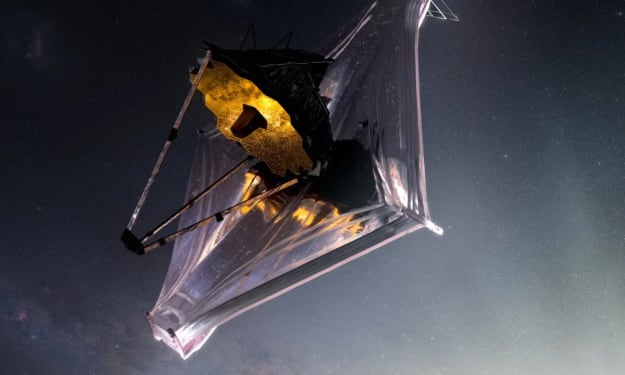
Orion Comes Alive: NASA Capsule Throws Off Its Cover in Major Test. AI-Generated.
Orion Comes Alive: NASA Capsule Throws Off Its Cover in Major Test NASA has achieved a major breakthrough in its ambitious Artemis program with a successful and critical test of the Orion spacecraft's forward bay cover (FBC) separation system. This achievement marks an essential milestone toward the goal of returning humans to the Moon, and eventually venturing further into deep space, including Mars.
By Adnan Rasheedabout a year ago in History
The Creation of the Dark Web: A Deep Dive
The Dark Web is a dark area of the internet that has piqued the interest of many people all over the world. It is often associated with secrecy, anonymity, and illicit activities. However, its creation did not originate with criminal intent. In fact, the Dark Web has a fascinating history rooted in the pursuit of privacy, freedom of information, and secure communication.
By SHAHADAT hossain about a year ago in History
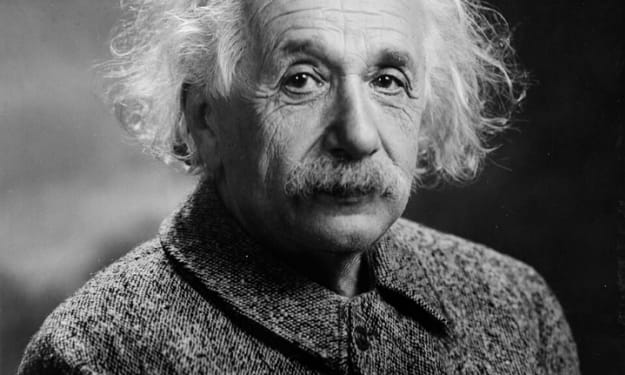
Biography of Aubert Einstein the greatest scientist ever
Albert Einstein (14 March 1879 – 18 April 1955) was a German-born theoretical physicist who is best known for developing the theory of relativity. Einstein also made important contributions to quantum mechanics. His mass–energy equivalence formula E = mc2, which arises from special relativity, has been called "the world's most famous equation". He received the 1921 Nobel Prize in Physics for his services to theoretical physics, and especially for his discovery of the law of the photoelectric effect.
By Favour Nyimbiliabout a year ago in History
Artificial Intelligence Solves One of Archaeology’s Greatest Puzzles.
Artificial Intelligence Solves One of Archaeology’s Greatest Puzzles. For centuries archaeology has been a discipline built on patience careful excavation and painstaking analysis. Every shard of pottery ancient inscription and ruined structure tells a story but understanding these fragments often requires years if not decades of study. Today however a new player has entered the field Artificial Intelligence (AI). In a groundbreaking development AI has recently helped solve one of archaeology’s greatest puzzles revolutionizing the way we uncover humanity’s ancient past. One of the most elusive challenges in archaeology has been the deciphering of ancient scripts. Languages like Egyptian hieroglyphs were famously decoded with the help of the Rosetta Stone but many others such as Linear A the Indus Valley script and early Mesoamerican glyphs have remained stubbornly mysterious. Traditional methods of decipherment often rely on finding bilingual inscriptions or large amounts of contextual material luxuries that are not always available.
By Adnan Rasheedabout a year ago in History
"Dead Hand: The Secret History of Russia’s Automatic Nuclear Retaliation System". AI-Generated.
The Shadow of the Dead Hand: The History of Russia’s Automatic Nuclear Launch Program Throughout the Cold War era, the specter of nuclear annihilation loomed over the globe. The United States and the Soviet Union amassed thousands of nuclear weapons, bracing for the worst potential scenario: a surprise offensive that could obliterate their nations within moments. In response, the Soviet Union devised one of the most formidable and clandestine systems ever conceived the Automatic Nuclear Launch Program, referred to in the West as the Dead Hand. This system assured a retaliatory response even in the event that the entire Soviet leadership was eradicated, encapsulating the doctrine of “Mutual Assured Destruction” in its most harrowing manifestation. In this article, we will explore the origins, framework, and chilling legacy of this program. The Birth of the Dead Hand System 1. The Threat of Decapitation In the late 1970s and early 1980s, Soviet leaders harbored concerns regarding a potential American preemptive strike. U. S. advancements in missile precision and stealth technologies (such as the B-2 bomber) suggested that it could be feasible to eliminate Soviet leadership before they could issue a counteroffensive order. This alarming scenario termed a "decapitation strike" propelled the Soviet military to seek an effective response. They required a system capable of executing an automatic retaliation even if no personnel remained to authorize the order. 2. Development of the System The program, covertly designated as "Perimeter" (Периметр), commenced development in 1974 and was finalized by 1985. Key characteristics of Perimeter encompassed:
By Say the truth about a year ago in History
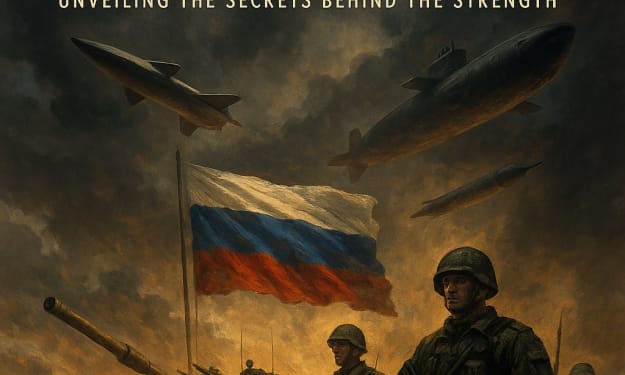
"Russia’s Hidden Power: Unveiling the Secret Weapons That Keep the World on Edge"
Russia’s Might and Its Concealed Armaments: The Covert Power of a Global Titan Russia, the planet’s largest nation by area, is frequently regarded as one of the most formidable entities in international relations. In addition to its extensive territory and abundant natural resources, Russia's military prowess, intelligence capacities, and enigmatic secret armaments add to its formidable reputation. What precisely accounts for Russia's strength, and which clandestine weapons does it maintain that keep even the most powerful states on edge? In this article, we delve into the bedrock of Russia's strength and examine some of its most speculated secret armaments. The Foundations of Russia’s Strength 1. Extensive Territory and Resources Spanning over 17 million square kilometers, Russia's sheer size provides a strategic advantage. It possesses vast reserves of oil, natural gas, coal, and rare minerals. Its forests and waterways ensure energy security and economic leverage, particularly in global markets. Natural Gas: Russia accounts for approximately 20% of the world's natural gas, an essential resource for Europe and Asia. Arctic Claims: Russia has assertively claimed segments of the Arctic, believed to contain trillions of dollars worth of oil and gas. 2. Military Might Russia fields the second-largest military globally, following the United States. It sustains: A Nuclear Arsenal: Estimated at over 6,000 nuclear warheadsthe largest accumulation on the planet. Modernized Armed Forces: Although deeply rooted in Soviet traditions, Russia's military has undergone modernization, incorporating new tanks, submarines, and hypersonic missiles. Experience: Russian forces have engaged in various operational theaters, from Afghanistan to Syria, adapting to multiple warfare strategies. 3. Political Resolve and Cyber Warfare In contrast to many Western nations, where public opinion heavily shapes military initiatives, Russia's leadershipparticularly under President Vladimir Putinbenefits from centralized authority to act decisively. Moreover, Russia has excelled in cyber warfare: Cyber Attacks: Russian entities have been associated with significant cyber intrusions globally, targeting electoral processes, corporations, and governmental infrastructures. Information Warfare: Russia employs media manipulation and online disinformation initiatives as extensions of state authority. The Secret Weapons of Russia Beyond its conventional range of armaments, Russia is believed to include several "secret" or highly classified weapons capable of altering the global power dynamic. Some are verified; others are speculated within defense discussions. 1. Poseidon Nuclear Torpedo (Status-6) One of Russia’s most unsettling covert weapons, Poseidon is a substantial nuclear-powered, nuclear-armed underwater drone. Capabilities: It can traverse thousands of miles underwater, evade missile defense systems, and generate radioactive tsunamis that could incapacitate coastal urban areas. Impact: If activated, Poseidon could obliterate enemy infrastructure without requiring conventional nuclear missile launches. 2. Avangard Hypersonic Glide Vehicle The Avangard is a hypersonic missile system capable of exceeding 20 times the speed of sound and maneuvering erratically, rendering it nearly impossible to intercept. Deployment: Russia asserts it has already fielded Avangard-equipped missiles. Advantage: Existing anti-missile systems in the West are predominantly ineffective against hypersonic threats. 3. Burevestnik Nuclear-Powered Cruise Missile Dubbed "Skyfall" by NATO, the Burevestnik is a theoretical missile with an unlimited range due to its nuclear propulsion. Potential: Such a projectile could remain aloft for months, perpetually altering its trajectory, and strike targets anywhere on the planet. Status: Trials have been reported, but it remains ambiguous whether it is entirely functional. 4. Electronic Warfare Systems (EW) Russia has made significant investments in electronic warfare technologies: Capabilities: Disrupt adversary communications, radar, and satellite systems. Systems: The Krasukha-4 and Murmansk-BN are among the recognized Russian EW systems that can jam enemy assets hundreds of kilometers distant. 5. Underwater "Doomsday" Bases There are ongoing speculations that Russia possesses clandestine underwater facilities and deep-sea platforms equipped with nuclear armaments, particularly in the Arctic and Pacific Oceans. While not officially validated, these speculations correspond with Russia's focus on asymmetric warfare strategiesintroducing unexpected and unconventional threats. Reasons for Russia's Investment in Secret Weapons There are multiple factors contributing to Russia's intense focus on developing clandestine and advanced weaponry: Offsetting Conventional Deficiencies: Russia recognizes that, economically and conventionally, it cannot compete directly with NATO and the U. S. Psychological Warfare: The fear of unknown technologies keeps adversaries apprehensive. Strategic Surprise: Clandestine weapons can provide Russia with first-strike or deterrent advantages should overt conflict arise. Conclusion Russia’s strength resides not solely in its tanks, missiles, or oil reservesit is in its capacity to conduct psychological, cyber, and unconventional warfare while sustaining a strategic advantage through secretive, advanced technologies. From nuclear torpedoes to hypersonic missiles and electronic warfare, Russia has developed an arsenal that fuses traditional power with futuristic terror. In a world increasingly defined by novel forms of conflictcyber attacks, hypersonic arms races, and underwater weaponryRussia’s covert maneuvers guarantee that it remains a contender no one can afford to underestimate. Its clandestine weapons are not merely instruments of warthey are shields of fear, intrigue, and global influence.
By Say the truth about a year ago in History
10 Interesting Unknown Facts About Jaipur, Rajasthan
Jaipur, the capital of Rajasthan, is often referred to as the "Pink City" because of its distinctive pink-hued buildings. With a rich cultural heritage, majestic palaces, and ancient forts, it attracts millions of tourists every year. However, beneath its popular tourist spots lies a treasure trove of hidden gems and lesser-known facts. Here are 10 interesting, lesser-known facts about Jaipur that will make you look at this royal city from a fresh perspective:
By Ashley Robinsonabout a year ago in History
Trump writes ‘Vladimir, STOP!’ after Russia launches deadliest strikes on Kyiv since last summer
US President Donald Trump said he is “not happy” after Russia launched its deadliest wave of attacks on Kyiv in nine months, telling President Vladimir Putin to “STOP!” as he attempts to push Ukraine to agree on a contentious ceasefire proposal. Moscow sent 70 missiles and 145 drones toward Ukraine, mainly targeting Kyiv, in an attack that leader Volodymyr Zelensky said was aimed at pressuring the United States. “I am not happy with the Russian strikes on KYIV. Not necessary, and the timing is terrible. Vladimir, STOP! Every week, 5,000 soldiers are dying. Let's finish the peace agreement! On Thursday, Trump wrote on Truth Social. According to Ukraine's emergency services, the strikes resulted in the deaths of at least 12 people and the injuries of 90 others. Additional casualties may be buried under the rubble. Moscow's assault, according to the emergency services, hit 13 places in Kyiv, including residential buildings and civilian infrastructure. It was the most expensive attack on the city since an aerial bombardment in July 2024 that killed 33 people and targeted a hospital and residential areas. Zelensky said during a trip to South Africa that the bombardment was “first and foremost” aimed at “pressuring the US.” He sought to push back against Trump’s efforts to corral Kyiv into making concessions, telling reporters: “The fact that Ukraine is ready to sit down at a negotiating table after (a) full ceasefire with terrorists… is a big compromise.” On the night of April 24, Russian forces unleashed an hours-long barrage of missiles and drones against Kyiv, killing at least 12 civilians and injuring over 90—its deadliest assault on the Ukrainian capital since July 2024. According to reports from Ukrainian emergency services, the strikes struck residential buildings, critical infrastructure, and public spaces in 13 locations throughout the city, trapping several individuals beneath the rubble as rescue workers attempted to reach them. According to President Volodymyr Zelenskyy, one of the ballistic missiles was identified as a North Korean–manufactured KN-23, underscoring growing cooperation between Moscow and Pyongyang in their military supplies . In a public rebuke that was unusually blunt, former U.S. President Donald Trump took to his Truth Social platform shortly after the strikes to issue a direct plea to Russian President Vladimir Putin. “I am not happy with the Russian strikes on KYIV. Not necessary, and the timing is terrible. Vladimir, STOP! 5000 soldiers a week are dying. Lets get the Peace Deal DONE!” His posts on social media were characterized by his use of all capital letters. One of the rare occasions in which Trump has directly criticized Putin by his first name rather than using the more formal "Mr. President” and illustrating his preference for punchy, informal messaging even in matters of global diplomacy . According to analysts, Trump's use of Truth Social as a kind of diplomatic channel is indicative of a larger shift in the manner in which state leaders communicate. Historically, appeals between heads of state have been conveyed through formal letters, phone calls or mediated statements; Trump’s approach—immediate, public and conversational—breaks with protocol and raises questions about its efficacy in influencing Kremlin decision-making . While some observers view the move as an attempt to inject urgency into U.S.-backed peace negotiations, others caution that social-media entreaties may carry little weight with a leader long accustomed to Western pressure campaigns
By Mahim khanabout a year ago in History