Discoveries
Taylor Swift’s Record-Breaking ‘Eras Tour’ Movie Dominates Streaming
Taylor Swift continues to redefine success in the entertainment industry, and her latest triumph comes in the form of Taylor Swift: The Eras Tour (Taylor’s Version), a concert film that has taken streaming platforms by storm. Originally released in theaters in October 2023, the film shattered box office records before making its highly anticipated debut on Disney+ in March 2024. Since then, it has dominated streaming charts, reinforcing Swift’s unparalleled influence in music, film, and pop culture.
By Silas Blackwoodabout a year ago in History
The Forgotten Empire That Shaped the Modern World
We often talk about history like it’s a straight line from ancient Greece to Renaissance Europe to Silicon Valley. But between the ruins of Rome and the rockets of Elon Musk lies a missing chapter — one written not in Latin or English, but in Arabic script, inked with innovation, and powered by curiosity. It’s the story of a civilization that burned brightly at a time when most of the Western world had gone dark.
By Mohammad Ashiqueabout a year ago in History
History Would’ve Burned: How Fire Shaped Civilizations
Fire is one of humanity’s oldest and most transformative discoveries. Its mastery marked the dawn of civilization, altering the course of history in ways both constructive and destructive. From providing warmth and protection to enabling technological advancements, fire has been a double-edged sword—capable of nurturing societies or reducing them to ashes. This article explores how fire has shaped human history, from prehistoric times to the modern era, and how civilizations have risen, fallen, and adapted in its flames. The Dawn of Fire: Humanity’s First Great Tool The controlled use of fire dates back at least 1 million years, with evidence suggesting that early hominids like Homo erectus harnessed it for warmth, cooking, and protection. Fire allowed early humans to: Cook food, making it more digestible and unlocking greater nutritional value, which may have contributed to brain development. Ward off predators, enabling safer settlements. Extend waking hours by providing light after sunset, fostering social interaction and tool-making. Without fire, human evolution and migration—especially into colder climates—would have been drastically different. Fire and the Birth of Civilization As humans transitioned from nomadic hunter-gatherers to settled agricultural societies, fire became indispensable. 1. Agriculture & Land Management Slash-and-burn farming cleared forests for crops, though it also led to soil depletion over time. Controlled burns were used by Indigenous peoples to manage ecosystems, promoting biodiversity. 2. Metallurgy & Technology The discovery of smelting (extracting metal from ore using fire) revolutionized tool-making, leading to the Bronze and Iron Ages. Fire enabled ceramics and glassmaking, essential for storage, construction, and art. 3. Warfare & Destruction Fire was weaponized early, from flaming arrows to Greek fire (a Byzantine incendiary weapon). Cities like Rome (64 AD) and London (1666) suffered catastrophic fires that reshaped urban planning. Fire as a Cultural and Religious Symbol Beyond its practical uses, fire held deep spiritual significance: Zoroastrianism revered fire as a symbol of divine wisdom. Greek mythology told of Prometheus, who stole fire from the gods to give to humanity. Hindu rituals involve sacred fires (yajna) for purification and offerings. The Industrial Revolution: Fire Powers the Modern World The 18th and 19th centuries saw fire’s role expand exponentially with the advent of: Steam engines (burning coal) powering factories and transportation. Internal combustion engines, leading to automobiles and airplanes. Electricity generation, initially through coal and later gas and oil. However, industrialization also brought pollution, deforestation, and climate change—unintended consequences of humanity’s reliance on fire. Fire in the Modern Age: Control and Catastrophe Today, fire remains both a vital tool and a devastating force: 1. Controlled Use Energy production (natural gas, nuclear reactions). Space exploration (rocket propulsion). Medicine and industry (sterilization, manufacturing). 2. Uncontrolled Disasters Wildfires (exacerbated by climate change) destroy millions of acres annually. Urban fires (e.g., Grenfell Tower, 2017) reveal vulnerabilities in modern infrastructure. Warfare (napalm, incendiary bombs) continues to use fire as a weapon. Conclusion: Will Fire Consume or Sustain Us? Fire has been a defining force in human history—both creator and destroyer. As we advance, the challenge is to harness its power responsibly, mitigating its dangers while leveraging its benefits. From ancient campfires to fusion energy, fire remains at the heart of civilization’s progress. If history is written in flames, then humanity’s future will be shaped by how well we master this primal force—before it masters us.
By Silas Blackwoodabout a year ago in History
Julia Thomas: The Woman Who Died Chasing the Lost Dutchman’s Gold
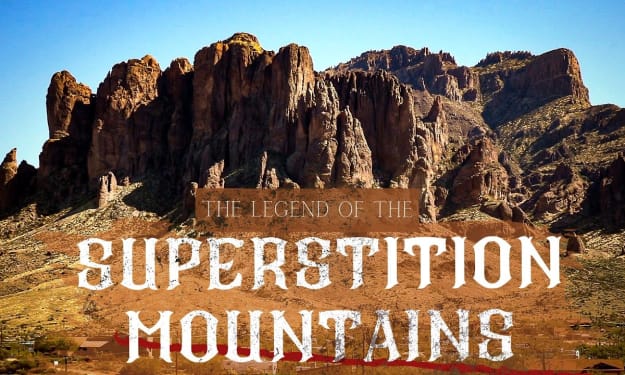
🌵 She Sat by His Bedside. Then She Went Looking for Gold. In the vast, rugged history of the American West, few tales are as enduring — or as haunting — as that of the Lost Dutchman’s Gold Mine. Most versions of the story center on Jacob Waltz, the elusive German immigrant who allegedly hid a treasure trove of gold deep in Arizona’s Superstition Mountains.
By Rukka Novaabout a year ago in History
The Peralta Stones: Are These Ancient Maps the Key to the Lost Dutchman’s Gold — or the Greatest Treasure Hoax in American History?
A Treasure Map Carved in Stone… Or Just a Clever Mystery? Imagine stumbling across a set of heavy, hand-carved sandstone tablets buried in the Arizona desert — covered in cryptic symbols, Latin inscriptions, and what looks like a map.
By Rukka Novaabout a year ago in History
Elon Musk's interesting life story. Content Warning.
Early Life and Education Born on June 28, 1971, in Pretoria, South Africa, Elon Musk was the eldest of three children. His mother, Maye Musk, was a Canadian model and dietitian, and his father, Errol Musk, was a South African electromechanical engineer. From a young age, Musk exhibited a keen interest in computing and technology. At age 12, he developed and sold a video game called Blastar for $500.
By Himanish Royabout a year ago in History
99-million-year-old dinosaur tail found preserved inside amber fossil
**99-Million-Year-Old Dinosaur Tail Found Preserved Inside Amber Fossil** In one of the most extraordinary paleontological discoveries of the 21st century, scientists have uncovered a 99-million-year-old dinosaur tail preserved in amber. This rare and stunning find, unearthed in Myanmar, has provided researchers with a unique glimpse into the ancient world, revealing incredible details about feather evolution, dinosaur biology, and the ecosystems of the Cretaceous period.
By GLOBAL NEWSabout a year ago in History
Joe Biden. AI-Generated.
Joe Biden was born on November 20, 1942, in Scranton, Pennsylvania, a small city in the United States. He grew up in a working-class family. His father, Joseph Biden Sr., worked very hard to take care of the family. At times, the family had little money. But they stayed strong and close together.
By Khalil Rehmanabout a year ago in History