Discoveries
The Roaring Silence: Revealing the Greatest Enigma of the Yali
Origins and Early Representations: The earliest recorded illustrations of Yalis can be traced to the Pallava and Chola temples in Tamil Nadu, dating as early as the 7th century CE. These mystical beings embellish columns, gopurams (temple towers), and even thrones. In these representations, the Yali frequently appears mid-roar, with colossal claws, razor-sharp fangs, and a serpentine tail coiling around ancient stone. In contrast to the well-documented deities of Hindu mythologyShiva, Vishnu, and Brahmathe Yali lacks a definitive origin narrative. It is neither a god nor does it play a significant role in the Puranas, Mahabharata, or Ramayana. Nonetheless, it appears repeatedly, almost obsessively, throughout temple architecture in Tamil Nadu, Karnataka, Andhra Pradesh, and Kerala. What is a Yali? Descriptions of the Yali differ widely. It is often depicted with the body of a lion, the head or tusks of an elephant, and at times, wings reminiscent of a bird or a trunk akin to a Makara (sea dragon). It is also illustrated engaged in combat with warriors, symbolizing triumph over malevolence or disorder. The composite aspect of the Yali has led numerous scholars to regard it as a guardian chimeraa mythical amalgamation of various animals, crafted to evoke fear and reverence. Despite its intimidating appearance, the Yali is not malevolent. Indeed, it is viewed as a guardian, vigilantly overseeing temple entrances and symbolizing bravery, valor, and the preservation of dharma (cosmic order). Symbolism and Function: The Yali is believed to embody the forces of naturepotent, unpredictable, and protective if honored. In Vastu Shastra (the ancient science of architecture), Yalis are thought to repel negative energies, serving as spiritual guardians. There is also a belief that Yalis represent manifestations of inner strength. Just as temples symbolize the microcosm of the universe and the human body, Yalis embody the inner beasts we must conquer through knowledge, devotion, and discipline. But why such significant emphasis on a creature with no established position in scriptural mythology? This inquiry leads us to the essence of the mystery. The Mystery: Why Was the Yali So Prominent? Historians and art analysts have suggested various theories: Dravidian Heritage: The Yali may derive from pre-Vedic Dravidian traditions, making it a remnant of a more ancient symbolic system that predates Hindu orthodoxy. This would elucidate why the Yali appears more frequently in South Indian temples than in the North. Royal Symbolism: The lion (Simha) and elephant (Gaja) represent long-standing symbols of authority and nobility. Merging these could have produced a super-symbol for dynasties such as the Cholas and Vijayanagar rulers to assert their divine sovereignty and invulnerability. Architectural Requirement Transformed into Myth: Some assert that the Yali originated as a design elementa robust, artistic embellishment utilized to reinforce heavy beams and constructions. Over time, individuals began to mythologize the being, ascribing powers and significance to its appearance. Lost Texts and Oral Traditions: Numerous regional legends were never inscribed but transmitted verbally. It is plausible that the Yali possessed a well-developed narrative tradition that has since disappeared or survived solely in temple art and folklore.
By Say the truth about a year ago in History
The female horror film audience : viewing pleasures and fan practices. Part: 03
front a) mixed sex groups (usually) b) couples (often) c) female groups (sometimes) d) male groups (rare) middle a) couples b) groups (mixed sex?) rear a) couples b) female pairs or groups c) lone males (old)5 d) lone males (young) Even assuming that women make up only a small proportion of the mixed sex groups (these may well be dominated by males), anywhere between 25 and 50 per cent of Twitchell's audience could well be female. Clover's breakdown of the audience (p. 6) offers a slightly different picture: At theatre screenings ... the constituencies typically breakdown, in order of size, as follows: young men, frequently in groups but also solo; male-female couples of various ages (though mostly young); solo 'rogue males' (older men of ominous appearance andlor reactions); and adolescent girls in groups. Clover did not collect any data or make any personal observations of the cinema audience, instead relying on data reported by Austin (1983). She did, however, conduct a small scale survey of video rentals (p. 6-7), but these were from a very small sample of video stores and should not be taken as statistically significant. Clover collected rental figures for two rape-revenge films from three rental outlets in the San Francisco area for four weeks. Results showed that between 80 and 90 per cent of renters were male and renters of both sexes were mostly in their early twenties. However, these figures are unlikely to give any indication of who viewed the film once it had left the store. The mixed-sex group is notably absent from Clover's cinema audience. She also maintains that young men in single sex groups make up most of the audience, whereas Twitchell rarely or never saw such groups. Clover ranks all female groups as the lowest proportion of the audience, yet Twitchell's observations seem to contradict this. It may be that Clover and Twitchell are reporting on audiences from different geographical or class backgrounds, or different generic or historic audiences; it may also be possible that, while the adolescent male remains the majority viewer of the 80s slasher film, Clover.
By Silas Blackwoodabout a year ago in History
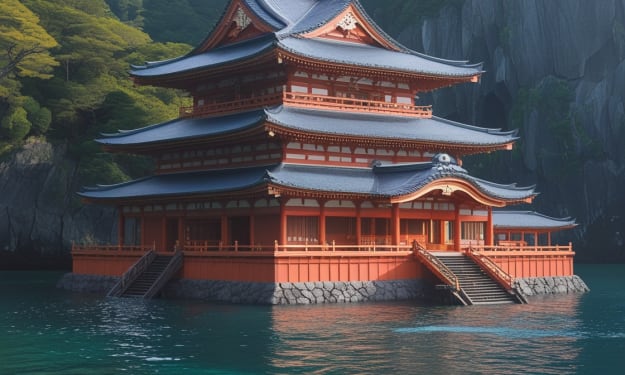
The Dragon King's Palace: Revealing the Subaquatic Treasure City of Japanese Mythology. AI-Generated.
The Mythical Origins of Ryūgū-jō Within the expansive realm of Japanese mythology, few narratives resonate with such awe as the chronicle of Ryūgū-jō (竜宮城), the Dragon Palace located beneath the ocean. Alleged to be the sphere of Ryūjin (龍神), the Dragon Deity of the sea, Ryūgū-jō is a splendid underwater palace crafted from coral, crystal, and precious metals. Its mythological foundations originate from early Shinto convictions and were further developed by Buddhist influences, folklore, and oral traditions transmitted through generations.
By Say the truth about a year ago in History
"The Dragon Through Time: Tracing the History and Origin of the Mythical Beast"
The Genesis of the Dragon Myth The notion of dragons predates documented history. Long before societies inscribed records on tablets or scrolls, tales of serpentine monsters and sky-beasts were transmitted orally through generations. Anthropologists speculate that the dragon myth may have originated from ancient humans discovering colossal fossilized bonespossibly of dinosaurs or large prehistoric mammalsand envisioning them as remains of formidable, mythical creatures. Another hypothesis posits that dragons are a fusion of humanity's primal fears: serpents, large felines, birds of prey, and flames. When amalgamated into one entity, you obtain something remarkably akin to the dragona formidable, fearsome predator that reigns over land, air, and occasionally even water. Dragons of the East: Symbols of Authority and Prosperity Nowhere is the dragon more esteemed than in Chinese culture. Contrary to being malicious, Chinese dragons (termed long or lung) are emblems of wisdom, rainfall, imperial power, and strength. Their likeness is observed in everything from ancient scrolls to contemporary festivals. The earliest allusions to dragons in Chinese mythology date back over 6,000 years. Archaeologists have uncovered dragon-like designs on pottery from the Neolithic Hongshan culture, and jade sculptures in the form of coiled serpents indicate that the myth held profound religious or ceremonial significance. In Chinese cosmology, dragons govern weather and waterrivers, oceans, precipitation, and floods. Unlike their Western counterparts, they are wingless, elongated, serpentine beings often depicted soaring effortlessly through the clouds. Emperors of China asserted lineage from dragons and frequently donned dragon robes. The "Dragon Throne" referred to the seat of imperial authority. Japan, Korea, and Vietnam cultivated similar dragon traditions, albeit with local modifications. The Japanese ryū is likewise a water deity, while Korean dragons were regarded as guardians residing in rivers or mountains and were known to admonish wrongdoers. Dragons of the West: Formidable and Ferocious In contrast, Western dragons emerged as representations of chaos, avarice, and devastation. They are commonly illustrated as winged, fire-breathing reptiles that accumulate treasure and terrorize settlements. One of the earliest references to such dragons originates from Mesopotamian mythology. The Babylonian creation epic Enuma Elish recounts the story of Tiamat, a primordial chaos dragon vanquished by the storm god Marduk. Similarly, in Greek mythology, the hero Heracles must conquer the Hydra, a multi-headed serpent-like creature, as one of his tasks. Dragons entered European mythology through Greco-Roman narratives and subsequently through Norse, Celtic, and Christian conventions. In Christianity, the dragon frequently represents Satan or wrongdoing. The narrative of Saint George conquering the dragon evolved into a well-known medieval fable that illustrated Christian morality prevailing over malevolence. Such narratives functioned as allegories for the dichotomy of good versus evil and were intended to impart ethical principles. Medieval dragons were also protectors of immense treasuressimilar to the dragon in Beowulf, which hoards gold, or in Norse sagas like the Völsunga saga. This portrayal of the dragon gained notable popularity in later fantasy literature. The Dragon in Mesoamerican and Other Mythologies Dragons are not limited to Eurasia. In Mesoamerican mythology, Quetzalcoatlthe Feathered Serpentis a deity of knowledge, wind, and civilization. Although not a dragon in the Western context, this divinity possesses numerous dragon-like characteristics: serpentine shape, ability to fly, and divine strength. In Hindu mythology, the serpent-dragon Vritra is a demon of drought vanquished by the deity Indra. Similarly, the Naga in Southeast Asia are semi-divine serpent entities linked with water, fertility, and the underworld. Even in Australia, Aboriginal legends recount the "Rainbow Serpent," a creature that formed rivers and landscapes as it traversed the land. The Modern Dragon: From Myth to Media The representation of the dragon continues to progress. In the 20th and 21st centuries, dragons have evolved into symbols of fantasy literature and mainstream culture. From Smaug in The Hobbit to Daenerys’s dragons in Game of Thrones, the creature has assumed new significance. In numerous contemporary interpretations, dragons are not inherently evil. They are ancient, intelligent entitiessometimes companions, sometimes foes. They embody enigma, strength, and the uncontrollable forces of nature. In games, books, and films, dragons now symbolize the connection between the ancient realm and fantasy. Conclusion: A Creature of Imagination and Identity The dragon remains one of the few universal beings of myth, emerging independently in nearly every ancient society. Whether a benevolent bringer of rain or a ferocious beast, the dragon encapsulates our deepest fears and highest hopes. It is a being of dualitieslife-giver and annihilator, sagacious mentor and daunting creature. Its ongoing relevance attests to a universal reality: regardless of time or location, humans are captivated by tales of the formidable and the enigmatic. And few symbols are as potent or mysterious as the dragon.
By Say the truth about a year ago in History
Kappa: The River Demon of Japanese Mythology. AI-Generated.
Kappa: The River Demon of Japanese Mythology Japan's mythological realm is abundant with intriguing and peculiar beings, collectively referred to as yokai. Among these, the kappaa water-dwelling sprite or demonstands out as one of the most mysterious and enduring figures in Japanese legend. Typically portrayed as a small, humanoid entity with amphibious traits, a shell on its back, and a bowl-like indentation on its head that retains water, the kappa serves both as a menace and a moral educator. It represents Japan’s profound reverence for nature, particularly its waterways, and its longstanding tradition of storytelling. Origins and Description The term kappa is inscribed in kanji as 河童, which roughly translates to “river child. ” Kappa are believed to inhabit rivers, ponds, and lakes, where they lurk beneath the surface anticipating interactionsoften playfully or even perilouslywith humans. The creature likely emerged from ancient Shinto beliefs concerning river deities and water spirits, intertwined with Buddhist influences and local folklore transmitted through generations. Physically, the kappa is described in various manners, yet certain characteristics are universally recognized: it is approximately the size of a child, possesses a scaly or slimy green exterior, webbed hands and feet, and a turtle-like shell on its back. Its most distinguishing feature is the water-filled dish or sara atop its head. This basin is the source of its power; if the water spills, the kappa becomes feeble or may even perish. Kappa are sometimes depicted as having beak-like mouths, strong arms, and a distinctive odor reminiscent of fish or moist earth. Despite their intimidating appearance, they possess considerable intelligence and are known to communicate in Japanese, partake in games, and engage in sumo wrestlingone of their preferred pastimes. Dangerous Tricksters or Moral Teachers? Kappa are notorious for their antics, which range from innocuous mischief to more lethal confrontations. In numerous narratives, kappa pull individualsparticularly childreninto the water to drown them. They are also reputed to attack livestock and even capture shirikodamaa mythical orb believed to reside within a person’s anus, thought in certain traditions to contain the soul or vital essence. However, the kappa is not entirely malevolent. In some stories, if an individual successfully outsmarts a kappaoften by bowing deeply (which compels the kappa to bow back and spill the water from its head)the kappa may become indebted and serve the human loyally. Other narratives depict kappa as teaching humans about medicine or assisting in the irrigation of rice fields. These more benevolent representations imply a dual nature: the kappa as a reminder to honor water, and also as a symbol of how wit and virtuous behavior can triumph over peril. Cultural Significance The kappa’s significance in Japanese culture transcends mere legend. Throughout the Edo period (1603–1868), tales of kappa were extensively disseminated through literature and visual art. Woodblock prints illustrated kappa engaging in sumo wrestling, intimidating villagers, or partaking in peculiar antics. These narratives frequently conveyed a moral lesson, cautioning children against swimming unaccompanied or disrespecting nature. Shrines aimed at appeasing or venerating kappa remain present in rural Japan. Offerings of cucumbersconsidered their preferred foodare occasionally presented to deter them. Even in contemporary times, certain sushi establishments offer cucumber rolls referred to as kappa-maki, a lighthearted nod to the creature. Modern Japanese media has adopted the kappa in various formats. From manga and anime to films and video games, the kappa appears in roles that span from humorous companion to formidable spirit. Productions like GeGeGe no Kitaro and games such as Yo-kai Watch have reinterpreted the kappa for new audiences, preserving the folklore while softening its more sinister aspects.
By Say the truth about a year ago in History
The Mythical Nine-Tailed Fox: Heritage, Lore, and Cultural Impact
Ancient Roots in China: The Huli Jing The notion of the nine-tailed fox traces back over 2,000 years to ancient China. The earliest documented mention can be found in the “Shanhaijing” (Classic of Mountains and Seas), a Chinese manuscript assembled between the 4th and 1st centuries BCE. The Huli Jing was characterized as a captivating, astute fox spirit that could exist for more than a millennium. According to Daoist beliefs, these foxes amassed spiritual energy through age and meditation, acquiring magical abilities and frequently transforming into human females to engage with humans. In early writings, the Nine-Tailed Fox represented auspiciousness, longevity, and affluence. Nonetheless, with the passage of time, their portrayal became more intricate. In certain narratives, they entice men, extract life force, or instigate turmoil, embodying the dual nature of allure and peril. Rulers and intellectuals deliberated whether Huli Jing were divine emissaries or demonic deceivers, reflecting the society’s shifting ethical and spiritual principles. The Kitsune of Japan: Trickster, Paramour, and Protector As the mythology disseminated to Japan, the Nine-Tailed Fox assumed a local incarnation: the Kitsune. In Japanese folklore, foxes were revered as sacred envoys of Inari, the Shinto deity of rice, fertility, and abundance. Unlike the Chinese Huli Jing, Kitsune are closely linked with Shinto faith and temples, where effigies of foxes are frequently situated. Japanese kitsune were categorized into two main classifications: Zenko (善狐) – benevolent foxes associated with Inari. Yako (野狐) – mischievous or malevolent wild foxes. Traditions suggested that a Kitsune acquires a tail every century, with nine tails symbolizing the pinnacle of wisdom and strength. Upon reaching nine tails, the fox radiates with golden or white fur and possesses capabilities such as shape-shifting, generating fire or lightning (kitsunebi), and penetrating dreams. One of the most renowned kitsune tales in Japan is the story of Tamamo-no-Mae, a stunning courtesan revealed to be a malevolent nine-tailed fox. Her conspiracy to assassinate the emperor was uncovered, resulting in her demise, yet her spirit continued to haunt the region. Korean Gumiho: A More Ominous Aspect In Korea, the Gumiho holds a more malevolent reputation. Initially referenced in the “Samguk Yusa” during the Goryeo era, Gumiho are typically depicted as flesh-eating female foxes who allure men to devour their hearts or livers. This darker interpretation may represent a moral cautionary narrative surrounding temptation and treachery. In certain narratives, a Gumiho may attain permanent humanity if it abstains from taking life for 1,000 days or secures the affection of a human. These tales underscore the conflict between a Gumiho's aspiration to attain humanity and its inherent monstrous tendencies, a theme prevalent in contemporary Korean television dramas. Symbolism and Interpretation Throughout various cultures, the Nine-Tailed Fox symbolizes dualityintelligence and deceit, allure and peril, metamorphosis and stagnation. It is frequently regarded as a metaphor for power that necessitates mastery, as well as the concealed potential within individuals who appear ordinary. The numeral nine itself holds symbolic significance. In East Asian numerology, nine signifies completeness and eternity. Consequently, a nine-tailed fox is not merely a formidable spiritit is a nearly divine entity that has realized the utmost possible state of its existence. Modern Representations The Nine-Tailed Fox has experienced a substantial resurgence in popular culture: Anime & Manga: The most notable contemporary example is Kurama, the Nine-Tailed Fox imprisoned within Naruto Uzumaki in the "Naruto" series. Kurama, initially a devastating creature, transforms into a guardian figure epitomizing friendship, mastery over strength, and inner resilience. Games: Characters inspired by the nine-tailed fox feature in games such as League of Legends (Ahri), Pokémon (Ninetales), and Genshin Impact (Yae Miko). TV & Film: Korean dramas like My Girlfriend is a Gumiho and Tale of the Nine-Tailed reinterpret the fox spirit as a multifaceted romantic character. These adaptations illustrate how the myth continues to develop, resonating with contemporary themes of identity, transformation, and power. Conclusion The Nine-Tailed Fox has endured across time, geography, and genre to emerge as a mythical archetype that is universally recognized. Whether as a celestial protector, alluring spirit, or misapprehended monster, the fox’s narrative remains profoundly humanpertaining to mastery over desire, the quest for wisdom, and the equilibrium of light and shadow. In every culture it influences, the Nine-Tailed Fox imprints a legacy of magic, enigma, and
By Say the truth about a year ago in History
Climate Migration: Millions Move as U.S. Faces Extreme Weather
Introduction Climate change is no longer a distant threat—it is reshaping where and how Americans live. As extreme weather events become more frequent and severe, millions of people across the United States are being forced to relocate. Hurricanes, wildfires, rising sea levels, droughts, and extreme heat are driving what experts call "climate migration," a growing trend where people move to escape environmental disasters and economic instability caused by climate change. The U.S. is now witnessing one of the largest internal migrations in its history, with people fleeing high-risk areas for safer regions. This article explores the causes of climate migration, the most affected regions, the economic and social impacts, and what the future holds as climate displacement accelerates. 1. What is Climate Migration? Climate migration refers to the movement of people due to sudden or gradual changes in their local environment caused by climate change. Unlike traditional migration, which is often driven by economic opportunity or political instability, climate migrants are pushed out by forces beyond their control—rising seas, devastating storms, or unlivable temperatures. In the U.S., climate migration is happening in two main ways: Sudden Displacement: People forced to move immediately after disasters like hurricanes, floods, or wildfires. Gradual Relocation: Families and businesses leaving areas that are becoming increasingly uninhabitable due to rising heat, drought, or repeated flooding. According to a 2023 report by the U.S. Census Bureau, over 3 million Americans have moved due to climate-related factors in the past decade, and that number is expected to rise dramatically. 2. U.S. Regions Most Affected by Climate Migration A. Coastal Areas: Rising Seas and Hurricanes States like Florida, Louisiana, and Texas are experiencing some of the highest rates of climate migration due to hurricanes and sea-level rise. Florida: Miami and other coastal cities face chronic flooding, with projections showing that much of South Florida could be underwater by 2100. Many residents are moving inland or to states like Tennessee and North Carolina. Louisiana: The state loses a football field-sized amount of land to the sea every 100 minutes. Communities like Isle de Jean Charles have already become some of the first official U.S. climate refugees. Texas: Hurricane Harvey (2017) and other extreme storms have pushed people away from Houston and other Gulf Coast cities. B. The West: Wildfires and Drought California, Oregon, and Arizona are seeing mass departures due to wildfires, water shortages, and extreme heat. California: Wildfires have destroyed entire towns (e.g., Paradise in 2018), forcing thousands to relocate. Many are moving to neighboring states like Nevada and Idaho. Arizona & Nevada: Phoenix and Las Vegas face dangerous heatwaves, with temperatures regularly exceeding 110°F. The Colorado River drought is also making life unsustainable for many. C. The Midwest: Flooding and Agricultural Stress States like Iowa, Nebraska, and Missouri are experiencing more frequent and severe flooding, disrupting farming and pushing rural residents to leave. The 2019 Missouri River floods caused billions in damage, accelerating migration out of small farming towns. D. The Northeast: Extreme Weather and Rising Insurance Costs Even historically stable regions like New York, New Jersey, and Massachusetts are seeing climate-driven moves due to Superstorm Sandy-like events, coastal erosion, and skyrocketing home insurance costs. 3. The Economic and Social Impact of Climate Migration A. Housing Crises in Receiving Cities As people flee high-risk areas, they often relocate to cities like Nashville, Denver, and Atlanta, driving up housing prices and straining infrastructure. Austin, Texas, saw a 40% population increase in the past decade, partly due to climate migrants from California and the Gulf Coast. Boise, Idaho, became one of the fastest-growing cities as West Coast residents sought refuge from wildfires. B. Rising Insurance Costs and "Climate Abandonment" Many insurers are pulling out of high-risk states like Florida and California, making homeownership unaffordable. In Florida, some homeowners pay over $6,000 annually for insurance—four times the national average. Banks are increasingly redlining climate-vulnerable areas, refusing mortgages for homes in flood or fire zones. C. Strain on Local Governments Cities receiving climate migrants must expand schools, roads, and emergency services, often without sufficient funding. Meanwhile, shrinking towns in disaster-prone areas face economic collapse as tax bases disappear. D. Mental Health and Community Displacement Being forced to leave one’s home due to climate disasters leads to "solastalgia"—a form of emotional distress caused by environmental change. Indigenous communities and low-income families, who have fewer resources to relocate, are disproportionately affected. 4. The Future of Climate Migration in the U.S. A. Projected Hotspots for Migration By 2050, researchers predict: 13 million Americans could be displaced by sea-level rise alone. The "Climate Belt" (Midwest and Northeast) may see the largest influx of migrants due to more moderate temperatures and water availability. "Climate Havens" like Duluth, Minnesota, and Buffalo, New York, are preparing for population surges. B. Policy Challenges and Solutions The U.S. currently has no federal plan for climate migration, but some steps are being taken: FEMA’s new programs to buy out flood-prone homes. State-level initiatives, like Louisiana’s resettlement programs for coastal communities. Urban planning reforms to build climate-resilient cities. C. The Need for National Action Experts urge: Federal relocation assistance for climate-displaced families. Updated infrastructure policies to protect vulnerable regions. Climate adaptation funding for cities receiving migrants. Conclusion Climate migration is no longer a future possibility—it is happening now. As extreme weather reshapes America’s landscape, millions are being forced to make difficult decisions about where to live. Without urgent action, the economic, social, and humanitarian costs will only grow. The U.S. must develop long-term strategies to manage this crisis, from strengthening climate resilience to supporting displaced communities. The choices made today will determine whether climate migration leads to chaos or coordinated adaptation. One thing is certain: as the planet warms, America’s population map will keep changing. Key Takeaways: Over 3 million Americans have already moved due to climate factors. Coastal cities, wildfire zones, and drought-stricken areas are seeing the most outmigration. Housing shortages, insurance crises, and mental health struggles are major challenges. By 2050, 13 million+ people could be displaced by rising seas and extreme weather. Policy action is needed to manage relocation and protect vulnerable communities.
By Silas Blackwoodabout a year ago in History