Books
Apple’s New Era: Why the Tech Giant Is No Longer Playing Coy About Ads
Introduction By wearing the badge of privacy champion, Apple Inc. distinguished itself from Silicon Valley's tech giants for many years. The company proudly promoted its commitment to user data security, frequently highlighting competitors' privacy issues (Meta). Apple was the clean-cut, consumer-first tech titan. However, there has been a noticeable shift lately. The once reserved player in digital advertising is stepping boldly into the spotlight — and it’s not trying to hide it anymore.
By Md Shahadat Hossain2 years ago in History
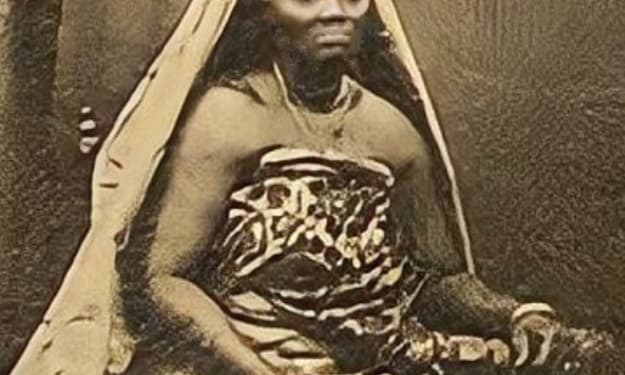
Madame Tinubu: The Trailblazing Woman Who Shaped 19th-Century Lagos
In the vibrant, bustling city of Lagos during the 19th century, one woman rose above societal constraints to wield unparalleled influence over commerce, politics, and power. Madame Tinubu, a formidable businesswoman and political strategist, defied the male-dominated norms of her era, leaving an indelible mark on the history of pre-colonial and colonial Lagos. Her story is one of resilience, ambition, and cunning, as she navigated complex dynamics to become a celebrated yet controversial icon whose legacy endures.
By KWAO LEARNER WINFRED2 years ago in History
The Myth of Isis
Chapter One: The Beginning of Bliss In the heart of ancient Egypt, where the Blue Nile winds around towering temples and sandy deserts, Queen Isis and her husband Osiris lived a perfect marital life. One day, they sat together in the garden of their palace, discussing the future of Egypt and the plans they would set to build a great civilization.
By mohamed elsayed2 years ago in History
Dream-making farmer. AI-Generated.
“Dream-making farmer” Evening has fallen in a small village in West Bengal—Sonarpur. A middle-aged man is walking along the rice fields, a look of deep thought on his face. His name is Raghunath Mandal. He is over fifty, his complexion is like ripe soil, and his eyes are filled with dreams. Raghunath is a farmer by birth. His father and grandfather also worked in agriculture. But with the passage of time, farming has become a dirty job for many in the village. Young people have gone to the city in search of jobs. But Raghunath believed, “If farming is done with heart, it can earn more respect than in the city.” The beginning of the struggle However, Raghunath had to pay a high price for this belief. When he was young, their family was fairly prosperous. But about ten years ago, all the land was submerged in a terrible flood. The crops were damaged, and the debt burden increased. The family members also started saying, “Farming is useless, now sell the land.” But Raghunath did not give up. He wanted to save his ancestral land with tears in his eyes. He said, “My father sweated on this land. If I can, I will start anew. If I can’t, I will end here.” In search of a new path Over the next few years, Raghunath started learning a lot. He would watch YouTube videos on his mobile phone—‘How to do organic farming’, ‘Benefits of diversified farming’, ‘Farming with compost’. He understood that cultivating rice alone would not work anymore. One type of crop means one type of income, one type of risk. So he focused on mixed farming. In addition to rice, he started cultivating potatoes, mustard, lentils, and even chili. He also started drip irrigation by conserving rainwater. He reduced costs by making natural fertilizers. Social barriers Initially, the villagers laughed. Some would say, “These are all urban kids’ businesses. These things don’t work in our village.” Some would say, “I think he’s become a scientist now!” But Raghunath continued on his own path. He would say, “Today you are smiling, tomorrow you will come to my land to learn.” His wife Malti Devi was his greatest strength. Every morning before going to the land, he would say, “The soil loves you Raghu, you too love the soil. The fruits will come.” Fruits began to bear The very next year, his land yielded exceptionally well. Paddy was also good, and he made a good profit from potato and pulse cultivation. He started making a profit from his losses. He took a loan from the bank to buy his own tractor and started large-scale farming. At this time, he decided to make other farmers aware. He set up a “Farmer Support Center” in a small room next to his house, where discussions were held once a week—about soil testing, fertilizer management, and government agricultural subsidies. Waves of change Slowly, the face of Sonarpur village began to change. Farmers who had once given up returned to the pull of the soil. “Sabuj Saathi Krishak Sangh” was formed under the leadership of Raghunath. They now farm in groups, sell their crops in the wholesale market, and share the profits. Raghunath sent his daughter to study at an agricultural college. He said, “My father gave me land, I give you knowledge, and my daughter will give you a future.” Honors and Recognition One day, Raghunath received a call from the District Agriculture Department—“You will be awarded the ‘Best Innovative Farmer’ award.” At first, he couldn’t believe it. When he got on stage and gave his speech, his voice was shaking. He said, “I am neither a scientist nor a big man. I am a farmer, and that is my pride.” Conclusion: Inspiration from Raghunath The life of Raghunath Mandal is not just that of a farmer, it is the story of a dreamy, determined, hardworking person, who believed in the power of his soil. He showed that education and technology can be used not only by city but also by rural farmers to change their lives. Today, Raghunath’s story is an example not only in Sonarpur, but also in the surrounding districts and states. Because of people like him, the soil survives, agriculture survives, and the country survives. When everyone says, “Nothing happens in farming,” the Raghunaths prove—“Everything happens in farming, if the farmer doesn’t give up.” If you want, I can turn this story into a video script, play, or essay. If you want it to be in a specific regional folk style or change the characters, let me know.
By MD SUAB MIAH2 years ago in History
Is time travel possible?. AI-Generated.
"Time travel! Just the phrase sparks a wildfire of curiosity in the human mind. Back in 1895, H.G. Wells lit the fuse with his iconic sci-fi novel, 'The Time Machine.' Ever since, we've been swimming in a galaxy of time-bending tales, from mind-blowing books to blockbuster movies. These stories paint such a tempting picture, don't they? Hop into a time machine, punch in a date, and BAM! You're strolling through ancient history or getting a sneak peek at the futuristic cityscape. Imagine pressing the "rewind" button to see the dinosaurs or the "fast forward" button to see if flying cars are finally here! It's undeniably cool to think about, but here's the million-dollar question: can we actually pull off time travel? The scientific community is split right down the middle on this one. Team Impossible firmly believes it's a no-go. Team Theoretically Possible, on the other hand, thinks the laws of physics might allow it, even if our current tech is light-years away. They hold onto the hope that someday, just maybe, we'll crack the code. Think of time as a relentless river, always flowing forward. We're all on this one-way cruise towards the future, each moment the 'present' before instantly becoming 'past.' From birth to beyond, it's a non-stop journey. But can we jump off the boat and swim upstream to the past? Or teleport ourselves to some distant future? Before we dive into building our imaginary time machines, let's get a grip on what time actually is and how it all started. Scientists tell us that our universe as we know it exploded into existence 13.8 billion years ago in the Big Bang. This wasn't just a bang; it was the ultimate expansion event, and it's still going strong! This expansion created space – the three dimensions of length, width, and height we're so familiar with. But here's the kicker: scientists believe the Big Bang also birthed a fourth dimension. To pinpoint anything in the universe, you don't just need its spatial coordinates; you also need its location in time. This fourth dimension, my friends, is time itself. Incredible, isn't it? Before the Big Bang, space and time were apparently non-existent. Everything was squished into a single, static point. The Big Bang unleashed both simultaneously. While we experience space and time as separate entities in our daily lives, the universe's very fabric is woven from their union: space-time. The legendary Albert Einstein showed us this in his theory of general relativity. Time, it turns out, is a fundamental dimension of the cosmos, constantly shaping and changing everything. But Einstein didn't stop surprising us. His special theory of relativity revealed a fascinating link between time and speed. Time is relative rather than a universal constant. The faster an object moves, the slower time passes for it. Picture this: you've got two identical twins. One hops into a super-fast rocket, zipping through space at 99% of the speed of light for five years. The other twin stays put on Earth. When the rocket returns, guess what? Only five years have passed for the twin who travels through space. But for the Earth-bound twin? A whopping thirty-six years! Why the time warp? According to special relativity, extreme speed makes time dilate, or stretch out, inside the rocket. Therefore, thirty-six years passed on Earth while the traveling twin only experienced five years. The returning astronaut is now thirty-one years younger than their sibling, and they've effectively traveled thirty-one years into Earth's future! Sounds like pure sci-fi, but science backs this up. It's called time dilation, and we've got experimental proof! Here's a fun twist: we actually use time dilation in our everyday lives! Think about GPS navigation in your car. Those satellites orbiting high above Earth aren't exactly breaking any speed records (a mere 3.9 kilometers per second compared to light's blazing 300,000 kilometers per second). Yet, even at that speed, their onboard clocks tick about 38 microseconds slower each day due to their motion. But wait, there's more! Gravity also messes with time, as Einstein's general relativity tells us. Being further away from Earth's gravitational pull means the GPS satellite clocks actually run about 45 microseconds faster each day compared to clocks on the ground. The net effect? The GPS clocks gain 45 minus 38, which is 7 microseconds per day relative to Earth-based clocks. A microsecond is a millionth of a second – not a huge difference in our daily schedules. However, if these tiny discrepancies weren't constantly calibrated, your GPS would quickly become useless! Using time dilation to travel to the future therefore sounds appealing, doesn't it? The catch? We haven't exactly figured out how to build a vehicle that can zoom at near the speed of light. Plus, Einstein's equations also tell us that as an object approaches light speed, its mass becomes infinite, and its length shrinks to zero. Not exactly ideal for a comfortable journey! Even Einstein himself was pretty skeptical about the practicalities of time travel. But hold on, there's another potential route to time travel, and guess who we need to consult? Yes, Einstein once more! Space-time's fabric serves as the foundation for the universe's structure, as we discussed. Imagine space-time as a giant rubber sheet. If you place a heavy lead ball on it, the sheet around the ball will warp and curve due to the ball's mass. In a similar vein, Earth and the other planets revolve around the Sun because its enormous mass bends space-time around it. The more massive the object, the greater the curvature and the stronger its gravitational pull. In his general theory of relativity, Einstein provides an elegant explanation for gravity, a ground-breaking concept that has been repeatedly demonstrated through experiments over the past century. Many scientists believe we could potentially use this warping of space-time to achieve time travel. One intriguing idea came from astronomer Frank Tipler. He theorized that if you could take an object about ten times the mass of the Sun, shape it into an incredibly long and dense cylinder, and then spin it at mind-boggling speeds, it might create a tunnel through the space-time fabric, potentially allowing travel to the past. Although developing such a cosmic fidget spinner is, to put it mildly, beyond our current technological capabilities, it is a fascinating theoretical concept. For now, it remains firmly in the realm of science fiction. Speaking of science fiction becoming almost science fact, our universe is full of mind-bending objects! Perhaps the most famous are black holes. These cosmic behemoths have gravity so intense that not even light can escape their grasp. Inside a black hole, the curvature of space-time becomes infinite – a point scientists call a singularity. Some theories suggest that within this singularity, a black hole might form an invisible tunnel, connecting it to another black hole in some far-flung corner of the universe. Two black holes that appear light-years apart might actually be linked by a shortcut through space-time! This hypothetical tunnel is called a wormhole. Wormholes aren't exactly a new concept, even if they sound straight out of a sci-fi flick. General relativity provides a theoretical framework for their existence. In a 1935 paper, Einstein and his colleague Nathan Rosen even mentioned them, but they didn't call them wormholes. Back then, they were known as Einstein-Rosen bridges. Many scientists see wormholes as potential shortcuts across the vast cosmic distances, perhaps even allowing travel to different points in time. However, we haven't exactly managed to snag a ride through one yet! Another group of scientists is exploring the possibility of creating artificial wormholes in the lab by generating incredibly powerful gravitational fields that could warp the fabric of space-time. Naturally, the difficulty lies in the fact that we do not yet have the technology to generate such extreme gravitational forces. But who knows what the future might hold? As we started with, the allure of time travel is deeply ingrained in the human psyche, and even scientists aren't immune to its charm. However, the concept does come with some perplexing paradoxes. Consider the well-known grandfather paradox: if you could travel back in time and prevent your own grandfather from meeting your grandmother, neither your parent nor you would ever be born. So, how could you have gone back in time in the first place? It really makes me wonder! Then there's the question of where everyone is if future humans discover time travel. Shouldn't we be bumping into time tourists from the future by now? This lack of temporal visitors leads some scientists to believe that while time travel might be theoretically possible, it's likely riddled with practical (and paradoxical) complications. But fear not, sci-fi enthusiasts! According to physicist and popular science author Dr. Michio Kaku, there might not be any fundamental laws of physics preventing time travel. He suggests it's primarily an engineering problem. We just haven't built the right tools yet. So, while zipping back to high school or skipping ahead to the year 3000 might still be firmly in the realm of dreams (and really cool movies), the science behind it is a captivating journey in itself. Who knows what wonders the future of physics might unlock? We might one day actually choose the location of our time machine!"
By Mahdi Hussain 2 years ago in History
Allah’s Guest
In a quiet little town surrounded by fields and dusty roads, lived a boy named Saleh. He was no different from other boys in age, but life had given him experiences far beyond his years. His father had passed away when he was only five, and since then, his mother had raised him alone. They lived in a small clay house with a tin roof that rattled whenever the wind blew too hard.
By Rejuan Ratul2 years ago in History
Deadly, Sombre Good Friday: 58 Killed in Israeli Attacks on Gaza. AI-Generated.
Gaza City, April 18, 2025 — In what should have been a day of solemn reflection and peace, Good Friday turned into a blood-soaked nightmare for the people of Gaza. At least 58 Palestinians were killed and dozens more wounded in a series of relentless Israeli airstrikes across the besieged territory, marking one of the deadliest single-day escalations in recent weeks.
By Rezwan Al Shahriar2 years ago in History
"Threads of Empire: The Richest Royal Dress Ever Worn by a King" . AI-Generated.
"Threads of Empire: The Richest Royal Dress in History" Introduction Throughout history, the attire of kings has symbolized not just wealth and power but also the divine right to rule. Among the many legendary garments worn by monarchs, one stands out for its opulence, historical importance, and jaw-dropping value: the ceremonial robe of Emperor Shah Jahan of the Mughal Empire. Known as the "Peacock Robe", this legendary piece of royal fashion was not just clothing—it was a moving museum of the empire's wealth. This article explores the fascinating history, design, and present-day worth of this extravagant piece of regal attire.
By Say the truth 2 years ago in History
The Thunder of the Crescent: The Epic Life of Mehmed the Conqueror
Born for Glory In the year 1432, under the golden crescent moon of Edirne, a child was born to the Ottoman Sultan Murad II and his wife Hüma Hatun. They named him Mehmed — the name of a prophet, the name of destiny.
By Md Ajmol Hossain2 years ago in History