Books
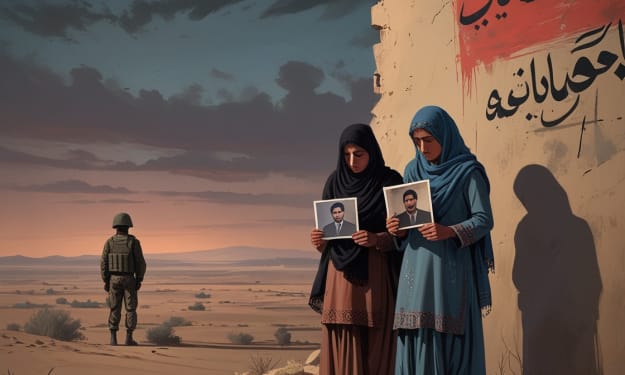
Silent Genocide: The Hidden Massacre of Balochistan. AI-Generated.
The Concealed Afflictions: The Balochistan Massacre – An Overlooked Episode of Contemporary History In spite of being one of the least addressed atrocities of the contemporary period, the persistent turmoil and purported massacres in Balochistan stand as a distressing reminder of the muted agony of a populace ensnared in the realm of politics and power. This article reveals the concealed particulars of decades of discord in the Baloch region, examining its historical origins, political conflicts, and the human toll that persistspredominantly disregarded by international media and historical narratives. The Concealed Afflictions: The Balochistan Massacre – An Overlooked Episode of Contemporary History When history is recorded by the triumphant, entire segments of anguish are frequently excluded. One such segment transpires in the rugged mountains and arid terrains of Balochistanan extensive, resource-abundant region divided among Pakistan, Iran, and Afghanistan. Although lesser-known to the global community, Balochistan has suffered a harrowing legacy of political oppression, insurrections, and brutal crackdowns, prompting numerous historians and human rights advocates to label the conflict as a contemporary silent massacre. A Land of Abundance, A People Marginalized Balochistan is the largest province of Pakistan in terms of area, yet the least inhabited. It possesses ample natural resources, including natural gas, gold, coal, and copper. In spite of this affluence, the area endures as one of the most destitute and underdeveloped in South Asia. Baloch nationalists contend that the federal government has long exploited Balochistan’s resources while providing minimal returns to its inhabitants. This sentiment is not novel. The impetus for unrest was initiated soon after the establishment of Pakistan in 1947. The princely state of Kalat (part of Balochistan) initially pursued independence but was subsequently annexed by Pakistan in 1948, igniting the first of several Baloch revolts. Each insurrectionwhether in 1958, 1962, 1973, or the more recent movementshas been met with forceful military response. Oppression and Alleged Massacres Since the early 2000s, the conflict has intensified considerably. The Pakistani military and intelligence agencies have been accused by numerous human rights organizations of executing enforced disappearances, extrajudicial killings, and acts of torture. Thousands of Baloch activists, students, intellectuals, and ordinary villagers have reportedly gone missing. Their remains are sometimes later discovered disfigured, discarded in remote siteswhat locals grimly label as “kill and dump” operations. While precise statistics are challenging to corroborate owing to restricted access to the area and fear of reprisals, estimates from various NGOs indicate that over 20,000 individuals may have vanished over the past two decades. Human Rights Watch and Amnesty International have both documented severe violations in the region; however, global political focus has been scantpartly owing to Balochistan's geopolitical sensitivity.
By Say the truth 2 years ago in History
"Genghis Khan: The Shadow of Conquest – A Chronicle of the Bloodiest Campaigns in History"
Genghis Khan: The Shadow of Conquest – A History of His Fatalities Genghis Khan, the architect of the Mongol Empire, stands as one of history's most formidable and contentious personalities. Celebrated for his military acumen and the unification of the Mongol tribes, his campaigns of conquest resulted in the demise of millions and the collapse of entire civilizations. This article delves into the magnitude, context, and enduring consequences of the mass fatalities attributed to Genghis Khan, assessing the impact on humanity and culture. Article: When the name Genghis Khan is invoked, it conjures images of thundering horsemen, sweeping victories, and vast expanses of territory unified under a singular emblem. Born as Temujin in 1162, Genghis Khan ascended from tribal obscurity to emerge as the paramount sovereign of the largest contiguous empire in global history. However, his journey to triumph was marked by rivers of blood, devastated cities, and obliterated populations. By the time of his demise in 1227, Genghis Khan had established an empire that spanned from the Pacific Ocean to the Caspian Sea. Yet, beneath this extensive territorial acquisition lies a darker inheritance: an unparalleled fatality record. Contemporary historians estimate that Genghis Khan and his Mongolian forces were accountable for the deaths of over 40 million individuals, an astonishing total that represented approximately 10% of the global population at that era. The Ascendancy of the Khan Temujin was born into a fragmented and turbulent steppe society, where fidelity was rare, and treachery was prevalent. After experiencing exile, destitution, and internal tribal conflicts, he ultimately united the Mongol tribes under his authority. In 1206, he was proclaimed “Genghis Khan,” signifying “Universal Sovereign. ” From that point, he embarked on a path of conquest. His initial campaigns targeted neighboring steppe tribes and kingdoms, yet his aspirations swiftly expanded. China, Central Asia, Persia, and segments of Eastern Europe succumbed to his might. Campaigns of Widespread Annihilation One of the most infamous incidents during Genghis Khan’s reign was the obliteration of the Khwarazmian Empire (present-day Iran, Turkmenistan, Uzbekistan). Following a diplomatic incident in 1218, where a Mongol trade convoy was slaughtered and their envoys executed, Genghis Khan retaliated with relentless vengeance. Entire cities, including Nishapur, Herat, Merv, and Samarkand, were annihilated. Merv, one of the most populous cities within the Islamic world at that time, was reportedly home to over 500,000 residents. According to contemporary narratives, the Mongols exterminated every man, woman, and childallegedly around 700,000 fatalities in that city alone. In Nishapur, in retaliation for the death of one of Genghis Khan’s sons-in-law, an infuriated Mongol general purportedly executed over 100,000 inhabitants. While the precision of medieval death tolls is contested, even the most conservative assessments position the Mongol death toll in the tens of millions. Tactics of Terror Unlike other empires, Genghis Khan utilized fear as a weapon. His psychological warfare included not only military strategies but also deliberate brutality. He frequently offered cities the choice to capitulate peacefully. If they declined, they faced total destruction. News of his savagery spread ahead of his forces, prompting many cities to surrender without resistance. Estimated Net Worth of the Plunder Genghis Khan did not amass personal riches in the manner of contemporary rulers or billionaires; however, the wealth seized during his campaigns was immense. Although it is challenging to assess in today's currency, historians approximate that his conquests extracted the equivalent of trillions of dollars in gold, silver, silks, spices, livestock, and land value. From the Chinese Jin Dynasty alone, the Mongols procured vast amounts of silver and tributes, amounting to hundreds of billions in current value. In the Islamic realm, they acquired treasure from Persia and the Silk Road cities that had traded wealth for centuries. The slave trade also thrived, as skilled artisans and laborers were often preserved solely to be enslaved. Long-Term Impacts While Genghis Khan was indisputably brutal, his reign also yielded paradoxical advantages. He fostered trade along the Silk Road, initiated postal systems, and endorsed meritocracy. His empire demonstrated religious tolerance and technological innovation. Yet the overwhelming scale of human loss, both in terms of lives and cultural heritage, looms large. Entire libraries were incinerated, intellectuals were executed, and civilizations crumbled. For instance: The ancient city of Balkh, once a hub of Buddhist scholarship, was obliterated. In Baghdad, a subsequent Mongol campaign led by his grandson Hulagu resulted in the deaths of over 200,000 individuals, decimating one of the world’s most dynamic centers of intellect. Legacy Genghis Khan’s legacy remains intricate. In Mongolia, he is celebrated as a national icon. In China and parts of Central Asia, he is remembered as a unifier and lawgiver. However, in Iran, Iraq, and Afghanistan, his name still evokes memories of terror and devastation. To this day, no other conqueror has attained such extensive dominance while leaving behind a death toll of this scale. The 40 million fatalities attributed to Genghis Khan’s conquests serve as a stark reminder of what unrestrained power can inflict in the hands of a relentless leader.
By Say the truth 2 years ago in History
Bangladesh's Struggle for Independence and Freedom
Bangladesh's Independence: A Historic Struggle for Independence The story of Bangladesh's freedom is one of bravery, self-sacrifice, and the unwavering spirit of a nation that fought against oppression to define itself. Before 1971, Bangladesh was known as East Pakistan, a region that the ruling elite of West Pakistan (present-day Pakistan) used to marginalize and exploit. In addition to being a political movement, the struggle for independence was also a struggle for economic justice, cultural and linguistic rights, and democratic representation.
By Baiyatur Ridoun2 years ago in History
Iran and the US Hold Second Round of Nuclear Negotiations in Rome
Iran and the US Hold Second Round of Nuclear Negotiations in Rome Tensions are high and attempts to revive the 2015 Joint Comprehensive Plan of Action (JCPOA), also known as the Iran nuclear agreement, have failed. The negotiations take place at this time.
By md shahin ahammed raj2 years ago in History
"Wild Whispers"
The Song Under the Sky The valley of Elowen had always been a quiet wonder: unaltered by time, surrounded by ancient mountains, and covered in endless wildflowers that bloomed like dreams that had long since passed. It was a place where the sky appeared to be bluer, the winds seemed to be gentler, and the earth hummed softly, as if it were whispering secrets that could only be heard by those who really paid attention. Growing up, Liora had been told stories about the magical valley. It was referred to by Mira, her grandmother, as the "last breathing piece of the old world." When Liora was a child, she believed that the stars wrote destinies on mountain peaks, rivers carried memories, and trees spoke in riddles. However, up until this point, the weight of reality had pressed those childhood fantasies deeply into her memory. She hadn't been back for ten years. Since the accident, not. But something had brought her back, a tug in her chest similar to that of an old melody. She still recalled how breathtaking it was. The tall grasses were drenched in fire and gold as the morning light fell over the ridges like warm honey. Like ocean breezes touching flowers, the air smelled salty and sweet. Orange poppies, violet lupines, and white daisies danced in the breeze as she stepped off the gravel path into the meadow. She moved slowly and quietly, as if the earth didn't want to disturb its own tranquility. She had a journal in her hand. It was her grandmother's, with a leather cover that had been touched for many years and pages that were full of looping handwriting and tiny pressed flowers. Mira had believed the voice of the valley. She asserted that the wilds spoke truths to those in greatest need. A marked page appeared when the journal opened: Listen when the river sings. Follow the trees as they sway. If you can just hear, the wild has a message for you. While her fingers trembled as they traced the ink, Liora softly scoffed. It seemed foolish, didn't it? However, Liora allowed herself to wonder—what if—for the first time in years as the memory of Mira's voice stirred like wind through tall grass. She watched the current glimmer in the golden light as she walked along the river's edge. The water appeared to be a path leading somewhere sacred and ancient because of the mist that hung just above the surface. She listened as she knelt and her fingers brushed the cool stream. A faint, melodic sound emerged, resembling a lullaby without words. Something older and softer, not the current or the splash of fish. Her heart became still. She listened to the sound. The sunlight filtered through the trees in jumbled patterns across the forest floor as the path wound through them. The leaves were coaxed into spirals of light and shadow as the wind played through them. She thought back to Mira's stories about how the forest could speak, how every bark twist and breeze sigh was a language long lost. Then she saw it: a light-covered clearing, as if the sun had chosen this one spot to worship. A tree unlike any other stood in the middle, its trunk silver-gray, its bark etched with spirals, and its blossoms glowing faintly white despite the fact that spring should not yet be in full bloom. Liora reached out, attracted by it. She experienced memories, sounds, the scent of her grandmother's garden, childhood laughter, and most importantly, a voice when her hand touched the bark. "Welcome back, wild child," I said. She gasped, her heart racing, and stepped back. The voice had not been spoken aloud; rather, it had developed within her head like a thought that wasn't her own. "What... who are you?" She spoke softly. "A parent. a feeling. A whisper of what could have been and still be. Her eyes were clouded by tears. "Why not now?" The tree appeared to be breathing as the grass was moved by the wind. "Because of your memory. because those who once listened to the wild never forget." Emotion swept over her like a tide as she fell to her knees. Since the day her grandmother died in that storm alone, while Liora was far away chasing careers, cities, and certainty, all of her pain, loss, and guilt came flooding back. She said softly, "I'm sorry." "I lost my ability to listen." The voice replied as the leaves glistened in a light and sound cascade: However, you have since returned. And the wild makes amends." A white, breath-like blossom fell from the tree. As soon as Liora took it in her palm, she felt warmth radiate through her chest. It was much more than a flower. A message was sent. Pages flew open to reveal yet another clearly marked passage as her journal in her bag slightly vibrated: Follow the Whispering Tree's path when it gives a bloom. You'll find what was lost and what is still out there. She camped under the stars that night with the blossom safely stored in her journal. She could see the mountains above her like wise, dormant giants. The stream sang. The tales told by the wind Liora also listened for the first time in a decade. In her dream, Mira was walking the same meadows, not old and frail, but young and vibrant, laughing in the breeze. Mira turned and said, "The world still sings, Liora," in the dream. Continue to listen. She awoke with a new purpose in her heart and tears streaming down her cheeks. The unpaved, unplanned, and instinctively woven path opened up for her the following morning. Wild animals were calling. With every step, Liora responded with her open heart and bare feet.
By Mridul Mahmud 2 years ago in History
Loved it! 😍
This debut novel delivers captivating characters in this gripping tale of a plan to save mankind. Pope John Paul II and the future Pope Benedict XVI become enmeshed in a perilous scheme. A former British agent finds himself in deadly encounters with sinister forces while protecting a scientist with a dark secret, and his innocent lover. Together, with an altruistic cardinal, they form an unusual bond as they each hold a secret that could cause the ruination of the Vatican and the Catholic Church as they search for The Shroud Solution.
By NILIMA MISTRY2 years ago in History
Russia Creating ‘General Impression’ of Ceasefire While Continuing to Shell, Zelensky Says. AI-Generated.
Volodymyr Zelensky, the president of Ukraine, has accused Russia of deliberately deceiving the international community by creating the appearance of a ceasefire while continuing its military aggression against Ukrainian territory. Despite Moscow's public overtures suggesting a willingness to pursue peace or humanitarian pauses, Zelensky highlighted Russian forces' intensified shelling activities in several frontline regions in his recent national address and subsequent press statements. Zelensky stated, "They are trying to give the impression that they are ready for a ceasefire or some form of de-escalation." However, the fact of the matter is that the shelling has not ended. Attacks continue on our cities. Civilians continue to perish." According to reports, Russian diplomatic statements and media campaigns have portrayed Russia as open to peace talks and localized ceasefires, particularly around Orthodox Easter and other international diplomatic milestones. The Ukrainian president's remarks follow these statements. Ukrainian and international observers assert that Russian officials' statements hinting at humanitarian concerns and a potential desire to de-escalate tensions are part of a broader propaganda strategy aimed at manipulating global opinion. Ground Reality Contradictions The reality, according to local administrations and the Ukrainian armed forces, starkly contradicts Russian propaganda. Over 200 separate artillery and missile attacks on Ukraine's eastern and southern regions, including Kharkiv, Zaporizhzhia, Donetsk, and Kherson, have been reported in the past week alone. Numerous civilians have been killed in these attacks, which have also caused extensive damage to infrastructure. Russia's intentions have been seriously questioned as a result of the ongoing aggression. Ukrainian officials contend that the Kremlin's strategy is to maintain unwavering military pressure on Ukraine while presenting itself as diplomatic and cooperative on the international stage. They assert that the purpose of this dual strategy is to weaken Ukraine's alliances and polarize international opinion. Dmytro Kuleba, Ukraine's Foreign Minister, stated, "Russia wants to appear as a reasonable actor in front of the world, all while pursuing a war of attrition on the battlefield." "This goes beyond mere hypocrisy. By implying that Kiev is the one refusing to talk, it is a calculated attempt to undermine support for Ukraine." Strategic Use of Stop-and-Go Language According to experts in international relations and conflict resolution, Russia's strategy is not novel; rather, it is a continuation of similar tactics utilized in previous conflicts, such as those in Georgia and Syria. In order to reorganize military forces, reorganize logistics, and gain breathing room while maintaining initiative on the battlefield, temporary or proposed ceasefires have frequently been utilized. Dr. said, "We see a classic case of strategic messaging in which a state actor attempts to manipulate perceptions." Conflict analyst Elena Mykhailova works at the Ukrainian Institute for Strategic Studies. "The Kremlin recognizes that Western publics are becoming increasingly war-weary, and any sign of Ukrainian intransigence could be politically damaging to Kyiv's international partners," In light of this, any talk of a ceasefire coming from Moscow is met with extreme suspicion in Kyiv. Officials in Ukraine say that while Russian missiles keep hitting Ukrainian cities, there can't be meaningful negotiations or a truce. The Brunt is borne by civilians. The ongoing conflict's human cost continues to rise. A school, a hospital, and a number of residential buildings were destroyed by recent shelling in the town of Avdiivka, which has seen some of the bloodiest fighting. Humanitarian organizations and emergency services are struggling to get aid to the most affected areas. Mayor Vitalii Barabash of Avdiivka stated, "We can't talk about peace when our children are being pulled from rubble." "Because we've seen this pattern before, we brace ourselves for more shelling every time we hear talk from Russia about ceasefires." These sentiments are echoed by local volunteers and international NGOs operating in the region. Due to ongoing military activity, access to safe corridors for evacuation or aid delivery remains highly unpredictable and frequently risky, according to the International Committee of the Red Cross. Diplomatic Tensions and International Reaction There has been a mixed response from around the world to the most recent events. Jens Stoltenberg, Secretary General of NATO, expressed support for Ukraine and stated that any claims of a ceasefire must be supported by evidence that can be verified on the ground. Stoltenberg stated at a press conference, "Talk is cheap." "What we need to see are concrete actions, such as the cessation of hostilities, the withdrawal of troops, and respect for the sovereignty of Ukraine," Ukraine will continue to receive both military and humanitarian aid from the European Union. In the meantime, the United States of America has announced an additional aid package that includes support for humanitarian causes, ammunition, and air defense systems. However, due to the long-term dangers of a prolonged war, some political voices in Europe and elsewhere have called for renewed diplomatic engagement. Such calls may contribute to Moscow's strategy if there isn't a unified position and careful verification mechanisms, analysts warn. The World's Warning from Zelensky President Zelensky has repeatedly urged world leaders to keep an eye on things and avoid falling for what he calls "Russia's theatrical performances." He emphasized that genuine efforts to achieve peace must be based on openness, accountability, and a clear end to violence. Zelensky stated, "Russia speaks of peace with one hand while pulling the trigger with the other." "A genuine ceasefire indicates the end of hostilities. not merely empty phrases or obtrusive gestures." In addition, he made a direct appeal to the general public all over the world, urging citizens living in democratic nations to exert pressure on their governments to continue supporting Ukraine. He stated, "This is not just our war." "It is a war for the values we all hold dear: human dignity, freedom, and justice." The Way Forward Ukraine faces enormous challenges on the military and diplomatic fronts as the war enters its third year. Maintaining international unity and focus will be increasingly challenging in light of shifting geopolitical priorities and domestic pressures in other nations, despite the importance of allies' support. However, for Ukrainians living in the area, clarity is crucial. The Russian message's dual nature—talking peace while waging war—increases the complexity of a conflict that is already devastating. We do not desire illusions. Zelensky stated, "We want peace, but not peace built on lies." "No matter how many smokescreens Russia tries to throw up, we will defend our land, our people, and our future."
By Shamimahmed 2 years ago in History
The Lion of the Desert: Omar Mukhtar’s Fight for Freedom
The Lion of the Desert: Omar Mukhtar’s Fight for Freedom As the whistling winds herald the ancient empires of yore, one man stood firm against the perpetual tide of colonial subjugation: With Omar Mukhtar, the faith and gritty resolve touched the sea of golden sands in Libya. Dubbed a freedom fighter and self-taught scholar of the holy book, Mukhtar became the symbol of defiance against Italian colonialism in Libya. Even in death, his unfiltered courage serves as an inspiration and lends life to his unmatched militaristic heroism. Mukhtar's legacy is etched onto the face of warfare, and is glowing brighter than any weapon of war; testament to the clarity of principles that has held defiant even today, unmatched dignity, and unwavering resolve to justice.
By Md Ajmol Hossain2 years ago in History
Why Reading Books is Essential for a Better Life.
Benefits of reading books Books are the foods of statistics and mind. The enthusiastically in the world have viewed books as an necessary phase of lifestyles at some stage in the ages. Books are no longer virtually a potential of passing time, they play an integral role in shaping human thinking, language, imagination and human qualities. Although technological know-how has influenced every and each and every factor of our lives in the present era, the importance of books has now no longer diminished in any way. On the contrary, reading books has emerge as even greater vital if considered from the right perspective.
By Md. Arafat Rahman2 years ago in History