Books
Trump rallies supporters in Michigan to mark 100 days in office
**Trump Rallies Supporters in Michigan to Mark 100 Days in Office** *Washington Township, MI — April 29, 2017* President Donald Trump marked his 100th day in office with a spirited rally in Washington Township, Michigan, on Saturday evening. Trump decided not to attend the traditional White House Correspondents' Dinner in Washington, D.C. instead of interacting directly with his supporters in a state that was crucial to his victory in the 2016 election. **Celebrating Early Achievements**
By GLOBAL NEWS2 years ago in History
Trump’s 100-day rally: Familiar grievances, an ebullient crowd and a difficult task ahead
Crossing the symbolic barrier between the first 100 days of his presidency and the 1,361 that remain, Trump basked in adulation from a supportive crowd and declared that he had just completed the “the most successful first 100 days of any administration in the history of our country.” He waxed nostalgic about his last act with familiar grievances and hyperbolic claims, and seized the moment to set a course for the next one.
By MD IMRAN KHAN2 years ago in History
Mon Mocha, played by Ander, has become one of the greatest Star Wars characters ever.
To provide us with this information, many Botha’s perished...” When actress Caroline Blackstone uttered the above famous Star Wars line as Mon Mocha in Return of the Jedi, it was undoubtedly a cool moment, a glimpse into the previously unseen hierarchy of the Rebel Alliance… albeit one that lasted about “26 and a half seconds,” as the actress once joked. Indeed, that brief scene was pretty much all we got of Mon Mocha, onscreen anyway, for many, many years.
By MD IMRAN KHAN2 years ago in History
Thunderbolts* First Reviews: A Breath of Fresh Air for the MCU
Critics say it's a welcome return to form for the franchise, with thoughtfully fleshed out characters, spectacular visuals, engaging action sequences, and fantastic performances from Florence Pugh and Lewis Pullman in particular.
By MD IMRAN KHAN2 years ago in History
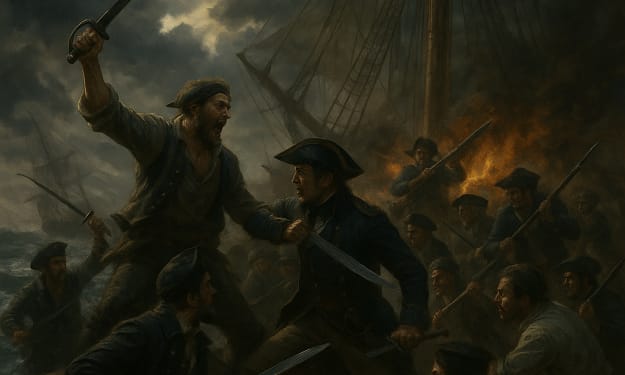
"Sabotage or Mutiny: The Hidden Threats That Sank Great Ships"
Sabotage or Rebellion: Unveiling the Mysteries Behind Enigmatic Maritime Calamities For centuries, the ocean has served as both a conduit and a conflict zoneconnecting continents, transporting empires, and inspiring aspirations of exploration. However, beneath the façade of noble discovery lies a grimmer, obscured truth: vessels lost without rationale, crews disappearing, and debris never recovered. In numerous instances, conjecture has pointed to two ominous alternativessabotage or rebellion. Was it a conspiracy from within? A treachery among the ranks? Or was it a desperate uprising by seafarers pushed to their breaking point? This article delves into the intricate history, motivations, and notable instances surrounding sabotage and rebellion on the open waters, scrutinizing how these dual forces of internal disintegration have transformed the trajectory of maritime history. The Fine Distinction Between Sabotage and Rebellion Although frequently categorized together, sabotage and rebellion are inherently distinct: Sabotage pertains to the intentional dismantling, impairment, or hindrance of a vessel, usually conducted by a crew member or saboteur for political, military, or personal purposes. Rebellion is an overt insurrection or uprising by a ship's crew against the commanding officersoften instigated by severe conditions, unjust command, or ideological convictions. Both actions signify a collapse of order and the ultimate treachery of maritime discipline. Notable Instances of Sabotage or Rebellion 1. The Potemkin Rebellion (1905) One of the most renowned rebellions in naval history unfolded aboard the Russian battleship Potemkin. Discontent stemming from maggot-ridden provisions, severe discipline, and an escalating revolutionary fervor incited sailors to revolt, resulting in the death of several officers and the takeover of the vessel. Although ultimately subdued, the Potemkin rebellion emerged as a symbol of the Russian Revolution, illustrating how social inequity at sea could incite widespread insurrection. 2. The USS Maine (1898): Sabotage or Mishap? The American battleship USS Maine detonated in Havana Harbor, resulting in the deaths of 260 sailors. The United States held Spain accountable, igniting the Spanish-American War. Nonetheless, subsequent investigations indicated that the explosion might have been caused by an internal coal fire rather than foreign aggression. Nevertheless, theories of sabotage linger, including speculation that it was an internal maneuver to justify warfare. The reality remains ambiguous. 3. The Rebellion on the Bounty (1789) Captain William Bligh’s Bounty represents perhaps the most notorious rebellion in Western history. Discontent with Bligh’s severe governance and a yearning for the laid-back lifestyle of Tahiti compelled Fletcher Christian and several sailors to take command of the ship. Bligh and his loyalists were cast adrift in a small boat, yet remarkably survived. The rebels escaped to Pitcairn Island, where some were later apprehended. This incident has since inspired a multitude of literary works and films. Motivations Behind Rebellion What drives crews to risk their lives in revolt? Historically, several factors have contributed to rebellion: Inhumane treatment: Brutality from captains, starvation, and excessive labor could ignite insurrection. Ideological influences: Revolutionary movements or class discontent at sea mirrored broader societal tensions. Isolation and cabin fever: Prolonged voyages in confined spaces can induce psychological strain and distrust. Greed and riches: In certain instances, rebellions were fueled by the ambition to seize treasure or cargo, particularly aboard trading and colonial vessels. Contemporary Illustrations and Cold War Mystique Even in the 20th century, sabotage and insurrection retained significance: Soviet Submarine B-59 (1962): During the Cuban Missile Crisis, Soviet personnel aboard this submarine debated whether to deploy a nuclear torpedo. One individual, Vasili Arkhipov, declined. His choice may have averted WWIII, yet the incident also disclosed how perilously close submariners approached insurrection under duress. INS Khukri (1971): India’s sole naval vessel lost in combat was targeted by a torpedo during the Indo-Pak conflict. While attributed to strategic miscalculations, certain conspiracy theorists propose that sabotage was involved, pointing to the vessel's rapid demise. MV Wilhelm Gustloff (1945): Sunk by a Soviet submarine, the ship carried over 9,000 individuals. Although not officially recognized as sabotage, survivor testimonies imply chaotic command and misinformation could have played a role in its catastrophic outcome. Methods of Sabotage: When Vessels Become Traps Sabotage has manifested in numerous ways: Disabling engines or navigation apparatus Contaminating water or food provisions Severing communication channels Arson or deploying explosive devices During wartime, saboteurs onboard cargo vessels and submarines assumed pivotal roles in intelligence activities. Some even masqueraded as crew members, installing explosives or leaking fuel. Scrutinizing Calamities: Fact or Concealment? Maritime investigations into vessel losses frequently grapple with incomplete data, absent wreckage, and political influences. This has led many to suspect that the reality behind certain catastrophes is obscured. For instance: The Cyclops (1918): Vanished with 309 personnel. Some attribute it to an insurrection stemming from adverse conditions, while others suspect sabotage. No remnants were ever discovered. The Kursk (2000): A Russian submarine that sank, resulting in the deaths of 118 sailors. Official narratives attribute it to a torpedo failure, but some assert that sabotage or internal rebellion was concealed by governmental authorities. Conclusion The ocean harbors secrets older than civilizations. Among them, none are more unsettling than those linked to treachery from within. Sabotage and insurrection strike at the essence of trust, adherence, and the very essence of survival at sea. From ancient triremes to nuclear submarines, the specter of internal disintegration remains ever-present. Whether motivated by desperation, ideology, or avarice, the narratives of sabotage and insurrection remind us that the gravest threats are not always tempests or adversarial fleetsbut rather, human hearts in revolt.
By Say the truth 2 years ago in History
Israel commits Gaza genocide under world’s ‘watchful eye’, ICJ told
"The International Criminal Court Hears the Gaza Genocide Case as Israel's War Continues" – The International Court of Justice (ICJ) in The Hague heard harrowing testimony this week as South Africa presented its case accusing Israel of committing genocide in Gaza—a conflict unfolding, as one lawyer put it, "under the world’s watchful eye." The historic hearings have rekindled global debate regarding Israel's military offensive, which has resulted in the deaths of over 34,000 Palestinians, the displacement of 1.9 million people, and the destruction of much of Gaza. "A Calculated Destruction of Life"
By Rakib Hasan2 years ago in History