Books
Letters From a Locked Drawer
The Drawer No One Touched In the quiet town of Meadowridge, 16-year-old Clara Wren lived with her father in an old, creaky house full of memories. Her mother had passed away when Clara was just a baby, and the only thing left of her was an antique wooden desk in the attic. It had belonged to her mother, and on that desk sat a single drawer locked tight for as long as Clara could remember.
By Muhammad Hayatabout a year ago in History
He Was Homeless for 8 Years — What He Did with His First Paycheck Shocked the World. AI-Generated.
“Sometimes, the people who have the least, give the most.” This quote couldn’t be truer for John Thompson, a man whose journey from the streets of Chicago to becoming a national symbol of hope and compassion has touched the hearts of millions around the world.
By YT S RAIHANabout a year ago in History
The Quiet Hero Who Stopped a Nuclear War
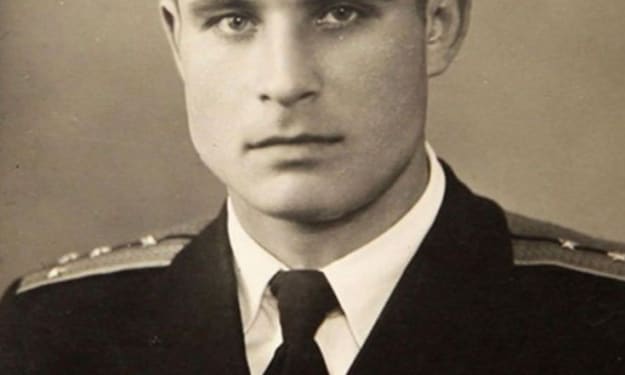
Have you ever wondered how close the world has come to ending? Not in some sci-fi blockbuster, but in real life-sweaty, chaotic, human life? Let me take you back to October 1962, when the Cuban Missile Crisis had the planet holding its breath. I was reading about this the other day, and it hit me: one man, a Soviet submarine officer named Vasili Arkhipov, might just be the reason we’re all still here. His story isn’t one of grand speeches or Hollywood heroics. It’s about a quiet choice made in a sweltering submarine, under unimaginable pressure.
By KWAO LEARNER WINFREDabout a year ago in History
Timothée Chalamet Preparing for Biopic of a Spoon: 'I've Been Sitting in Cutlery Drawers for Weeks'
Introduction. Bold and bizarre news has caught everyone's attention: Timothée Chalamet is getting ready for a new kind of role—a biopic about a spoon. Yes, a spoon! Known for choosing unique projects,
By Md Monowar2 years ago in History
Kashmir Attack: How India Might Strike Pakistan and What History Suggests
The Kashmir conflict has long been a flashpoint between India and Pakistan, two nuclear-armed neighbors with a history of wars and skirmishes. Whenever a major terror attack occurs in Jammu and Kashmir, particularly if there is evidence or suspicion of Pakistani involvement, tensions escalate sharply. India’s response to such attacks has evolved over the years, and historical patterns offer clues about how it might act in the future.
By FARHAN SAGOR2 years ago in History
2.Soar High: The Ultimate Aerial Adventure Gift Experience.
Soar High: The Ultimate Aerial Adventure Gift Experience Light the flame in a daredevil with a fortune of incredible events. Visualize oneself flying over a vast expanse of blue sky with tufts of white mists and breathtaking views all around. Feel the wind tugging at your face, the extent of open stretches down below you, and then the thrill of it all. This is precisely what aeronautical experience sports offer, along with astounding moments filled with extraordinary wonder.
By Md Monowar2 years ago in History
2.Soar High: The Ultimate Aerial Adventure Gift Experience.
Light the flame in a daredevil with a fortune of incredible events. Visualize oneself flying over a vast expanse of blue sky with tufts of white mists and breathtaking views all around. Feel the wind tugging at your face, the extent of open stretches down below you, and then the thrill of it all. This is precisely what aeronautical experience sports offer, along with astounding moments filled with extraordinary wonder.
By Md Monowar2 years ago in History
Alcohol Consumption Trends: Who Has the Worst Eating Habits?
Alcohol Consumption Trends: Who Has the Worst Eating Habits. Ongoing exploration shows that a full 60% of the people who drink liquor routinely settle on definitely less fortunate dietary decisions than their teetotaling partners. That is a striking connection that has restored interest in the patterns in liquor utilization and their immediate relationship with dietary patterns. The exploration shows that drinking designs influence quick food decisions as well as long haul dietary ways of behaving.
By Md Monowar2 years ago in History
The Mountain of Light and the Throne of Glory: The Greatest Treasures of the Mughal Empire
The Koh-i-Noor and the Peacock Throne: The Supreme Treasures of the Mughal Empire The Mughal Empire, one of the most influential and affluent dynasties in Indian history, accumulated unimaginable riches over the centuries. Among its most renowned treasures were the legendary Koh-i-Noor diamond and the Peacock Throne, both emblems of imperial magnificence and global intrigue. This article delves into the history of these iconic gems, their role in defining Mughal opulence, and how they were ultimately lost to invaders and colonizers, becoming subjects of dispute and yearning in contemporary times.
By Say the truth 2 years ago in History
Foundations of a Nation: The Story of the United States of America
The story of the United States of America is one of struggle, perseverance, and triumph. From the early days of colonial rule to the present day, the nation has faced numerous challenges and overcome incredible obstacles to become the powerful and influential country it is today. This story is a testament to the strength and resilience of the American people and the enduring spirit of freedom and democracy that has guided the nation from its inception. *The American Revolution: A New Era Begins* The American Revolution was a pivotal moment in the nation's history, marking the beginning of a new era of independence and self-governance. The war was fought between the colonies and Great Britain, with the colonies seeking to break free from British rule and establish their own government. The revolution was led by a group of visionary leaders, including George Washington, Thomas Jefferson, and Benjamin Franklin, who were determined to create a new nation based on the principles of liberty, equality, and democracy. The revolution was not without its challenges, however. The Continental Army, led by Washington, faced numerous defeats and setbacks, and the outcome of the war was far from certain. Yet, through determination and perseverance, the colonists were ultimately able to secure their independence, and the Treaty of Paris, signed in 1783, formally ended the war and recognized the United States as a sovereign nation. *The Constitution: A Framework for Government* Following the Revolution, the new nation faced the challenge of creating a government that would be fair, effective, and accountable to the people. The Articles of Confederation, adopted in 1781, proved inadequate for the task, and a new constitution was drafted in 1787. The Constitution, which went into effect in 1789, established a federal system of government, with power divided between the national government and the states. The Constitution also enshrined the principles of democracy and individual rights, including freedom of speech, freedom of the press, and the right to a fair trial. The Bill of Rights, added to the Constitution in 1791, further protected individual liberties and ensured that the government would not abuse its power. *The Struggle for Unity: Civil War and Reconstruction* Despite the progress made in the early years of the nation, the United States was soon faced with a new challenge: the issue of slavery. The disagreement over slavery ultimately led to the Civil War, fought between the Union (the northern states) and the Confederacy (the southern states) from 1861 to 1865. The war was a defining moment in American history, and its outcome would shape the nation's future. The Union, led by President Abraham Lincoln, ultimately emerged victorious, and the Emancipation Proclamation, issued in 1863, declared freedom for all slaves in the Confederate states. The Reconstruction era that followed the war saw significant progress in the fight for civil rights, including the passage of the 13th, 14th, and 15th Amendments to the Constitution, which abolished slavery, granted citizenship to former slaves, and protected their right to vote. *The Rise of America: From Isolation to Global Power* In the late 19th and early 20th centuries, the United States underwent a period of rapid industrialization and growth, emerging as a major world power. The nation's economy expanded rapidly, driven by technological innovation and immigration, and the United States became a leader in industry, finance, and trade. The United States' entry into World War I in 1917 marked a significant turning point in the nation's history, as it began to take on a more active role in global affairs. The war effort was followed by a period of isolationism, but the Japanese attack on Pearl Harbor in 1941 drew the United States into World War II, and the nation emerged from the war as one of the world's two superpowers. *The Cold War and Beyond* The Cold War, which lasted from the end of World War II to the collapse of the Soviet Union in 1991, was a defining period in American history. The United States and the Soviet Union engaged in a decades-long struggle for ideological supremacy, with the United States promoting democracy and capitalism, while the Soviet Union advocated for communism. The Cold War was marked by numerous proxy wars, espionage, and propaganda campaigns, but it ultimately ended with the collapse of the Soviet Union. The United States emerged from the Cold War as the world's sole superpower, and it has continued to play a leading role in global affairs, promoting democracy, human rights, and economic development around the world. *Conclusion*
By Hashim Khan2 years ago in History