Books
A Glimmer into Bronze Age Civilization: Hungarian Archaeologists Discover Over 3,400-Year-Old Metal Artifacts on an enigmatic volcanic hilltop,,, . AI-Generated.
A glimpse into a Bronze Age civilization is provided by Hungarian archaeologists' discovery of over 3,400-year-old metal artifacts on an enigmatic volcanic hilltop. On a mysterious volcanic hilltop in western Hungary, a group of Hungarian archaeologists discovered hundreds of ancient metal artifacts that were up to 3,400 years old. This was a ground-breaking discovery. The excavation is shedding new light on the lives, rituals, and technologies of Central European Bronze Age societies, and it has attracted the attention of historians and researchers from across Europe. The site, known locally as Várdomb, or "Castle Hill," is situated near the town of Sümeg, on a long-dormant volcanic formation. This elevated terrain, now covered in forest and stone, was once a strategic stronghold for early human settlers. During the Bronze Age, when hillforts played important roles in security, trade, and governance, it was an ideal location for a fortified settlement due to its natural defenses and expansive views of the surrounding area. Relics from the Bronze Age, a Hidden Treasure Over 800 items have been found by archaeologists thus far, including ritualistic objects, agricultural tools, jewelry, finely crafted weapons like swords, axes, daggers, and spearheads, as well as fragments of pottery. The majority of the metal objects are bronze, a copper-tin alloy that represented the era's technological advancements. The intricate decorations on some of the weapons suggest that they belonged to high-status individuals—perhaps warriors, chieftains, or priests. Also found among the collection were unique metal spirals, pins, and adornments, possibly used for ceremonial purposes or as symbols of wealth and power. One particularly intriguing find is a group of objects intentionally buried together, which raises the possibility that these were offerings or ritual sacrifices to deities that were worshipped at the time. "The sheer scale and diversity of the artifacts uncovered here make this one of the most important Bronze Age sites ever found in Hungary," said Dr. Gábor Ilon, the lead archaeologist on the project. "It appears that this site was not only a location of defense but also a hub of cultural and religious activity," the author says. Ancient Life Hints on the Hilltop Archaeological evidence suggests that the people who lived in the fortress on Várdomb probably had advanced metallurgical skills, built complex structures, and traded far away. The site may have had watchtowers, workshops, and communal halls, as evidenced by the charred remains of wooden beams, stone foundations, and storage pits. Additionally, the location of the fortress at a high altitude indicates its strategic importance—residents could spot approaching threats from miles away and maintain control over nearby trade routes, river valleys, and farmlands. Researchers also think that the unique landscape of the volcanic hill, which was used in ancient myths and rituals, may have had spiritual significance. Using modern technology to preserve the past The excavation is being carried out with the support of Hungary’s National Museum and various academic institutions. LIDAR (Light Detection and Ranging), ground-penetrating radar, and 3D modeling are among the cutting-edge techniques being utilized by researchers to digitally reconstruct the site and examine the object distribution. These technologies allow experts to explore below the surface without disturbing delicate archaeological layers.
By Habib Mahmudabout a year ago in History
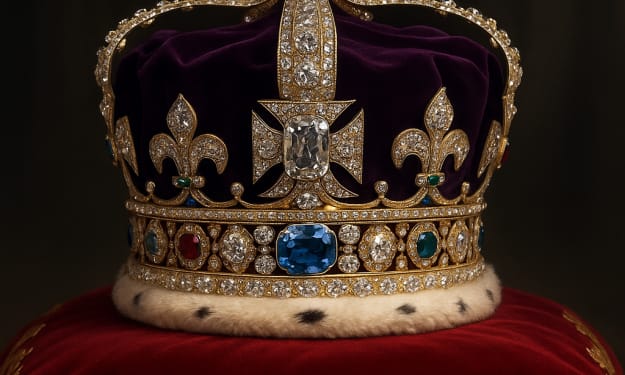
“Crown of Empires: The Legendary Wealth of the World’s Most Expensive Crown” . AI-Generated.
“The Diadem of Sovereigns: The Chronicle and Valuation of the World’s Most Costly Diadem” The narrative of royal diadems is a captivating saga of authority, triumph, and unimaginable affluence. Among all, one diadem distinguishes itselfthe British Imperial State Diadem, an emblem of sovereignty and the most financially substantial in history. Adorned with over 3,000 gemstones, including the famed Cullinan II diamond and the Black Prince’s Ruby, its worth transcends mere gold and gemstones. This article explores the inception, transformation, and heritage of this diadem, presenting a contemporary appraisal that surpasses $6 billion, establishing it as the most cherished diadem ever crafted. Introduction: An Emblem Beyond Epochs and Authority From pharaohs and emperors to medieval monarchs and contemporary rulers, the diadem has perpetually epitomized ultimate power. Yet beyond representation, diadems also signify extravagance. Among the multitude throughout historyfrom the Mughal Empire to the French Bourbonsthe British Imperial State Diadem is deemed the most priceless, both historically and economically. Housing some of the largest and rarest gemstones on the planet, it is more than merely a ceremonial adornmentit constitutes a vessel of empire, warfare, diplomacy, and heritage. Origins of the Imperial State Diadem The earliest iteration of the British Imperial Diadem traces back to the 15th century. However, the present design was reconstructed in 1937 for the coronation of King George VI and adapted for Queen Elizabeth II’s coronation in 1953. Its design draws from prior diadems but integrates treasures amassed over centuries of colonial expansion, wartime plunder, and royal legacy. Unlike other diadems designed exclusively for display or burial, this diadem has been actively utilized in coronations and state ceremonies, including the State Opening of Parliament. Diadem Features and Gemstone Inventory The Imperial State Diadem is constructed from solid gold, silver, and platinum and weighs over 1. 06 kilograms (2. 3 pounds). It comprises: 2,868 diamonds 273 pearls 17 sapphires 11 emeralds 5 rubies Among these, several legendary stones elevate the diadem to unmatched prominence: The Cullinan II Diamond: Referred to as the Second Star of Africa, it is a 317-carat flawless diamond carved from the largest gem-quality diamond ever discovered. This diamond alone is valued at over $400 million USD. The Black Prince’s Ruby: A significant semi-precious red spinel, this “ruby” is steeped in legend. It was donned by Henry V at the Battle of Agincourt in 1415 and occupies a central position in the diadem. The Stuart Sapphire: A deep blue 104-carat sapphire that has been passed through various generations of English and Scottish royalty. The St. Edward’s Sapphire: Presumed to have belonged to Edward the Confessor, this 11th-century gemstone rests atop the diadem’s cross. Historical and Political Heritage The diadem’s gemstone collection reflects the expansion and wealth of the British Empire. Numerous stones, particularly the Cullinan diamond, were gifts or acquisitions from colonized regions, notably South Africa, India, and Burma. Certain aspects of the crown have ignited global discourseparticularly the Koh-i-Noor diamond, which is not present in this crown but resides within another crown of the British collection. These disputes underscore that crowns are not merely decorativethey are political artifacts symbolizing both glory and colonization. Modern Appraisal: What Is Its Value? Assessing the worth of a crown of this nature is intricate, as many of the gems are distinctive, invaluable, or historically irreplaceable. Nevertheless, contemporary gemologists and historians approximate: Component Estimated Value Cullinan II Diamond (317 carats) $400–450 million Black Prince’s Ruby $100–150 million Stuart Sapphire $40–50 million Gold, Silver, Pearls $10–15 million Other Diamonds, Emeralds, Rubies $200–300 million Historical Value, Provenance $5 billion+ (symbolic, irreplaceable) Total Estimated Worth $5. 8 to $6. 5 billion USD Comparison to Other Renowned Crowns Although various empires possessed remarkably elaborate crownssuch as: The Mughal Peacock Throne, adorned with diamonds, emeralds, and pearls. The Russian Imperial Crown, featuring a 398-carat red spinel and 4,936 diamonds. The Crown of the Austrian Empire, signifying Holy Roman authority. none equates to the cumulative wealth, application, historical preservation, and symbolic significance of the Imperial State Crown of Britain. Custody and Exhibition Presently, the Imperial State Crown is situated in the Tower of London, secured as part of the Crown Jewels of the United Kingdom. It is removed solely for exceptional events, such as coronations or royal funerals. Its protection is exceptional, and although it is accessible for public viewing, no oneexcept the reigning monarchis permitted to don it. Conclusion: Wealth in Gold, Power in Heritage The Imperial State Crown transcends its status as the most expensive crown everit symbolizes five centuries of history. Each gemstone conveys narratives of conquest, diplomacy, divine right, and human aspiration. With an estimated net worth exceeding $6 billion USD, it occupies the zenith of royal regalia and historical treasure. In a world captivated by wealth and authority, this crown persists as a unique amalgamation of boththe ultimate representation of monarchy and empire.
By Say the truth about a year ago in History
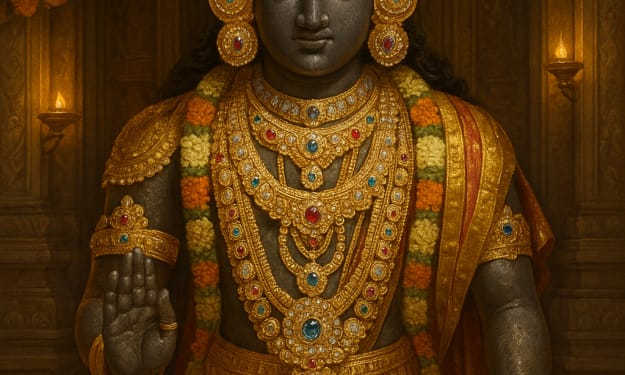
“Lord of Fortune: The Costliest Idol in History – The Wealth of Tirupati Balaji”. AI-Generated.
The World’s Most Expensive Idol: The Unrevealed Narrative of Tirupati Balaji’s Golden Wealth Among the globe’s most revered deities, the statue of Lord Venkateswara at Tirumala, Andhra Pradesh, serves not only as a spiritual lighthouse but also as an emblem of extraordinary affluence. Sculpted from sacred black stone and embellished with immense quantities of gold, diamonds, and other precious gems, this idolvenerated by millionsis appraised as the priciest in documented history. This article examines its origins, religious importance, priceless embellishments, and the contemporary valuation of both the idol and the temple's assets. Introduction: The Living Divinity of the Peaks Perched atop the Tirumala hills in southern India, the temple of Lord Venkateswara, commonly referred to as Balaji, ranks among the wealthiest religious locations globally. Millions of devotees ascend to Tirupati each year to catch a glimpse of the revered idol, believed to be over 2,000 years old. Beyond its spiritual significance, the idol itselfstanding approximately 8 feet in heightis a repository of unparalleled historical and monetary value. In this article, we delve into the background, composition, and financial appraisal of the world’s most costly religious idol. The Idol: Artistry and Myth The principal deity, Lord Venkateswara, is crafted from a unique variety of black granite or Shaligrama stone, traditionally believed to possess magnetic and healing attributes. In accordance with ancient Vaishnavite customs and temple lore, this idol is said to be self-manifested (Swayambhu)not created by human artisans. It is embellished with: A colossal diamond-encrusted crown (appraised alone to be valued at over $50 million USD) Numerous gold adornments, including necklaces, girdles, and anklets An ancient gem known as Navaratna Kirita, set with nine precious stones A thick gold plating covering various sections of the idol itself Emeralds, sapphires, rubies, and pearls, some of which trace back to the Vijayanagara Empire (14th–16th century CE) Historical Support and Contributions Rulers from diverse Indian dynastiesincluding the Cholas, Pandyas, Vijayanagara monarchs, and Marathashave offered priceless ornaments to the deity throughout the centuries. Noteworthy contributions encompass: Krishnadevaraya’s Crown (early 1500s): Composed of solid gold and adorned with diamonds and emeralds. British Raj-era Contributions: Despite colonial governance, affluent merchants and aristocrats persistently donated substantial gold reserves and gemstones to the deity. Even contemporary celebrities and industrialists contribute considerable quantities of gold and funds to the idol and temple annually. The deity is adorned differently each day and during various seasons, with specific sets of jewelry designated for special festivals. Temple Vaults and Concealed Riches In addition to the ornaments adorning the idol, the Tirumala Tirupati Devasthanams (TTD) trust oversees concealed vaults filled with gold and gemstones gifted over the centuries. The temple receives: Approximately 30–35 million USD in cash donations each year Hundreds of kilograms of gold, with nearly 60,000 kg accumulated as per recent reports Daily offerings of diamonds, rubies, and exotic jewels The vaults, many of which remain inaccessible to the public, are estimated to harbor treasures worth over $20 billion USD, much of which was originally presented to the idol itself. Valuation Estimate: Analyzing the Idol’s Worth To evaluate the contemporary worth of the Tirupati Balaji idol and its immediate embellishments: Component Estimated Contemporary Worth Diamond Crown $50 million USD Gold Ornaments (Necklaces, Waistbands, Anklets, Armlets) $150–200 million USD Gemstones (Emeralds, Rubies, Sapphires, Pearls) $100–150 million USD Historical Items (Navaratna Crown, Ancient Jewelry) $75–100 million USD Total Idol Wealth Estimate $375–500 million USD Note: This does not encompass the temple’s additional assets such as real estate, reserves, or vaults. Cultural and Spiritual Worth: Beyond Monetary Value For worshippers, however, the riches of the idol cannot be quantified in gold or currency. Lord Venkateswara is revered as “the deity who alleviates debt,” believed to bestow blessings, health, and prosperity upon anyone who approaches with genuine intent. Each ornament or coin presented is regarded as an expression of faith, rather than mere economics. Furthermore, the idol’s distinctive essence, time-honored rituals, and emotional ties with millions render it culturally invaluable. Comparisons with Other Idols While numerous religious figures globally possess significant worth, the Tirupati idol surpasses many in terms of collective wealth, importance, and enduring reverence. Other notable examples include: The Golden Buddha of Thailand (5. 5 tons of gold; $250 million+) Jagannath idols of Puri (inestimable due to relics within) Padmanabhaswamy temple vault idols in Kerala (unopened treasures potentially exceeding $22 billion USD) Nonetheless, due to its exceptional visibility, documentation, and historical complexity, the Balaji idol retains the status of the most ornately adorned deity in the contemporary world. Conclusion: Divine Wealth and Eternal Devotion The idol of Lord Venkateswara transcends being a mere divine artifact; it serves as the spiritual nucleus of South India and a repository of historical richness. With an estimated net worth approaching half a billion dollars, it stands as a monument to steadfast faith, continuous royal sponsorship, and the profound legacy of temple wealth in India. In a society fixated on material wealth, the narrative of Tirupati Balaji serves as a reminder that genuine value resides where affluence intertwines with reverence, and where gold transforms into the sacred in the hands of devotees.
By Say the truth about a year ago in History
The Arba'in Pilgrimage: Faith, Culture, and Memory in Motion
A Journey Through Images, Stories, and Testimonies The event opened with a moving and intense photographic exhibition that visually documented the march of pilgrims from Najaf to Karbala. The shots, capturing faces marked by fatigue and spontaneous acts of solidarity, conveyed the deep sense of community and resistance that characterizes the pilgrimage. The images spoke for themselves: men, women, children, the elderly—all united in remembrance of Imam Husayn, a key figure in Shia spirituality and a symbol of the struggle against tyranny.
By Maddalena Celanoabout a year ago in History
The Rise and Legacy of the Mughal Empire
The history of the Mughal Empire is one of grandeur, ambition, and complexity. Spanning over three centuries, this dynasty ruled much of South Asia, leaving behind a legacy that shaped the cultural, political, and architectural landscape of the Indian subcontinent. The Mughals, descendants of the great Central Asian conqueror Timur and the Mongol Empire, brought an era of prosperity, artistic brilliance, and remarkable political intrigue that reverberates in India’s heritage to this day.
By Haseeb Mujaddidiabout a year ago in History
A Transformational Story of the Economic Boom in Africa. AI-Generated.
Africa was once known as the "dark continent," but it is now enjoying a golden age of progress, new ideas, and opportunities. A significant shift is taking place across the continent, from the golden sands of the Sahara to the lush green forests of the Congo Basin, from the Atlantic coast cities to the bustling trade centers of the Indian Ocean. It is not just numbers on spreadsheets or graphs in reports that are rewriting Africa's future; rather, it is the pulse of a new generation. First Chapter: A New Beginning in Nairobi Aisha Mwangi watched the sunrise over an ambitious city from the rooftop of her apartment in Nairobi, Kenya. She finished high school ten years ago and had no idea where she was going. She now owns a digital fashion startup with 14 young employees. Her business specialized in clothing with African influences, combining contemporary Western designs with traditional fabrics like kitenge. With just a single phone and an Instagram account, her journey began. Her designs are now available to customers in Rwanda, Ghana, the United Kingdom, and even Japan due to Kenya's robust mobile banking infrastructure and expanding e-commerce market. Africa's economic development was being largely supported by the digital economy, which was fueled by necessity and innovation. The Tech Revolution in Lagos,
By Habib Mahmudabout a year ago in History
Rolando Romero disrupts Ryan Garcia's plans in massive upset
NEW YORK -- What was supposed to be a memorable event in Times Square on Friday night turned out to be a forgettable one with no action and left boxing fans disappointed. The plan was for Ryan Garcia and Devin Haney to win their respective fights and meet for a highly anticipated rematch later this year. Haney fulfilled his promise, albeit with a poor decision, but Rolando "Roll" Romero disrupted the fight by shocking Garcia with a unanimous decision (115-112, 115-112, 118-109) to end an underwhelming night of fights. In the main event, Garcia's return to boxing after a one-year suspension for failing a drug test after his April 2024 fight with Haney was a disaster. Garcia (24-2, 1 NC) entered the fight as a -1000 favorite on ESPN BET. In the 12-round contest, however, he was unable to unleash his signature left hook or produce any significant offense. Picks by the Editor It is time for Ryan Garcia and Devin Haney to part ways, at least for the time being. Andreas Hale, 8h In Times Square, Lopez defeats Barbosa to keep the belt. 8hAndreas Hale
By MD IMRAN KHANabout a year ago in History
The Last Light: How Anne Frank’s Words Still Illuminate the World. AI-Generated.
AI-Assisted Content This article was created with the help of ChatGPT and then reviewed and edited by the author to ensure originality and compliance with Vocal Media's guidelines.
By Md Hasan Aliabout a year ago in History