Books
bangladesh turbulent half century form coups to cilmate shocks. AI-Generated.
Over the past fifty years, Bangladesh has gone through a complex and often turbulent journey. The country has repeatedly faced challenges such as political instability, military coups, natural disasters and climate change. However, despite the many adversities, Bangladesh has made incredible progress in development, poverty reduction and disaster management.
By shakil hasanabout a year ago in History
Urdu:-The National Language of Pakistan
Language is more than a medium of communication; it is the lifeblood of culture, identity, and unity. In Pakistan, Urdu holds the honored stat being the national language, a role that has shaped the nation’s character since its creation in 1947. Though many regional languages are spoken throughout the country, Urdu serves as a unifying force, bridging the linguistic and cultural diversity of the nation.
By aadam khanabout a year ago in History
The Cold War: A Detailed Overview
🧊 The Cold War: A Detaiew Timeframe: Approximately 1947 – 1991 Main Adversaries: The United States and its NATO allies vs. The Soviet Union and its Warsaw Pact allies Ideological Conflict: Capitalism and democracy (USA) vs. Communism and authoritarianism (USSR) --- 🌍 Origins of the Cold War The Cold War emerged after the end of World War II, as the wartime alliance between the United States and the Soviet Union began to disintegrate. The primary factors contributing to the Cold War included: Ideological Differences: The U.S. championed capitalism and democracy, while the USSR advocated for communism and a centrally planned economy. Geopolitical Tensions: The Soviet Union sought to expand its influence in Eastern Europe, leading to the establishment of communist governments in countries like Poland, Hungary, and Czechoslovakia. The U.S. viewed this as a threat to democratic nations and responded with policies aimed at containing communism. Economic Factors: The U.S. implemented the Marshall Plan to aid in the reconstruction of Western Europe, while the USSR established the Comecon to support Eastern Bloc countries. ---🔑 Key Events During the Cold War 1. Berlin Blockade and Airlift (1948–1949) In an effort to gain control over the entire city of Berlin, the Soviet Union blockaded all land routes to West Berlin. In response, the United States and its allies initiated the Berlin Airlift, supplying West Berlin with food and fuel via air transport for nearly a year. 2. Formation of Military Alliances NATO (North Atlantic Treaty Organization): Established in 1949, NATO was a collective defense alliance among the U.S., Canada, and Western European nations. Warsaw Pact: Formed in 1955, this was a collective defense treaty among the Soviet Union and its Eastern Bloc allies. 3. Korean War (1950–1953) The Korean Peninsula was divided into North Korea (communist) and South Korea (capitalist). The war began when North Korean forces, supported by the USSR and China, invaded South Korea. The United Nations, led by the U.S., intervened on behalf of South Korea. The conflict ended in an armistice, restoring the original borders. 4. Cuban Missile Crisis (1962) The Soviet Union placed nuclear missiles in Cuba, just 90 miles from the U.S. coast. This discovery led to a tense 13-day standoff, bringing the world to the brink of nuclear war. The crisis was resolved when the USSR agreed to remove the missiles in exchange for a U.S. promise not to invade Cuba and the secret removal of U.S. missiles from Turkey. 5. Vietnam War (1955–1975) North Vietnam, supported by the USSR and China, aimed to unify the country under communism. South Vietnam, backed by the U.S., resisted. The war resulted in a communist victory and the unification of Vietnam under communist rule. 6. Space Race The U.S. and the USSR competed to achieve significant milestones in space exploration. Notable events include the Soviet Union launching Sputnik, the first artificial satellite, in 1957, and the U.S. landing the first humans on the Moon in 1969.
By Ahmed rahi about a year ago in History
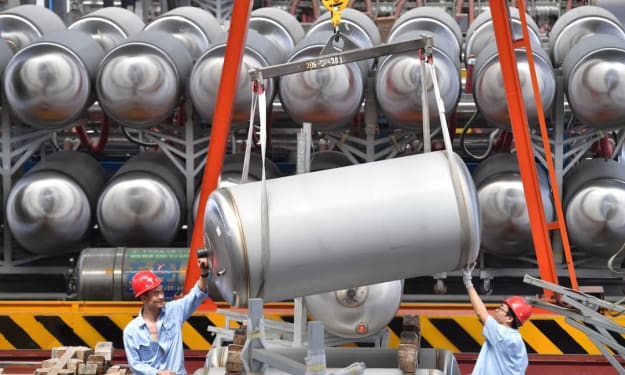
Asia's LNG demand stays muted in April while Europe eases
.LAUNCESTON, Australia, April 29 (Reuters) - Asia's imports of liquefied natural gas (LNG) remained tepid in April while Europe's started to show signs of the usual seasonal easing as winter peak demand passed.
By Md.Abdur Roufabout a year ago in History
"We’re Not Trying to Recreate a Species from Ancient DNA Scraps": One of Earth’s Rarest Animals Could Be Brought Back from the Edge of Extinction.. AI-Generated.
"We’re Not Trying to Recreate a Species from Ancient DNA Scraps": One of Earth’s Rarest Animals Could Be Brought Back from the Edge of Extinction.
By Sayeed Ahmedabout a year ago in History
The Abandoned Wealth of Emperor Nero: Gold Amidst Infernos. AI-Generated.
The Ascendance of a Golden Sovereign Nero Claudius Caesar Augustus Germanicus ascended to the throne in 54 CE at the tender age of 17. Although youthful, Nero wielded considerable authority, inherited from a complicated lineage of Julio-Claudian rulers tracing back to Augustus. With the Roman Empire at its zenith in terms of territory and commerce, Nero assumed the imperial position during a period of extraordinary affluence. His mother, Agrippina the Younger, facilitated his rise to power, manipulating court dynamics and eliminating adversaries. However, Nero would soon declare his autonomynot merely through absolute governance but by expending funds at a scale that astonished even the elite of Rome. The Origins of Nero’s Wealth Nero’s fortune was derived from various streams: Imperial Taxation: Provinces throughout Europe, North Africa, and Asia Minor rendered tribute to Rome. Taxes on agriculture, commerce, and property ownership flowed into the imperial treasury. Confiscations: Nero had a notorious proclivity for accusing senators and elites of treason or conspiracy. Their assets were appropriated and added to the state (or his personal) treasury. This strategy both enriched him and eliminated political dangers. Commerce and Tribute: The Roman Empire's extensive trading network, particularly in luxury commodities from the Eastsuch as spices, silk, and gemstonesproduced substantial profits. Conquered regions also presented valuable tributes including gold, silver, and enslaved individuals. Mining and Coinage: Nero oversaw the empire’s mining activities in Hispania (Spain), Gaul, and the Balkans. He adulterated the Roman currency by diminishing the silver content in coinsan expedient that enhanced imperial liquidity but compromised long-term economic stability. Nero’s Opulence: The Golden House One of Nero’s most renowned expenditures of imperial wealth was the creation of the Domus Aurea, or Golden House. Following the Great Fire of Rome in 64 CEwhich some accounts claim Nero instigated, although evidence remains ambiguoushe appropriated a substantial expanse of central Rome to construct his palace. The Golden House was a residence unlike any other in Roman annals: Its corridors were adorned with gold leaf and precious gemstones. Rooms boasted revolving ceilings that showered fragrances and rose petals. Artificial lakes and expansive gardens encircled the edifice. A colossal effigy of Nero, the Colossus Neronis, towered outsidesurpassing 100 feet in height. This architectural wonder epitomized both the pinnacle of Nero’s wealth and the extravagance that alienated Rome’s citizens and senators from him. Financing Extravagance: Performances and Campaigns Nero perceived himself not merely as an emperor but as a creator and entertainer. He financed extravagant games, theatrical productions, and musical competitionsmany of which showcased him as the main attraction. Audiences were frequently obligated to attend and applaud his performances. In 66 CE, Nero initiated an expensive expedition in Greecenot for conquest, but to tour cities and perform. He returned with thousands of accolades and trophies, though they were predominantly symbolic; the journey depleted the state treasury. The Decline of Nero and the Disappearance of His Wealth By 68 CE, public discontent, military uprisings, and political opposition reached a pinnacle. The Senate proclaimed Nero a public adversary. Confronted with arrest and execution, Nero took his own life on June 9, 68 CE, reportedly exclaiming, "What an artist dies in me! " What transpired with his extensive fortune after his demise? Theories and Historical Narratives: Confiscated by Successors: Galba, Otho, and Vitelliuswho succeeded Nero during the chaotic "Year of the Four Emperors"likely appropriated portions of the imperial treasury to support their own aspirations for authority. Concealed Reserves: Some speculate that Nero concealed portions of his wealth in subterranean vaults or private villas prior to his death. Treasure seekers have long conjectured about hidden troves beneath the remnants of the Golden House. Destroyed or Dispersed: With the conflagration of the palace and plundering by soldiers, a significant portion of Nero’s wealth may have been lost. Priceless artworks, manuscripts, and coins likely vanished amid the turmoil. Transformed into Public Structures: Emperor Vespasian, who ultimately restored stability, repurposed the area of Nero’s palace to construct the Colosseum, reclaiming the site for civic use. Some of Nero’s appropriated funds may have subsidized this transformation. The Quest for Nero’s Treasure Today Parts of the Domus Aurea have been unearthed in Rome, revealing frescoes, gilded ceilings, and intricate mosaics. However, no treasure troves have been discoveredleading many to surmise they were either looted or remain concealed.
By Say the truth about a year ago in History
Trump calls on Walmart to absorb tariffs rather than raise prices
Trump Calls on Walmart to Absorb Tariffs Rather Than Raise Prices In a move that reignited debate over trade policy and consumer pricing, former President Donald Trump recently made headlines by calling on retail giant Walmart to absorb the cost of tariffs rather than passing those expenses onto American consumers. The comments come amid growing concerns about inflation, supply chain challenges, and trade tensions with China and other manufacturing nations. Trump’s message, posted on his social media platform Truth Social, signaled a renewed political focus on economic nationalism and corporate responsibility.
By Nirob Khanabout a year ago in History
NASA's James Webb Space Telescope mission — Live updates. AI-Generated.
# **NASA's James Webb Space Telescope Mission — Live Updates** The **James Webb Space Telescope (JWST)**, NASA’s most ambitious and powerful space observatory, has been revolutionizing our understanding of the universe since its launch on **December 25, 2021**. As Webb continues its mission, scientists are uncovering unprecedented details about distant galaxies, exoplanets, and the origins of the cosmos. Below are the latest live updates on JWST’s groundbreaking discoveries and mission progress.
By Ananta Biswas about a year ago in History
🍯 The Great Molasses Flood of Boston, January 15, 1919: A Sticky Catastrophe That Swept Through the Streets and Caused Multiple Fatalitie
🌇 Part 1: Boston at Boiling Point - The City Before the Flood To understand how a flood of molasses could destroy part of a city and take lives, we must first travel back to Boston in the winter of 1919 - a city full of contradictions, opportunity, and unrest. The Great War had just ended in November 1918, and like many American cities, Boston was adjusting to the uneasy transition from wartime industry to peacetime life. Amid economic shifts, labor strikes, political radicalism, and the tail-end of a deadly flu pandemic, tension simmered in the air.
By History Seekerabout a year ago in History
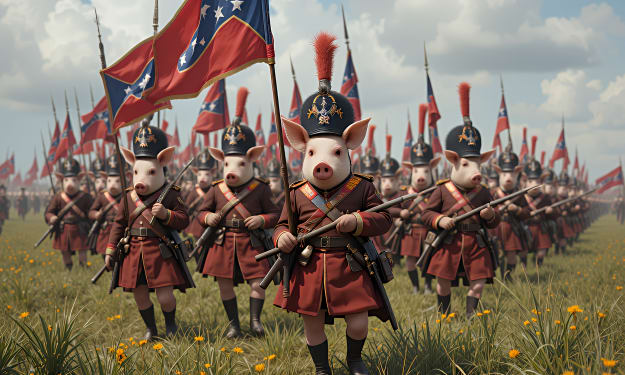
🐖The Pig War on the US–Canada Border, 1859: A Territorial Dispute Triggered by the Killing of a Single Pig
🏞 Part 1: A Snoutful of Trouble - The Pig That Started It All In the otherwise quiet and pastoral June of 1859, San Juan Island - then an unsettled jewel in the Pacific Northwest's emerald crown - became the unlikely battleground for a bizarre territorial standoff between two of the world's most powerful nations: the United States and Great Britain. San Juan Island, lush with cedar forests, rugged coastlines, and fertile grazing fields, was inhabited by a small but tense mix of British employees of the Hudson's Bay Company and independent American homesteaders drawn west by the promise of land and opportunity.
By History Seekerabout a year ago in History
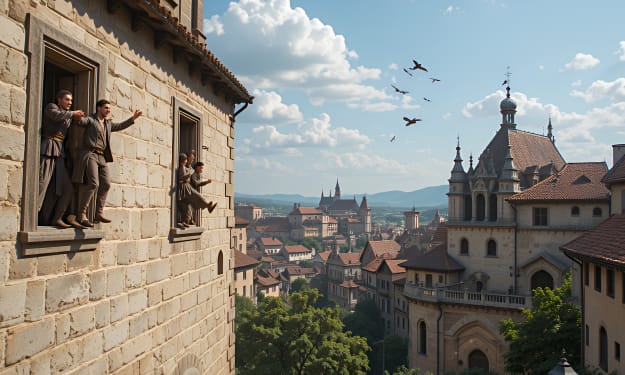
🏰The Defenestrations of Prague, 1419 and 1618: Political Assassinations by Throwing People Out of Windows That Sparked Wars
Part 1: Introduction - What Is a Defenestration? The term defenestration may sound peculiar to modern ears, but it holds a deeply significant place in European history - particularly in the Czech lands. Derived from the Latin words de- ("down from" or "away") and fenestra ("window"), defenestration simply means the act of throwing someone out of a window. Though seemingly straightforward, this term encapsulates a rare yet dramatic form of political violence that became emblematic of Prague's turbulent religious and political struggles during the late Middle Ages and the early modern period.
By History Seekerabout a year ago in History