Books
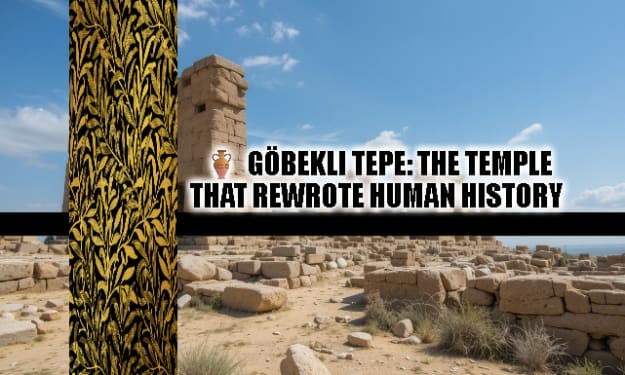
🏺 Göbekli Tepe: The Temple That Rewrote Human History
🏺 Göbekli Tepe: The Temple That Rewrote Human History I. Discovery and Location Göbekli Tepe, which translates from Turkish as “Potbelly Hill,” sits quietly in the dry, rolling hills of southeastern Turkey, near the modern city of Şanlıurfa. Though it had long appeared on maps as a minor mound — a common sight in the region — its true significance wasn’t understood until the mid-1990s. In fact, for decades, local farmers and researchers assumed the mound was a simple Bronze Age burial site or a ruined Byzantine outpost. But in 1994, the German archaeologist Klaus Schmidt, who had worked at nearby Neolithic sites, re-examined the mound and recognized that the flint tools and carved stones scattered across the surface pointed to something far older and more significant.
By History Seekerabout a year ago in History
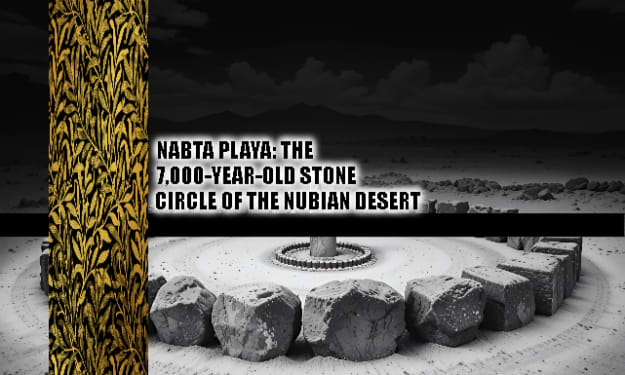
⛏️Nabta Playa: The 7,000-Year-Old Stone Circle of the Nubian Desert
⛏️Nabta Playa: The 7,000-Year-Old Stone Circle of the Nubian Desert Discovery and Location Nabta Playa lies hidden deep within the Nubian Desert, an arid and inhospitable region in southern Egypt, close to the border with Sudan. This vast desert landscape today is characterized by harsh winds, blazing sun, and seemingly endless sand dunes, but approximately 7,000 to 8,000 years ago, this area was dramatically different.
By History Seekerabout a year ago in History
The Wealthiest Empire in History: The Golden Heritage of the Mali Empire
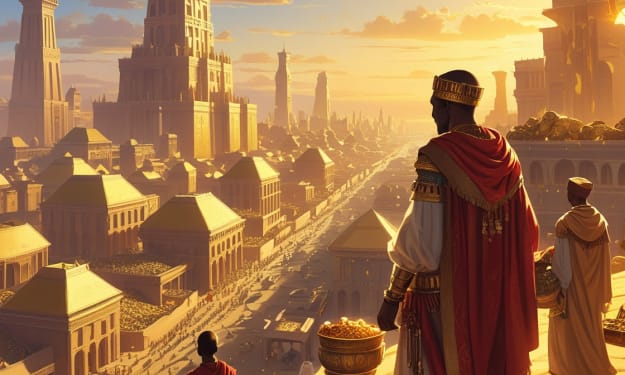
The Foundations of the Mali Empire The Mali Empire was established circa 1235 AD by Sundiata Keita, who unified several smaller kingdoms following the decline of the Ghana Empire. Under Sundiata’s guidance, Mali evolved into a centralized entity with a formidable military and effective administration. Nonetheless, it was under his successors—most notably Mansa Musa (r. 1312–1337)—that the empire attained its pinnacle. Encompassing portions of contemporary Mali, Senegal, Gambia, Guinea, Niger, Nigeria, and Mauritania, the Mali Empire governed extensive territories and essential trade routes, including segments of the Sahara Desert. This positioned it to dominate trans-Saharan commerce, especially in salt, ivory, enslaved individuals, and most crucially—gold. Mansa Musa: The Most Affluent Individual in History Mansa Musa, the tenth sovereign of Mali, is frequently recognized as the most affluent person in documented history. His net worth, adjusted for inflation and current assessments, is approximated to exceed $400 billion USD. This fortune was not solely attributed to dominion over land but also the empire’s gold mines, which contributed more than half of the world’s gold during his reign. In 1324, Mansa Musa embarked on a renowned pilgrimage to Mecca (Hajj), an occasion that highlighted the immense scale of his empire’s riches. He journeyed with a caravan composed of: 60,000 individuals, 12,000 enslaved individuals conveying gold bars, 80 camels transporting hundreds of pounds of gold dust each. According to historians, he distributed so much gold in Cairo, Mecca, and Medina that it diminished the value of the metal, resulting in economic inflation in the region for over a decade. This singular incident established Mali—and Musa—as significant players on the medieval global landscape. Sources of Wealth
By Say the truth about a year ago in History
Echoes of a Broken Lyre
In the expansive and colorful landscape of 19th-century Brazilian literature, few voices echo with the same haunting beauty and emotional depth as that of Luís Nicolau Fagundes Varela. A poet of contrasts—both mystical and melancholic, patriotic and reflective—Varela's short yet brilliant career represented a pivotal moment in Brazil’s Romantic movement. Frequently eclipsed by his contemporaries such as Castro Alves and Álvares de Azevedo, Varela remains a profoundly human figure, whose poetry was influenced as much by personal sorrow as by the idealistic zeal of his era.
By A Históriaabout a year ago in History
In the shadow of the Sultan
The beginning of the mystery Year 1566 On a gloomy night in Istanbul, the capital of the Ottoman Empire, a thick fog covers the city. Beneath the high walls of the palace a lonely boat floats in the black waters of the Bosphorus. Year 1566 On a gloomy night in Istanbul, the capital of the Ottoman Empire, a thick fog covers the city. Beneath the high walls of the palace a lonely boat floats in the black waters of the Bosphorus.
By MD. Tanvir Hossainabout a year ago in History
The Boy Who Drew the Stars
Liam was not like the other kids in his town. He didn’t play football or race his bike in the streets. Instead, he liked quiet places, soft light, and the sound of a pencil moving across paper. His favorite spot was his small desk by the window, where he would sit for hours under the warm yellow light of his old desk lamp.
By ihsandanishabout a year ago in History
The Creation of the World: A Bible Story of God’s Power and Love. AI-Generated.
In the very beginning, before time as we know it began, there was nothing but God—eternal, infinite, and full of love. The story of the Creation of the World, found in the Book of Genesis (1:1-2:3), is the foundation of the Bible, revealing how God brought everything into existence with His mighty word. This sacred account, believed to have occurred thousands of years ago, tells of the origins of the heavens, the earth, and all living things, showcasing God’s power, creativity, and purpose for humanity. Shared across generations, this story continues to inspire awe and gratitude for the world we live in today.
By David Andrewsabout a year ago in History