Books
The Anunnaki and the Dawn of Humanity: A Cosmic Origin Story
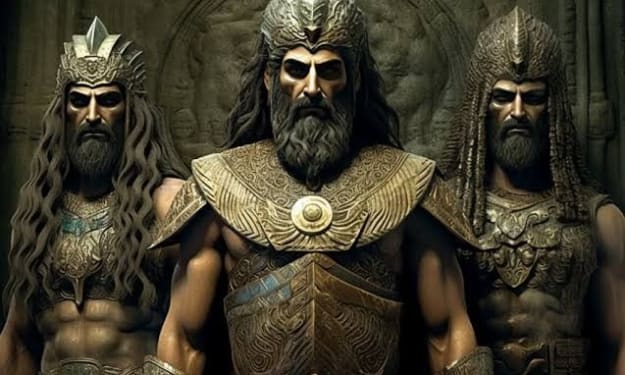
You know those moments when you stumble across something so wild it makes your head spin? Last night, I was flipping through The Epic of Humanity-yeah, that book you and Matt Lroy poured your souls into-and I couldn’t put it down. It’s like a cosmic puzzle that keeps you up past midnight, piecing together clues from ancient tablets and star systems. The way you broke down the Anunnaki’s story? Mind-blowing. It’s not just history; it’s a saga that feels like it’s whispering secrets from the edge of the universe. So, let’s dive into this, because the idea that gods, demigods, and humans all got tangled up in a 450,000-year-old drama? That’s the kind of thing that makes you wonder what else we’ve forgotten about our own story.
By KWAO LEARNER WINFREDabout a year ago in History
The Long History of the Middle Finger: From Ancient Insult to Global Gesture
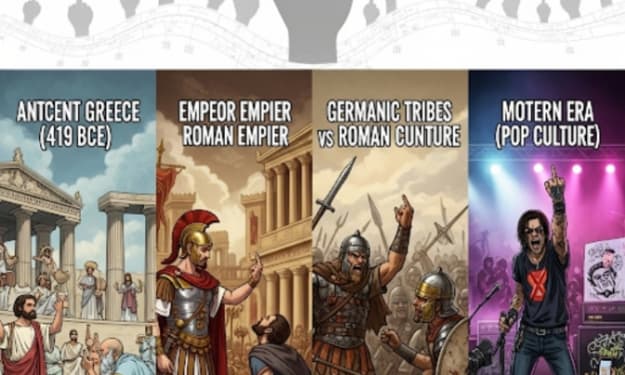
The gesture of raising the middle finger—often considered vulgar or offensive in many cultures—has a surprisingly rich and ancient history that spans thousands of years. It is more than just a modern-day sign of frustration; it has deep roots in classical antiquity, plays, empires, and even battlefield provocations. From the Roman Empire to present-day protests, the middle finger has consistently served as a powerful, rebellious tool of communication. Origins in Ancient Greece The earliest recorded use of the middle finger as an offensive gesture dates back to ancient Greece, around 419 BCE. In Aristophanes’ famous comedic play The Clouds, a student mocks Socrates by raising his middle finger. This early use was not just comedic but carried a strong insult, symbolizing something highly inappropriate. In Greek culture, the gesture was symbolic and often interpreted as a visual representation of male genitalia. The extended middle finger was meant to resemble the penis, while the curled fingers on either side represented the testicles. This crude symbolism clearly implied that the person on the receiving end of the gesture was being emasculated or humiliated. The Romans and “Digitus Impudicus” When the Romans inherited and expanded upon Greek culture, they also adopted this vulgar hand gesture. In Latin, the middle finger was referred to as the "digitus impudicus", meaning “the impudent finger” or “the shameless finger.” It was seen as a crude and disrespectful way to insult someone—particularly in public settings. One of the most infamous figures connected to the gesture was the Roman Emperor Caligula. Known for his tyranny and eccentricities, Caligula reportedly forced members of his court and even the general public to kiss his middle finger as a deliberate act of humiliation. For Caligula, it was a way of asserting dominance and mocking those who opposed or questioned him. Meanwhile, Emperor Augustus, a much more conservative ruler, once exiled an actor from Rome for making the obscene gesture toward an audience during a performance. This suggests that even in a culture where gladiator battles and public executions were common, the middle finger was considered inappropriate and offensive enough to warrant exile. Germanic Tribes and Battlefield Insults The legacy of the digitus impudicus didn’t end with the fall of the Roman Empire. During various military campaigns, Germanic tribes—known for their fierce resistance to Roman occupation—used the gesture as a form of mockery and provocation. Roman soldiers would often encounter these taunts in the heat of battle. To the Germanic warriors, raising the middle finger was more than just an insult; it was a challenge to the masculine honor of the Roman soldiers. It mocked their authority, their pride, and their manhood, hitting them where it hurt the most—on a symbolic level. Medieval Silence and Modern Revival Surprisingly, during the Middle Ages, historical records on the middle finger gesture grow scarce. While vulgar language and hand signs undoubtedly existed, public decency laws and the influence of Christianity likely suppressed such expressions. It wasn’t until the modern era, particularly the 20th century, that the gesture began to resurface prominently in art, media, and pop culture. In the early 20th century, the gesture appeared in photographs of rebellious youth, political protests, and even wartime messages. By the 1960s and 70s, the middle finger had become a symbol of counterculture—used by musicians, actors, and civil rights protestors as a form of resistance.
By Ikram Ullahabout a year ago in History
The Untold Story of Enoch and the Cosmic Cover-Up
Ooh man, this story is insane! Buckle up, because we’re diving into the wild, mind-bending world of the Book of Enoch-a text so explosive it got kicked out of the Bible. Why? Well, let’s just say it’s got some truths that might make your Sunday school teacher squirm. Picture this: a dusty, ancient scroll, tucked away in the shadows, whispering secrets about spaceships, forbidden knowledge, and beings from the stars. Yeah, it’s that kind of story.
By KWAO LEARNER WINFREDabout a year ago in History
The Story of Us: Understanding the Journey of Human History
Title: The Story of Us: Understanding the Journey of Human History Subtitle: A deep dive into the key eras, events, and ideas that shaped civilizations and continue to influence our world today.
By Rahmat Ullah Khanabout a year ago in History
The Tapestry of Time: A Comprehensive Look at Human History
Title: The Tapestry of Time: A Comprehensive Look at Human History Subtitle: From ancient civilizations to the modern world — tracing the major milestones, revolutions, and legacies that shaped humanity.
By Rahmat Ullah Khanabout a year ago in History
WHEN PEACE WAS A CRIME:
Bound by Chains, Freed by Conviction: The Twin Souls of Bacha Khan and Nelson Mandela In the blood-soaked pages of colonial history, few names shimmer with the unbroken dignity of Khan Abdul Ghaffar Khan and Nelson Mandela, two giants of resistance who lived oceans apart but suffered under the same sky of oppression. One emerged from the rugged valleys of the North-West Frontier, the other from the gold-laden mines of South Africa yet both walked the same agonizing path: a path carved by prison bars, forged by pain, and lit only by the flickering torch of justice.
By Awais Ahmadabout a year ago in History
The Main Reason Behind the Israel-Iran Conflict
The conflict between Israel and Iran is one of the most dangerous tensions in the Middle East. It is not just about religion or politics—it’s a mix of historical distrust, security concerns, nuclear weapons, and regional influence. To understand why Israel and Iran are enemies today, we must look at real events, official statements, and international reports that clearly explain the reasons.
By Engr. Mansoor Ahmadabout a year ago in History