Books
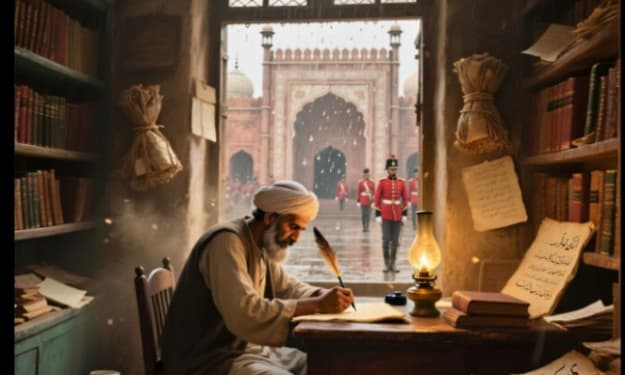
14 August 1947 — The Independence of Pakistan
14 August 1947 — The Independence of Pakistan Background: Seeds of Partition The road to 14 August 1947 was long, turbulent, and shaped by centuries of political, cultural, and economic forces. British colonial rule in the Indian subcontinent began in earnest after the Battle of Plassey in 1757, when the British East India Company established control over Bengal. By 1858, after the Indian Rebellion of 1857, the British Crown assumed direct authority over the territory, ushering in the period known as the British Raj.
By zakir ullah khanabout a year ago in History
JASMINE ON A GOLDEN SCAR A One-Day Bollywood Saga in Jaipur
JASMINE ON A GOLDEN SCAR A One-Day Bollywood Saga in Jaipur 05:17 a.m. 14 February – 12:03 a.m. 15 February CAST AND SECRET OBJECTS Radha Mehra 19 Kathak street-dancer hides a thumb-sized gold pellet stamped R.M. Avinash Avi Singh 22 mute pickpocket carries a wilted jasmine that re-scents when he is merciful Sub-Inspector Insiya Qureshi 25 undercover hunts Avi secretly hunts her lost sister wears a broken child anklet Seth Ratanlal Johari 55 jeweller-kingpin murdered Radha s father owns a cane with molten-gold handle City of Jaipur breathing watching singing back-up vocals PROLOGUE 00:00–05:16 a.m. Night refuses to die. Above the Pink City the moon is a silver rupee in a beggar s bowl. A red paper kite flaps like a fresh wound. Down in the arteries of Jaipur marigolds glow neon cardamom smoke braids with diesel a radio coughs up Lata Mangeshkar. Beneath the song beats a heart that has no voice. Avi stands on railway tracks pocket cradling a wilted jasmine. One mile east Radha ties ankle-bells in Hawa Mahal each bell echoing her father s last breath. Between her fingers glints a gold pellet no larger than a tear. Somewhere between them Insiya loads memories into her service pistol a broken anklet cutting her wrist like a forgotten promise. ACT I THE SCENT OF DAWN 05:17–08:00 Gem Market wakes to ankle-bells. Radha rehearses on a wooden cart jasmine petals falling with every spin. The gold pellet slips clink rolls to Avi s bare foot. Their eyes lock fear in hers recognition in his the royal mint mark his own father died forging. Insiya in a faded denim jacket sips chai while CCTV stills on her phone freeze on Avi s face. A monsoon gust flattens awnings petals swirl into a heart shape thunder answers like a tabla roll. Avi pockets the gold instead of stealing it the jasmine in his fist blooms for the first time in years. ACT II THE MID-DAY MASK 08:01–14:00 Albert Hall steps host a Valentine dance-off. Tourists circle Radha performs Krishna s Flute each stamp drawing a secret map on marble. Seth Johari watches from a black sedan tapping a gold-capped cane his reflection split by windshield crack half face half shadow. Avi weaves lifting wallets replacing every note with a jasmine bud penance in motion. Insiya closes in shoulders brush she smells jasmine remembers ten-year-old Zoya singing in a jasmine field before she vanished. Flashback inside Insiya s mind ten years ago Zoya chased by Johari s henchmen jasmine garland torn anklet snatched into mirrored corridors of City Palace. Back to present CCTV stills blur with memory. ACT III THE GOLDEN SNARE 14:01–18:00 Johari s underground workshop furnace glow molten gold like liquid sunrise. Radha lured under pretext of a dance performance locked in a glass cage above the conveyor inching toward heat. Avi and Insiya break through forgotten prison tunnels. Avi sketches on dusty floor heart plus jasmine equals Zoya Insiya nods tears cutting mascara tracks. Mirror maze showdown Johari confronts them wearing mirrored mask reflecting their guilt. Johari Gold remembers every scream Insiya So do I. She fires bullet ricochets shatters mirrors each shard shows Zoya s child-face. ACT IV FIRE-WALK AND FORGIVENESS 18:01–23:00 Glass floor finale Radha dances on cracking surface molten gold bubbles below. Avi crawls beneath sliding the gold pellet into a cooling mold evidence becomes lifeline. Johari dangles Zoya s anklet over furnace Insiya must choose duty or soul. Avi places last jasmine petal into Insiya s gun barrel she lowers the weapon. Radha stamps glass shatters gold splashes Avi redirects it into a heart-shaped mold. Cooled gold heart reveals initials Q Z Zoya Qureshi. Johari slips on molten droplets falls cane clattering like broken ghungroos. ACT V MIDNIGHT JASMINE 23:01–00:03 Rooftop of Hawa Mahal city lights flicker like diyas. Radha ties the gold heart around Insiya s wrist. Avi signs in the air For Zoya. Insiya hugs him jasmine scent returns blooming fresh in winter wind. Narrator steps out elderly Avi voice restored by age addresses the reader Forty Valentine dawns later the jasmine still blooms on this rooftop. I never told them the pellet was my father s last forgery some truths are best left to melt in the heart of the beholder. CIRCULAR ECHO First line repeated word for word In the city where every wall is a mirror I once hid inside a reflection. My name is Avinash Singh and the jasmine in my pocket still carries the night s moonlight. EPILOGUE 00:03 a.m. Camera pulls back Hawa Mahal windows glow like hundreds of golden eyes. A new mute boy steals a jasmine garland from the old man s stall. Cycle begins again. Fade-out sound of ankle-bells.
By youssef mohammedabout a year ago in History
Riding the Roads of Progress: Transportation in 1975
Riding the Roads of Progress: Transportation in 1975 How Innovation and Expansion Shaped a More Connected World In 1975, the world was on the move — quite literally. The transportation systems of the time reflected a period of innovation, expansion, and growing connectivity. As the global population grew and cities expanded, people relied more than ever on diverse modes of transportation to live, work, and explore. Whether by road, rail, air, or sea, 1975 marked a year when the wheels of progress turned with energy and optimism. Highways and the Rise of Personal Travel By 1975, the automobile had become a central part of daily life for millions, especially in countries like the United States, Canada, and parts of Europe. In the U.S., the Interstate Highway System — launched in the 1950s — was still being developed, with over 40,000 miles of roadway connecting cities, suburbs, and rural areas. This vast network transformed how people traveled, making long-distance trips faster and more accessible. Families could now pack into their station wagons and take road trips across the country, exploring national parks, visiting relatives, or just enjoying the freedom of the open road. Gasoline was relatively inexpensive, and car ownership was seen not just as a convenience but a symbol of independence. Cars of the 1970s had their own charm — big, bold, and full of character. While fuel efficiency wasn’t yet a major concern, manufacturers were starting to explore safer and more comfortable designs. Seat belts became more common, and the first signs of environmental awareness were beginning to shape vehicle design and regulation. Public Transit: A City’s Lifeline In urban centers, public transportation remained the backbone of daily commuting. Cities like New York, London, Paris, and Tokyo operated extensive subway systems that transported millions of passengers each day. These underground networks were efficient, reliable, and increasingly important as urban traffic congestion grew. 1975 also saw a renewed interest in improving and expanding bus services. In many cities, public buses were a lifeline for workers, students, and families. They offered affordable and frequent service, often linking neighborhoods to downtown areas, schools, and shopping districts. In some parts of Europe, governments began investing more in clean, efficient public transport, such as electric trams and light rail systems. These efforts reflected a growing commitment to reducing pollution and traffic while making cities more livable. Railways: The Golden Thread of Connectivity Though long-distance rail travel had seen some decline with the rise of the automobile and airplane, trains remained vital in 1975 — especially in Europe and Asia. Countries like France, Germany, and Japan led the way with advanced rail networks, setting new standards for speed and comfort. In 1975, Japan’s Shinkansen — or “bullet train” — was already famous for connecting Tokyo and Osaka in just a few hours. Introduced in 1964, the system had grown significantly by 1975 and symbolized the future of high-speed rail. Meanwhile, in the United States, Amtrak was still in its early years, having been formed in 1971 to consolidate and revive passenger rail service. While it faced challenges, Amtrak provided an important alternative for travelers seeking to avoid the hassle of driving or flying. Air Travel: The Jet Age Soars Commercial aviation had truly taken off by the mid-1970s. Jumbo jets like the Boeing 747 were changing the way people viewed the world, making international travel faster and more accessible to the middle class. Airports around the globe were expanding to accommodate growing passenger numbers. In 1975, air travel was no longer reserved for the elite — it was becoming an option for families going on vacation, businesspeople attending meetings across the country, and students studying abroad. Flying was still a special experience, often marked by formal dress, complimentary meals, and the excitement of seeing the world from above. Looking Forward: Seeds of Sustainability While 1975 was largely a celebration of growth and mobility, it was also a year when early concerns about the environment began to influence transportation policy. The oil crisis of the early 1970s had made governments and citizens more aware of fuel consumption. This sparked interest in alternative fuels, mass transit investment, and cleaner technologies — laying the foundation for the sustainability efforts we see today. Conclusion The transportation system in 1975 was a vibrant, dynamic reflection of a world on the move. From the roar of highway traffic to the quiet efficiency of electric trains, from the excitement of air travel to the daily rhythms of the morning bus commute, this era showcased human ingenuity in motion. While challenges existed — from pollution to congestion — the overall spirit was one of possibility and progress. Transportation in 1975 connected people not just to places, but to opportunities, ideas, and each other. And in doing so, it helped shape the modern world we live in today.
By Muhammad Saad about a year ago in History
The Unseen Stitches of Grace Wisher
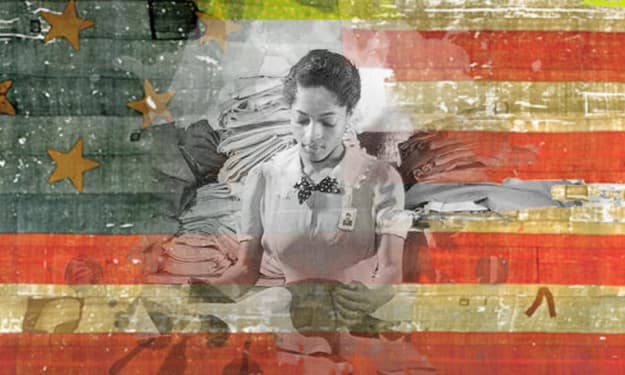
Imagine a young girl, barely 10, her small hands threading a needle under the flickering light of a Baltimore candle. She’s learning to sew, not just to mend clothes, but to craft something monumental-something that would one day wave over a fort and inspire a nation. That girl was Grace Wisher, and her story, tucked quietly into the folds of history, deserves to be unfurled.
By KWAO LEARNER WINFREDabout a year ago in History
Wired for Connection: The Rise of Communication in 1990
Wired for Connection: The Rise of Communication in 1990 How the 1990s Laid the Groundwork for Our Modern Digital World In the early months of 1990, homes and offices buzzed with a symphony of sounds—the ring of corded telephones, the whir of fax machines, the steady clicking of keyboards on boxy desktop computers. It was a time of rapid transformation, a period when communication technologies began evolving faster than ever before. For many, 1990 marked the beginning of a new, connected way of life. In a typical mid-sized office in New York City, Diane, a communications manager, began her day with a cup of coffee and a quick scan of her Rolodex. She had a stack of memos to send, a conference call to coordinate, and several urgent faxes to receive from overseas clients. Just a few years prior, these tasks would have taken days, even weeks. But now, thanks to the growing network of phone lines, satellites, and digital devices, information moved faster than ever. A Year of Transition The communication landscape of 1990 was a fascinating blend of the old and the new. Landline telephones were the cornerstone of both personal and professional contact. It was not uncommon to see people with long coiled cords stretched across their kitchens or office cubicles, deep in conversation. Answering machines with tiny cassette tapes allowed people to leave messages after the beep, offering a small taste of “on-demand” communication. Fax machines had also become a staple of business operations. Documents could be transmitted across continents in minutes, using nothing more than a phone line and a bit of patience. Though the whirring and screeching sounds they made could be grating, the convenience they offered was undeniable. But perhaps the most exciting innovation was the rise of early computer networks. Local area networks (LANs) allowed computers within offices to share files and printers, saving time and boosting productivity. And for those adventurous enough to explore beyond the office, dial-up modems offered a gateway to the nascent internet—a slow and often frustrating experience, but one filled with limitless potential. Global Reach, Local Impact 1990 also marked a turning point in global communication. Satellite technology had advanced to the point where international phone calls became more reliable and affordable. This opened up new opportunities for global collaboration. For example, Diane often worked with partners in Tokyo and London, coordinating projects through a mix of faxes, phone calls, and occasionally, telex—a still-used but fading communication method from previous decades. The world felt smaller. Businesses could expand their reach, families could stay in touch with relatives abroad, and news from across the globe arrived faster than ever. For many, this new speed and accessibility created a sense of optimism. The barriers of time and distance were starting to break down. Seeds of the Digital Age While smartphones and social media were still a distant dream, many of the foundational technologies of today were already taking shape in 1990. Email was slowly being adopted in universities and tech companies, though it was far from mainstream. Bulletin board systems (BBS) allowed users to post messages, download files, and chat in text-based forums—a precursor to modern online communities. Personal computers were becoming more common in homes, especially with the popularity of machines like the IBM PS/2 and the Apple Macintosh. Families used them for everything from word processing to playing simple games, but a growing number of users were also beginning to explore how computers could connect them to the outside world. One of the unsung heroes of this era was the modem—a boxy device that turned digital signals into sound so they could travel over phone lines. Though painfully slow by today’s standards, modems allowed people to connect to services like CompuServe, Prodigy, and America Online. Through these early platforms, users could send emails, join chat rooms, and even read news articles—laying the groundwork for the internet revolution to come. A Look Ahead Looking back, 1990 was not just a year of new tools and gadgets—it was a moment of cultural and technological shift. It was a time when people began to expect faster answers, clearer connections, and more immediate access to information. These expectations would go on to fuel the rapid advancements of the following decade, including the explosion of the internet, mobile phones, and digital media. For Diane and millions like her, 1990 wasn’t about tech for tech’s sake. It was about using communication to build relationships, share ideas, and connect the world in ways previously unimaginable. It was a year that proved something powerful: when people are connected, progress follows.
By Muhammad Saad about a year ago in History
Exploring the Diverse Landscape of Cooling Systems in Turkey . AI-Generated.
Introduction Turkey, straddling the crossroads of Europe and Asia, boasts a varied climate that ranges from the humid coastal regions of the Mediterranean and Black Sea to the arid plateaus of Central Anatolia and the continental extremes of Eastern Turkey. Summers can be scorching, with temperatures often exceeding 35°C (95°F) in cities like Istanbul, Antalya, and Izmir, driving a surging demand for effective cooling solutions. As urbanization accelerates and climate change intensifies heatwaves, the cooling sector has become a critical component of Turkey's infrastructure, economy, and daily life. The market for air conditioning تعمیر کولر گازی در مشهد and related systems is booming, projected to reach USD 3.35 billion by 2030, growing at a compound annual growth rate (CAGR) of 5.87% from 2025. This growth reflects not only technological advancements but also a blend of traditional methods rooted in Turkey's rich architectural heritage and modern innovations aimed at sustainability.
By handy maneshonabout a year ago in History