Books
The Boom and the Storm: A Miami Tale of 1920s USA
In the roaring 1920s, Miami was not yet the gleaming city of glass towers and neon lights that people imagine today. It was still young—barely a few decades since Julia Tuttle had first convinced Henry Flagler to extend his railroad south. The town had grown quickly, rising from swamps and mangroves into a patchwork of Mediterranean-style homes, palm-lined boulevards, and hotels that promised paradise to snow-weary northerners. By 1920, Miami was buzzing with ambition. Land was the new gold, and every block of soil, every corner of sand, was said to hold riches for those who dared to buy it. The city became the heart of what newspapers would call “The Florida Land Boom.” Among the dreamers was Samuel Whitaker, a young man from Ohio. Samuel had worked in his father’s hardware store, but he wanted more than the quiet life of selling nails and saws. He had read articles about Miami—where land prices doubled overnight and fortunes were made before breakfast. In 1922, he boarded a train south, carrying a leather suitcase, a pressed white hat, and his savings tucked in a money belt. Miami greeted him with heat and the smell of salt air. The streets were alive with chatter: salesmen waved glossy brochures, women in summer dresses strolled along Flagler Street, and motorcars rattled over coral-rock roads. Billboards promised “Tropical Eden! Buy Today, Sell Tomorrow!” Samuel fell in with a circle of hustlers, builders, and dreamers. One of them, a slick-talking man named Victor Roscoe, took him under his wing. “Listen, Sam,” Victor said one evening, leaning against a streetlamp on Biscayne Boulevard, cigar smoke curling around his head. “This city ain’t like the rest of America. Up north, you wait years for land to rise in value. Here? You buy Monday, you sell Friday, and you’re a rich man by Saturday night.” Samuel believed him. He bought a plot of land near the bay—scrubland with more mosquitoes than palms—and within a month, he had sold it for twice the price. His heart raced with the thrill of easy fortune. Miami nights glittered. Jazz drifted from hotel ballrooms, and prohibition-era speakeasies hummed behind shuttered doors. Wealthy northerners poured in, lured by advertising campaigns that painted Florida as “The Sunshine Frontier.” Some came to retire, others to speculate, but all came chasing the dream. Samuel spent evenings at the Royal Palm Hotel, where men in linen suits clinked glasses of bootleg whiskey and women in sequined dresses danced the Charleston. He watched yachts glide across Biscayne Bay under the moonlight and thought himself on the edge of an empire. By 1925, the boom reached fever pitch. Plots of land sold before buyers even saw them. Realtors traded deeds on sidewalks like poker chips. Even swampy tracts far from the city were sold with promises of future boulevards and grand hotels. Miami was no longer just a town; it was a vision of endless possibility. But beneath the glamour, cracks began to show. Supplies of building materials were strained; bricks and lumber ran short. Railroads became clogged with shipments of cement, cars, and food, unable to keep up with the flood of newcomers. Some investors bought land that turned out to be underwater during high tide. Samuel noticed it but told himself it was temporary. When he walked past the bay and saw cranes lifting steel beams against the sunrise, he believed Miami would outlast any troubles. Then, in the summer of 1926, the storm came. On September 18, 1926, a massive hurricane roared toward the city. Warnings were sparse, and many dismissed them, believing Miami’s luck would never run out. But as the winds howled and the sea rose, the dream city was torn apart. Samuel huddled in a boardinghouse near Flagler Street as the storm ripped roofs from houses and hurled palm trees like matchsticks. The Royal Palm Hotel’s grand windows shattered. Boats were tossed into streets. When dawn broke, Miami looked like a battlefield: buildings collapsed, rail lines twisted, bodies carried by floodwaters. The storm had killed hundreds and left thousands homeless. The boom’s fragile foundation was exposed. In the months that followed, investors fled. Land prices crashed. Those who had mortgaged their futures for quick riches found themselves penniless. Banks closed, construction halted, and the bright advertisements promising paradise disappeared. Victor Roscoe vanished overnight, leaving Samuel with unpaid debts and worthless deeds. But Samuel stayed. He took work repairing damaged homes and hauling lumber, earning just enough to survive. At night, he walked along the battered bayfront, listening to the hum of cicadas and thinking of what Miami had been—and what it might still become. By 1928, Miami was quieter. The jazz still played, but softer, less wild. The tourists returned in smaller numbers, and new laws sought to bring order to the reckless land trade. Samuel no longer dreamed of overnight riches. He had learned, painfully, that Miami’s story was not about quick fortune, but endurance. He saved enough to open a small café on Biscayne Boulevard, serving Cuban coffee, sandwiches, and slices of key lime pie. Locals came, workers rebuilding the city came, and even a few cautious tourists wandered in. One evening, an old man sat at Samuel’s counter and said, “This town will rise again, son. Mark my words. Storms come and go, but Miami—Miami is eternal.” Samuel nodded, watching the sun set beyond the bay. He no longer dreamed of fast money. Instead, he believed in the slow, steady heartbeat of the city. And indeed, Miami did rise again. The boom and the storm became just another chapter in its restless story, a reminder that the city’s spirit was not built on sand and speculation alone, but on resilience, hope, and the courage of those who stayed Years later, when Miami grew into a global city of skyscrapers, highways, and glittering nightlife, old-timers would still remember the 1920s—the wild land boom, the jazz-filled nights, the hurricane that humbled the dream. And they would tell stories of men like Samuel Whitaker, who came seeking fortune but stayed to build a life, proving that Miami was more than a playground of chance.
By Afriditipszoneabout a year ago in History
The Forgotten Bells of Old Los Angeles
In the early 1800s, long before Los Angeles became a vast city of freeways and skyscrapers, it was still a modest pueblo, a settlement of adobe houses, dusty streets, and wide fields stretching toward the distant mountains. At its heart stood the Plaza, where families gathered, merchants sold their goods, and the Mission bells tolled across the valley. Life in those days was simple but not without its struggles. The people of Los Angeles lived close to the land, raising cattle, planting orchards, and weaving their lives around the church and community festivals. Among them lived a young boy named Mateo, the son of a vaquero. He loved nothing more than listening to the old stories told by his grandmother about the founding of the pueblo in 1781, when just a few families came from faraway lands to make a new life here. One tale she told often was of the Mission bells—the great bronze bells brought from Mexico and hung in the towers of the nearby church. They were said to be blessed, ringing not only to mark time but also to protect the people. According to her, when danger approached, the bells would toll on their own, warning the pueblo. Most thought this was only a legend, but to Mateo, it was a truth worth believing. As years passed, Los Angeles began to grow. More travelers arrived—some from the East, some from across the seas. Traders brought goods by wagon, and stories spread of gold to the north. But with this growth came unease. Bandits roamed the hills, and disputes over land began to trouble the pueblo. One hot summer, word came that a band of raiders planned to strike the settlement at night. The townspeople were afraid, for they had little defense beyond a handful of guards. That evening, Mateo wandered near the Mission. The bells stood silent in the tower, dark against the orange glow of the setting sun. He whispered a prayer, remembering his grandmother’s words: “The bells will guard us.” At midnight, when the pueblo slept, the raiders crept down from the hills. But as they drew near, the silence was broken by a deep, thunderous sound. The Mission bells began to ring—loud and unyielding—though no one was in the tower to pull the ropes. The pealing echoed across the valley, waking every household. Men and women rushed to the Plaza, carrying torches and tools, ready to defend their homes. Startled by the sudden alarm, the raiders fled into the night, leaving the pueblo untouched. The next morning, the townspeople searched the tower, but they found no one there. The ropes were still tied, and the great bells swayed gently as if moved by unseen hands. Many fell to their knees, giving thanks. From that day forward, the story of the “Forgotten Bells” became part of Los Angeles lore. As time went on, the pueblo grew into a bustling town. Railroads came, streets filled with carriages, and new settlers from every corner of the world arrived. The old adobes gave way to larger buildings, and the Mission bells eventually cracked with age, taken down and stored away. Yet the memory of that night lived on in whispered tales. Mateo grew old and often sat by the Plaza, watching children play where he once had. When asked about the bells, he would smile and say, “They rang for us when we needed them most. And though the city may forget, their spirit still guards Los Angeles.” Today, when you walk through El Pueblo de Los Ángeles, the historic heart of the city, you can still hear echoes of that story. The streets may be filled with music, laughter, and the rumble of cars, but some say that if you stand quietly by the old church at midnight, you may hear a faint tolling in the distance—a reminder of the night the Mission bells saved the pueblo.
By Afriditipszoneabout a year ago in History
The Day Lisbon Fell: A Story That Changed the World
Picture this: it’s a crisp November morning in 1755, and Lisbon’s streets are buzzing. Dock workers haul crates of spices and gold, priests polish their sermons, and the city’s readying itself for All Saints’ Day, a big deal for its Catholic heart. The air’s thick with anticipation-festivities are about to kick off. But then, in a heartbeat, the ground growls. A rumble turns into a roar, and the world as Lisbon knows it crumbles. By sunset, tens of thousands are gone, and a once-magnificent city lies in ruins. This isn’t just a story of destruction, though-it’s the story of how one day shook humanity to its core, sparking a revolution in how we see the world. Curious yet?
By KWAO LEARNER WINFREDabout a year ago in History
The Mysteries of Faith: Unraveling Belief in an Age of Skepticism
I, Stefano D'Angelo, found myself absorbed by a Netflix documentary series, a compelling exploration that boldly challenged conventional narratives, presenting what some might label as heresy, while others might see as profound truth. It delved into the very fabric of belief, juxtaposing the raw power of faith – often said to move mountains – against archaeological findings and scientific scrutiny. The series, much like our modern world, asked: what truly is real, and what is merely perceived?
By Stefano D'angelloabout a year ago in History
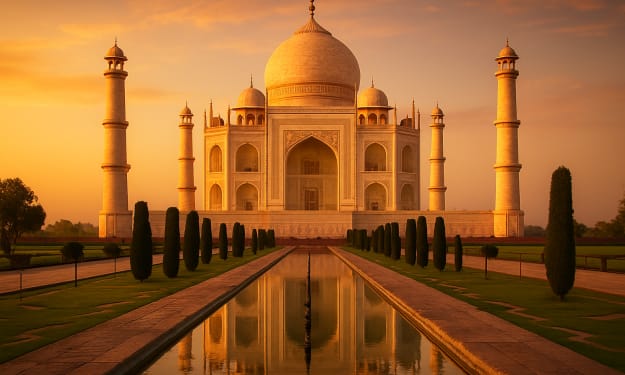
The Timeless Beauty of the Taj Mahal: A Monument of Love
Introduction The Taj Mahal, often called the Crown of Palaces, is one of the most breathtaking wonders of the world. Located in Agra, India, it has become a symbol of eternal love and devotion. Built in the 17th century by the Mughal Emperor Shah Jahan in memory of his beloved wife Mumtaz Mahal, this monument is more than just a masterpiece of architecture—it is a story carved in marble, echoing love, loss, and immortality.
By Waqas Ahmad about a year ago in History
Unveiled Secrets of the Deep: The Hughes Glomar Explorer's Hidden Mission
Imagine you’re a sailor in 1974, standing on the deck of a colossal ship, the Hughes Glomar Explorer, staring out at the endless Pacific Ocean. The world thinks you’re mining manganese nodules-those potato-sized lumps of metal supposedly littering the ocean floor. But you know the truth. You’re part of a covert CIA operation so audacious it feels like something out of a spy novel. The real mission? To snatch a sunken Soviet submarine from 16,500 feet below the surface, right under the noses of the Russians. This, my friends, is the wild, almost unbelievable story of Project Azorian. Ready to dive in?
By KWAO LEARNER WINFREDabout a year ago in History
The Old Story of Washington, D.C.
In the late 18th century, when America was still young, the leaders of the new nation faced a great question: where should the capital of the United States be? Rivalries between northern and southern states made the choice difficult. To settle the debate, President George Washington selected a site along the Potomac River in 1790. This land, carved from Maryland and Virginia, would become Washington, D.C. The city was not born from grand streets and marble buildings. At first, it was a swampy stretch of land with forests, farms, and muddy roads. Yet, from this humble ground, a capital of power and history began to rise. --- In 1791, French engineer Pierre Charles L’Enfant was chosen to design the city. He dreamed of wide avenues, grand public squares, and monumental buildings that would rival the great capitals of Europe. His design included the National Mall, the sweeping stretch of land between the Capitol and the Potomac, where monuments and museums would later stand. Though L’Enfant’s grand ideas caused quarrels and he was dismissed, his vision endured. The city slowly took shape around his plan, with the U.S. Capitol as its crown. --- Struggles of a Young City In its earliest days, Washington, D.C. was more a construction site than a city. Politicians and workers complained about the lack of paved streets, inns, and basic comforts. When President John Adams moved into the newly built White House in 1800, the mansion was unfinished, with walls damp from plaster and rooms cold in winter. His wife, Abigail Adams, used the great East Room to hang laundry because it was too empty to serve any other purpose. --- The Burning of Washington The War of 1812 brought one of the darkest chapters in Washington’s history. In August 1814, British troops marched into the city. They set fire to many government buildings, including the Capitol and the White House. Flames lit the night sky, and the young capital seemed doomed. But a sudden storm saved Washington. Torrential rain and strong winds helped put out the fires. Soon after, citizens and leaders returned, determined to rebuild. The burned walls of the Capitol and White House were restored, a sign that the capital—and the nation—would endure. --- Growth and Change Throughout the 19th century, Washington grew slowly. It was not yet the grand city that L’Enfant imagined. Muddy streets and wooden houses still lined much of the city. But as America expanded, so too did its capital. The Civil War transformed Washington. The city filled with soldiers, freed slaves, and government workers. Camps and hospitals spread across its fields. President Abraham Lincoln walked the streets often, a tall figure in his stovepipe hat. At Ford’s Theatre in 1865, tragedy struck when Lincoln was assassinated, an event that forever tied Washington to the nation’s sorrow. --- The City of Monuments By the late 19th and early 20th centuries, Washington began to take on its present form. The Washington Monument, completed in 1884, rose as a towering tribute to the nation’s first president. Later, the Lincoln Memorial and Jefferson Memorial were added, giving the city its solemn beauty. The National Mall became the symbolic heart of the capital, a place where history, memory, and ideals met. Over time, museums of the Smithsonian Institution grew along its edges, preserving the stories of the nation. --- Washington Through the Ages Through wars, protests, and celebrations, Washington, D.C. became more than just the seat of government. It became a stage for democracy. Civil rights marches, presidential inaugurations, and voices of protest filled its streets. From Martin Luther King Jr.’s “I Have a Dream” speech at the Lincoln Memorial to countless gatherings on the Mall, the city has stood as a witness to both the struggles and triumphs of America. --- Legacy of an Old Capital Today, Washington, D.C. is both a city of residents and a symbol for the world. Beneath its monuments and marble halls lies the story of a place born from compromise, rebuilt after destruction, and forever tied to the nation’s destiny. From the muddy roads of its earliest days to the shining avenues of today, the old story of Washington, D.C. reminds us that history is not just written in books—it is built in stone, lived in streets, and carried by the people who walk them.
By Afriditipszoneabout a year ago in History