Books
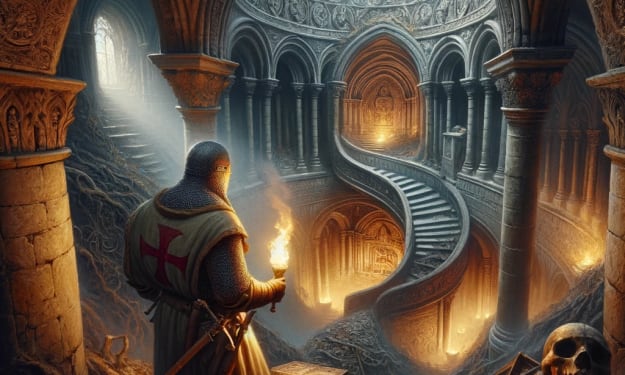
“The Templar's Chronograph” Chapter 1: The Discovery
In the year 1307, as the autumn leaves danced to the whispers of change in the outskirts of Paris, Sir Henri de Clairmont, a valiant Templar Knight known for his unwavering courage and loyalty, found himself on a path less traveled. The air was crisp, filled with the promise of the unknown, as Henri, weary from his travels, sought refuge in the ruins of what once was a grand church, now forgotten by time and man alike.
By Echoes of Infinity3 years ago in History
Neglected Faces: Ladies Carrying out Life Punishments in America"
In the vast landscape of America's criminal justice system, there exists a group of women who have been handed the most severe punishment - life imprisonment. Each of these women has a unique story, a narrative that led them to a fate marked by incarceration for the remainder of their lives. In this article, we will explore the lives and crimes of some particular women in America who are serving life sentences, shedding light on their experiences and the complexities of the justice system.
By Movie Foo13 years ago in History
Atoms of Power | A Journey Through Nuclear History
In the annals of human history, few inventions have left as profound a mark on the world as the atomic bomb. A symbol of destructive power and geopolitical tension, these weapons have only been detonated in a handful of instances, each leaving an indelible mark on the course of history. As of my last knowledge update in atomic bombs have been detonated in two countries: the United States and Japan. The atomic age dawned during the final stages of World War II when the United States, in a bid to hasten the end of the conflict, dropped atomic bombs on the Japanese cities of Hiroshima and Nagasaki. The year was 1945, and the world witnessed the devastating power of nuclear weapons for the first time. Hiroshima, a bustling city with historical significance, found itself thrust into the heart of destruction on August 6, 1945. The bomb, codenamed "Little Boy," was dropped by the American B-29 bomber named Enola Gay. The impact was cataclysmic, instantly wiping out large portions of the city and causing unprecedented human suffering. The mushroom cloud that rose over Hiroshima marked the beginning of a new era – the nuclear age. Three days later, on August 9, 1945, Nagasaki became the second city to experience the horror of nuclear devastation. The bomb, named "Fat Man," was a plutonium implosion-type device, and its detonation over Nagasaki further underscored the destructive capabilities of nuclear weapons. The toll on human life and the long-lasting impact on the survivors, known as hibakusha, was immeasurable. In the aftermath of these bombings, the world recoiled at the realization of the unimaginable power humans now possessed. The bombings of Hiroshima and Nagasaki led to Japan's surrender and the end of World War II, but it also initiated a new chapter in global history – the nuclear age. Since then, no other country has used atomic bombs in warfare. The devastating lessons of Hiroshima and Nagasaki prompted a collective understanding of the need to prevent the use of nuclear weapons. However, the specter of the Cold War and the arms race that ensued between the United States and the Soviet Union kept the world on edge for decades. The Limited Test Ban Treaty of 1963 marked a significant step towards curbing the testing of nuclear weapons in the atmosphere, outer space, and underwater. This international agreement aimed to mitigate the environmental and health risks associated with nuclear testing, demonstrating a growing awareness of the global consequences of such actions. As of my last update, subsequent agreements, such as the Treaty on the Non-Proliferation of Nuclear Weapons (NPT), have sought to prevent the further spread of nuclear weapons and promote peaceful uses of nuclear energy. The Comprehensive Nuclear-Test-Ban Treaty (CTBT) aimed to ban all nuclear explosions for both civilian and military purposes, though its universal adoption has been elusive. Despite these efforts, the possession and potential use of nuclear weapons remain contentious issues, with a handful of nations possessing these formidable arsenals. The importance of disarmament and non-proliferation efforts cannot be overstated in our quest for a more secure and peaceful world. While only two countries have experienced the devastating impact of atomic bombs in warfare, the global community continues to grapple with the complex challenges posed by nuclear weapons. The urgency of addressing disarmament, preventing proliferation, and fostering international cooperation has never been more apparent. In conclusion, the atomic bombings of Hiroshima and Nagasaki serve as enduring reminders of the immense power and responsibility associated with nuclear technology. The journey through nuclear history is fraught with challenges, but it is also marked by collective efforts to prevent the catastrophic use of atomic weapons. As we navigate the complexities of a world still shadowed by the nuclear threat, the pursuit of peace and global cooperation remains paramount. Writer ; Shahid mahmood Soomro
By Movie Foo13 years ago in History
**The Evolution of Education: A Journey Through the History of Schools**
The history of schools is a rich tapestry woven with threads of innovation, tradition, and societal change. From ancient civilizations to modern educational institutions, schools have played a pivotal role in shaping the minds and futures of generations. This journey through history will explore the key milestones, cultural shifts, and educational philosophies that have shaped the development of schools over the centuries. **Ancient Beginnings:** Education has been a fundamental aspect of human society since ancient times. In civilizations such as Mesopotamia, Egypt, and Greece, formal systems of education emerged to pass down knowledge, skills, and cultural values from one generation to the next. In ancient Greece, for example, schools known as "gymnasia" provided physical and intellectual training for young boys, emphasizing subjects like mathematics, literature, and philosophy. **Medieval Monasteries and Islamic Madrasas:** During the Middle Ages, education became closely intertwined with religion and scholarship. Monasteries in Europe served as centers of learning, where monks and scholars preserved and transmitted knowledge through manuscripts and oral instruction. Similarly, in the Islamic world, madrasas emerged as institutions for religious and secular education, teaching subjects such as theology, law, mathematics, and astronomy. **Renaissance Humanism and the Rise of Universities:** The Renaissance period in Europe witnessed a revival of interest in classical learning and humanist ideals. Renaissance humanists advocated for a broader, more secular education that emphasized the liberal arts, including literature, history, and the sciences. The rise of universities, beginning with institutions like the University of Bologna and the University of Paris in the 11th and 12th centuries, further democratized education and laid the groundwork for modern academic disciplines. **The Age of Enlightenment and Public Education:** The Enlightenment of the 17th and 18th centuries brought about significant changes in educational philosophy and practice. Thinkers like John Locke and Jean-Jacques Rousseau championed the idea of education as a means of fostering individuality, critical thinking, and social progress. The establishment of public schools and compulsory education laws in countries like Prussia, Scotland, and the United States reflected a growing recognition of education as a public good and a tool for societal advancement. **Industrialization and Mass Education:** The advent of the Industrial Revolution in the 18th and 19th centuries transformed the landscape of education. As urbanization and industrialization accelerated, there was an increasing demand for skilled workers and literate citizens. Mass education systems, modeled after factory production methods, emerged to meet this demand, with standardized curricula, age-based grade levels, and compulsory attendance laws becoming the norm in many countries. **Progressive Education and Educational Reform:** In the early 20th century, the progressive education movement challenged traditional pedagogical methods and advocated for a more child-centered, experiential approach to learning. Educators like John Dewey emphasized hands-on learning, critical thinking, and social cooperation as essential components of a modern education. Progressive reforms also sought to address issues of equity and access, advocating for the inclusion of marginalized groups and the elimination of discriminatory practices in schools. **The Digital Age and Educational Technology:** The late 20th and early 21st centuries have witnessed a proliferation of educational technology and online learning platforms. The advent of computers, the internet, and digital media has revolutionized the way students learn and teachers instruct. Distance learning, virtual classrooms, and interactive educational software have expanded access to education and personalized learning experiences for learners of all ages. **Challenges and Opportunities in 21st-Century Education:** Despite the progress made in education over the centuries, many challenges remain in ensuring quality, equitable education for all. Issues such as inadequate funding, unequal access to resources, and disparities in educational outcomes persist in many parts of the world. Additionally, rapid technological advancements and societal changes present both opportunities and challenges for educators and policymakers as they navigate the complexities of preparing students for an uncertain future. **Conclusion:** The history of schools is a testament to the enduring human quest for knowledge, enlightenment, and social progress. From ancient civilizations to the digital age, schools have served as crucibles of learning, innovation, and societal transformation. As we continue to navigate the complexities of education in the 21st century, it is essential to draw inspiration from the past while embracing the opportunities and challenges of the future in shaping the schools of tomorrow.
By J.Balakrishnan3 years ago in History
The most Evil Kid In the world
In the annals of modern history, there exists a haunting tale of a 10-year-old child who became one of the youngest convicted murderers. This story takes us into the unsettling world where childhoods are marred by unimaginable acts, where the concerns of homework and chores are overshadowed by something far more sinister. Within this narrative, we delve into the life of Ashley Martinson, who, on the day following her 17th birthday, committed a shocking crime that forever altered the course of her existence.
By Ibrahim Dauda3 years ago in History
Life Of Lionel Messi
Lionel Messi, born on June 24, 1987, in Rosario, Argentina, is widely regarded as one of the greatest football players of all time. His remarkable journey from a young boy with a passion for the game to a global football icon is nothing short of extraordinary.
By Lincoln VR3 years ago in History
Mohammad ( pbuh) -most influential of all time- London was Shocked
In 1978, Michael H. Hart crafted a remarkable literary work that captivated the minds of readers worldwide. Titled "The 100: A Ranking of the Most Influential Persons in History," this masterpiece became an instant sensation, enchanting over half a million souls and transcending linguistic boundaries with translations in 15 different tongues. Within its pages, Hart meticulously painted portraits of humanity's most illustrious figures, chronicling their extraordinary journeys, contributions, and legacies that reshaped the tapestry of our shared existence.
By Ibrahim Dauda3 years ago in History