Books
Story Of Mirza Sahiba
The tragic story of Mirza Sahiba: A love story bound by fate** In the vast web of Punjabi folklore, few stories have as deep a resonance as the tragic story of Mirza Sahiba. Steeped in Punjab's rich cultural heritage, this age-old love story continues to captivate hearts with its themes of forbidden love, social norms and the inexorable hand of fate. **The beginning of love:** The story begins in the rural hinterland of Punjab. There, his two families, the Karals and the Saids, lived in neighboring villages. Mirza was a brave and courageous warrior of the Qaral clan, known for her courage and her skill. Sahiba, on the other hand, was the epitome of beauty and grace, and she belonged to a noble Syed family. **Fateful encounter:** A fateful encounter crosses Mirza and Sahiba's paths during a village festival. Mirza was immediately captivated by Sahiba's ethereal beauty and she was hit by Cupid's arrow, but Sahiba was also attracted to this brave warrior. Though they belonged to rival clans, love blossomed between them, unaware of the enmity that smoldered between their families. **Secret Union:** Mirza and Sahiba knew that their love was forbidden, so they secretly pledged their love to each other. They secretly exchanged vows, and their hearts were bound together by a bond stronger than any social restriction. However, their happiness did not last long, and news of their forbidden romance soon reached Sahiba's brothers, who vehemently opposed the marriage. **Flight of Love:** Fearing for their lives, Mirza and Sahiba fled under cover of night and took refuge in the wilderness. Despite the dangers lurking in the shadows, her love inspires her to rebel against society's norms and follow her heart. They embark on a dangerous journey pursued by Sahiba's vengeful brothers, determined to avenge their family's honor. **betrayal:** As Mirza and Sahiba take refuge in the wilderness, Sahiba's resolve is shaken by the weight of her family loyalty. In a moment of weakness, she betrays Mirza's trust by revealing her location to her brothers, hoping to assuage their anger and restore peace. But little did she know that her actions would determine her tragic fate. **Tragic ending:** In a tragic twist of fate, Sahiba's brothers attacked their lovers in anger. In a cruel act of betrayal, they attacked Mirza while he was sleeping, leaving him vulnerable to their attacks. Despite her valiant efforts to protect herself, Mirza succumbed to her wounds and her life was cut short by the betrayal of those she once called her family. **Final farewell:** When Ms. Sahiba learned of her loved one's tragic fate, she was overcome with grief and remorse. Desperate to reunite her with Mirza, she plunged her dagger into her own heart, and rather than endure a life without him, she chose to die with him. Thus Mirza and Sahiba were as united in death as they were in life, and their love transcended the human realm and etched their names in the eternal record. **Legacy of Love:** Mirza Sahiba's tragic story has been immortalized in poetry, music and folklore for centuries. This is a poignant reminder of the power of love to defy all odds, even in the face of insurmountable obstacles. Though their lives were cut short by the cruel hands of fate, Mirza and Sahiba's love continues to inspire generations, a testament to the enduring power of true love in a world full of adversity. . Ultimately, Mirza Sahiba's story is a timeless testament to the unwavering strength of love, reminding us that even in the darkest of times, love has the power to transcend boundaries and conquer all. reminds me.
By Sophia Love3 years ago in History
The UNTOLD story of KUNTA KINTE ( a gambian slave worrior kunta kinte roots )
In the annals of history, some stories echo louder than others, their resonance felt across continents and generations. Yet, amidst the cacophony of tales that have been told and retold, there exists a narrative waiting to be unearthed a story obscured by the sands of time, obscured by the shadows of forgotten voices. This is the untold story of Kunta Kinte a tale of resilience, courage, and the indomitable human spirit.
By African Wordsmith3 years ago in History
He Boy From Block 66
Introduction: Literature has a unique ability to transport readers to worlds unknown, presenting narratives that resonate with the human experience. "The Boy From Block 66," a captivating literary work, weaves a tale that transcends boundaries, inviting readers to embark on a poignant journey that delves into the complexities of life, identity, and resilience. In this article, we will explore the multifaceted dimensions of this intriguing book, offering a glimpse into the narrative that has captured the hearts and minds of readers worldwide.
By Nataly Abreu3 years ago in History
From Rags to Riches| A Chronological Journey of the World's Wealthiest Individuals
Rags to Riches: An Illustrated Account of the World's Richest People" Introduction Throughout history, there have been remarkable individuals who defied the odds, rising from poverty to become some of the wealthiest people in the world. Their journeys are inspiring tales of determination, resilience, and entrepreneurial spirit. In this chronological exploration, we will delve into the lives of those who transformed their humble beginnings into immense fortunes, shaping the course of history and leaving an indelible mark on the world.
By Movie Foo13 years ago in History
Unveiling the Mysteries of Bian Lian
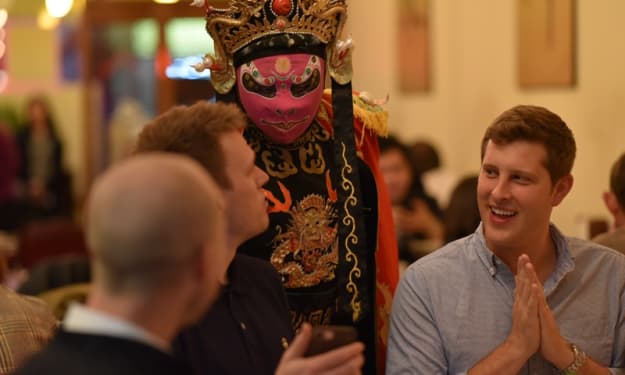
Step into the vibrant world of Sichuan opera, and you'll encounter a mesmerizing performance art known as Bian Lian, or "Face-Changing." Originating from ancient Chinese tradition, Bian Lian is a captivating display of skill and theatricality, where performers don brightly colored costumes and swiftly transform their masks to depict different characters with the flick of a fan or a wave of the hand. Sichuan opera, a beloved form of entertainment in regions like eastern and central Sichuan, Chongqing, Guizhou, and Yunnan, encompasses a rich tapestry of music, drama, and acrobatics. At its heart lies Bian Lian, a cherished aspect of this cultural treasure. The masks worn by performers are not mere props but treasures crafted with care by generations of opera artists. These masks portray well-known characters from the opera and hold the key to the mesmerizing art of face-changing. Traditionally, the secrets of Bian Lian were closely guarded within families, with only males permitted to learn the art. The rationale was rooted in the fear that if women married out of the family, the secrets might be divulged to other clans. However, in a departure from tradition, remarkable performers like Candy Chong and Du Li Min have defied gender norms, showcasing their mastery of Bian Lian to audiences around the world. Yet, with the passage of time, the once closely held secrets of Bian Lian have found their way beyond China's borders. Wang Daozheng, a seasoned Sichuan opera performer, bemoans the inadvertent leak of these ancient techniques during a troupe's visit to Japan in 1986. Concerns arise about the quality of training received by non-Chinese performers in countries like Japan, Singapore, and South Korea, raising questions about the preservation of this cherished art form. The allure of Bian Lian extends far beyond China's shores, captivating international audiences through various mediums. Renowned figures like Hong Kong pop star Andy Lau sought to unravel the mysteries of Bian Lian, with reports of substantial sums offered to masters for tutelage. Lau's journey into the world of face-changing, however, highlights the complexity of mastering this ancient art. In recent years, Bian Lian has made sporadic appearances on international platforms, offering glimpses into its enigmatic world. From television specials to talent shows, Bian Lian has left audiences spellbound with its rapid transformations and theatrical flair. Performers like Juliana Chen and Michael Stroud, known as The Magique Bazaar, have showcased the magic of Bian Lian on global stages, introducing the art to new audiences. Yet, amidst the intrigue and spectacle, the cultural nuances of Sichuan opera and Bian Lian remain largely unknown to many outside of China. Efforts are underway to bridge this cultural divide, enhancing the entertainment value for Western audiences unfamiliar with the context and significance of each mask's transformation. Enter the realm of blowing dust, where actors obscure their faces with black dust, adding an air of mystery to their performance. Witness the manipulation of beards, with colors shifting from black to grey to white, conveying a range of emotions from anger to excitement. Experience the dramatic unveiling of hidden masks atop performers' heads, each color symbolizing a different emotion - happiness, hate, anger, or sadness. And marvel at the art of face-dragging, as actors deftly alter their appearance with concealed greasepaint, adding depth and dimension to their characters. In the tapestry of Chinese opera, Bian Lian stands as a testament to the ingenuity and artistry of its performers. Through its rapid transformations and intricate techniques, Bian Lian transports audiences to a realm where masks hold the power to transcend identity and evoke a myriad of emotions. As this ancient tradition continues to captivate hearts and minds around the world, the legacy of Bian Lian endures, a timeless symbol of China's rich cultural heritage.
By Avhishek Agarwal3 years ago in History
The Mesmerizing World of Acrobatics
Acrobatics, a mesmerizing blend of balance, agility, and coordination, has enchanted audiences for centuries, transcending cultural boundaries and time periods. Derived from the Ancient Greek word ἀκροβατέω (akrobatéō), meaning 'walk on tiptoe, strut,' this captivating art form has found its place in a myriad of performance arts, sporting events, and martial traditions. From ancient civilizations showcasing their prowess to modern-day circuses and dance performances, acrobatics continues to dazzle with its daring feats and graceful movements. In this exploration of the world of acrobatics, we delve into its rich history, cultural significance, and the breathtaking displays that continue to captivate audiences worldwide.
By Avhishek Agarwal3 years ago in History
Ridiculous Wars In History
During the course of human history, civilizations have frequently clashed and engaged in warfare due to territorial disputes, political ideologies, and religious beliefs. On certain occasions, these conflicts encompassed all three factors simultaneously. However, there have also been instances where conflicts arose from absurd reasons that could have been resolved without resorting to armed conflict and the loss of countless lives. Therefore, in this compilation, we will explore five of history's astonishingly ludicrous wars that were fought.
By TONE TALKS3 years ago in History