Books
Best Digital Marketing Services in the USA
In today’s fast-paced, digitally-driven world, businesses need a solid online presence to remain competitive. Digital marketing plays a pivotal role in creating and expanding this presence, and as the demand for expert digital marketing services continues to rise, finding the best agencies in the USA has become more important than ever. From boosting brand visibility to increasing sales, the right digital marketing strategies can help companies across industries thrive in the online world.
By Amelia kerr2 years ago in History
The Enduring Value of Real Scientists
The Enduring Value of Real Scientists Science has always been the cornerstone of human progress, unraveling the mysteries of the universe and addressing real-world challenges. True scientists dedicate their lives to observation, experimentation, and discovery, contributing not only to human understanding but also to societal advancement. This article delves into the values that real scientists embody, the principles they uphold, and their enduring impact on the world.
By Mahalakshmi2 years ago in History
Echoes of Romance: A Roman Love Scene from Pompeii
The art of Pompeii continues to captivate modern audiences, providing a vivid glimpse into the lives, loves, and leisure of ancient Romans. Among the many treasures preserved by the catastrophic eruption of Mount Vesuvius in 79 CE is a stunning fresco that has been interpreted as a tender scene of love. Now housed in the British Museum, this panel depicts a woman playing a kithara, a type of lyre, with her lover seated beside her, gazing at her with adoration. Once believed to depict a music lesson, this artwork offers a timeless narrative of romance, artistry, and daily life in Pompeii. The Context of Pompeii Pompeii, a vibrant Roman city, was abruptly buried under volcanic ash in 79 CE, preserving an unparalleled record of Roman life. From grand villas adorned with intricate frescoes to humble homes with graffiti-covered walls, Pompeii’s remains offer insights into the art, culture, and emotions of its inhabitants. The fresco of the woman and her lover comes from a house in Pompeii, where it adorned the interior walls, likely serving as a decorative element that reflected the owner’s taste and social status. The Roman period, particularly the 1st century CE, was a time of flourishing art and culture. Scenes like this were popular in Roman domestic decoration, not only for their aesthetic appeal but also for their ability to convey themes of love, music, and leisure—an essential part of Roman elite identity. Depicting Love and Music This particular fresco is a masterpiece of storytelling. The central figure is a woman playing a kithara, a sophisticated stringed instrument associated with education, refinement, and artistic expression. Her posture and the way her fingers delicately touch the strings suggest a moment of musical performance, one that is private and intimate. Seated beside her is a man, presumably her lover, who gazes at her with a mixture of admiration and affection. His posture is relaxed yet attentive, highlighting the personal connection between the two. The interaction between the figures transcends words, capturing a moment of shared intimacy that resonates even today. The kithara itself is significant. In Roman culture, music was often associated with education and elite leisure. Women who played instruments, particularly in private settings, were seen as cultured and sophisticated. The inclusion of this instrument in the fresco suggests not only the woman’s artistic talent but also her social standing. Artistic Style and Technique The fresco demonstrates the skill and craftsmanship of Roman painters. Fresco painting involved applying pigment onto wet plaster, a technique that required precision and speed. The vibrant colors, delicate detailing, and realistic expressions are characteristic of Roman art during this period. The artist’s use of light and shadow adds depth to the scene, while the subtle details, such as the folds in the woman’s garments and the texture of the kithara, bring the image to life. The intimate setting, with the figures positioned closely together, enhances the emotional resonance of the piece. Symbolism and Interpretation While once thought to depict a music lesson, the fresco is now widely interpreted as a scene of romantic love. The man’s adoring gaze and the private setting suggest a deeper connection between the two figures. Music, in this context, serves as both a literal and metaphorical language of love—a medium through which emotions are expressed and relationships are deepened. In Roman art, music and love were often intertwined. Scenes of lovers enjoying music were common in domestic decoration, symbolizing harmony, passion, and the joys of life. The fresco’s theme reflects the broader Roman appreciation for leisure, beauty, and the emotional aspects of human experience. Preservation and Legacy The eruption of Mount Vesuvius, while devastating, ensured the preservation of Pompeii’s art for future generations. This fresco, like many others, provides a rare opportunity to connect with the personal lives of ancient Romans. It reminds us that despite the passage of centuries, themes like love, music, and human connection remain universal. Today, the fresco is displayed in the British Museum, where it continues to inspire and intrigue visitors. Its journey from a Roman home to a modern museum underscores the enduring appeal of Pompeii’s art and the stories it tells. Reflections on Ancient and Modern Love The scene depicted in this fresco resonates with modern viewers, offering a timeless narrative of romance and intimacy. In an age of technology and rapid communication, the simplicity of this moment—a woman playing music for her lover—reminds us of the universal power of shared experiences and personal connection. The fresco also invites us to reflect on the role of art in expressing and preserving human emotions. Whether through music, painting, or storytelling, the desire to capture love and beauty is a thread that connects us to the past. Conclusion The Roman fresco of the woman with her kithara and her adoring lover is more than just a decorative panel; it is a window into the hearts and minds of ancient Romans. Preserved by the ash of Vesuvius and brought to light centuries later, it bridges the gap between antiquity and modernity, reminding us that the human experience—love, art, and connection—is timeless. As we admire this piece in the British Museum, we are reminded not only of the richness of Roman culture but also of the shared emotions that define us all. It is a testament to the enduring legacy of Pompeii and the stories it continues to tell.
By Deji Akomolafe2 years ago in History
The Last Letter from Avalon
On the edge of the world, where the sea thundered against rough bluffs and the breeze murmured failed to remember stories, there stood a beacon that had not seen a boat in many years. The town beneath, known as Avalon, had for some time been deserted, its kin cleared away by time, war, and murmurs of the otherworldly. The beacon guardian, a single man named Elias, had been its just tenant as far back as anybody could recollect. His days were spent peacefully, saving the fire alive like trusting that somebody will return.
By money tactics2 years ago in History
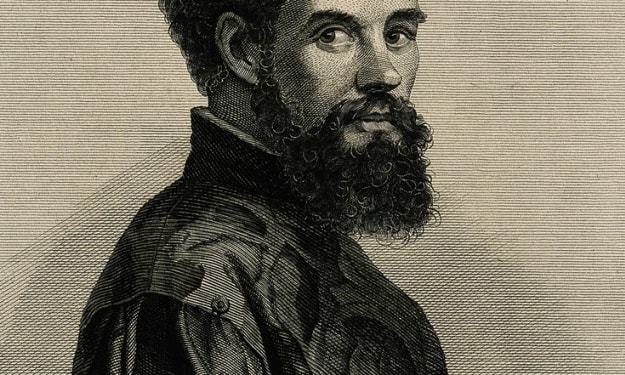
William Harvey: The Pioneer of Blood Circulation
William Harvey: The Pioneer of Blood Circulation William Harvey (1578–1657) was an English physician who revolutionized the understanding of the human body by discovering the circulation of blood. His groundbreaking work, *De Motu Cordis* (*On the Motion of the Heart and Blood*), fundamentally transformed medicine and established the modern study of physiology. This article delves into the life, discoveries, and legacy of William Harvey, segmented into key subsections.
By Mahalakshmi2 years ago in History
"The Hidden Lifeline: Unveiling the Advantages of Libya’s Underground Water Resources"
The Advantages of Libya’s Underground Baptize Resources Libya, one of the best barren nations in the world, owes abundant of its adaptation to its underground baptize resources. In a country area condensate is deficient and apparent baptize about non-existent, the all-inclusive aquifers hidden below the arid bank accommodate a basal lifeline. These underground reservoirs, primarily the Nubian Sandstone Aquifer System and others like the Kufra and Murzuk Basins, accept enabled Libya to advance admitting its acrid environment. This commodity explores the advantages of Libya’s underground baptize assets and their role in the country’s economic, social, and ecology development. 1. A Basal Antecedent of Freshwater
By Say the truth 2 years ago in History
Libya’s Underground Baptize Resources: A Hidden Treasure Below the Desert
Libya, a country accepted for its all-inclusive stretches of barren deserts, has continued faced challenges accompanying to baptize scarcity. With below than 2% of its acreage actuality abundant and an anniversary condensate of alone 20 to 50 millimeters in best areas, Libya’s annex on underground baptize assets is analytical for its survival.
By Say the truth 2 years ago in History
John Logie Baird: The Pioneer of Television
John Logie Baird: The Pioneer of Television John Logie Baird, a Scottish inventor, is best known for developing the world’s first working television system. His innovations laid the groundwork for the television technology that transformed communication and entertainment globally. This article explores his early life, groundbreaking inventions, challenges, and enduring legacy.
By Mahalakshmi2 years ago in History
The First Automotive Accident in the World: Historical Incident in Transport Modes
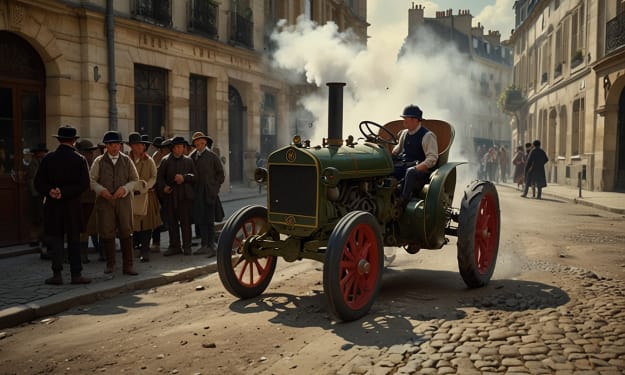
The first known car accident occurred in 1771. Modern road safety and automobile engineering as we know it today has only one particular day to its past. And that was the steam-powered tractor designed by Nicolas-Joseph Cugnot, the first automobile, crashing on the streets of Paris. It is rather difficult to imagine an automobile accident in a time when cars such as we understand them did not exist. Actually, the steam contraption, invented by Cugnot was one of the crucial moments in modern history. And the accident, though minor, became an historical event.
By Abhay kumar chauhan2 years ago in History
Julius Caesar Uncovered: The Rise, Reforms, and Tragic Fall of Rome's Greatest Leader. AI-Generated.
Julius Caesar – a name that echoes through the annals of history, conjuring images of unmatched power, unbridled ambition, and a dramatic demise. But who was the man behind the myth? This article delves into the untold story of one of Rome’s greatest leaders, a figure whose life reshaped the ancient world and whose legacy endures to this day.
By menaland yakon2 years ago in History
The After life Preparation of Egyptian King
Preparation for the Afterlife The adventure to the afterlife was apparent as abounding with challenges and tests, and alone those who were abundantly able would succeed. For Pharaohs, this alertness was decidedly elaborate, involving both concrete and airy elements. The concrete anatomy had to be preserved, arch to the convenance of mummification. The age-old Egyptians believed that the canning of the anatomy was capital for the soul's adaptation in the afterlife. Without an complete body, the king's ka (vital essence) would be clumsy to acknowledgment to it, authoritative abiding activity impossible.
By Say the truth 2 years ago in History