Books
Georgia vs. Georgia Tech: A Historic Rivalry of Passion, Pride, and Prestige
In the world of college football, few rivalries are as intense, storied, and deeply rooted in tradition as the one between the University of Georgia Bulldogs and the Georgia Institute of Technology Yellow Jackets. Commonly known as “Clean, Old-Fashioned Hate,” this rivalry transcends the game itself, representing a clash of cultures, academic prestige, and athletic prowess that has captured the hearts of generations.
By Sanjay Sanjay2 years ago in History
Thomas Alva Edison: The Wizard of Menlo Park
Thomas Alva Edison: The Wizard of Menlo Park Introduction Thomas Alva Edison, born on February 11, 1847, in Milan, Ohio, remains one of the most prolific inventors in history. Known as the "Wizard of Menlo Park," Edison is credited with transforming modern life through his groundbreaking innovations, which laid the foundation for contemporary technology. His inventions, including the phonograph, electric light bulb, and motion picture camera, continue to impact our daily lives. This article explores Edison’s life, achievements, and legacy.
By Mahalakshmi2 years ago in History
50 Powerful Lines From The Book ‘The Subtle Art Of Not Giving A F*ck’
Introduction Why is everyone talking about The Subtle Art of Not Giving a Fck*? Mark Manson's no-nonsense take on life offers a refreshing perspective that challenges conventional self-help advice. Instead of chasing positivity at all costs, Manson argues for embracing life's struggles, choosing what to care about, and finding meaning in hardship.
By Muhammad Nadeem2 years ago in History
On Writing: Stephen King's Writing Tips To Remember
Introduction Stephen King is a household name in the literary world, with a career spanning decades and countless bestsellers. From Carrie to The Shining, King has crafted stories that captivate and terrify readers. But beyond his gripping tales, he's also an incredible mentor to aspiring writers. His book On Writing: A Memoir of the Craft is packed with insights and tips that can transform how you approach storytelling.
By Muhammad Nadeem2 years ago in History
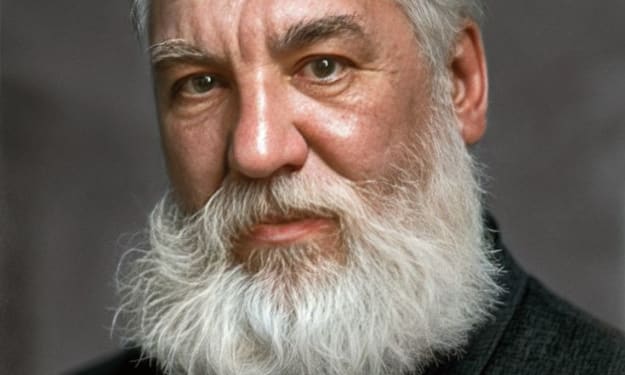
Alexander Graham Bell: The Life and Legacy of a Visionary Inventor
Alexander Graham Bell: The Life and Legacy of a Visionary Inventor Early Life and Education Alexander Graham Bell was born on March 3, 1847, in Edinburgh, Scotland, into a family deeply invested in the study of communication and elocution. His father, Alexander Melville Bell, was a renowned speech therapist and the inventor of "Visible Speech," a system to teach the deaf how to speak. Bell's mother, Eliza Grace Symonds, was deaf, which profoundly influenced his interest in helping the hearing-impaired.
By Mahalakshmi2 years ago in History
Explore India's Rich History and Traditions | Sanskriti Online
Cultural Understanding through Hindi: Unlocking India’s Heritage Learning a language is not simply about grammar and vocabulary; it is connecting with the culture, the past of those who speak that language, and the important people who did. Learning a language will never feel like a chore.
By Sanskriti Online2 years ago in History
11 Banned Books Through Time
Start writ There are plenty of reasons why a book might be banned. It may subvert a popular belief of a dominating culture, shock an audience with grotesque, sexual, or obscene language, or be thought to promote strife within a society. Whatever the reason, once a book is banned, a sort of aura of mystique is created around it that, more times than not, draws readers who want to decide for themselves whether it is in fact unfit for publication. So, without further ado, browse this list of books that have been banned through time and around the world to decide for yourself whether they warrant the controversy. Alice’s Adventures in Wonderland (1865) by Lewis Carroll Lewis Carroll, (Charles Lutwidge Dogson) at 25. Author of Alice Wonderland, 1857. Lewis CarrollAuthor Lewis Carroll (Charles Lutwidge Dogson) at age 25. © Everett Historical/Shutterstock.com As it has been hailed by scholars as the epitome of the literary nonsense genre and by children for its vivid imagery and comical whimsy, some may be surprised to find Alice’s Adventures in Wonderland by Lewis Carroll (pseudonym for Charles Dodgson) on a list of banned books. However, the children’s book—about a young girl’s dream of following a rabbit down a hole only to encounter an absurd world in which illogic reigns and various creatures of all shapes, colors, and sizes reside—has been attacked and banned at various times and for several different reasons. In 1900 a U.S. school prohibited the book from its curriculum, claiming that it expressed expletives and alluded to masturbation and other sexual fantasies as well as diminished, in the eyes of children, the statures of certain authority figures. About three decades later and on the other side of the world, Hunan province in China banned the book for its endowing animals with human language, because the province’s governor worried that the consequences of elevating animals to the same echelon as humans could be catastrophic for society. And roughly a decade after Disney’s 1951 animated production of the film Alice in Wonderland, the book was again met with dismay—this time by parents in culture-changing America during the 1960s, as they believed that it, along with the movie, encouraged the evolving drug culture with its “overt” allusions to hallucinogenic drug use. Even with such admonishments from various culture sects, Carroll’s pun-filled work has stood the test of time as well as been relished for its perceptive and original critiques of the emerging mathematical, political, and social systems of his time. Ulysses (1922) by James Joyce Irish writer James Joyce (1882 - 1941) in Zurich, Switzerland; photo dated 1938. James JoyceIrish writer James Joyce. Hulton Archive/Getty Images James Joyce’s Ulysses has skirted the line between obscene and genius since its serial publication in 1918–20. The novel—which chronicles the day of struggling artist Stephen Dedalus, Jewish ad man Leopold Bloom, and Leopold’s wife Molly Bloom—was met simultaneously with approbation by Joyce’s Modernist contemporaries, including Ernest Hemingway, T.S. Eliot, and Ezra Pound, and disdain by anti-obscenity advocates in English-speaking countries. Committees in the United States such as the New York Society for the Suppression of Vice successfully worked toward the banning of Ulysses after an excerpt in which the main character pleasured himself was published. It was thus considered contraband in America for more than a decade until the landmark obscenity court case United States v. One Book Called “Ulysses” in 1933 lifted the ban. The United Kingdom similarly banned the novel until the mid-1930s for its explicit sexuality and graphic depiction of bodily functions. Australia, however, enforced the novel’s suppression on-and-off from its publication until the mid-1950s. In 1941 the customs minister reportedly claimed that the book “holds up to ridicule the Creator and the Church.…Such books might vitally affect the standards of Australian home life.” Although some may presently view the book as obscene and unfit for public reading, universities across the globe hold Ulysses in the highest esteem for its deft display of stream-of-consciousness technique as well as its meticulously structured plot that intertwines various themes about the struggles of the modern human. Tropic of Cancer (1934) by Henry Miller Henry Miller Henry Miller Camera Press/Globe Photos It is no surprise that Henry Miller’s Tropic of Cancer made an entry in this list—in fact, it could hardly be a list of banned books without it. After enduring some 100 U.S. obscenity cases along with a plethora of bans in other countries, Henry Miller’s autobiographical account of his sexual exploits as an expatriate in France—which covers sadomasochistic sex, prostitution, and statutory rape, all laced with jumbled philosophizing and breathless celebrations of life—has been deemed not obscene and enjoys the freedom to be shelved next to the most influential texts in literary history. At the time of the novel’s initial publication in France in 1934 (which, it has been rumored, was allowed only because it was written in English, intended exclusively for English-speaking readers), its sexual candor accompanied by its blatant misogyny, racism, and anti-Semitism spurred both authority figures and readers to push for its ban, which then served as the impetus for a large demand for its freedom of publication. Interested readers went to great lengths to smuggle copies of the book into their countries so that they could discover for themselves what exactly was being banned. What ensued were a great many confiscations, obscenity cases, and the creation of a distinct aura around Miller as an author—namely, by later members of the Beat generation, upon whom he had a significant impact. Although the controversy surrounding that novel was loud, Miller continued to publish novels that followed in the same frank, comedic, and easy-flowing tone about his exploration of human sexuality. Nineteen Eighty-four (1949) by George Orwell George Orwell George OrwellEnglish author George Orwell published Nineteen Eighty-four in 1949 as a warning against totalitarianism. The novel, which centers on a dystopian society, is a classic of English literature. BBC Copyright After providing critical commentary of the dictatorial Soviet premier Joseph Stalin with the publication of Animal Farm—an allegorical fable about the Russian Bolshevik Revolution that depicted Stalin’s betrayal of the revolution’s initial cause—in 1945, George Orwell went even further to sour his image in the eyes of the infamous dictator when he wrote Nineteen Eighty-four in 1949. Stalin viewed the text as an unwanted critique on his ruling style, leading him to display his power to ban it in the Soviet Union, a ban that remained in effect until 1988. The controversial novel followed an average citizen in his attempt to escape the omnipresent eye of a dystopian government, and it dealt with themes concerning the nature of nationalism, sexual repression, censorship, and privacy. Nineteen Eighty-four also stirred controversy in places other than Russia. Various social groups in the United States denounced the novel and attempted to have it removed from bookstores. These attacks on the novel were somewhat contradictory in nature: some claimed that it was pro-communism while others claimed that it was antigovernment. However, today Orwell’s novel is celebrated by many as an insightful and, in some cases, clairvoyant commentary on the possible outcomes of ubiquitous, overly bureaucratic government institutions. Lolita (1955) by Vladimir Nabokov Lolita (1962) Lobby card of actress Sue Lyon as Lolita and actor James Mason as Humbert Humbert in a scene from the dark comedy film directed by Stanley Kubrick. Movie from the novel by Vladimir Nabokov lobby card for LolitaSue Lyon and James Mason on a lobby card for Lolita (1962), directed by Stanley Kubrick. © 1962 Metro-Goldwyn-Mayer Inc. Prior to its publication, Vladimir Nabokov’s Lolita gave even its author pause as to whether it should be available to the public. It took some convincing from his wife to publish the novel, and it was released by a noted pornographic press in France in 1955. Lolita’s controversial status fueled its success, leading it to the top of best-seller lists across the globe. However, its subject matter, presented to readers as the memoirs of a deceased European intellectual who fanatically yearned after a 12-year-old girl, proved too obscene for several authorities and was banned in its first decade of publication in France, England, Argentina, New Zealand, and South Africa as well as in some American communities. One review of the novel deemed it “highbrow pornography” adorned with “English vocabulary [that] would astound the editors of the Oxford Dictionary.” Although harshly censured, Nabokov’s novel refused to be unread and earned praise from scholars, who celebrated its meditation on the psychology of love. The Naked Lunch (1959) by William Burroughs For its prolific depictions of drug use and sexual promiscuity, soused with profanities and grotesque imagery, William Burroughs’s Naked Lunch (or The Naked Lunch, depending on whom you ask) received critical castigation from nearly all levels. The loosely structured book, which on first inspection resembles a collection of adjunct short stories rather than a coherent novel, was first published in Paris in 1959 and pended publication in the United States until 1962, due to obscenity laws that were then in place. Although it was federally legal for the novel to be published in the U.S. by the early ’60s, Burroughs still faced obscenity cases in several states, most notably the 1966 case in Boston, which some have considered to be the last significant obscenity suit concerning American literature. However, Burroughs—with the aid of his Beat compatriots Allen Ginsberg and Jack Kerouac, who had overcome obscenity cases of their own—was able to explain the social and cultural import of his postmodern monument to the courts and thus earned a significant victory for the freedom of speech. To this day Naked Lunch serves as a postmodern milestone in American literature and provides insightful, if surreal and outlandish, critiques on the nature of drug addiction, human sexuality, and police states. I Know Why the Caged Bird Sings (1969) by Maya Angelou Dr. Maya Angelou poses at the the Special Recognition Event for Dr. Maya Angelou ,The Michael Jackson Tribute Portrait at Dr. Angelou's home June 21, 2010 in Winston-Salem, North Carolina. Maya Angelou © Ken Charnock/Getty Images A meeting with writer James Baldwin and cartoonist Jules Feiffer inspired Maya Angelou to write I Know Why the Caged Bird Sings as a way of dealing with the assassination of Martin Luther King, Jr., a friend of hers, and to draw attention to her own personal struggles with racism. What she published was a chronicle of her coming of age in a small rural community in the South during the 1930s that recounts the sexual and emotional trauma she experienced there. The book was immediately popular, gained a National Book Award nomination, and remained on best-seller lists for two years. Despite its historical and cultural significance, the book has been regularly challenged, removed from school reading lists and libraries, and deemed inappropriate for young readers because of its use of offensive language and its focus on violence, sexuality, and racism. According to the American Library Association, it has undergone more than 35 public challenges or bans since 1983, when members of Alabama’s state textbook committee called for the book’s rejection because it espouses “bitterness and hatred toward white people and encourages deviant behavior because of references to lesbianism, premarital sex and profanity.” The Bluest Eye (1970) by Toni Morrison THE EDINBURGH INTERNATIONAL BOOK FESTIVAL, SCOTLAND, BRITAIN, AUG 28, 2004. Toni Morrison, Nobel prize winning author Toni MorrisonToni Morrison, 2004. © Maggie Hardie/Shutterstock.com Nobel Prize-winning author Toni Morrison’s debut novel The Bluest Eye, set in her hometown of Lorain, Ohio, in 1940–41, tells the story of a victimized adolescent Black girl named Pecola Breedlove who equates beauty and social acceptance with whiteness and thus longs to have blue eyes. Although largely ignored upon publication, the novel is now considered an American classic and an essential account of the African American experience after the Great Depression. It is a work of tremendous emotional, cultural, and historical depth, with passages rich in allusions to Western history, media, literature, and religion that are told using a unique structure and frequent shifts in perspective. However, since its publication in 1970, there have been and continue to be numerous attempts to ban The Bluest Eye from schools and libraries because of its depictions of sex, violence, racism, incest, and child molestation, and it frequents the American Library Association’s list of banned and challenged books. In the face of such attempts, the National Association for the Advancement of Colored People claimed that “this type of censorship perpetuates ignorance and intolerance, leaving our youth ill-prepared to tackle the complexities of racism they will inevitably face in their lives” and that Morrison’s work “is a critical part of our country’s literary heritage.” The Satanic Verses (1988) by Salman Rushdie Salman Rushdie in 2008. Salman Rushdie, 2008Salman Rushdie, author of works like Midnight's Children, Shame, and The Satanic Verses. Cate Gillon/Getty Images News Few authors have faced more blatant detestation for a piece of work than Salman Rushdie has for his novel The Satanic Verses, which tells the story of two men infused with Islamic culture and their (in)abilities to cope with Western influences. The novel’s publication inspired outright loathing from a majority of the Muslim community for its alleged blasphemous treatment of a character modeled after the Prophet Muhammad and of the transcription of the Qurʾān. Shortly after the book hit the shelves, in 1989 Ayatollah Ruhollah Khomeini, the political and religious leader of Iran, issued a fatwa calling for the killing of Rushdie and his editors and publishers. Rushdie’s public appearances were drastically limited thereafter, and he was forced to move frequently from residence to residence, all the time accompanied by bodyguards. The Satanic Verses faced bans in many countries, including Bangladesh, Egypt, Iran, Pakistan, and South Africa. (India, Rushdie’s birthplace, placed a ban on the importation of The Satanic Verses in 1988, though it was overturned in 2024 when original documents could not be supplied to a court.) The Absolutely True Diary of a Part-Time Indian (2007) by Sherman Alexie Sherman Alexie’s The Absolutely True Diary of a Part-Time Indian met immediate success upon its release in 2007, capturing that year’s National Book Award for Young People’s Literature among other awards. Alexie drew from personal experience to present the story of Junior—a Native American teenager who leaves his reservation’s school to attend an all-white high school—in diary form, utilizing innovative font changes and cartoons (illustrated by Ellen Forney) in order to connect with readers in new ways. The result was what Publishers Weekly called “a Native American equivalent of Angela’s Ashes, a coming-of-age story so well observed that its very rootedness in one specific culture is also what lends it universality, and so emotionally honest that the humor almost always proves painful.” Nonetheless, The Absolutely True Diary of a Part-Time Indian has faced significant backlash and has been challenged countless times since its publication on grounds of its use of offensive language and racism as well as being culturally insensitive and sexually explicit. Further, about a decade after the novel’s release, allegations of sexual misconduct against Alexie surfaced and led to additional challenges to the book’s presence on schools’ required reading lists. In all, the novel has numerous times (starting in 2010) made the American Library Association’s annual list of most challenged books and was slated at number one on that association’s list of the 100 most banned and challenged books between 2010 and 2019. Melissa (initially published as George in 2015) by Alex Gino Since its publication in 2015 as George (later published as Melissa at the author’s behest), Alex Gino’s novel—written for readers in grade three through seven and dedicated “to you, for when you felt different”—has won numerous awards and has been translated into several languages around the world. Gino’s portrayal of Melissa, a 10-year-old transgender girl whose identity is not respected by her family and peers and who struggles to find acceptance and define herself as her class puts on a performance of Charlotte’s Web, has been highly lauded for its straightforward depiction of what it can feel like when growing up outside the traditional gender binary system. However, the novel also topped the American Library Association’s annual list of the 10 most challenged books three years in a row in 2018–20, and the association listed it as the fifth most banned and challenged book between 2010 and 2019. It has been challenged, banned, or otherwise restricted for its use of LGBTQIA+ content, for clashing with traditional religious viewpoints, and for failing to reinforce a given community’s values. Gino, who identifies as nonbinary and “expect[s] to be relegated to the edges,” is not surprised by the backlash but continues to write “for gender-nonconforming kids, whatever language they want to use. Because if you see yourself reflected, it's a way of knowing that you are real—of knowing that you have a place in this world and that someone else sees you.” Home Demystified Lifestyles & Social Issues History & Society New York NY/ USA- November 23, 2018 Hordes of shoppers throng the Macy's Herald Square flagship store in New York looking for bargains on the day after Thanksgiving, Black Friday. © rblfmr/Shutterstock.com Why Is It Called Black Friday? Written by Fact-checked by The day following Thanksgiving—commonly referred to as Black Friday—has become one of the busiest shopping days of the year in the United States. National chain stores traditionally offer limited money-saving specials on a wide variety of goods in an effort to lure shoppers into stores while offering similar deals online. It is believed by many that the term Black Friday derives from the concept that businesses operate at a financial loss, or are “in the red,” until the day after Thanksgiving, when massive sales finally allow them to turn a profit, or put them “in the black.” However, this is untrue. A more accurate explanation of the term dates back to the early 1960s, when police officers in Philadelphia began using the phrase “Black Friday” to describe the chaos that resulted when large numbers of suburban tourists came into the city to begin their holiday shopping and, in some years, attend Saturday’s annual Army-Navy football game. The huge crowds created a headache for the police, who worked longer shifts than usual as they dealt with traffic jams, accidents, shoplifting, and other issues. Origin and history of the Black Friday sale following Thanksgiving Day in the United States. Shopping, consumerism, sales, Christmas, gifts. Encyclopædia Britannica, Inc. Within a few years, the term Black Friday had taken root in Philadelphia. City merchants attempted to put a prettier face on the day by calling it “Big Friday.” The phrase “Black Friday” to signify a positive boost in retail sales didn’t grow nationwide until the late 1980s, when merchants started to spread the red-to-black profit narrating...
By Israel ifeoluwa 2 years ago in History
**IPL 2025: Rishabh Pant is the Costliest Player, Shreyas Iyer and Arshdeep Singh Trail: An Exciting Auction**. Content Warning. AI-Generated.
The IPL 2025 auction has left fans and cricket experts in awe as some record-breaking bids make headlines. The auction saw **Rishabh Pant** become the costliest player in IPL history as Lucknow Super Giants picked him for a whopping ₹27 crore. Right behind this humongous deal was **Shreyas Iyer** who was sold to Kolkata Knight Riders for a staggering ₹26.75 crore and **Arshdeep Singh**, who has been sold to Punjab Kings for an amount of ₹18 crores. Record-breaking signing is all ready to make the crowd expectant and excited with the premium matches during the IPL season of 2025.
By Abhishek Singh Anand2 years ago in History
The Impact of Social Media on Mental Health
Social media has transformed the way we communicate, share experiences, and perceive the world around us. With billions of people worldwide using platforms like Instagram, Facebook, Twitter, and TikTok, social media has become a central part of daily life. It offers countless benefits, including staying connected with friends and family, finding support communities, and gaining access to information and entertainment. However, as social media continues to permeate every aspect of our lives, concerns about its impact on mental health have grown significantly. Is social media a tool that enriches our lives, or is it a double-edged sword that can harm our mental well-being?
By dokis sris2 years ago in History
Roger Bacon: The Visionary Philosopher and Early Advocate of the Scientific Method
Roger Bacon: The Visionary Philosopher and Early Advocate of the Scientific Method Roger Bacon (1219/20–1292) was a medieval English philosopher, scientist, and theologian whose work profoundly influenced the development of modern science. Often regarded as one of the forerunners of the scientific method, Bacon emphasized observation, experimentation, and the practical application of knowledge in a time when scholasticism and reliance on authority were the dominant intellectual paradigms. This essay delves into Bacon’s life, his major contributions, and his enduring legacy.
By Mahalakshmi2 years ago in History
The Historical story about Holy Makkah (mecca)
The Historical story about Holy Makkah (mecca) The historical backdrop of Makkah (Mecca) is rich and profoundly interlaced with strict and social importance. It is quite possibly of the holiest city in Islam and holds a phenomenal spot in the hearts of Muslims around the world. The following is an itemized verifiable record of Makkah, spreading over from its old starting points to its importance in Islamic history.
By Md. Didarul Alam2 years ago in History