Books
Shadows Over Europe
The air was thick with the scent of damp earth and the acrid tang of smoke. In a small French village, nestled between rolling hills and dense forests, the world seemed to hold its breath. It was 1943, and the shadow of war had engulfed Europe. This was a world where trust was as fragile as the cobblestone streets, and survival was a daily gamble.
By Asma Arafat2 years ago in History
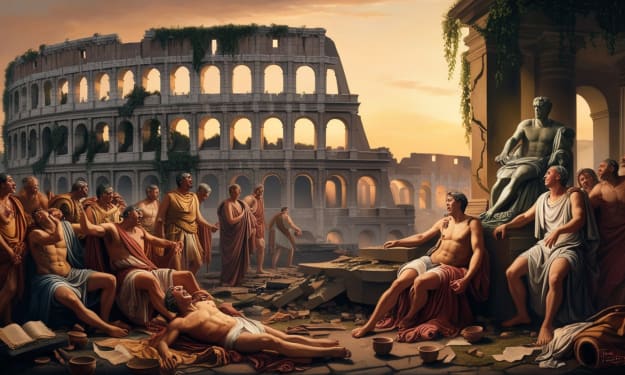
The Fall of the Roman Empire: Lessons from the Collapse of a Historical Superpower
The Fall of the Roman Empire: Lessons from the Collapse of a Historical Superpower Introduction The Roman Empire, once the epitome of power and civilization, met its dramatic decline over centuries, leaving historians and scholars puzzled and fascinated. This monumental collapse offers valuable insights into political, economic, and societal dynamics. How did such a mighty empire crumble? In this article, we explore the key factors behind the fall of Rome and the enduring lessons it imparts.
By 💓 Pulse of Stories 💓2 years ago in History
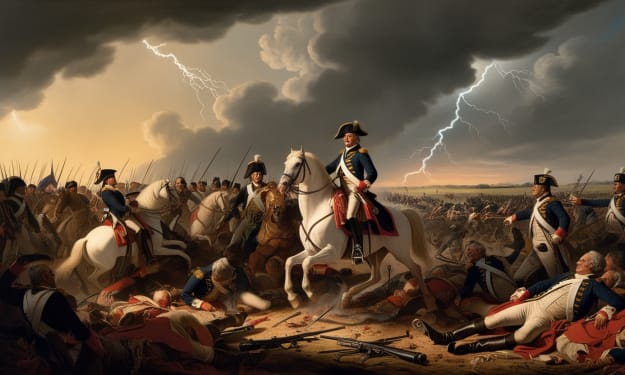
The Battle of Waterloo: Napoleon Bonaparte’s Dramatic End
The Battle of Waterloo: Napoleon Bonaparte’s Dramatic End Introduction The Battle of Waterloo, fought on June 18, 1815, stands as one of the most pivotal events in European history. This decisive clash marked the end of Napoleon Bonaparte’s reign and reshaped the political landscape of Europe for decades to come. In this article, we will delve into the key events, players, and consequences of this legendary battle, unraveling the factors that led to Napoleon’s dramatic fall.
By 💓 Pulse of Stories 💓2 years ago in History
Drone
The morning had already been rough. She had woken up late; the alarm had gone off twice, and she had hit snooze both times, clinging to the warmth of the bed as if it could protect her from the world outside. The place where Mark should have been was empty, the coldness of his absence an immediate reminder of her loneliness. She’d sighed at the empty space beside her, reaching out as if to will him back into the bed. But he was gone. As he always was. Early mornings were his domain, the time when he would leave for work and she would be left to navigate the quiet of their
By youssef mohammed2 years ago in History
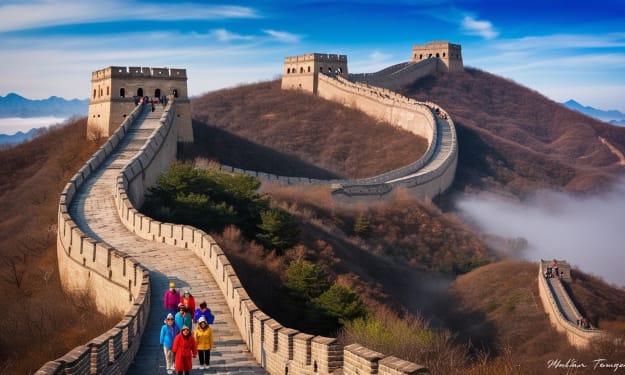
The Story of the Great Wall of China: A Symbol of Strength and Determination
The Story of the Great Wall of China: A Symbol of Strength and Determination Introduction The Great Wall of China stands as one of humanity’s most extraordinary architectural feats. Stretching over 13,000 miles, it symbolizes strength, resilience, and cultural unity. Built over centuries, this monumental structure aimed to protect China from invasions, regulate trade, and solidify the empire’s boundaries. In this article, we will explore the history, purpose, and legacy of the Great Wall, highlighting how it became a timeless emblem of perseverance.
By 💓 Pulse of Stories 💓2 years ago in History
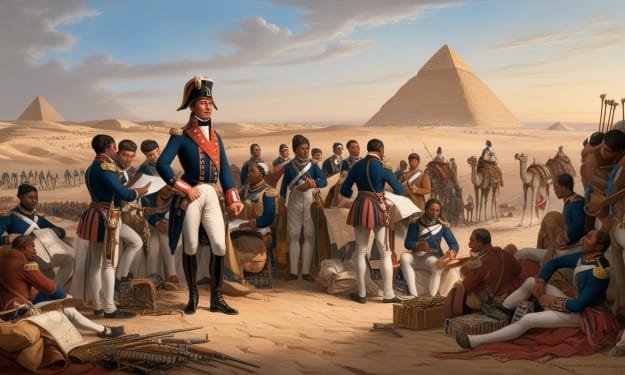
The French Campaign in Egypt: Ambitions and Challenges
The French Campaign in Egypt: Ambitions and Challenges Introduction The French Campaign in Egypt (1798–1801) remains a fascinating episode in history, blending military ambition, cultural exchange, and political turmoil. Initiated by Napoleon Bonaparte, the campaign aimed to undermine British interests, expand French influence in the East, and establish a new route to India. However, the journey was fraught with challenges, from local resistance to logistical setbacks. This article delves into the French expedition to Egypt, exploring its objectives, obstacles, and enduring legacy.
By 💓 Pulse of Stories 💓2 years ago in History
The Story of Japan's Rise: From Isolation to a Global Power
The Story of Japan's Rise: From Isolation to a Global Power Introduction Japan's transformation from a secluded island nation to one of the world’s leading economic and technological powers is nothing short of remarkable. This journey, often referred to as the "Japanese Miracle," showcases a blend of resilience, strategic vision, and cultural dedication. But how did Japan achieve such a profound transformation? This article dives deep into the story of Japan's rise, tracing its roots, pivotal moments, and the lessons the world can learn from its success.
By 💓 Pulse of Stories 💓2 years ago in History
The Story of the French Revolution: The Fall of Monarchy and the Rise of Democracy
The Story of the French Revolution: The Fall of Monarchy and the Rise of Democracy Introduction The French Revolution (1789–1899) stands as one of the most transformative events in modern history. It marked the end of absolute monarchy in France and heralded the rise of democracy and modern political ideologies. But how did a nation steeped in centuries of royal rule come to overthrow its monarchy? What were the underlying causes, key moments, and long-term effects of this monumental upheaval? In this article, we will explore the intricate details of the French Revolution, diving into its origins, key figures, pivotal events, and lasting legacy.
By 💓 Pulse of Stories 💓2 years ago in History
The Sultan Who Shook the World: The Story of Saladin Al-Ayyubi
The Sultan Who Shook the World: The Story of Saladin Al-Ayyubi 🌍⚔️ In the twelfth century AD, specifically during the time of the Crusades, a man emerged who engraved his name in the annals of history in letters of gold: Saladin Al-Ayyubi. Saladin was born in the city of Tikrit in 1138 AD, to a Kurdish family. From a young age, he showed sharp intelligence and a great interest in science and chivalry, which qualified him to become a skilled leader in his youth. 🌟
By 💓 Pulse of Stories 💓2 years ago in History
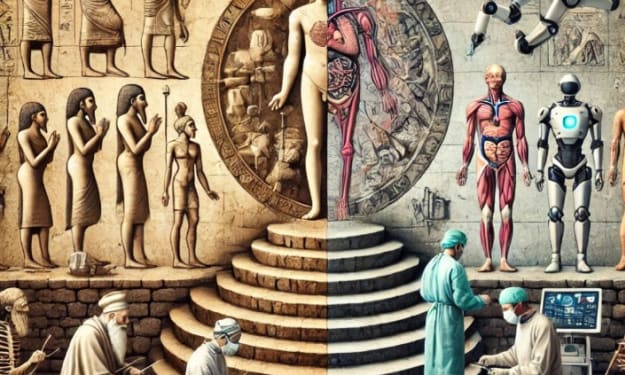
"The Evolution of Surgery Through Time"
The Evolution of Surgery: From Age-old Practices to Avant-garde Mastery Surgery, the art and science of alleviative diseases and injuries through chiral and active operations, has a alluring history that spans bags of years. What began as abecedarian procedures abiding in balloon and absurdity has acquired into a adult conduct that saves millions of lives annually. This commodity delves into the arresting adventure of surgery, from its age-old origins to the cutting-edge advancements of today. Ancient Beginnings: The Foundations of Surgery The history of anaplasty can be traced aback to aged times. Archaeological affirmation suggests that trepanation—the conduct or abrading of a aperture into the animal skull—was one of the age-old surgical procedures. Skulls from as far aback as 6500 BCE appearance signs of trepanation, generally believed to accept been performed to amusement arch injuries or absolution "evil spirits." Ancient civilizations, including the Egyptians, Indians, Greeks, and Romans, laid the background for surgical practices. In Egypt, about 3000 BCE, affirmation from the Edwin Smith Papyrus reveals abundant ability of anguish care, cartilage setting, and surgical techniques. Indian surgeon Sushruta, generally referred to as the "Father of Surgery," aggregate the Sushruta Samhita about 600 BCE. This age-old argument declared over 300 surgical procedures and 120 surgical instruments, including techniques for avalanche anaplasty and reconstructive procedures like rhinoplasty. The Greeks and Romans additionally contributed significantly. Hippocrates, the "Father of Medicine," emphasized a rational admission to analgesic and surgery, affective abroad from abnormal explanations. Roman physician Galen furthered anatomical ability by analytic animals and applying his allegation to animal surgery, admitting with inaccuracies due to the abridgement of animal dissection. The Medieval Era: Stagnation and Survival The abatement of the Roman Empire led to a aeon of stagnation in surgical advancements, decidedly in Europe. During the Middle Ages, anaplasty was generally relegated to barbers rather than accomplished physicians. Known as barber-surgeons, these practitioners performed procedures like bloodletting, tooth extractions, and amputations, generally with bound compassionate of analysis and no anesthesia. Meanwhile, the Islamic Golden Age preserved and broadcast surgical knowledge. Pioneers like Al-Zahrawi (Albucasis) wrote abundantly on surgical techniques and instruments in his medical album Al-Tasrif. His works were translated into Latin and afflicted European anaplasty for centuries. The Renaissance: A Rebirth of Surgical Knowledge The Renaissance era brought a improvement of absorption in animal analysis and surgery. The apparatus of the columnist press in the 15th aeon accustomed medical texts to be broadly disseminated, adopting a new beachcomber of authentic inquiry. Andreas Vesalius, a Flemish anatomist, revolutionized the compassionate of animal analysis with his groundbreaking assignment De Humani Corporis Fabrica (On the Fabric of the Animal Body) in 1543. By administering dissections on animal cadavers, Vesalius adapted abounding of Galen’s errors, accouterment a added authentic anatomical foundation for surgery. In the 16th century, Ambroise Paré, a French aggressive surgeon, alien avant-garde techniques for alleviative battlefield injuries. Paré affected the use of ligatures to tie off claret argosy during amputations, replacing the aching and generally baleful convenance of cauterization with hot irons. The 19th Century: A Leap Forward The 19th aeon apparent a axis point in surgical history, apprenticed by advances in anesthesia, antisepsis, and compassionate of disease. Anesthesia: Before the appearance of anesthesia, surgeries were excruciatingly aching and generally abhorred unless actually necessary. In 1846, American dentist William T.G. Morton approved the use of ether as a accepted anesthetic, revolutionizing anaplasty by acceptance patients to abide procedures after pain. Chloroform and nitrous oxide anon followed, added convalescent surgical outcomes. Antisepsis: The addition of antibacterial techniques by Joseph Lister in the 1860s acutely bargain surgical infections. Inspired by Louis Pasteur’s antibody theory, Lister acclimated carbolic acerbic to alter surgical instruments, wounds, and operating rooms. His methods ushered in the era of antibacterial surgery, extenuative endless lives. Pathology and Diagnostics: Advances in compassionate diseases, such as Rudolf Virchow's cellular pathology, provided surgeons with a bigger butt of the altitude they were treating. This ability laid the background for specialized fields of surgery. The 20th Century: Specialization and Abstruse Innovation The 20th aeon witnessed an admission of surgical advancements, apprenticed by abstruse innovations, bigger medical education, and specialization. Key milestones include: Organ Transplantation: The aboriginal acknowledged branch displace in 1954 paved the way for transplants of the heart, liver, lungs, and pancreas. Advances in immunosuppressive drugs, such as cyclosporine, fabricated these life-saving procedures added viable. Minimally Invasive Surgery: The development of laparoscopy in the 1980s accustomed surgeons to accomplish procedures through baby incisions, abbreviation accretion time and complications. Robotic-assisted surgery, alien in the 2000s, added added precision. Cardiac Surgery: Open-heart anaplasty became accessible with the apparatus of the heart-lung apparatus in the 1950s. Surgeons like Dr. Christiaan Barnard accomplished groundbreaking feats, such as the aboriginal human-to-human affection displace in 1967. Trauma and Emergency Surgery: The enactment of agony centers and advancements in surgical techniques decidedly bigger outcomes for blow victims and war casualties. The 21st Century: The Approaching of Surgery Modern anaplasty continues to evolve, apprenticed by cutting-edge technologies and interdisciplinary collaboration. Key trends include: Artificial Intelligence (AI) and Robotics: AI-powered systems abetment in diagnostics, surgical planning, and real-time decision-making. Robots like the da Vinci Surgical System accredit unparalleled attention in circuitous procedures. Regenerative Medicine: Techniques like 3D bioprinting and axis corpuscle analysis authority the affiance of regenerating damaged tissues and organs, potentially abbreviation the charge for transplants. Personalized Medicine: Advances in analysis and atomic analysis accredit surgeons to clothier treatments to alone patients, convalescent ability and abbreviation risks. Telemedicine and Remote Surgery: The affiliation of telemedicine allows surgeons to argue and alike accomplish remotely, accretion admission to affection affliction in underserved regions. Conclusion The history of anaplasty is a attestation to animal ingenuity, perseverance, and the adamant following of knowledge. From age-old trepanation to robotic-assisted procedures, anaplasty has adapted from a perilous aftermost resort into a cornerstone of avant-garde medicine. As technology continues to advance, the approaching of anaplasty holds bottomless possibilities, alms achievement and healing to endless patients about the world.
By Say the truth 2 years ago in History
Join the Shadows: Echoes of the Forgotten
We have the echoes of living left to us. They're parts of us; these reverberations often slumber in our memory's depths. This is the journey to history. And while we read these echoes, perhaps some time, somewhere, will be devoted to all that we remember and everything we will leave behind. In this view, echoes become untold stories which mold us; it is the chance of self-reclamation, according to her. This is how darkness becomes history that we can endure, and embrace. So come with us on this journey into the past. Key Takeaways Days spent exploring the past reveal layers of identity. (You know how so many things we forget are just hiding in the dark corners of our existence?) And so it becomes, rediscovering the roots, healing the pasts. So shadows represent trauma and also the chance to grow as well. Exploring dark memories is an invitation for each of us to be introspective. Emotional resonance links our lived experiences. The Importance of Memory in Our Life Memory is fundamental to our selves, constructing our identities from the experiences of life. It directs what we do; how we behave; the choices we make. This illustrates how memory is not just retrospective but looks ahead, too. How Memory Singlehandedly Defines the Self Memory is the basis of our personal history, linking vital events to our identity. Psychological studies illustrate how the lens of memories shapes our tendency for behavior, interactions, and skills. For example, remembering previous experiences can bring new insights into, and predictions for, those of the future. Each memory is a part of the intricate portrait of who we are. X-ray sign of the close link of memory with identity. There are different kinds of lost echoes. This makes pastel memory very important. They might be dim, but they do affect us today." They often surface when we think back on things to help us make choices. These memories help us in the understanding of their persistence in our feelings. It provides insight into ourselves that heals and grows. Family and transcendence in struggle and suffering But personal narratives are the best tools we have to confront the dark sides of ourselves. People discover their concealed history through stories." It allows them to reflect on their experiences. These stories can be highly cathartic to tell. It is a way to carry trauma and adversity. Each tale reveals the textured memories that inform us. The Shadows We All Carry There are shadows of memory on every person that reflect the trials and triumphs of their life. These shadows hurt us but also show us how resilient we are. By sharing our stories, we make the darkness less lonely. This sense of connection with others who have experienced similar things is crucial. It builds community and a sense of support. Uncovering Untold Stories from the Past Writers like Maya Angelou and James Baldwin taught us the importance of discussing untold narratives. Their works call on readers to attend to their own shadows of memory. Helps lift wounds toward healing and understanding. By confronting the darkness in their stories, the writers transform pain into a narrative of strength. This approach can be highly effective for healing and growth. When the Darkness Becomes a Memory: Echoes of the Forgotten The dark memories exploration proves that there is a world of experiences; probably feelings and thoughts; without being transformed into the co-breathing. We find those that become memories when we look back. These are not just pass-through memories; they linger, shaping how we think, act, and feel. Exploring the History Behind the Story It may reveal hidden truths in the den of our dark memories. With each layer we discover, we are forced to contemplate. It helps us improve our understanding of what we do and feel. Whether they are dark or not can result in a state of sadness, regret, or perhaps happiness. The revising of these memories allows us to "process with emotions we've repressed. This is an important step in the process of healing. Dark Memories: Influence of the Past on Present Research has shown that unresolved memories have mental effects. Shadows from the past can affect how we look at and relate to other people. These memories help in finding peace and growing. All things considered, we really draw strength from our past. An analysis of our darker memories really helps us know ourselves better. That kind of knowledge allows us, as we live, to be more aware of the forces forming us. The Journey into the Shadows Navigating through our feelings can expose what has remained buried. These experiences lurk below the surface of our daily lives. But acknowledging these feelings helps us identify hope, and strengthens us during difficult times. Beneath What We Walk Through Each Day Everybody fights battles we cannot see that define how we view the world. Contemplation is a process of looking past our dark sides and brings out some truths about our past. If we are not dealt with them they will imprison us. There is healing in exploring these shadows. Finding Light in the Darkness Some of these include mindfulness, meditation, and reflection, in which we heal emotional pain. However, through lessons from some wise teachers including Thich Nhat Hanh and Pema Chödrön, we will regain hope once more. This helps guide us through harsh moments in life and rebuild our resilience. Memories are the key to our lives and reflect back. It informs our identities and allows us to endure both joyous and sorrowful moments. It may reveal much about us — and why we heard and/or remembered specific events. Why We Choose to Remember We see those moments in the past clearly, like we know exactly what went on. It helps us learn from our past because of reflection. When we step back into the darkness, we become a stronger version of ourselves, transformed and almost precocious. Therapy demonstrates how memories empower us to become who we are today. It shows the way we heal and grow, and how there is always some form of balance between the light and shadow in life. Building Power: The Role of Time in Memory The relationship between time and memory is one riddled with complexity and profundity. As we live, our memories change, an aftereffect of how our perspectives do. Our experiences are richer, and their meanings are variable as we grow and learn. Time Is a Trickster That Illusions Us Like a sculptor working with clay, time gives form to our memories. We don’t remember those early memories clearly, or in any important way, but they fade over time. Research shows memories are malleable in a way that shapes our identity. An important moment can play out differently, reminding us that perspectives change. Memories as Living Entities Just like all living things, memories grow, and this understanding is what helps us work through them. They are stories that intermingle with our lives today. With every consideration, they shift and become richer and veiled over. The work of Elizabeth Loftus illustrates how memory changes in the presence of new experiences. This suggests our past is a dialogue with our present, a knotting together of time and memory. The exploration of the past allows an individual to know him better. Looking at memories is a healing process. He can reconstruct himself by facing these locked-up moments in time. Tomorrow will uncover deep feelings and awareness from looking back into one's life. Healing through memory brings the past to the present. It shapes who we are today. "These concepts behind some forms of narrative therapy are helping us tell our stories. It reconciles our past and liberates our emotions. It is closure and healing. Using Echoes of the Forgotten to Tell New Stories We can become different people by going back and retelling old stories. We can write new stories about our futures. What defines us is what we've overcome, but the ability to tell new stories allows us to be more than a victim of circumstance. It is about taking on our heritage while acquiring new power to make a move ahead, converting old whispers into tokens of hope and endurance. Literature is an ideal platform to investigate human experience, especially the question of how memory and trauma function. Dozens of authors have responded to the challenge of dark literature. They weave tales of illumination for personal as well as collective history that unveil the dark recesses of the past. Books Which Take Inspiration from Dark Memories Books like these find their inspiration from dark memories. These books both pull the readers in with their story lines and also challenge them to question what constitutes a memory. A few of these include: Beloved by Toni Morrison – A fantastic representation of slavery's scars and numinous power of memory The Bell Jar by Sylvia Plath – An insightful take into defeatism and battle for identity. Things They Carried by Tim O'Brien — Part fiction, part autobiography, it addresses the weight and guilt of war. Writers Who Shine a Light in the Darkness Some writers write to heal, or to make sense. Many of their works explore literary darkness. That forces readers to confront their own dark corners. This literary collection demonstrates how stories can mirror our world and reveal truths about it. They offer insights into memory and trauma. Visually The Art In Shadows And Filmmaking Visual storytelling can be a compelling way of exploring darkness and memory. performers use it to tell poignant stories that resonate deeply with us. Edvard Munch and Ingmar Bergman are just two examples of how they plunge into human feelings and draw us into their narratives. Impactful Literature that Represents the Underlying Theme Many works demonstrate the bond between art and darkness in deep emotional journeys. Munch's "The Scream" reveals our darkest fears, Bergman's "The Seventh Seal" confronts us with mortality. These elements are crucial to how we comprehend our woes, which makes them vital to ever this visual storytelling. Revisiting the Context of Visual Narrative Visual stories teach lessons through deep feelings, and this is how we learn about our own shadows. In art and films, we confront our memories and the bleakest chapters of life. This kind of storytelling not only captures our attention but also gives us an opportunity to get in touch with the emotions of others. As we work through these stories, we also consider our own pasts. It brings attention to the need for remembrance. Community and Shared Memories Experiences we share that help us build a strong community to thrive. These shared experiences are the building blocks of community. They forge a common history of hardship and triumph. The past unites people. It heals and grows them. Stories create a sort of connection; whenever we tell our story, we form a joint heart. Close The Bonds We Build Through Shared Experiences Deep connections are built on shared experiences. Every time we share our stories, we contribute to a larger story of collective memory. This helps other people experience a sense of connectedness and understanding. It's about being part of a community: Feeling like you belong. Being open and vulnerable. Helping one another in difficult moments. How to Encourage Dialogue About the Past Talking about community memories highlights our own common struggles. Reframing these discussions is essential to discover the important stories. Some ideas for how to initiate these conversations include: Hosting storytelling events. Creating support groups to talk about darkness. Connecting more people using social media. Forgotten Echoes: The Psychological Facet Psychology of the memory teaches us lessons about the forgotten echoes, especially those in relation to trauma. That corrective lens is as formidable as a trauma itself because traumas leave lasting marks on our minds. This has the potential to disrupt our mental health. To understand why, we need to contemplate how our brains store these memories. Understanding Sleep and Trauma Memory If something is traumatic, it can be difficult to remember what happened. Knowing this, teachers like Bessel van der Kolk demonstrate how trauma impacts our minds. Trauma storage is something very much more different than where things are placed, recorded, saved, and stored. This can lead to intense feelings and make handling memories difficult. It's really important to face these challenges head-on. EMDR and narrative therapy are the therapies that help people approach their dark memories so that they can be healed, rebuilt, and become strong. Ways to Keep Your Memories and Go Exploring It's walking down the lane of memories. Neither does it open up insights that are required to grow. Techniques such as journaling or guided imagery or memory mapping do work. They help to put us in dialogue with memories and think about them. Methods of Journal, Thoughts & Reflection Journaling makes for a powerful memory engagement. It allows us to relive important moments in our lives. There are different journaling approaches to help improve this process, such as: You can also do free writing: This is to write nonstop and just write whatever comes to mind, feelings, hidden memories will come out. Guided Journaling: We have specific questions to direct us to certain memories. Memory Mapping: If we assist in visualizing our memories, we can see how rooted our memories are. Memory Practices and Exercises Engagement with our memories through reflective exercises in our daily lives increases the level of engagement. Here are some best practices of a few: Guided Imagery — Visualizing things in the past pulls out emotions and details. Storytelling: When we tell stories with others, there is a social aspect about it and this leads to insights. Memory Cues — Photos or artifacts from the past can evoke memories and prompt reflection; Conclusion This has been an article about the importance of understanding our memories. Not just the good parts, we have to acknowledge the good and dealt parts of our lives. We are composed of good times and sad times. In reflection of moments from our past, we learn to heal. We can learn and heal by facing our past. This procedure did not make us weaker but stronger and wiser. We encourage you to dig deep into your own history. Reflecting on your memories can bring great insight and peace. Embracing all parts of our lives honors our past and looks forward to a brighter future!
By J Pavan Kumar2 years ago in History