Books
Alice and the Enchanted Rabbit Hole
Alice had always been an inquisitive youngster. She was engrossed in the wind's whispers, the leaves' dance, and the enigmatic world around her as other kids engaged in typical games. But the day she found a weird rabbit hole caught her off guard.
By MD.ATIKUR RAHAMAN2 years ago in History
Cleopatra and Mark Antony. AI-Generated.
In the scorching deserts of ancient Egypt, a legendary love affair between Cleopatra, the enigmatic queen of the Nile, and Mark Antony, the powerful Roman general, would shake the foundations of the ancient world. Their tumultuous relationship, marked by passion, politics and tragedy, has been immortalized in literature, art and film, captivating the imagination of audiences for centuries. It was the year 41 BC and Cleopatra, then 29 years old, had just ascended to the throne of Egypt. Mark Antony, 42 years old, was one of the most powerful men in Rome and a key ally of Julius Caesar. Their meeting was a turning point in history, as they formed an alliance that would change the course of the ancient world. Their relationship was a whirlwind romance, marked by passion, luxury, and excess. Cleopatra, known for her intelligence, beauty and cunning, had a profound impact on Mark Antony, who was smitten by her charms. Together, they would sail the Nile, attend lavish feasts, and engage in fierce battles, forging a bond that would last a lifetime. But their love was not without its challenges. The Roman Empire, led by Octavian (later known as Augustus Caesar), viewed Cleopatra as a threat to their power and Mark Antony's alliance with her as a betrayal. The ensuing Battle of Actium, fought in 31 BC, would prove disastrous for the star-crossed lovers, as they were defeated by Octavian's forces. The tragic finale of their love affair is the stuff of legend. As Octavian's forces closed in on Alexandria, Cleopatra and Mark Antony took their own lives, rather than submit to their enemies. Cleopatra, famous for her beauty and cunning, died at the age of 39, allegedly from the bite of a poisonous asp. Mark Antony, the Roman general who had once been invincible, died at the age of 53, his heart broken by the loss of his beloved Cleopatra. The legacy of Cleopatra and Mark Antony's love affair continues to captivate audiences around the world. Their story has inspired countless works of literature, art, and film, including William Shakespeare's famous play "Antony and Cleopatra." The 1963 film "Cleopatra," starring Elizabeth Taylor and Richard Burton, is just one example of the many adaptations of their legendary love affair. Furthermore, the story of Cleopatra and Mark Antony serves as a testament to the enduring power of love and passion. Their legendary love affair, marked by politics, tragedy, and excess, continues to inspire and captivate audiences around the world, reminding us of the transformative power of love and the enduring legacy of two of history's most fascinating figures. The Enduring Legacy of Cleopatra and Mark Antony The impact of Cleopatra and Mark Antony's love affair extends far beyond the realm of history and literature. Their legendary romance has inspired countless works of art, music, and film, cementing their place in popular culture. From the iconic 1963 film "Cleopatra" to the numerous operas, plays, and musicals that have been written about their story, the legend of Cleopatra and Mark Antony continues to captivate audiences around the world. In art, Cleopatra and Mark Antony's love affair has inspired some of the most iconic works of the Renaissance and beyond. From the famous painting "The Meeting of Antony and Cleopatra" by Lawrence Alma-Tadema to the numerous sculptures and coins that have been minted in their honor, the image of Cleopatra and Mark Antony has become an enduring symbol of love and passion. In music, Cleopatra and Mark Antony's love affair has inspired countless operas, songs, and musicals. From the famous opera "Antony and Cleopatra" by Samuel Barber to the numerous musicals and songs that have been written about their story, the legend of Cleopatra and Mark Antony continues to inspire musicians and composers around the world.
By Henry Lucy2 years ago in History
Romeo and Juliet. AI-Generated.
In the picturesque city of Verona, Italy, a legendary tale of love, passion and tragedy has been etched in the annals of history. The story of Romeo and Juliet, two young lovers from feuding families, has become an iconic symbol of star-crossed love, captivating the hearts of audiences for centuries. This timeless tale, penned by William Shakespeare in the 16th century, is believed to have originated from an ancient narrative dating back to the 13th century. The Montagues and the Capulets, two influential families in Verona, had been embroiled in a bitter feud for years. Against this backdrop of hatred and animosity, Romeo, a young Montague and Juliet, the beautiful daughter of the Capulets, fell deeply in love. Their chance encounter at a ball hosted by Juliet's family sparked a passionate and all-consuming romance that would ultimately seal their fate. As their love blossomed, Romeo and Juliet exchanged vows of devotion, promising to be together despite the danger and opposition from their families. However, their happiness was short-lived, as their families' animosity towards each other continued to escalate. In a tragic turn of events, Romeo's hot-headed friend, Mercutio, was killed in a duel with Juliet's cousin, Tybalt, leading to Romeo's banishment from Verona. Undeterred by the obstacles in their path, Romeo and Juliet concocted a desperate plan to be together. Juliet faked her own death to avoid marrying another man, but Romeo, believing she was really dead, poisoned himself in her tomb. Juliet, upon finding Romeo's lifeless body, stabbed herself with his dagger, uniting the star-crossed lovers in death. The tragic tale of Romeo and Juliet has become an enduring symbol of the transformative power of love. Their story has inspired countless adaptations, including Shakespeare's iconic play, operas, ballets and films. The legend of the two lovers has also become synonymous with Verona, attracting millions of visitors to the city each year. In conclusion, the story of Romeo and Juliet serves as a poignant reminder of the redemptive power of love and the devastating consequences of blind hatred. Their timeless tale continues to captivate audiences around the world, ensuring that the memory of these star-crossed lovers will endure for generations to come. The Enduring Legacy of Romeo and Juliet The impact of Romeo and Juliet's story extends far beyond the realm of literature and theater. Their tale has inspired countless works of art, music, and film, cementing their place in popular culture. From the iconic balcony scene to the tragic finale, Romeo and Juliet's story has become an integral part of our collective cultural heritage. In music, Romeo and Juliet's story has inspired some of the most iconic works in the classical repertoire. Tchaikovsky's ballet "Romeo and Juliet" and Berlioz's symphonic work "Roméo et Juliette" are just two examples of the many musical adaptations of the tale. In popular music, Romeo and Juliet's story has inspired songs by artists such as Taylor Swift, Justin Bieber and Lady Gaga. In film, Romeo and Juliet's story has been adapted countless times, with notable versions including Franco Zeffirelli's 1968 film and Baz Luhrmann's 1996 modern adaptation. The tale has also inspired numerous parodies and reimaginings, including West Side Story of Romeo and Juliet. The enduring appeal of Romeo and Juliet's story lies in its universal themes of love, passion and conflict. Their tale continues to resonate with audiences around the world, reminding us of the transformative power of love and the devastating consequences of blind hatred. In Verona, Italy, the city where Romeo and Juliet's story is set, the legend of the two lovers remains a beloved and integral part of the city's cultural heritage. Visitors from around the world flock to Verona to see the famous balcony where Romeo declared his love for Juliet, and to experience the city's romantic charm. In conclusion, the story of Romeo and Juliet continues to captivate audiences around the world, inspiring countless adaptations and interpretations. Their timeless tale of love, passion and conflict remains an integral part of our collective cultural heritage, reminding us of the enduring power of love and the devastating consequences of blind hatred.
By Henry Lucy2 years ago in History
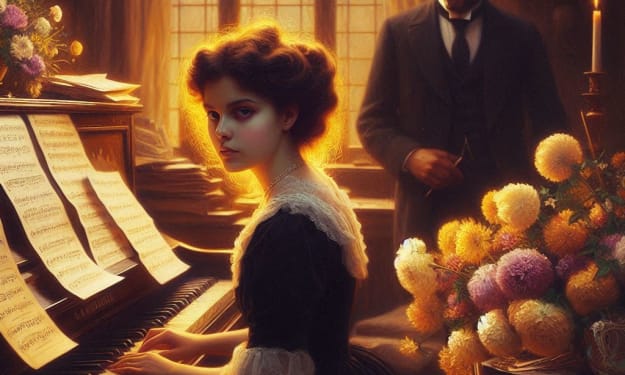
Dmitri Shostakovich and Nina Varzar. AI-Generated.
In the midst of the Soviet Union's turbulent 1930s, a chance encounter between Dmitri Shostakovich, the renowned Russian composer and Nina Varzar, a talented pianist, would spark a complicated yet enduring relationship that would leave an indelible mark on Shostakovich's life and music. Their bond, marked by love, loss, and artistic partnership, would inspire some of Shostakovich's most iconic works, and remain one of the most fascinating stories in the history of classical music. It was the year 1932, and Shostakovich, then 25 years old, had just arrived in Moscow, seeking to establish himself as a composer. Varzar, 23 years old, was already an established pianist, known for her technical brilliance and expressive playing style. Their meeting was nothing short of fate, with Shostakovich being immediately drawn to Varzar's talent, beauty and fiery personality. Their relationship was intense and passionate, with Shostakovich and Varzar sharing a deep love of music, literature, and art. They would often spend hours discussing the latest works of Vladimir Mayakovsky, Sergei Eisenstein, and other prominent artists of the time. Varzar's influence on Shostakovich's music was undeniable, and her own playing style would later influence the development of Soviet piano music. But their relationship was not without its challenges. Shostakovich's struggles with the Soviet regime, which had begun to exert increasing pressure on artists to conform to its ideological demands, would often put a strain on their relationship. Varzar, who was also struggling to establish herself as a pianist in a male-dominated field, would often find herself at odds with Shostakovich's growing fame and success. Despite these challenges, Shostakovich and Varzar's love for each other only grew stronger. They would often perform together, with Varzar premiering many of Shostakovich's piano works, including the "Piano Concerto No. 1" and the "Piano Quintet." Shostakovich, in turn, would often dedicate his works to Varzar, including the "Piano Sonata No. 1," which was inspired by their tumultuous relationship. The turning point in their relationship came in 1936, when Shostakovich's "Lady Macbeth of the Mtsensk District" was denounced by the Soviet regime, leading to a period of intense scrutiny and repression. Varzar, who had always been Shostakovich's rock and confidante, stood by him throughout this difficult period, providing him with emotional support and inspiration. Today, the story of Dmitri Shostakovich and Nina Varzar serves as a testament to the power of love and art to transcend even the most challenging of circumstances. Their complicated yet enduring relationship continues to inspire audiences around the world, and their legacy remains an integral part of the history of classical music. The Legacy of Shostakovich and Varzar The influence of Shostakovich and Varzar's relationship can be seen in the many musical and artistic collaborations that followed. Shostakovich's music, inspired by Varzar's playing style and artistic vision, would go on to influence generations of composers, including Benjamin Britten, Leonard Bernstein, and Alfred Schnittke. Varzar's own legacy as a pianist and educator continues to inspire musicians around the world. Her playing style, characterized by its technical brilliance and expressive nuance, would influence the development of Soviet piano music, and her students would go on to become some of the most prominent pianists of the 20th century. Today, the story of Dmitri Shostakovich and Nina Varzar continues to captivate audiences around the world. Their complicated yet enduring relationship serves as a testament to the power of love and art to transcend even the most challenging of circumstances, and their legacy remains an integral part of the history of classical music. In celebration of their legacy, the St. Petersburg Philharmonic has dedicated a series of concerts to the music of Shostakovich, featuring many of the works that he composed for Varzar. The concerts, which have been met with critical acclaim, provide a unique glimpse into the musical and artistic world of these two creative geniuses. In conclusion, the story of Dmitri Shostakovich and Nina Varzar is a testament to the enduring power of love and art. Their complicated yet enduring relationship continues to inspire audiences around the world and their legacy remains an integral part of the history of classical music. References: [1] "Shostakovich: A Biography" by Laurel E. Fay [2] "Nina Varzar: A Life of Music and Devotion" by Elena Basner [3] "St. Petersburg Philharmonic: Shostakovich and Varzar" concert se
By Henry Lucy2 years ago in History
Erik Satie and Suzanne Valadon. AI-Generated.
In the vibrant streets of Montmartre, Paris, a chance encounter between Erik Satie, the renowned French composer and Suzanne Valadon, a talented and beautiful artist, would spark a romance that would leave an indelible mark on Satie's life and music. Though brief, their passion would burn brightly, only to be extinguished by Satie's own insecurities and fears, leaving a lifelong influence that would shape the course of modern music. It was the year 1893 and Satie, then 27 years old, had just arrived in Paris, seeking to establish himself as a composer. Valadon, 25 years old, was already an established artist, known for her bold and expressive paintings. Their meeting was nothing short of fate, with Satie being immediately drawn to Valadon's beauty, talent and fiery personality. Their romance was intense and all-consuming, with Satie and Valadon sharing a deep passion for art, music and literature. They would often spend hours discussing the latest works of Pablo Picasso, Henri de Toulouse-Lautrec and other prominent artists of the time. Valadon's influence on Satie's music was undeniable and her own artistic style would later influence the development of Fauvism and Cubism. But despite the passion that burned between them, Satie's insecurities and fears began to surface. He was hesitant to commit to a relationship, fearing that it would stifle his artistic freedom. Valadon, sensing Satie's hesitation, began to feel uncertain about their future together. The turning point came when Satie, in a moment of panic, rejected Valadon's advances. Valadon, heartbroken and humiliated, ended their relationship, leaving Satie alone and regretful. The aftermath of their breakup was marked by a period of intense creativity for Satie. He poured his emotions into his music, composing some of his most iconic works, including the "Gymnopédie No. 1" and the "Gnossienne No. 1." Valadon's influence on Satie's music remained undeniable and her own artistic style continued to evolve and flourish. Despite his artistic success, Satie never forgot Valadon, and the regret of losing her would haunt him for the rest of his life. He would often speak of her to his friends and family, remembering the passion and love they had shared. Today, the story of Erik Satie and Suzanne Valadon serves as a testament to the power of love and art to transcend even the most challenging of circumstances. Their brief yet intense romance continues to inspire audiences around the world, and their legacy remains an integral part of the history of modern music and art. The Enduring Legacy of Satie and Valadon The influence of Satie and Valadon's relationship can be seen in the many artistic and musical collaborations that followed. Satie's music, inspired by Valadon's artistic style, would go on to influence generations of composers, including Claude Debussy, Maurice Ravel, and John Cage . Valadon's artistic style, meanwhile, would continue to evolve and flourish, influencing the development of Fauvism and Cubism. Her paintings, characterized by their bold colors and expressive brushstrokes, would go on to inspire artists such as Pablo Picasso and Henri Matisse. Today, the legacy of Erik Satie and Suzanne Valadon continues to inspire audiences around the world. Their story serves as a testament to the power of love and art to transcend even the most challenging of circumstances, and their influence can be seen in the many artistic and musical collaborations that followed. In celebration of their enduring legacy, the Musée d'Orsay in Paris has dedicated an entire exhibition to the works of Satie and Valadon. The exhibition, which features many of Satie's most famous compositions alongside Valadon's paintings, provides a unique glimpse into the artistic and musical world of these two creative geniuses. In conclusion, the story of Erik Satie and Suzanne Valadon is a testament to the power of love and art to inspire and transcend. Their legacy continues to influence artists and musicians around the world, and their story remains an integral part of the history of modern music and art. References: [1] "Erik Satie: A Biography" by Robert Orledge [2] "Suzanne Valadon: A Life of Art and Passion" by June Rose [3] "Musée d'Orsay Exhibition: Satie and Valadon”
By Henry Lucy2 years ago in History
Franz Liszt and Countess Marie d'Agoult. AI-Generated.
In the salons of 19th-century Paris, a chance encounter between Franz Liszt, the renowned Hungarian composer and Countess Marie d'Agoult, a beautiful and intelligent French aristocrat, would spark a relationship that would be marked by passion, jealousy and artistic inspiration. Their tumultuous love affair would leave an indelible mark on Liszt's music and legacy, and remain one of the most fascinating stories in the history of classical music. It was the year 1833, and Liszt, then 22 years old, had just arrived in Paris, seeking to establish himself as a composer and pianist. Countess d'Agoult, 27 years old, was a member of the French nobility, known for her beauty, intelligence, and strong will. Their meeting was nothing short of fate, with Liszt being immediately drawn to the Countess's charms. Their relationship was intense and passionate, with Liszt and the Countess sharing a deep love of music, literature and art. They would often spend hours discussing the latest works of Victor Hugo, Honoré de Balzac and other prominent writers of the time. The Countess, who was also a talented writer, would often provide Liszt with inspiration and feedback on his compositions. But their relationship was not without its challenges. Liszt's jealousy and possessiveness would often lead to fierce arguments and reconciliations. The Countess, who was also known for her strong temper, would often retaliate against Liszt's accusations, leading to a cycle of tension and drama. Despite these challenges, Liszt and the Countess's love for each other only grew stronger. They had three children together, including Cosima, who would later marry Richard Wagner. The Countess would often accompany Liszt on his concert tours, providing him with emotional support and inspiration. The Countess's influence on Liszt's music was undeniable. She would often provide him with ideas and inspiration for his compositions, and her own literary talents would influence the librettos of his operas. Liszt's music, in turn, would provide the Countess with a source of comfort and inspiration, helping her to cope with the challenges of their tumultuous relationship. Today, the story of Franz Liszt and Countess Marie d'Agoult serves as a testament to the power of love and art to transcend even the most challenging of circumstances. Their relationship, marked by passion, jealousy and artistic inspiration, continues to fascinate audiences around the world and remains an integral part of the history of classical music. The Legacy of Liszt and the Countess Despite the challenges they faced, Liszt and the Countess's relationship had a profound impact on the world of classical music. Liszt's music, inspired by the Countess's beauty and intellect, continues to be celebrated for its passion, innovation, and technical brilliance. The Countess, too, left her mark on the world of music. Her literary talents and her influence on Liszt's compositions helped to shape the course of classical music history. Her legacy extends beyond her relationship with Liszt, and she remains an important figure in the history of French literature and music. In the years following their separation, Liszt continued to compose some of his most iconic works, including the "Piano Sonata in B minor" and the "Mephisto Waltz." The Countess, meanwhile, dedicated herself to raising their children and pursuing her literary career. Despite their tumultuous past, Liszt and the Countess remained in contact until the end of their lives. The Countess passed away on March 5, 1876, and Liszt followed her on July 31, 1886. They are buried together in the Bayreuth Stadtfriedhof, a testament to the enduring power of their love and their legacy. Today, the story of Franz Liszt and Countess Marie d'Agoult continues to inspire audiences around the world. Their passionate and tumultuous relationship serves as a reminder of the power of love and art to transcend even the most challenging of circumstances.
By Henry Lucy2 years ago in History
Johannes Brahms and Agathe von Siebold. AI-Generated.
In the picturesque town of Göttingen, Germany, a chance encounter between Johannes Brahms, the renowned composer and Agathe von Siebold, a beautiful and talented young singer, would spark a romance that would leave an indelible mark on Brahms' life and music. Though brief, their passion would burn brightly, only to be extinguished by Brahms' own fears and doubts, leaving a lifelong regret that would haunt him forever. It was the year 1858 and Brahms, then 25 years old, had just arrived in Göttingen, seeking refuge from the chaos of his life in Hamburg. Agathe, 23 years old, was a member of the local nobility, with a voice that was as beautiful as it was rare. Their meeting was nothing short of fate, with Brahms being immediately smitten by Agathe's charms. Their romance was intense and all-consuming, with Brahms pouring out his heart and soul to Agathe. He would often take her on long walks, discussing literature, philosophy, and music. Agathe, in turn, would inspire Brahms' creativity, encouraging him to pursue his artistic vision. But despite the passion that burned between them, Brahms' fears and doubts began to surface. He was hesitant to commit to a relationship, fearing that it would stifle his artistic freedom. Agathe, sensing Brahms' hesitation, began to feel uncertain about their future together. The turning point came when Brahms, in a moment of panic, rejected Agathe's proposal of marriage. Agathe, heartbroken and humiliated, ended their relationship, leaving Brahms alone and regretful. The aftermath of their breakup was marked by a period of intense creativity for Brahms. He poured his emotions into his music, composing some of his most iconic works, including the "German Requiem" and the "Violin Concerto". Despite his artistic success, Brahms never forgot Agathe, and the regret of losing her would haunt him for the rest of his life. He would often speak of her to his friends and family, remembering the passion and love they had shared. Today, the story of Johannes Brahms and Agathe von Siebold serves as a testament to the power of love and regret to shape our lives and art. Though their romance was brief, its impact on Brahms' music and legacy is still felt today. The Enduring Legacy of Brahms and Agathe The story of Johannes Brahms and Agathe von Siebold is a poignant reminder of the power of love and regret to shape our lives and art. Though their romance was brief, its impact on Brahms' music and legacy is still felt today. Brahms' music is characterized by its complexity, depth and emotional intensity. His works, such as the "German Requiem" and the "Violin Concerto," are considered some of the greatest masterpieces of classical music. The passion and emotion that Brahms poured into his music were deeply influenced by his relationship with Agathe. Agathe, too, left her mark on the world of music. Though she never pursued a career as a singer, her influence on Brahms' music is undeniable. Her beauty, intelligence and passion inspired Brahms to create some of his most iconic works. The legacy of Brahms and Agathe extends far beyond their music. Their story serves as a reminder of the power of love and regret to shape our lives. It is a testament to the enduring power of art to express the deepest emotions of the human experience. Today, the town of Göttingen, where Brahms and Agathe first met, is a pilgrimage site for music lovers from around the world. Visitors can walk the same streets where Brahms and Agathe strolled, hand in hand, discussing literature, philosophy, and music. The story of Johannes Brahms and Agathe von Siebold is a timeless tale of love, loss, and the enduring power of art. It is a reminder that even the briefest of romances can leave an indelible mark on our lives and our art. References: [1] "Brahms: A German Requiem" by Michael Musgrave [2] "The Brahms Biography" by Malcolm MacDonald [3] "Göttingen: A City of Music and Literature" by Hans-Joachim Hinrichsen
By Henry Lucy2 years ago in History
Gustav Mahler and Alma Schindler. AI-Generated.
In the vibrant city of Vienna, a chance encounter between Gustav Mahler, the renowned Austrian composer and Alma Schindler, a beautiful young socialite, would spark a whirlwind romance marked by intense passion, intellectual debates, and personal struggles. Their love story, though tumultuous, would leave an indelible mark on the world of music and art. Alma Schindler, born on August 31, 1879, was the daughter of a respected landscape painter and a singer. She was a talented composer in her own right, having started composing at the age of eight Gustav Mahler, 19 years her senior, was the director of the Vienna State Opera, where he had introduced many innovations since 1897. Their meeting in 1901 would set off a chain of events that would change their lives forever. Their romance was intense and all-consuming, with Mahler proposing to Alma just a month after meeting her. They married in 1902 and Alma became Mahler's muse, inspiring some of his most iconic works. However, their relationship was not without its challenges. Mahler's demands for Alma to abandon her own composing career created tension and Alma's desire for intellectual stimulation and independence often put her at odds with Mahler's traditional views on women. Despite these challenges, the couple shared a deep passion for music and art. Mahler would often take Amla on long walks, discussing literature, philosophy and music. Alma, in turn, would inspire Mahler's compositions, including his iconic Fifth Symphony, which he dedicated to her. Tragedy struck in 1907 when their young daughter, Maria, died of scarlet fever. Mahler was devastated and the loss would haunt him for the rest of his life. Alma, too, was grief-stricken, and the couple's relationship began to fray. In 1910, Alma began an affair with the young architect Walter Gropius, which would eventually lead to the breakdown of her marriage to Mahler. Mahler, sensing his marriage was crumbling, sought advice from Sigmund Freud in 1910. Gustav Mahler passed away on May 18, 1911, leaving Alma a widow at just 31 years old. Though their marriage had been tumultuous, Alma would go on to champion Mahler's music, ensuring his legacy lived on. Alma's life after Mahler was marked by personal struggles and artistic pursuits. She married Walter Gropius in 1915, but their marriage ended in divorce in 1920. She later married Franz Werfel, with whom she fled Austria in 1938 to escape the Nazi occupation. Today, Alma Mahler-Werfel is remembered not only as the muse and wife of Gustav Mahler but also as a talented composer and artist in her own right. Her legacy serves as a testament to the power of passion, intellect and creativity to transcend even the most tumultuous of lives. Alma Mahler's life was a complex web of love, loss and artistic expression. Her marriage to Gustav Mahler was marked by intense passion, but also intellectual debates and personal struggles. Mahler, 19 years her senior, was a renowned composer and director of the Vienna State Opera. He was smitten with Alma, but their relationship was tumultuous, with Mahler demanding she abandon her own composing career. Alma's artistic ambitions were stifled and she became Mahler's muse, inspiring some of his most iconic works, including his Fifth Symphony. The famous Adagietto movement is a love letter to Alma, with musical messages woven throughout the score. However, their marriage was also marked by tragedy, including the loss of their young daughter, Maria, who died of scarlet fever in 1907. Despite the challenges, Alma remained a charismatic figure, enchanting artistic men with her wit, intellect and musical talent. Her relationships with men like Gustav Klimt, Alexander von Zemlinsky and Walter Gropius were marked by intense passion and intellectual debates. Throughout her life, Alma struggled with her own artistic identity, torn between her desire to compose and her role as a muse and supporter of her husband's music. Her legacy is complex, with some viewing her as a female incarnation of inspiration and others as a domineering and sex-crazed figure. Today, Alma Mahler's music is being rediscovered, with 17 of her songs known to have survived. Her life serves as a testament to the power of love, art and intellectual curiosity, despite the challenges and controversies that surrounded her.
By Henry Lucy2 years ago in History
"Beneath the Sands of Time: The Controversial Discovery of a Subterranean Metropolis Under Egypt’s Pyramids"
The Eternal Allure of Egypt’s Mysteries The Great Pyramids of Giza, guardians of the desert for over 4,500 years, have long captivated humanity. These colossal structures, aligned with celestial precision, are testaments to the sophistication of ancient Egyptian civilization. Yet, as modern technology peels back layers of sand and stone, a provocative theory has emerged: beneath the pyramids and the Sphinx lies a sprawling subterranean network—a “hidden city” that could redefine Egyptology. This claim, however, has ignited fierce debate among experts, pitting traditional archaeologists against interdisciplinary researchers armed with radar scans and AI-driven simulations.
By Nada soliman2 years ago in History
"Echoes of Colonial Wealth: A Historical Reflection"
The Expropriated Wealth: European Colonial Exploitation and Its Estimated Net Value During the colonial period, European nations harnessed extensive resources from their colonies, frequently with minimal concern for indigenous populations, ecosystems, or long-term viability. From Africa to Asia and the Americas, colonial powers appropriated valuable minerals, agricultural goods, and human labor, leaving in their wake a legacy of economic inequality, cultural erosion, and environmental destruction. Herein, we examine several of the principal natural resources appropriated by European nations, estimate their net value, and contemplate the broader ramifications of colonial exploitation. 1. Natural Resources Appropriated by European Colonizers Gold, Silver, and Precious Metals European colonial powers extracted substantial quantities of gold, silver, and other precious metals from their territories. Spain, for instance, pillaged gold and silver from Latin America, particularly from the mines in Potosí, Bolivia. Between the 16th and 18th centuries, it is estimated that Spain extracted approximately 45,000 tons of silver and 400 tons of gold from the Americas. When adjusted for inflation, the current value of these resources would approximate $2 to $3 trillion. Spices and Agricultural Riches The Dutch, British, and Portuguese empires reaped significant profits from the spice trade, controlling essential trade routes and colonies such as Indonesia, India, and Sri Lanka. Spices like cloves, nutmeg, cinnamon, and pepper were valued immensely. Additionally, colonizers exploited colonies for cash crops such as sugarcane, tea, coffee, and cotton. India alone provided vast amounts of cotton and textiles to the British Empire, contributing billions of pounds to Britain’s industrialization. The Caribbean colonies were utilized for sugar plantations, operated by enslaved African laborers, whose unpaid work contributed billions more to European affluence. Rubber, Timber, and Diamonds The Belgian exploitation of the Congo under King Leopold II stands as one of the most notorious examples of colonial plunder. Millions of Congolese individuals were compelled to extract rubber and ivory, often under inhumane conditions. It is estimated that Belgian exploitation of Congo’s resources generated wealth corresponding to hundreds of billions of dollars in present-day value. The British also governed valuable diamond and gold mines in South Africa. The De Beers diamond company, established during the colonial period, remains a symbol of European prosperity derived from African resources. 2. Human Toll of Colonial Exploitation Forced Labor and Enslavement One of the most catastrophic aspects of European colonialism was the transatlantic slave trade. Between the 16th and 19th centuries, an estimated 12 to 15 million Africans were forcibly taken to the Americas, where they were enslaved on plantations. The uncompensated labor of enslaved individuals fueled the economic expansion of European powers, particularly Britain, France, Spain, and Portugal. The economic contribution of enslaved African labor has been appraised at over $14 trillion in current terms. Loss of Human Life Colonial conflicts, coerced labor, starvation, and disease resulted in the demise of millions in colonial regions. In India specifically, British colonial strategies contributed to numerous famines, notably the Bengal Famine of 1943, which claimed approximately 3 million lives. The cumulative human cost of European colonialism amounts to tens of millions, with incalculable economic and social repercussions. 3. Exploitation of Animals and the Environment Colonial exploitation transcended human populations to encompass animals and ecosystems. European hunters and settlers caused the extinction of species such as the passenger pigeon and the quagga (a variant of zebra). In Africa, elephants were pursued for ivory, and woodlands were cleared for plantations, disrupting ecosystems and biodiversity. The environmental destruction wrought by colonial exploitation, including deforestation, soil depletion, and biodiversity loss, continues to affect former colonies today. 4. Approximate Value of Extracted Resources Although determining the precise value of all resources plundered by European powers during the colonial epoch is challenging, historians and economists have offered some staggering approximations: India under British Administration (1757-1947): British colonial exploitation is estimated to have extracted around $45 trillion from India, according to economic historian Utsa Patnaik. This estimate encompasses the value of resources, labor, and economic practices that benefited Britain at India's detriment. Africa: The wealth extracted from Africa, including gold, diamonds, rubber, ivory, and enslaved individuals, is surmised to be valued at several trillion dollars. Some assessments suggest that the reparations owed to Africa exceed $100 trillion. Latin America: The gold and silver commandeered by Spain from Latin America, particularly from the Inca and Aztec civilizations, would be valued at approximately $2-3 trillion today. 5. Colonialism's Legacy and Advocacy for Reparations The economic inequalities between former colonial powers and their erstwhile colonies stand as a persistent legacy of colonial exploitation. Numerous scholars, advocates, and organizations have urged for reparations to rectify the historical injustices of colonialism. These reparations could manifest as financial restitution, debt forgiveness, or investments in education, healthcare, and infrastructure within former colonies. Conclusion The European colonial period was characterized by the systematic plunder of natural resources, human labor, and cultural heritage. The wealth generated through this exploitation fueled Europe’s industrial growth and global supremacy, while leaving many former colonies impoverished and grappling with the ramifications of colonialism. Recognizing the magnitude of this exploitation is vital for cultivating a more equitable global future and addressing the historical injustices that continue to influence our contemporary world.
By Say the truth 2 years ago in History