Biographies
The 600-Year-Old Mystery That Still Defies Decoding
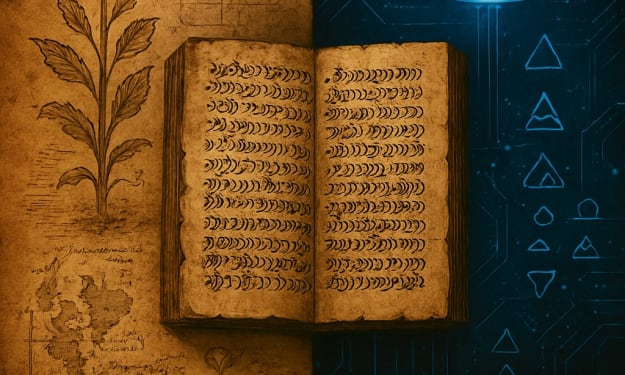
Imagine this: You open an old chest in a dimly lit library, and inside lies a book so strange, it doesn’t even feel human. Its pages are made of ancient vellum smooth but yellowed with time filled with strange, looping script no one has ever read, and illustrations that make your brain go, Wait… what am I looking at?
By Muhammad Ayaan about a year ago in History
The Woman Who Shook the Monastery
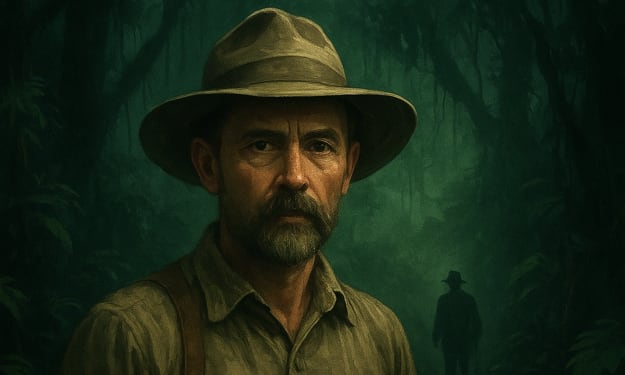
The Beginning of the Scandal In early 2025, rumors began swirling in Thailand’s Buddhist community: respected monks were suddenly vanishing, stepping down without explanation. Whispers spoke of a woman—beautiful, calculated, and bold—who had ensnared them in a trap.
By Atif khurshaidabout a year ago in History
The 9 Unknown Men of Ashoka, The Secret Society That Has Guarded Knowledge for Over 2,000 Years
Imagine a secret so powerful that it could change the fate of the world… What if such knowledge was hidden away not destroyed, but kept in the hands of a few chosen individuals, passed down silently from generation to generation for over two millennia?
By Muhammad Ayaan about a year ago in History
Want to Be a Treasure Hunter in Japan?. AI-Generated.
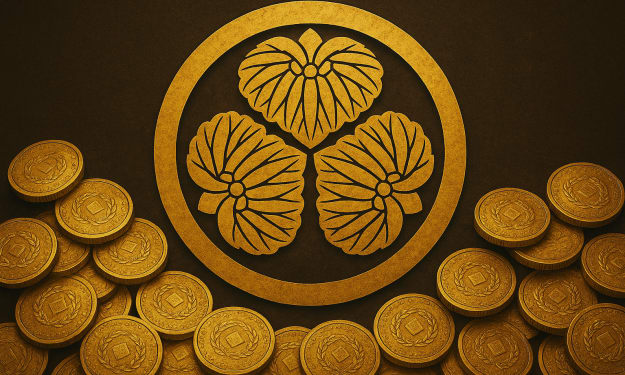
When people think of treasure hunting, they often imagine Caribbean pirates, sunken ships, or mysterious maps leading to buried chests. But Japan has its own legends of hidden riches—some rooted in history, others in show business mystique. If you ever dreamed of being a treasure hunter, the Land of the Rising Sun has two fascinating tales that continue to spark curiosity: the elusive Tokugawa buried gold and the theatrical Princess Tenko’s hidden fortune.
By Takashi Nagayaabout a year ago in History
The Ghost of Coco Chanel: How One Woman Reinvented Fashion Forever
The Ghost of Coco Chanel: How One Woman Reinvented Fashion Forever The dark, glamorous, and complicated legacy of Chanel. The name Coco Chanel lingers in the world of fashion like a ghost — ever-present, elusive, and immortal. To this day, her designs define elegance, her fragrance whispers of timeless femininity, and her persona embodies both brilliance and controversy. More than a designer, Chanel was a revolution, a woman who dared to dismantle the corseted cages of her era and replace them with freedom, power, and allure.
By waseem khanabout a year ago in History
"Imran Khan: From Pitch to Parliament"
Imran Khan: From Pitch to Parliament The sun beat down on the cricket pitch as Imran Khan, a young and ambitious fast bowler, steamed in to deliver another scorching ball. His eyes blazed with determination, his muscles rippled with power, and his heart pounded with passion. This was his domain, where he reigned supreme, and his name was on everyone's lips. Born on October 5, 1952, in Lahore, Pakistan, Imran Khan was destined for greatness. His father, Ikramullah Khan Niazi, was a civil engineer, and his mother, Shaukat Khanum, was a housewife. Imran was the only son, with four sisters. His family encouraged his love for cricket, and he began playing at the age of 13. Imran's cricketing career spanned over two decades, during which he played 88 Tests and 175 One-Day Internationals (ODIs) for Pakistan. He took 362 wickets in Tests and 182 wickets in ODIs. Imran's impressive statistics made him a household name, and he became a national hero. However, Imran's life took a dramatic turn when his mother, Shaukat Khanum, was diagnosed with cancer. He was devastated by her illness and eventual death in 1985. This personal tragedy sparked a sense of purpose in Imran, and he decided to build a cancer hospital in his mother's memory. The Shaukat Khanum Memorial Cancer Hospital, established in 1994, was a testament to Imran's compassion and dedication. He traveled the world, fundraising and collecting donations to build the hospital. Today, the hospital is one of the largest and most respected cancer treatment centers in Pakistan. Imran's entry into politics was met with skepticism, but he persevered, driven by his vision for a better Pakistan. He founded the Pakistan Tehreek-e-Insaf (PTI) party in 1996, with a promise to eradicate corruption, promote social justice, and strengthen the economy. Imran's message resonated with the youth and middle class, who were disillusioned with the existing political order. He campaigned tirelessly, traveling across the country, and connecting with people from all walks of life. On August 18, 2018, Imran Khan took oath as the 22nd Prime Minister of Pakistan. His tenure was marked by efforts to reform the country's institutions, strengthen the economy, and promote social welfare. However, Imran's journey was not without its challenges. He faced intense opposition from rival parties, and his government was criticized for its handling of economic and foreign policy issues. Allegations of corruption and misconduct also surfaced, testing Imran's resolve and reputation. Despite these challenges, Imran remained committed to his vision for Pakistan. He continued to inspire and motivate his supporters, who saw him as a symbol of hope and change. As Imran Khan looked out at the crowds of people gathered to hear him speak, he knew that his journey from the cricket pitch to the parliament had been worth it. He had taken the first steps towards creating a better Pakistan, and he was determined to see his vision through to the end. The crowd erupted in cheers as Imran raised his hands in triumph. He smiled, his eyes shining with pride and determination. He knew that the journey ahead would be long and difficult, but he was ready for the challenge. For Imran Khan, the cricket pitch and the parliament were not just two different arenas; they were two sides of the same coin. Both required passion, dedication, and a commitment to excellence. And Imran Khan had proven himself to be a master of both.
By Sadam Hussain about a year ago in History
The History of the Danube's Cauldrons
The History of the Danube's Cauldrons: A Legend Sculpted in Time Part I: The Land of Decebalus and Roman Power Before the rock of Ghița mountain bore the face of Decebalus, and before the road narrowed into a gorge where the waters of the Danube thrashed like a wounded dragon, the Cauldrons were a sacred place. For the Dacians in the area, the mountains were sanctuaries, and the river was a living being with a powerful spirit. The deep waters and strong currents were considered a manifestation of the gods, who protected the land from enemies. When rival tribes approached, the sound of the troubled waters hitting the rocks would drive them away, as a warning that here, the land itself was defending itself.In those times, the elders of the villages would whisper stories about Zamolxe, who had sat on a rock, with his gaze fixed on the sun, and had merged with the mountain. Thus, his spirit became the protector of the Cauldrons, watching over his people. Every rock had a legend, every waterfall a secret. It was believed that in the hidden caves lived beings of the earth, who appeared only on full moon nights to bless those who respected nature.Then, the Romans came. With their shiny weapons and disciplined legions, they descended towards the Danube, seeking to conquer and civilize. For them, the river was not a sacred being but a transportation route, a strategic border. When they reached the Cauldrons, they understood why the Dacians revered them. The waters were agitated, the currents were strong, and the narrow rocks made navigation almost impossible. They were forced to build a network of roads on the bank to transport troops and supplies, and the testimony of their work is still inscribed in the famous Tabula Traiana, a commemorative plaque that stands as a testament at the entrance to the gorge today.Trajan, the Roman emperor, understood that to conquer Dacia, he also had to conquer this water route. But the Dacians were not easy to defeat. Fearless warriors, led by King Decebalus, they knew every crevice, every hidden rock. They retreated into the mountains, using the rugged terrain as an ally. Fierce battles took place, and their echoes can still be heard when the wind blows strongly through the rocks. After the death of Decebalus and the conquest of Dacia, the Romans remained. But the spirit of the place refused to be subdued. The Dacian stories continued to be told in whispers around campfires, and the Romans, although they considered them superstitions, felt an unseen force, a weight of history that hovered over the Canyon. That is why the Tabula Traiana was not just a monument to Roman victory, but also a recognition of the power of the place. It was as if the Romans were telling the world: "We came, we conquered, but this place is more than just land. It has a soul." For centuries, the Cauldrons were a border, a place of passage and conflict. Romans, migrants, foreign peoples, all passed through here. But the Dacian spirit, that of freedom and love for the land, remained.
By alin butucabout a year ago in History
The best movies in history
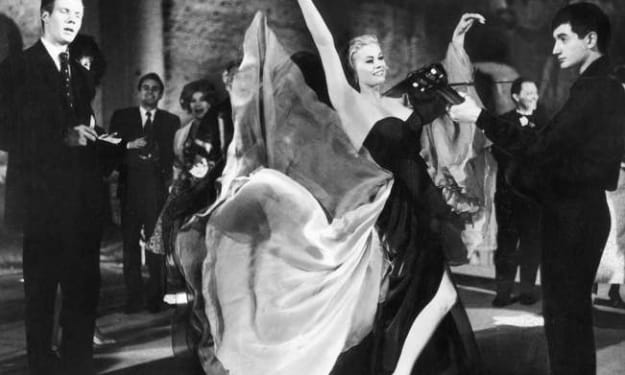
That's right. Personal taste, cultural impact, technological innovation, and critical consensus all play a role in determining the "best" films of all time. We can, however, compile a list of films that have fundamentally influenced cinema and are almost universally acclaimed by combining these elements. This list, which is organized by era and genre to highlight their distinct contributions, serves as a starting point. The Complete List of "Must-See" Events (A Selection of the Best) Sight & Sound's and the AFI's 100 Years...100 Movies critic and director polls consistently place these films at the top. The Classics of the Golden Age (pre-1960) Orson Welles' Citizen Kane (1941) Why it's so important: It has been called the best movie ever. It changed sound design, deep-focus photography, and narrative structure. The story of the rise and fall of a newspaper tycoon remains a masterclass in filmmaking. Michael Curtiz's 1942 film Casablanca Why it's so important: It has romance, drama, suspense, and humor all in one. It may be the most perfect Hollywood studio film ever made due to its timeless themes of sacrifice and honor, memorable characters, and iconic dialogue. Jean Renoir's The Rules of the Game (1939) Why it's important:
By parves mosharafabout a year ago in History