Biographies
A Brief History Of Disney
Although it is now one of the largest corporations in the world, the Walt Disney Company started as a small animation studio in the garage of Walt and Roy Disney’s grandfather. This tiny venture was founded on October 16, 1923 – and in 2006, Walt Disney’s company had grown to revenues of $34.3 billion.
By Brent J. Smith (J Smith)3 years ago in History
How MLK Day Became a National Holiday
As you know, January 15 is Martin Luther King Day, the holiday celebrating the life of civil rights leader Martin Luther King Jr. Each year on the third Monday of January we observe Martin Luther King Day and reflect on the work that still needs to be done for racial equality. This January 15, make the holiday more than just a day off and take time to reflect and take action on civil rights issues across the globe. Every MLK Day, schools and offices are closed, but people fully participate in remembering and honoring everything King has accomplished. His values and historical place in American history are discussed and advocated to educate communities and coming generations on the importance of equality and King’s influence. Movies and documentaries on his life are shown, and businesses and organizations run by and for the Black community are shown some support. But how did it become a national holiday????
By Gladys W. Muturi3 years ago in History
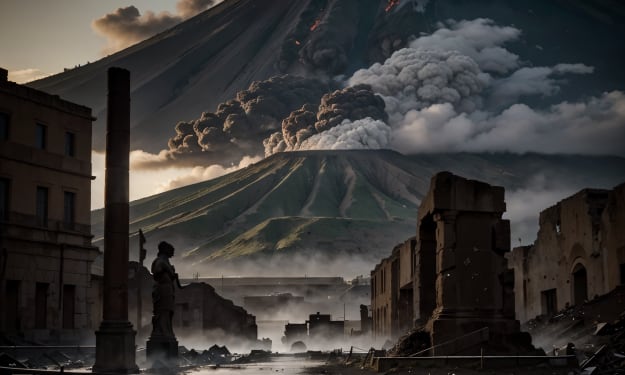
The Tragic Saga of Pompeii: A City Lost in Time
The ancient Roman city of Pompeii thrived in the shadow of Mount Vesuvius, with busy streets packed with people engaged in trade and cultural activities. Established in the sixth century BC, Pompeii served as a symbol of Roman wealth until the tragic events of August 24, AD 79, inscribed its sorrowful history. Pompeii was preserved in a state similar to a time capsule when layers of ash and pumice covered the city following Mount Vesuvius' eruption. Pompeii was discovered and rebuilt in the eighteenth century, and the results showed an unusual picture of Roman daily life, offering priceless insights into the customs, architecture, and artwork of the century.
By Isabel Martinez3 years ago in History
The Unseen Planet In Our Solar System
For millennia, humans were aware of only five planets: Mercury, Venus, Mars, Jupiter, and Saturn, observable with basic telescopes or the naked eye under favorable conditions. In the late 18th century, Sir William Herschel, a renowned astronomer, discovered a new planet—a frosty blue one initially mistaken for a star—later recognized as Uranus. It orbits the Sun 19 times farther than Earth and takes 84 years to complete one revolution. Herschel also detected double stars and nebulae. In the mid-1800s, astronomers detected anomalies in Uranus' orbit, leading to the discovery of Neptune in 1846. Despite theories about another planet between Mercury and the Sun, known as Vulcan, corroborated by the peculiar behavior of Mercury's orbit, no concrete evidence surfaced. Einstein's theory of general relativity later explained Mercury's orbit irregularity, suggesting space-time curvature by massive celestial bodies like planets alters orbits. While the Vulcan theory persisted, Einstein's explanation gained traction, and tests during solar eclipses aimed to validate his theory. Additionally, hypotheses about an undiscovered Planet 9 or Planet X beyond Neptune, affecting objects in the Kuiper Belt, emerged. The Nibiru myth, claiming a doomsday scenario in 2012, proved baseless, as calculations disproved its existence. Moreover, the 2011 Comet Elenin briefly misconstrued as Nibiru, dissipated harmlessly. These astronomical mysteries continue to intrigue, shaping our understanding of the solar system's complexities.
By Cudjoe Justice3 years ago in History
"Weaving Identities: Exploring the Tapestry of Cultural Heritage"
Our cultural legacy gives us a feeling of identity and a link to our past, which makes us feel like we belong. We will examine the complex web of cultural legacy in this investigation, piecing together the historical, traditional, and customary elements that make up the rich tapestry of many global communities. We hope to shed light on the distinct identities that comprise our global community by learning more about the histories, significance, and cultural practices of the many objects, historical locations, and historical practices we come across on this voyage. Come along with us as we explore cultural heritage in depth and celebrate the diversity and beauty that make the world a better place.
By Isabel Martinez3 years ago in History
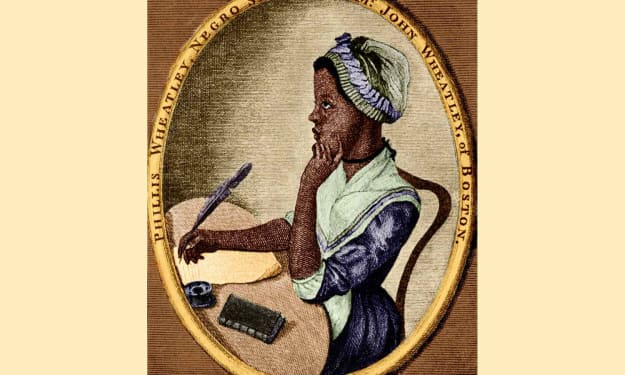
Against All Odds: The First Published Black American Poet
How incredible is the human spirit that the will to survive is more vital than any fear we may encounter? ~o~ It happened all of a sudden on one sunny day. Stolen from the life you used to have and everything you knew by strangers without empathy, much less compassion.
By Rene Volpi 3 years ago in History
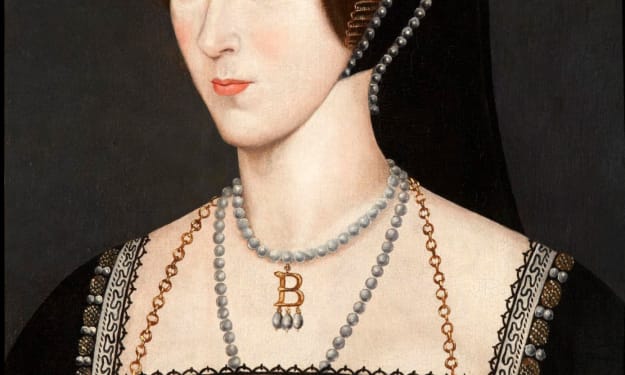
Anne Boleyn: A Tale of Triumph and Tragedy in Tudor England
Anne Boleyn: A Tale of Triumph and Tragedy in Tudor England Anne Boleyn, the second wife of King Henry VIII and mother to Queen Elizabeth I, remains an enigmatic figure in history, with her life marked by an extraordinary rise to power and a swift, tragic fall. This article delves into the captivating narrative of Anne Boleyn, exploring the dynamics of her ascent, characterized by ambition and political maneuvering, and the abrupt descent that unfolded against a backdrop of accusations, betrayal, and the ever-shifting currents of Tudor politics.
By Yaseen Pahad3 years ago in History