Biographies
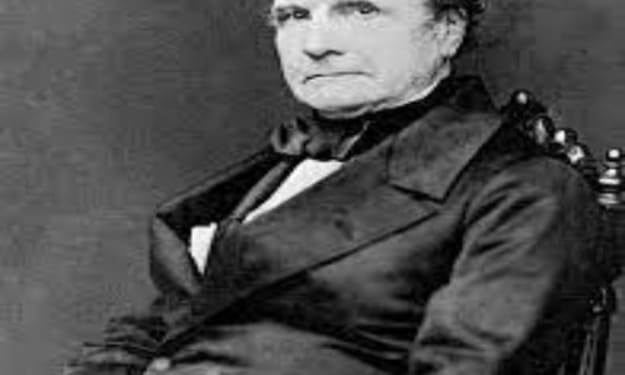
Charles Babbage's Odyssey to the Analytical Engine
A determined thinker labored against the limitations of his time in the dimly lighted chambers of early 19th-century London, where the air was thick with the aroma of ink and candles cast long shadows upon heaps of mathematical manuscripts. At the beginning of his journey, Charles Babbage—a name hardly known in history—set out on an adventure that would completely transform the field of computation.
By Tracy Kotze3 years ago in History
Biography of America
The United States of America emerged from a revolutionary fervor in the 18th century, and within two centuries, it became a formidable nation after triumphing in two world wars. However, delving into the pre-American history of the continent reveals a diverse and intriguing evolution. Before European settlers and explorers charted its coastlines, the continent was inhabited by various Native communities. The first people are theorized to have crossed over from Asia via a land bridge connecting Russia to Alaska during the Ice Age.
By A G M Astekur Islam 3 years ago in History
The emperor
The galaxy is ravaged by a foreign war, fueled by a desperate struggle for survival amidst chaos and carnage. One name echoes across the stars: the Emperor. His true origins are a mystery, but every legend must have a beginning. This one begins 50,000 years ago, in a time lost to history. At that time, space was a vast, uncaring expanse and the planet Terra was a brutal, unforgiving wasteland.
By Abdulmalik Habib3 years ago in History
1935 - The Year My Dad And Elvis Were Born
Introduction This is one of a series of posts about years with significant events that coincide with the number of the Vocal story. I am going to miss many, like Jesse Owens at the 1936 Olympics. According to testimonies Hitler did not snum Owens but his own President did. This does not make Hitler a good man.
By Mike Singleton 💜 Mikeydred 3 years ago in History
I See Clowns...
I am a millennial. For reference, a millennial is a person born between 1981 and 1996. There are many things that our generation has lived through that generation Z and the current generation (gen X) either do not remember or do not know about. Let's go back to the early 2000s, shall we? It was an interesting time to be alive, cell phone use was on the rise. Apple gave us the iPod and the iPhone and changed how we listened to music. No more did we have to download music from LimeWire or carry our compact disk players in our pockets and walk a certain way so the song wouldn't skip too much. Pagers were on their way out. Only doctors or street pharmacists had them mostly. Caller ID was now a service that came standard instead of having to pay a separate fee for it. So many new technologies and different ways to seemingly improve one's life.
By Latoya Giles 3 years ago in History
Secrets of Isaac Newton
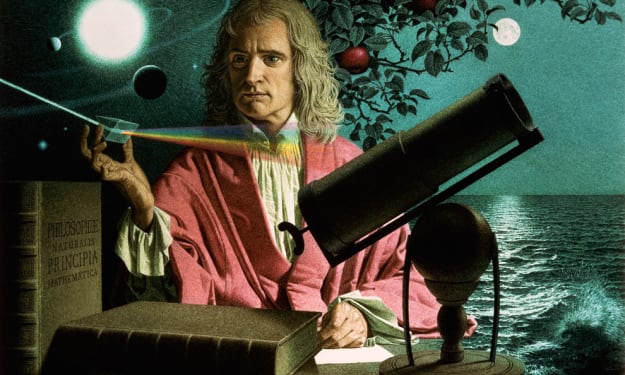
He disappointed his mother by not pursuing her dream of becoming a farmer. His relationships with others were so complex that he ended up living a solitary life. However, his passion for alchemy led him to become one of the most renowned scientists in history. Yes, I'm referring to Isaac Newton, the famous English physicist and mathematician who revolutionized modern physics. Newton was born in the small village of Wol Thorp in 1643. Unfortunately, he never had the chance to meet his father, who passed away before his birth. Around the same time, another brilliant scientist, Galileo Galilei, took his last breath in Florence. Little did Newton know that he would later build upon Galileo's ideas and make them legendary. From the very beginning, Isaac faced challenges as he was born prematurely and had to fight for survival. He was so tiny that he could fit inside a large mug. His mother remarried shortly after his birth, and he ended up living with his grandmother, separated from his mother for nine years. This solitude had a lasting impact on his life. Years later, when reflecting on his past, he even confessed to having fiery thoughts about his stepfather, such as wanting to burn down the house. On the bright side, his isolation sparked his interest in books on mechanics and technology. He even developed a highly accurate system of sundials. Recognizing his intellectual potential, his uncle and school headmaster encouraged him to pursue his studies instead of tending to the family property. Despite his mother's initial resistance, she eventually gave in, and Newton returned to grammar school. At the age of 18, he was admitted to Trinity College, Cambridge. To support his education, Newton worked and studied, waiting tables and taking care of other students' rooms.
By Angelo Valentino Krause3 years ago in History
Chief Executive: George Washington's Role in the American Revolu
George Washington was a key player in American history. He was born in Westmoreland County, Virginia, on February 22, 1732. Washington, who is regarded as the "Father of His Country," was instrumental in both the American Revolutionary War and the country's creation. Washington's military career began in the French and Indian War, where he was acknowledged for his leadership and received invaluable experience. His discipline and devotion to duty prepared him for his eventual position as the Continental Army's supreme commander during the American Revolution. Despite the many obstacles the Continental Army had to overcome, Washington's strategic acumen and tenacity were crucial. His famous crossing of the Delaware River on Christmas Eve 1776, as well as the triumphs that followed at Trenton and Princeton, raised spirits and demonstrated his military prowess. Washington was a leader off the battlefield as well. In 1787, he presided over the Constitutional Convention and was instrumental in the creation of the US Constitution. His backing was crucial to the document's ratification, and the presidency was defined by his support for a powerful executive branch. Washington was unanimously elected as the first president of the United States in 1789. During his presidency, the new government's credibility was established and important programs were put into action. Notably, he nominated Alexander Hamilton to the position of Secretary of the Treasury, which paved the way for the founding of the US financial system and the First Bank of the United States. Washington's wisdom and desire for the unity of the country were evident in his 1796 Farewell Address. He issued a caution against being involved in foreign affairs and political factionalism. Washington's voluntary ceding of authority established a model for orderly handovers of power. Beyond his accomplishments in politics and the military, Washington's reputation is defined by his views on slavery. He acknowledged owning slaves, but he had misgivings about the system. He expressed a complicated but changing view on slavery by allowing his slaves to be eventually freed in his will. On December 14, 1799, George Washington departed from this life at Mount Vernon. The country was greatly affected by his passing, and many people lamented his accomplishments. Washington's leadership and moral character shaped the presidency and left an enduring impression on American history. The Washington Monument in Washington, D.C., and other monuments honoring Washington's legacy endure. His likeness is included on the dollar bill. He had an incalculable influence on the United States, and his leadership during the country's early years cemented his status as a legendary figure in American history. Without a doubt, George Washington had a significant role in American history. He was born into a family of plantation owners in Virginia and went on to become the first President of the United States and a pivotal figure in the American Revolutionary War. Washington's military career began in the French and Indian War, where he displayed qualities of leadership that would later come to define his part in the country's founding. He led the Continental Army as its supreme commander throughout the Revolutionary War and was instrumental in achieving American independence. His reputation was cemented and morale was raised by his strategic genius, which was best demonstrated by his crossing of the Delaware River and his wins at Trenton and Princeton. Washington had influence in politics in addition to his military prowess. He led the 1787 Constitutional Convention, which made a substantial contribution to the writing of the US Constitution. When he became president in 1789, he established significant precedents for both the office and the young country. Washington's legacy is engrained in American history; monuments, his likeness on banknotes, and his continuing influence on presidential succession all serve as permanent reminders of his critical role in forming the country.
By Mohammad fayaz3 years ago in History