Biographies
Russia's Historical Conflicts: A Look at the Nations and Motivations
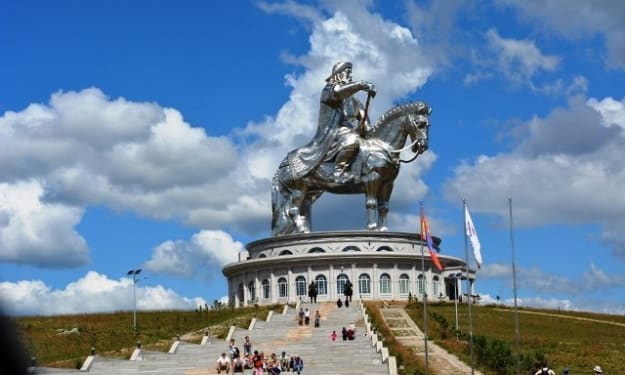
Introduction: Russia, a vast and diverse nation spanning two continents, has a rich history marked by numerous conflicts with various countries. These conflicts, ranging from territorial disputes to ideological differences, have shaped the geopolitical landscape and influenced global relations. In this article, we delve into the historical record to explore the countries with which Russia has engaged in armed conflicts and examine the underlying reasons for these confrontations. The Mongol Empire: Russia's history of conflicts dates back centuries, and one of the earliest significant clashes was with the Mongol Empire in the 13th century. The Mongols, led by Genghis Khan and later his descendants, sought to expand their empire westward. Russia, then divided into several principalities, became a target. The Battle of Kulikovo in 1380 marked a turning point, as Russian forces, led by Dmitry Donskoy, achieved a symbolic victory over the Mongols. Ottoman Empire: The Ottoman Empire and Russia found themselves in frequent conflicts over territorial expansion and control of key strategic regions, particularly in the Black Sea area. These tensions often escalated into full-fledged wars, such as the Russo-Turkish Wars of the 18th and 19th centuries. The control of territories like Crimea and access to warm-water ports fueled these conflicts, showcasing the geopolitical importance of the region. Sweden: In the early 18th century, Russia and Sweden engaged in the Great Northern War, a conflict over territorial dominance in the Baltic Sea region. The war culminated in the Battle of Poltava in 1709, where Russian forces, under the leadership of Peter the Great, decisively defeated the Swedish army. This victory marked Russia's emergence as a major European power. France and Britain (Napoleonic Wars): During the Napoleonic Wars in the early 19th century, Russia found itself at odds with France under Napoleon Bonaparte. The invasion of Russia by Napoleon in 1812 resulted in a brutal conflict that saw the French army devastated by the harsh Russian winter and the resilience of Russian forces. In this war, Russia formed alliances with other European powers, including Britain, to ultimately defeat Napoleon. Germany (World War I and World War II): In the 20th century, Russia faced Germany in two devastating world wars. In World War I, Russia was initially part of the Allied powers but withdrew from the conflict following the Russian Revolution in 1917. The subsequent Russian Civil War further contributed to the nation's internal strife. In World War II, the Eastern Front became a major theater of conflict, with Nazi Germany invading the Soviet Union in 1941. The war on the Eastern Front was marked by intense battles, such as the Battle of Stalingrad, which proved to be a turning point in the conflict. The Soviet Union's eventual triumph in 1945 came at an immense cost, with millions of lives lost. Afghanistan: In the late 20th century, Russia was involved in the Soviet-Afghan War (1979-1989), supporting the Afghan government against mujahideen insurgents. The conflict had complex geopolitical implications, involving the United States and its allies supporting the mujahideen. The Soviet withdrawal in 1989 marked the end of this conflict but left a lasting impact on the region. Conclusion: Russia's history is replete with conflicts that have shaped its identity and influenced global affairs. From ancient battles against the Mongols to the more recent engagements in Afghanistan, Russia's military history reflects its strategic concerns, territorial ambitions, and responses to external threats. Understanding these historical conflicts is crucial for comprehending Russia's geopolitical position in the contemporary world. What is the situation in Russia now? As of the latest update in 2024, the situation in Russia is dynamic and subject to change. Key factors include political developments, economic conditions, and international relations. Russia's political landscape is influenced by its leadership, and economic indicators play a role in shaping the nation's trajectory. Additionally, Russia's foreign policy decisions impact its relations with other countries. For the most current and accurate information, it is recommended to refer to the latest news sources and official statements from relevant authorities.
By Movie Foo13 years ago in History
. Content Warning.
Introduction:** As winter blankets the landscape with its pristine white cover, there's an undeniable charm that accompanies the arrival of a snow day. For children and adults alike, it's a welcomed pause from the routine, offering a chance to indulge in simple joys and reconnect with the beauty of nature. In this article, we explore the magic of a snow day and the myriad ways in which it enriches our lives.
By Ismail Ahmad3 years ago in History
The exploring of Socialism
T In the realm of political ideologies, socialism stands as a beacon of hope for many, promising equality, social justice and redistribution of wealth. It has its roots in the 19th century, emerging as a response to the inequalities and injustices perpetrated by capitalism during the Industrial Revolution. Over the decades, socialism has evolved into various forms, each with its own interpretations and implementations. are
By Mind writer3 years ago in History
Jeanne Paquin
(1869-1936) She was called “The first Queen of French Haute Couture” and was known for her modern and innovative designs. She was the first major female couturier, as well as one of the pioneers of the modern fashion business. Her clientele included the Queens of Spain, Belgium and Portugal. She was Jeanne Paquin.
By Ruth Elizabeth Stiff3 years ago in History
Most Devoted Love
The Romance of Two Poets Poets Elizabeth Barrett and Robert Browning eloped on September 12, 1846. At this time Barrett was a well-known and respected poet who had also published literacy criticism and Greek translations as well as poetry. Her first volume of poems “The Seraphim and Other Poems” came out in 1838. This was followed by “Poems by Elizabeth Barrett” in 1844.
By Rasma Raisters3 years ago in History
History of bus
The history of buses dates back to ancient civilizations, but the modern concept of buses began to emerge in the 19th century. Here's a brief overview: 1. **Early Forms of Public Transportation**: In ancient times, various forms of public transportation existed, such as horse-drawn carriages, chariots, and stagecoaches. These were used primarily for transportation within cities or between towns. 2. **Steam-Powered Buses**: In the early 19th century, experiments with steam-powered buses were conducted in England. These vehicles were cumbersome and not widely adopted due to their inefficiency and technical limitations. 3. **Horse-Drawn Omnibuses**: By the 1820s, horse-drawn omnibuses, which were large carriages capable of carrying multiple passengers, became popular in cities like Paris and London. They provided a mode of mass transportation for urban populations. 4. **Introduction of Motorized Buses**: The late 19th and early 20th centuries saw the introduction of motorized buses, initially powered by steam engines and later by internal combustion engines. These buses were more efficient and reliable compared to their horse-drawn counterparts. 5. **Expansion and Standardization**: As motorized buses became more common, cities around the world began to establish public transportation systems using buses as a primary mode of transport. Standardization of bus design, routes, and schedules helped streamline urban transit systems. 6. **Innovations and Improvements**: Throughout the 20th century, various innovations such as diesel engines, pneumatic tires, and hydraulic brakes contributed to the evolution of buses, making them more comfortable, efficient, and safer. 7. **Integration of Technology**: In recent decades, technology has played a significant role in improving bus transportation. This includes the introduction of hybrid and electric buses, GPS tracking systems for real-time monitoring, and advancements in fare collection systems. 8. **Specialized Services**: Alongside traditional city buses, specialized services like coach buses for long-distance travel, school buses for student transportation, and shuttle buses for specific routes or areas have become commonplace. 9. **Environmental Concerns**: In response to environmental concerns and the need to reduce emissions, there has been a growing emphasis on developing eco-friendly alternatives such as electric buses and buses powered by alternative fuels like hydrogen.
By J.Balakrishnan3 years ago in History