Biographies
"Resilience and Diversity: A Comprehensive History of Nigeria". Content Warning.
Introduction The history of Nigeria is a tapestry woven with threads of pre-colonial civilizations, the transatlantic slave trade, colonial rule, independence struggles, and post-independence challenges and triumphs. Spanning millennia, Nigeria's story is one of resilience, cultural diversity, political upheaval, and economic transformation.
By Paschal Mmesoma3 years ago in History
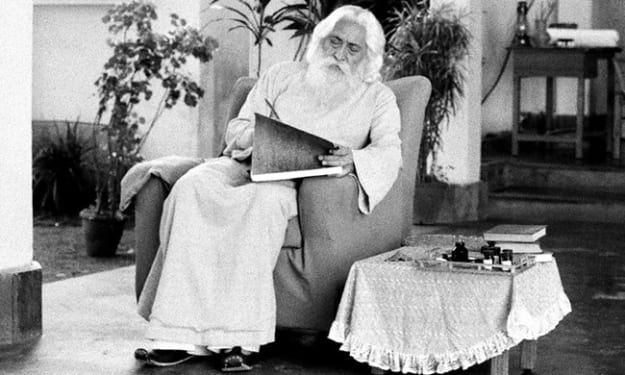
Rabindranath Tagore: The Legacy of a Literary Maestro
Rabindranath Tagore, widely hailed as the Bard of Bengal, stands as an icon of India's cultural and literary heritage. A polymath whose talents spanned poetry, music, literature, art, and social reform, Tagore left an indelible mark not only on the Indian subcontinent but also on the global stage. Born into a prominent Bengali family in the 19th century, Tagore's genius transcended boundaries, earning him the first non-European Nobel Prize in Literature in 1913. This article delves into the multifaceted life and enduring legacy of Rabindranath Tagore, shedding light on his literary contributions, philosophical insights, and advocacy for social change.
By MEDIA.COM WORLD 3 years ago in History
Why bible study is important: A Critical Look at the Enduring Importance of Bible Study
Unveiling the Tapestry: A Critical Look at the Enduring Importance of Bible Study The Bible, a text of profound historical, cultural, and spiritual significance, has served as a cornerstone of faith for millennia. Yet, its true essence unfolds not through passive consumption, but through active engagement – through critical study. This pursuit transcends mere intellectual exercise; it offers a transformative journey for individuals and communities alike. Examining the motivations behind Bible study reveals a rich tapestry woven with threads of personal development, communal connection, and timeless wisdom. At the core of critical Bible study lies the transformative encounter with the Divine. The text serves as a revelation from a transcendent power, detailing creation, humanity's relationship with this power, and the path towards redemption. Through rigorous study, we encounter not only the power and majesty depicted in passages like Psalm 18, but also the divine's love and compassion, exemplified in John 3:16. This encounter fosters a deeper connection with the transcendent, igniting a sense of awe and wonder that shapes our understanding of the world and our place within it. Beyond the encounter with the Divine, the Bible offers a moral framework for navigating life's complexities. It presents principles like honesty, integrity, forgiveness, and love through narratives and teachings. Studying passages like the Ten Commandments (Exodus 20) or the Sermon on the Mount (Matthew 5) provides a foundation for ethical decision-making. By grappling with these concepts through critical analysis, we cultivate a robust moral compass that guides us in our interactions with ourselves and others. This framework is not static; it is a dynamic tool for discerning right from wrong in a world filled with ethical ambiguity. Life often presents challenges and uncertainties that leave us feeling disoriented. The Bible serves as a source of solace, wisdom, and guidance in these times. Through the stories of individuals like Job confronting suffering (Job 1-2) or David navigating leadership (2 Samuel), we find relatable experiences and timeless advice. Studying Psalms of lament or Proverbs on wisdom equips us to grapple with our own struggles and discover meaning and purpose in life's journey. The Bible reminds us that we are not alone in our struggles, and that even in the darkest of times, hope and redemption are possible. Furthermore, critical Bible study acts as a catalyst for personal growth. The text serves as a mirror reflecting our inner selves. Passages like Romans 3:23, reminding us all have fallen short, or Galatians 5:22-23, outlining the "fruit of the Spirit," challenge us to examine our actions and motivations with a critical eye. Studying such verses encourages self-reflection, prompting us to identify areas for growth and cultivate desirable qualities like patience, kindness, and self-control. This introspective journey is not always comfortable, but it is a necessary step towards becoming the best versions of ourselves. The Bible is not meant to be a solitary pursuit. It thrives in shared exploration and critical discourse. Studying scripture fosters a sense of community and belonging. Participating in Bible studies allows for diverse perspectives on scripture, enriching our understanding. Group discussions on passages like 1 Corinthians 13, celebrating love, or Ephesians 4:29-32, promoting healthy communication, can strengthen relationships within families and communities. Through shared exploration and critical dialogue, we not only gain new insights but also build bonds based on a common foundation of faith. The value of critical Bible study extends beyond the personal and spiritual. The text offers historical context and sheds light on the development of Western civilization. Studying it enhances our understanding of social structures, legal systems, and cultural practices of the ancient world. Passages like Genesis 1-11, detailing creation narratives, or Acts of the Apostles, recording the spread of Christianity, offer valuable historical insights that broaden our perspective on the world and our place within it. Finally, the Bible speaks to timeless themes that continue to resonate in our contemporary world. Issues like poverty, justice, and environmental stewardship find echoes in scripture. Studying passages like Micah 6:8, advocating for justice, or Leviticus 25:35, promoting care for the vulnerable, allows us to apply biblical principles to current challenges. The Bible empowers us to engage with these issues not only as citizens but also as individuals guided by faith and informed by critical analysis. In conclusion, critical Bible study is a lifelong journey of discovery. It unveils the depths of the transcendent power depicted in the text, equips us with a robust moral compass, and offers solace and meaning in life's complexities. It fosters personal growth, strengthens relationships, enhances our understanding of the world, and empowers us to engage with contemporary issues. As we delve deeper into scripture with a critical lens, we embark on a transformative journey - a journey that enriches our lives and connects us to something far greater than ourselves. The Bible is not merely a collection of stories; it is a living tapestry woven with threads of wisdom, hope, and transformation, waiting to be unraveledStart writing...
By Mayar Younes3 years ago in History
How Much Did Alexander The Great Conquer?
Alexander the Great, one of history's most renowned military leaders, carved out a vast empire that spanned from Greece to India. His conquests reshaped the political landscape of the ancient world and left a lasting legacy that continues to influence cultures and societies today.
By Exotic History3 years ago in History
Global warming updates | Climate change | Green House gases
What is Global Warming? Global warming is the phenomenon of a gradual increase in the temperature near the earth’s surface. This phenomenon has been observed over the past one or two centuries. This change has disturbed the climatic pattern of the earth. However, the concept of global warming is quite controversial but the scientists have provided relevant data in support of the fact that the temperature of the earth is rising constantly.
By Global warming3 years ago in History
The Divine Legacy of Osiris: Guardian of the Afterlife
In the ancient land of Egypt, amidst the golden sands and mighty pyramids, there existed a god of unparalleled significance tha is Osiris, the beloved deity of life, death, and resurrection. His story, woven through the tapestry of Egyptian mythology, captivated the hearts and minds of ancient Egyptians for millennia. (I Love this ancient Knowlodge)
By Vasco Duarte3 years ago in History
Maharana Pratap Singh I
Maharana Pratap Singh I, popularly known as Maharana Pratap, was a valiant king of the Kingdom of Mewar—a princely state in northwestern India, situated in the present-day state of Rajasthan. His life is a saga of unwavering courage, resilience, and defiance against the mighty Mughal Empire, particularly during the reign of Emperor Akbar.
By Allwyn Roman Waghela3 years ago in History
Chola - Thanjavur Temple
Raja Raja Chola: Raja Raja the Great, was one of the most prominent rulers of the Chola dynasty, which reigned over a significant portion of South India and parts of Southeast Asia from the 9th to the 13th centuries. Here's an overview of his life and accomplishments:
By Rajalaksmi3 years ago in History
Dolly Parton
Dolly Parton stands as a towering figure in the realm of music, her legacy spanning decades and genres, her influence reaching far beyond the confines of country music. Born on January 19, 1946, in Locust Ridge, Tennessee, Dolly Rebecca Parton emerged from humble beginnings, growing up in a family of 12 children with her father toiling as a tobacco farmer and her mother tending to the household. Theirs was a life marked by poverty, yet it was also steeped in the rich traditions of Appalachian music that would later become a cornerstone of Dolly's career.
By Mary Ngugi3 years ago in History