Biographies
My Younger Days
The sun dipped below the horizon, casting long shadows over the small town of Willow Creek. The air was thick with the scents of blooming flowers and freshly cut grass, mingling with the distant hum of cicadas. At the heart of the town stood a modest, two-story house with a wraparound porch, its white paint weathered and peeling. This house had seen better days, just like the man who sat on the porch, rocking gently in his chair.
By Alohan I Rowland2 years ago in History
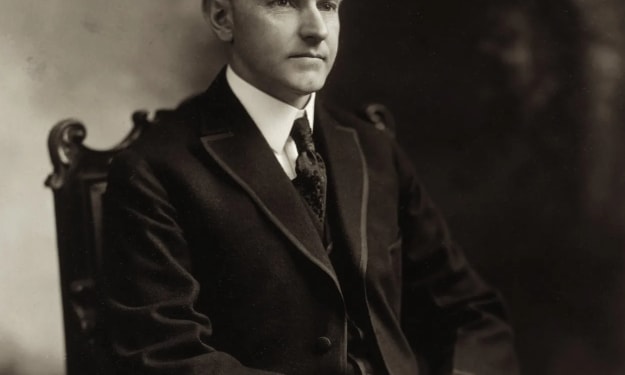
Calvin Coolidge
Calvin Coolidge, the 30th President of the United States, served from 1923 to 1929. Known for his quiet demeanor and a belief in limited government, Coolidge's presidency coincided with the Roaring Twenties, a period of economic prosperity and significant social change in the United States. His approach to governance, characterized by restraint and a conservative fiscal policy, left a lasting impact on the country and provides a stark contrast to the more activist presidencies that followed.
By Nicole Jameson2 years ago in History
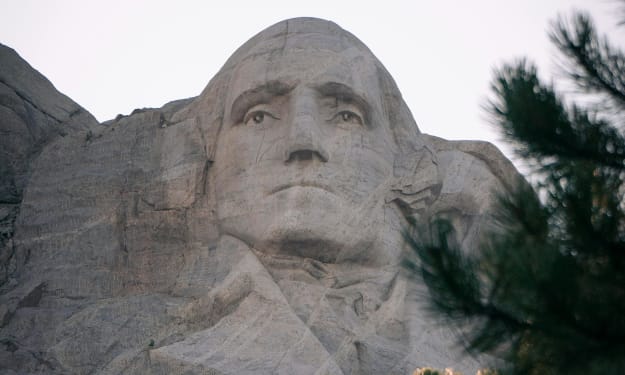
George Washington
George Washington, often revered as the "Father of His Country," holds a paramount place in American history. His leadership during the American Revolutionary War, his role in the drafting of the Constitution, and his tenure as the first President of the United States cement his legacy as a pivotal figure in the nation's founding. This essay explores Washington's life, his contributions to the establishment of the United States, and the enduring principles he championed.
By Nicole Jameson2 years ago in History
The Anthony Edwards Story. AI-Generated.
Anthony Edwards is a name synonymous with incredible talent and potential in the NBA. With an impressive four 40-point games already under his belt, he's second only to LeBron James for the most 40-point games before turning 21. Edwards holds himself to high standards, a reflection of his awareness of his immense potential. His journey is one of resilience, family bonds, and relentless determination.
By 10X race | Strictly for Sigmas2 years ago in History
Unraveling the Mystery of Jimmy Hoffa's Disappearance
Vanishing Act: Unraveling the Mystery of Jimmy Hoffa's Disappearance In the history of American crime, few mysteries loom larger than the disappearance of James Riddle Hoffa, better known as Jimmy Hoffa. A powerful labor leader and the president of the International Brotherhood of Teamsters, Hoffa was one of the most influential figures in the American labor movement during the mid-20th century. Yet, on July 30, 1975, he vanished without a trace, leaving behind a legacy of corruption, intrigue, and unanswered questions. Jimmy Hoffa's rise to power was as meteoric as it was controversial. Born into a working-class family in Detroit, Hoffa rose through the ranks of the Teamsters Union through a combination of charisma, cunning, and ruthless ambition. Under his leadership, the Teamsters became one of the largest and most powerful labor unions in the United States, wielding considerable influence over the nation's transportation industry. Yet, Hoffa's tenure at the helm of the Teamsters was also marked by allegations of corruption, racketeering, and ties to organized crime. He was convicted of jury tampering, attempted bribery, and fraud in 1964 and sentenced to prison, though he was later pardoned by President Richard Nixon in 1971. Despite his legal troubles, Hoffa remained a formidable force in the labor movement, and his disappearance sent shockwaves through the nation. The circumstances surrounding Hoffa's disappearance are shrouded in mystery and speculation. On the day he went missing, Hoffa was scheduled to meet with two mafia figures, Anthony "Tony Jack" Giacalone and Anthony "Tony Pro" Provenzano, at the Machus Red Fox restaurant in Bloomfield Township, Michigan. He was last seen standing in the parking lot of the restaurant, waiting for his associates to arrive. After that, he vanished without a trace. In the years that followed, numerous theories emerged about what happened to Jimmy Hoffa, but none have ever been proven. Some believe that he was murdered by members of the mafia in retaliation for his efforts to regain control of the Teamsters Union after his release from prison. Others speculate that he was killed by his own associates to prevent him from cooperating with law enforcement or to silence him about their criminal activities. One of the most enduring theories is that Hoffa's body was disposed of in a remote location and buried in a clandestine grave. Over the years, numerous searches have been conducted in an effort to locate his remains, but all have come up empty-handed. Despite the efforts of law enforcement, private investigators, and amateur sleuths, the mystery of Jimmy Hoffa's disappearance remains unsolved to this day. The disappearance of Jimmy Hoffa has captured the public imagination for decades, inspiring countless books, movies, and television shows. His larger-than-life persona, combined with the intrigue surrounding his disappearance, has turned him into a legendary figure in American folklore. Yet, for all the speculation and conjecture, the truth about what happened to Jimmy Hoffa remains elusive. In recent years, new leads and developments have reignited interest in the case, but the mystery persists. In 2013, the FBI conducted a dig at a site in Oakland Township, Michigan, based on a tip from a reputed mobster, but no trace of Hoffa's remains was found. The search only served to underscore the enduring mystery of his disappearance and the lengths to which people will go in search of the truth. The disappearance of Jimmy Hoffa remains one of the greatest unsolved mysteries in American history, a haunting reminder of the dark underbelly of power and influence. Until the day his remains are found and the truth is finally uncovered, the legend of Jimmy Hoffa will continue to captivate the public imagination, a tantalizing enigma that refuses to be forgotten.
By Deji Akomolafe2 years ago in History
Major Events of 1904
The year 1904 was marked by significant political, social, and cultural developments across the globe. From the Russo-Japanese War to the groundbreaking scientific discoveries, the events of this year have had a lasting impact on history. Here, we delve into the most notable occurrences of 1904.
By Samson E. Gifted2 years ago in History
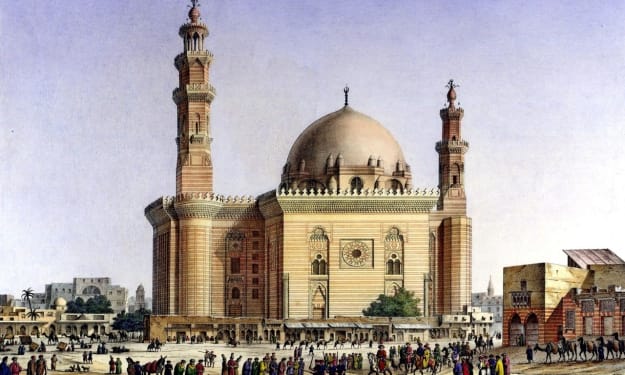
of the history of Islam
Islam, one of the world's major monotheistic religions, emerged in the 7th century CE in the Arabian Peninsula. Its founder, Prophet Muhammad, was born in Mecca in 570 CE. At the age of 40, Muhammad began receiving revelations from God through the angel Gabriel. These revelations were later compiled into the holy book of Islam, the Quran.
By Rifais Fabanyo2 years ago in History
A Journey Through the Rich History of Christianity
Introduction: Christianity, one of the world's major religions, has a history that spans over two millennia, marked by profound theological developments, cultural influences, and global expansion. From its humble beginnings in ancient Judea to its status as a global faith with diverse denominations, Christianity's journey is a fascinating tapestry of triumphs, challenges, and enduring legacies.
By Samson E. Gifted2 years ago in History
Iceland: Tales from the Land of Elves and Trolls
Emma thought she was ready for anything when she made the decision to live in Iceland for a year. She had also taken a few language classes, watched documentaries, and read travel guides. However, nothing could have prepared her for the bizarre practices and customs she would observe in this land of fire and ice.
By Mike Taylor2 years ago in History