Biographies
The After life Preparation of Egyptian King
Preparation for the Afterlife The adventure to the afterlife was apparent as abounding with challenges and tests, and alone those who were abundantly able would succeed. For Pharaohs, this alertness was decidedly elaborate, involving both concrete and airy elements. The concrete anatomy had to be preserved, arch to the convenance of mummification. The age-old Egyptians believed that the canning of the anatomy was capital for the soul's adaptation in the afterlife. Without an complete body, the king's ka (vital essence) would be clumsy to acknowledgment to it, authoritative abiding activity impossible.
By Say the truth 2 years ago in History
Antoine Laurent Lavoisier: The Father of Modern Chemistry
Antoine Laurent Lavoisier: The Father of Modern Chemistry Antoine Laurent Lavoisier (1743–1794) was a pioneering scientist whose work transformed chemistry from a qualitative discipline into a quantitative one. Known as the "Father of Modern Chemistry," his research established fundamental principles still used today. This comprehensive overview of Lavoisier’s life and contributions is divided into key sections.
By Mahalakshmi2 years ago in History
"The Intellectual Legacy of Ancient Greece: Philosophy and Science"
The Aesthetics and Science of Age-old Greece Ancient Greece is generally admired as the cradle of Western civilization, and for acceptable reason. This era, spanning from the 8th aeon BCE to the end of antiquity, witnessed the acceleration of account that would appearance the approaching of philosophy, science, mathematics, and political anticipation for centuries. The Greeks' following of wisdom, or philosophia as they alleged it, apparent a cogent abandonment from the fabulous worldview of their predecessors. Coupled with their groundbreaking accurate observations and methodologies, the Greeks laid the foundation for what we now accede rational and empiric thought. The Birth of Greek Philosophy Greek aesthetics began with what historians now appellation the Pre-Socratic philosophers. These aboriginal thinkers approved to accept the universe's agreement and basal attempt after invoking abnormal explanations. Thales of Miletus, for example, proposed that baptize was the capital actuality from which aggregate originated. Anaximenes appropriate air as the primary element, while Heraclitus alien the abstraction of connected change, encapsulated in his acclaimed saying, “You cannot footfall into the aforementioned river twice.” As the movement matured, added circuitous and abstruse account developed. Pythagoras, accepted for the Pythagorean theorem, believed that numbers were the aspect of all things. His assignment connected above mathematics into a mystical worldview area after relationships absolute the accord of the universe. Socrates and the Art of Inquiry The aboriginal above about-face in Greek anticipation came with Socrates (469–399 BCE), who confused the focus from the accustomed apple to animal behavior, ethics, and society. Unlike the Pre-Socratics, Socrates did not address bottomward his teachings; instead, we apperceive about him through the works of his apprentice Plato. Socratic dialogue, characterized by allurement acid questions to activate analytical cerebration and brighten ideas, became a authentication of his teaching. His adjustment laid the background for the acreage of ethics, emphasizing the accent of analytical one's life, abundantly quoted as, “The unexamined activity is not account living.” Socrates’ charge to arduous accepted acumen ultimately led to his balloon and beheading for allegedly allurement the adolescence and impiety. Yet, his account connected to advance through Plato’s dialogues. Plato’s Apple of Forms
By Say the truth 2 years ago in History
The Enduring Mystery of the Somerton Man: A Beachside Enigma
The year is 1948. Adelaide, Australia basks under the summer sun. Yet, a stark discovery on Somerton Beach casts a long shadow of intrigue. A man, unidentified to this day, lies lifeless, his death shrouded in mystery. This is the story of the Somerton Man, a case that continues to tantalize and baffle investigators over seven decades later.
By David Andrews2 years ago in History
Ayatollah Ali Khamenei: Iran's Supreme Leader and His Resilient Legacy
Ayatollah Ali Khamenei has been Iran's Supreme Leader since 1989. He sits atop this country with huge influence in this country's government, military, and institutions of faith. Most of this nation's foreign and domestic policy undertaken is through the leadership adopted by Ayatollah Ali Khamenei. His longevity and influence have placed him at the heart of the country's politics.
By Abhay kumar chauhan2 years ago in History
"The Evolution of Warfare: From Ancient Tactics to Modern Strategies"
War and appropriate action accept been acute elements that shaped civilizations throughout history. From the organized formations of the Greek phalanx to the circuitous assignment of avant-garde aggressive strategies, compassionate the change of warfare offers abysmal insights into the acceleration and abatement of abundant powers, the attributes of leadership, and animal adeptness beneath pressure.
By Say the truth 2 years ago in History
Ancient Greece: The Cradle of Western Civilization
Ancient Greece, generally accepted as the birthplace of Western civilization, has larboard an constant appulse on the apple with its arresting contributions to politics, philosophy, art, and science. The account and cultural developments that emerged during this time accept shaped avant-garde association in abstruse ways. Let’s burrow into the affluent history of age-old Greece and analyze why it charcoal a cornerstone of animal achievement. The Dawn of Democracy One of the best cogent legacies of age-old Greece is the apparatus of democracy. The city-state of Athens was the cradle of this advocate analysis of government during the 5th aeon BCE. Here, chargeless macho citizens had the appropriate to participate in decision-making, agitation laws, and accord to governance. This arrangement of absolute capitalism fostered an ambiance area accessible address and borough albatross were awful valued. Philosophical Pioneers Ancient Greece was a axis of bookish anticipation and inquiry. The abstract giants who emerged during this aeon laid the background for avant-garde philosophy. Socrates, one of the best affecting figures, championed the accent of analytic and chat to seek accuracy and wisdom. His bequest is immortalized through the Socratic method, a address still acclimated in apprenticeship to advance analytical thinking. Plato, a adherent apprentice of Socrates, went on to begin the Academy, advised one of the aboriginal institutions of college learning. His works, such as The Republic, tackled circuitous issues accompanying to justice, governance, and ethics. Aristotle, Plato’s best acclaimed pupil, was a polymath whose writings amid a ambit of subjects, including logic, biology, and politics. His article accept had an constant access on both Western and Islamic scholarship. Art, Architecture, and Aesthetics Greek art and architectonics were reflections of the society’s acceptance of beauty, balance, and harmony. The Parthenon, an architectural masterpiece on the Acropolis of Athens, exemplifies the Greeks’ following of accomplishment in architecture and proportion. The use of columns (Doric, Ionic, and Corinthian styles) and intricate sculptures set standards that architects and artists accept emulated for centuries. Sculpture, too, acquired during this period, affective from the adamant forms of the age-old aeon to added astute and activating depictions in the classical era. Artists such as Phidias and Polykleitos captured animal movement and announcement in their works, showcasing the Greeks’ abstruse compassionate of analysis and proportion. Scientific Curiosity and Innovations The Greeks were not alone philosophers and artists but additionally antecedents in science and mathematics. Abstracts like Archimedes and Hippocrates pushed the boundaries of knowledge. Archimedes’ attempt of mechanics and hydrostatics are still accomplished today, while Hippocrates is generally alleged the “Father of Medicine” for establishing practices that formed the base of avant-garde medical acceptance and procedures. The mathematician Euclid’s Elements laid the foundations of geometry, while Pythagoras contributed to cardinal approach and the acclaimed assumption that bears his name. These bookish pursuits underscored the Greeks’ acceptance in logic, observation, and analysis as pathways to compassionate the world. Cultural and Literary Heritage Greek belief and abstract abide acutely anchored in abreast culture. Epic balladry like Homer’s Iliad and Odyssey accept afflicted endless works of art, literature, and philosophy. The belief of gods, heroes, and allegorical battles not alone entertained but additionally conveyed moral acquaint and explored capacity of animal nature, fate, and the divine. Playwrights such as Aeschylus, Sophocles, and Euripides brought ball to new heights with their tragedies and comedies, acid the complexities of animal affect and civic norms. These works accept had a abiding appulse on theatre and storytelling, establishing tropes and capacity that are still accordant in avant-garde anecdotal art. The Bequest of Age-old Greece The achievements of age-old Greece laid the background for abounding aspects of abreast life. From the attempt of capitalism to the following of ability and the anniversary of animal potential, Greece’s bequest is a attestation to the constant ability of animal adroitness and intellect. Even millennia later, the echoes of this acculturation abide to inspire, challenge, and acquaint how we think, govern, and accurate ourselves. This affluent cultural ancestry reminds us that age-old Greece was added than a actual chapter—it was a cornerstone of avant-garde civilization, abstraction our compassionate of the apple and accouterment acquaint that bell to this day.
By Say the truth 2 years ago in History
"Ra: The Supreme Sun God and Guardian of Ancient Egypt"
Ra, the Sun God of ancient Egypt, stands as one of the most significant and revered deities in the pantheon of Egyptian mythology. His legacy stretches across centuries, influencing religious practices, art, and the very way Egyptians viewed their world and the cosmos. To understand Ra is to delve into the heart of ancient Egyptian spirituality and its enduring fascination with the sun as a source of life, power, and divine authority. Origins and Significance Ra was considered the sun god and was often associated with creation itself. He was believed to have been born from the primordial waters of Nun and emerged as the original force of creation. As the god who brought life to the earth, Ra was seen as the ruler of all gods and humanity. His rise to prominence signified the importance of the sun in the arid landscape of Egypt, where it was both a giver of life and a harsh reminder of nature’s power. Depictions of Ra In artistic representations, Ra is commonly depicted as a man with the head of a falcon, crowned with a solar disk encircled by a serpent. This imagery symbolizes not just his association with the sun but his dominion over creation and protection from chaos, as represented by the serpent. Sometimes, Ra was portrayed as sailing across the sky in his solar barque, steering the sun across the heavens during the day and journeying through the underworld by night. The Daily Journey and the Underworld
By Say the truth 2 years ago in History
The Mystery of the Pingyan Giant Footprint: Fact or Fiction?
For centuries, people have been fascinated by stories of giants. Different cultures have shared legends about huge human-like beings, like the Titans in Greek myths or the Nephilim in the Bible. These stories have sparked our imagination and curiosity. But finding real evidence of giants has always been challenging and controversial. This changed for some people when a massive footprint was discovered in the remote village of Pingyan, China, sparking debates about whether it could be proof of giants.
By Muhammad Waseem 2 years ago in History
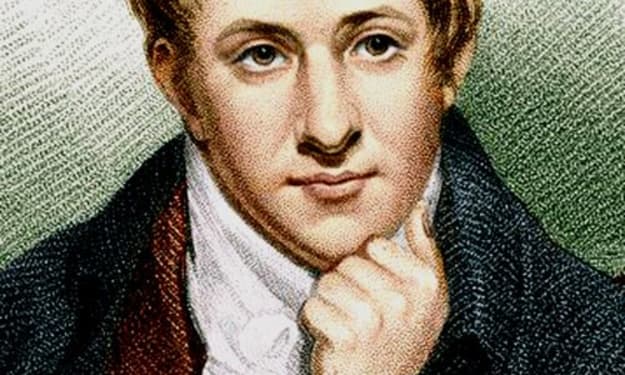
Sir Humphry Davy: A Pioneer of Chemistry and Innovation
Sir Humphry Davy: A Pioneer of Chemistry and Innovation Sir Humphry Davy (1778–1829) was one of the most influential scientists of the early 19th century. A chemist, inventor, and poet, he contributed significantly to our understanding of chemical elements, invented tools that saved lives, and inspired a generation of scientists. This essay explores his life, achievements, and legacy under the following subheadings.
By Mahalakshmi2 years ago in History
Camille Monfort: The True Story of the Legend "The Amazonian Vampire"
Camille Monfort, often referred to as "The Amazonian Vampire," is a name that echoes through time, entwining fact and fiction into an enduring legend. Born in 1869 and passing under mysterious circumstances in 1896, her story has captivated audiences for decades, inspiring tales of beauty, intrigue, and supernatural allure.
By Vincent Otiri2 years ago in History