Biographies
Pensacola
Pensacola is a charming city in the northwest corner of Florida, known for its beautiful beaches, rich history, and vibrant culture. Often called the "City of Five Flags," Pensacola has a unique heritage influenced by Spanish, French, British, Confederate, and American rule.
By Farhan Sayed2 years ago in History
Archimedes: The Brilliant Mind That Shaped Science and Engineering
The Story of Archimedes: The Ancient Engineer Archimedes—the name may remind you of high school math, but his story goes far beyond equations. He was an ancient genius, inventor, and engineer whose ideas laid the foundation for modern science and technology. Let’s dive into his fascinating life and explore how his inventions continue to influence us today.
By Valuable Knowledge2 years ago in History
Stargate
Stargate is a popular science fiction franchise that has captured the imagination of fans around the world. Starting with a single movie, it grew into a universe of TV shows, books, comics, and games. Its unique blend of adventure, science, and mythology makes it a favorite among sci-fi enthusiasts.
By Farhan Sayed2 years ago in History
"The Hidden Treasure of Krishna Deva Raya"
The Hidden Affluence of Krishna Deva Raya: A Bequest of Affluence and Wisdom Krishna Deva Raya, the illustrious adjudicator of the Vijayanagara Authority (1509–1529 CE), is acclaimed as one of the greatest monarchs in Indian history. His administration apparent a aureate era of prosperity, cultural renaissance, and aggressive achievements. Accepted for his advocacy of arts, architecture, and literature, Krishna Deva Raya’s authority was a hub of barter and wealth, alluring merchants from beyond the world. However, his administration is additionally active in mystery, with tales of hidden treasures that accept captivated the acuteness of affluence hunters and historians for centuries. This commodity explores the legends of Krishna Deva Raya’s hidden treasure, its origins, accessible locations, and the constant attraction of his legacy. The Affluence of the Vijayanagara Empire The Vijayanagara Authority was one of the wealthiest empires of its time. Its capital, Hampi, was a advancing metropolis, adorned with arresting temples, palaces, and bazaars. Barter routes affiliated the authority to Persia, Arabia, and Southeast Asia, bringing in gold, gems, and spices. The empire's affluence was added aggrandized by able agronomical practices, irrigation systems, and the abstraction of adored minerals from mines. Krishna Deva Raya’s administration was apparent by unparalleled prosperity. His aggressive conquests broadcast the empire’s territories, bringing in war anatomy and accolade from defeated kingdoms. The affluence of affluence in the Vijayanagara Authority gave acceleration to belief of all-inclusive treasures, some of which were accounted to accept been hidden to aegis them from invaders. Legends of the Hidden Treasure The War Anatomy of Orissa and Raichur: Krishna Deva Raya's campaigns adjoin the Gajapati rulers of Orissa and the Sultanate of Bijapur resulted in the accession of immense wealth. Absolute accounts advance that the treasures bedeviled during these campaigns included gold, silver, and adored stones. It is believed that a cogent allocation of this affluence was hidden in underground vaults beyond the empire. The Abstruse Vaults of Hampi: Hampi, the basic of the Vijayanagara Empire, is said to accommodate underground tunnels and accommodation that served as aristocratic accumulator facilities. These abstruse vaults were allegedly abounding with treasures, including aureate idols, coins, and jewelry. Local legends call hidden entrances to these vaults, attentive by intricate mechanisms and accessories to avert intruders. The Disappearance of Affluence Post-Battle of Talikota: The Vijayanagara Authority faced a adverse defeat in the Battle of Talikota in 1565 CE. The arrive Deccan Sultanates sacked Hampi, annexation its temples and palaces. However, abounding accept that the empire’s best admired treasures were hidden by loyalists afore the burghal fell, active in abstruse locations to anticipate them from actuality seized. Krishna Deva Raya’s Claimed Wealth: As a adjudicator accepted for his acumen and foresight, Krishna Deva Raya is accounted to accept hidden his claimed treasures in bearding locations. These treasures are said to accommodate attenuate artifacts, angelic texts, and heirlooms of immense cultural and airy significance. Possible Locations of the Hidden Treasure The Charcoal of Hampi: The sprawling charcoal of Hampi, a UNESCO Apple Heritage Site, are a affluence accession of history. Archaeologists and affluence hunters accept continued speculated about the actuality of hidden accommodation below the temples and palaces. The Vittala Temple, with its iconic bean chariot, and the underground Shiva temple are generally cited as abeyant sites for hidden treasures. Remote Caves and Forests: The asperous area surrounding Hampi is dotted with caves and close forests. Local ballad mentions abstruse passages arch to affluence caches, attentive by blame or abnormal forces. Ancient Fortresses: Forts congenital during Krishna Deva Raya’s reign, such as the Chandragiri and Penukonda forts, are believed to accommodate hidden treasures. These forts served as cardinal outposts and may accept housed emergency affluence of wealth. Efforts to Bare the Treasure Over the years, several attempts accept been fabricated to bare the hidden treasures of Krishna Deva Raya. While some archaeological excavations accept yielded artifacts and coins, the fabulous affluence declared in legends charcoal elusive. Affluence hunters accept faced challenges such as abridged absolute records, accustomed obstacles, and acknowledged restrictions on exploration. The Cultural Bequest of Krishna Deva Raya Beyond the legends of hidden treasures, Krishna Deva Raya’s accurate bequest lies in his contributions to culture, literature, and architecture. He was a angel of the arts, auspicious the conception of arcane works in Telugu, Kannada, Tamil, and Sanskrit. The Amuktamalyada, a Telugu ballsy authored by Krishna Deva Raya himself, charcoal a masterpiece of Indian literature. The temples and monuments congenital during his reign, such as the Virupaksha Temple and the Vittala Temple, are architectural marvels that abide to affect awe. These structures betoken the affluence and cultural composure of the Vijayanagara Empire, alms a glimpse into its aureate age. The Attraction of Hidden Treasures The belief of Krishna Deva Raya’s hidden affluence abduction the acuteness not aloof because of the affluence complex but additionally because they represent a affiliation to a august past. They serve as a admonition of the empire’s prosperity, resilience, and the constant bequest of one of India’s greatest rulers. While the absolute affluence may abide undiscovered, the cultural and absolute abundance larboard abaft by Krishna Deva Raya abide to flash brightly. They admonish us that the accurate treasures of a acculturation lie in its achievements, its people, and its contributions to humanity. Conclusion The hidden treasures of Krishna Deva Raya abide one of history’s best aperitive mysteries. Whether active below the charcoal of Hampi or absent to time, these treasures betoken the wealth, wisdom, and amplitude of the Vijayanagara Empire. As campaign and historians abide to chase for clues, the adventure of Krishna Deva Raya’s affluence reminds us of the constant attraction of history and the around-the-clock adventure for discovery.
By Say the truth 2 years ago in History
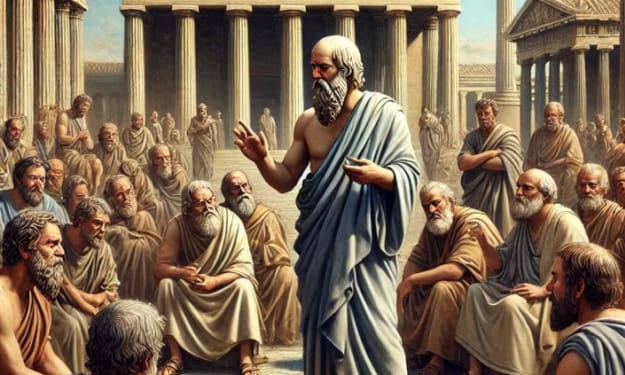
Socrates in the Agora
"Socrates: The Life, Philosophy, and Bequest of the Ancestor of Western Thought" Socrates, a name alike with acumen and the following of truth, is one of the best acclaimed philosophers in history. Built-in in Athens, Greece, about 470 BCE, Socrates laid the foundation for Western philosophy. Despite abrogation no accounting annal of his own, his account and methods greatly afflicted consecutive thinkers like Plato and Aristotle. This commodity explores the life, philosophy, trial, and constant bequest of Socrates, whose following of ability charcoal timeless. Early Activity and Background Socrates was built-in to Sophroniscus, a stonemason, and Phaenarete, a midwife. His bashful accomplishments shaped his apprehensive and aboveboard lifestyle. Unlike added Athenian philosophers of his time, Socrates alone absolute abundance and amusing status, allotment instead to appoint with bodies from all walks of life. Though little is accustomed about his education, Socrates acceptable accustomed a accustomed Greek education, which included literature, music, and concrete training. His aboriginal years were apparent by aggressive service, area he fought bravely in battles such as Potidaea and Delium, earning account for his adventuresomeness and endurance. Philosophical Methods and Beliefs Socrates’ altered access to aesthetics was centered on chat and questioning, a adjustment now accustomed as the Socratic Method. This address complex allurement acid questions to activate analytical cerebration and bare basal assumptions. His ambition was not to advise but to adviser others against self-discovery and bookish clarity. Core Beliefs: The Unexamined Life: Socrates abundantly declared, “The unexamined activity is not account living.” He believed that self-reflection and gluttonous ability were capital to a allusive life. Virtue as Knowledge: For Socrates, advantage and ability were inseparable. He argued that accurate ability leads to blameless accomplishments and that benightedness was the basis of all wrongdoing. The Following of Truth: Socrates admired the following of accuracy aloft all else, generally arduous civic norms and analytic the behavior of his contemporaries. Socrates in Athenian Society Socrates spent abundant of his activity in Athens, agreeable in abstract discussions in accessible spaces like the Agora. He approved out politicians, poets, and craftsmen to catechism their ability and betrayal their abridgement of understanding. This access fabricated him both admired and unpopular. Socrates' antipathy for accustomed acumen and his criticism of Athenian capitalism becoming him a acceptability as a amusing gadfly—a all-important irritant that stirs association into self-reflection. His followers included adolescent Athenians like Plato and Alcibiades, but his access additionally angry suspicion amid the city’s leaders. The Balloon and Afterlife of Socrates In 399 BCE, Socrates was brought to balloon on accuse of impiety and allurement the adolescence of Athens. His accusers claimed he alien new gods and led the adolescent bearing adrift by analytic acceptable values. The Trial During his trial, Socrates delivered a able defense, recorded by his apprentice Plato in The Apology. He argued that his analytic was a account to the gods and a account to society. Despite his eloquence, the board begin him guilty. Socrates was bedevilled to afterlife by arresting a cup of hemlock poison. The Death Socrates' afterlife was a abstruse moment in history, appearance the battle amid alone abandon and civic norms. He accustomed his fate calmly, abnegation to abscond back accustomed the opportunity. His charge to his attempt alike in the face of afterlife fabricated him a agonize for philosophy. Socrates’ Legacy Although Socrates wrote annihilation himself, his account were immortalized by his students, decidedly Plato. Through works like The Apology, Crito, and Phaedo, Plato preserved Socrates' article and alien them to approaching generations. Influence on Philosophy Plato and Aristotle: Plato's aesthetics was acutely afflicted by Socrates, and Aristotle, in turn, was Plato's student. Together, they laid the foundation for Western philosophy. Ethics and Morality: Socrates' focus on belief and the accent of analytic laid the background for moral philosophy. Modern Applications: The Socratic Adjustment is broadly acclimated in education, law, and psychotherapy, emphasizing chat and analytical thinking. Symbol of Bookish Integrity Socrates charcoal a attribute of bookish adventuresomeness and integrity. His alertness to claiming ascendancy and seek truth, alike at abundant claimed cost, inspires thinkers, educators, and activists worldwide. Mysteries and Interpretations Despite his constant legacy, abundant about Socrates charcoal a mystery. Best of what we apperceive comes from accessory sources like Plato, Xenophon, and Aristophanes, anniversary presenting a altered perspective. Some advisers altercate that Plato’s accounts may reflect his own abstract angle rather than Socrates’ absolute teachings. Conclusion Socrates’ activity and aesthetics abide to bell above centuries, reminding us of the ability of analytical cerebration and the following of truth. His methods and article claiming us to appraise our beliefs, catechism civic norms, and strive for a blameless life. As the ancestor of Western philosophy, Socrates' access extends far above age-old Greece, abstraction the bookish traditions that ascertain humanity’s adventure for ability and meaning.
By Say the truth 2 years ago in History
The Monumental Construction of the Suez Canal
"The Architecture of the Suez Canal: A Monument of Engineering and Mystery" The Suez Canal, a counterfeit aqueduct abutting the Mediterranean Sea to the Red Sea, stands as one of the best arresting engineering feats in animal history. Stretching 193 kilometers above Egypt, it has decidedly beneath amphibian routes amid Europe and Asia, revolutionizing all-around trade. While the aqueduct is acclaimed for its bread-and-butter importance, its architecture is buried in mystery, hardship, and animal sacrifice. This commodity explores the architecture of the Suez Canal, the challenges faced, the cost, and the animal assessment it exacted. The Vision Behind the Suez Canal
By Say the truth 2 years ago in History
David Lynch Movies And Tv Shows
David Lynch a visionary filmmaker painter and musician is well known for his distinctive style mysterious storytelling and dreamlike atmospheres. His works explore psychological depths surreal elements and often unexpected plot twists however they offer audiences an extraordinary experience. Although some may find his approach perplexing this complexity can be intriguing because it invites deeper reflection.
By Adnan Rasheed2 years ago in History
Fascinating Wonders of Nature: From Flying Dogs to Walking Trees
Is that a dog in the sky? Don’t get too excited—dogs haven’t evolved to fly just yet! But we’ve all seen realistic shapes in clouds. Some think it’s Mother Nature sending us coded messages. However, it’s our brain’s ability called pareidolia that makes us see patterns or faces in random objects. This skill likely helped our ancestors survive by spotting potential threats like predators hiding in shadows. Speaking of odd shapes, ever seen an orange “having a baby”? This phenomenon, called vivipary, happens when seeds sprout while still attached to the fruit. It’s rare in plants but fascinating, as it’s comparable to live birth in animals. On the topic of nature’s wonders, the giant African snail can grow up to 8 inches and live 10 years. These snails, while fascinating, are illegal to own in some countries due to their invasive nature and potential health risks. Another striking phenomenon is the "dirty thunderstorm," where volcanic eruptions generate lightning within ash clouds. This occurs when static electricity forms as ash particles collide, creating lightning near the ground. Nature never ceases to amaze! Did you know that tigers have striped skin beneath their fur? Unlike zebras, whose skin is all black, tigers’ striped patterns extend to their follicles. It’s a feature that makes them even more unique. Hailstones the size of tennis balls are another wild occurrence. These form when raindrops are lifted to freezing altitudes by strong updrafts, growing larger as they collect more layers of ice. Once heavy enough, they crash to the ground, often causing significant damage. Ever find a pearl while eating oysters? It’s rare, with a 1 in 10,000 chance, but possible. Pearls form when debris irritates the oyster, prompting it to coat the intruder in layers of nacre. Edible oyster pearls can be worth up to $4,000, while high-end jewelry store pearls fetch much more. Nature’s adaptability is also evident in the walking palm tree, found in Central and South America. It appears to “move” by growing new roots in a desired direction while older ones die off, enabling the tree to shift position slowly over time. In the ocean, the lingcod fish stands out with its electric blue flesh. This unique coloring is linked to a chemical called biliverdin, but the phenomenon remains poorly understood. Interestingly, the blue hue fades when cooked. Have you ever seen Zen stones? These natural formations occur when rocks sit atop melting ice, leaving slender pedestals behind. The process involves sublimation, where ice transitions directly to gas, creating these surreal shapes. Butterflies, with their intricate wing patterns, use them for both survival and attraction. The patterns help them camouflage, warn predators, or impress mates. Some species, like the zebra longwing, have unique feeding habits, consuming pollen directly for better nutrition and longer lifespans. Bioluminescence is another marvel, where creatures like plankton and shrimp emit light. Beaches with glowing waves, caused by these organisms, create magical sights. Similar wonders include Bolivia’s Salar de Uyuni, a salt flat that turns into a giant mirror after rainfall. Lastly, nature’s creativity extends to multi-fruit trees through grafting. By combining compatible fruits on one tree, you can grow several varieties in a single space. However, they require careful maintenance to ensure balance. These natural phenomena remind us of the planet’s beauty and complexity, from striped tigers to glowing oceans and moving trees. Each discovery adds to our appreciation of the world we live in.
By Nora Ariana2 years ago in History
The Paris Climate Treaty
The Paris Climate Treaty, also known as the Paris Agreement, is an important global agreement aimed at fighting climate change. It was created during the United Nations Climate Change Conference (COP21) in December 2015 in Paris, France. Representatives from almost every country in the world came together to make this deal. The goal of the treaty is to protect the Earth by reducing greenhouse gas emissions and keeping global warming under control.
By Farhan Sayed2 years ago in History
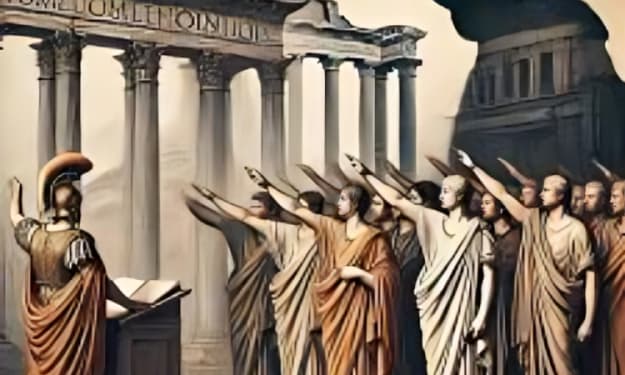
The Roman Salute
The Roman salute is a gesture where a person raises one arm forward with the palm facing down or slightly up. It is often associated with ancient Rome, but its real history and meaning are much more complicated. Over the years, this gesture has taken on different meanings in art, politics, and culture, making it a topic of debate and interest.
By Farhan Sayed2 years ago in History
Learn the Incredible Story of Sgt. Stubby, the War Canine Hero
Learn the Incredible Story of Sgt. Stubby, the War Canine Hero There are remarkable stories of valor that can be told of history, and among the most peculiar ones is the story of Sgt. Stubby, a stray dog that is known to have become one of the most prominent war heroes during World War I. This wonderful canine soldier served together with American soldiers and made acts that would help save numerous lives during battles. From a stray pup to a decorated war hero, the journey of Sgt. Stubby is a journey of courage, loyalty, and resilience. In this article, we are going to discover his inspiring story and find out why he remains one of the most famous military dogs in history. Who Was Sgt. Stubby? Sgt. Stubby was a Boston Terrier or Bull Terrier crossbreed; the breed is very small but solid. His birth and parentage are unknown because he was found roaming on the streets of New Haven, Connecticut, in 1917. He was befriended by a group of soldiers who were undergoing training at Yale University. These soldiers would be shipped overseas during World War I. One soldier, Private J. Robert Conroy, developed a close bond with Stubby. The dog soon became the favorite of the troops as he would cheer them up with his friendly and playful nature. How Sgt. Stubby Joined the War
By Kalpesh Vasava2 years ago in History